

US, Iran exchange more attacks as Trump floats levy on shipping cargo
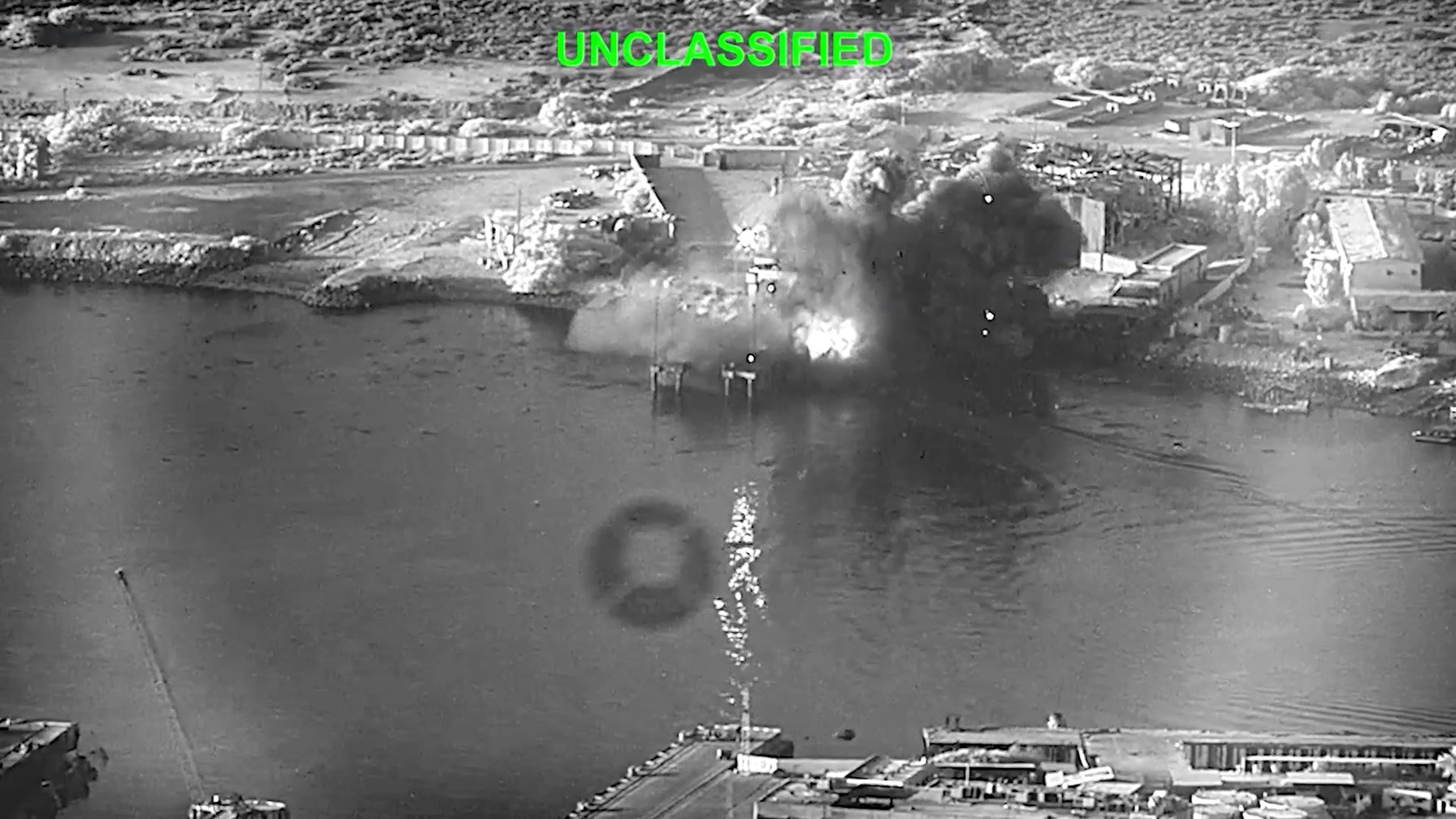
The United States and Iran continued to exchange strikes, putting their interim truce agreement and the Gulf region in further peril, while a US proposal to levy a 20 percent toll on Strait of Hormuz cargo roiled global financial and energy markets.
Among the latest developments, the United Arab Emirates confirmed that at least one crew member has been killed after Iranian missiles allegedly targeted two of its national tankers.
In a separate incident, the United Kingdom Maritime Trade Operations agency received a report on Tuesday of an incident in Oman, in which a tanker was hit by a missile while transiting outbound on the southern route. The agency said that authorities are investigating the incident.
READ MORE: US-Iran strikes deepen crisis amid dispute over waterway
The UKMTO also reported that another tanker was struck in Oman's waterway on Monday.
In a news release shared with China Daily, ADNOC Logistics and Services, the UAE's leading energy maritime logistics firm, confirmed that two very large crude carriers — Al Bahyah and Mombasa B — were hit by projectiles while navigating the Strait of Hormuz.
Iran's Islamic Revolutionary Guard Corps said its naval forces had struck and disabled two supertankers after the vessels ignored warnings and attempted to transit the Strait of Hormuz through a mined route at the encouragement of the US, Tasnim News Agency reported. The IRGC's statement did not name the vessels or say whether it was referring to the UAE's vessels.
In a statement issued early on Tuesday, the IRGC said its Navy remains fully committed to safeguarding Iran's rights in the Strait of Hormuz.
The US Central Command, or CENTCOM, said it completed the latest wave of strikes against Iran at 10:15 pm on Monday.
US President Donald Trump said in the Oval Office on Monday that US Gulf allies Saudi Arabia, Qatar, the UAE, Kuwait and Bahrain ought to reimburse the US.
"I want to be reimbursed because we're protecting a very rich portion of the world. We're spending money, and so what we've done is we are going to be reimbursed for protection," said Trump.
He went on to say that the US does not "need" those countries because "we have more oil than any other country in the world", and that "we've done a very effective job" in protecting those nations.
Referring to the US as the "guardian" of the Strait of Hormuz, Trump said the US plans to collect a 20 percent fee from ships passing through the vital shipping route, as compensation for ensuring safe passage.
In a post on X on Monday, Iranian Foreign Minister Seyed Abbas Araghchi said, "Whoever provides secure and safe passage of commercial vessels through the Strait of Hormuz should be compensated for this service. Iran has always been the guardian of the Strait and will remain so forever. Twenty percent is of course too much. We will be fair," said Araghchi.
Additional pressure
Deniz Istikbal, an assistant professor and economics researcher at Istanbul Medipol University in Turkiye, told China Daily that if the US were to take control of the Strait of Hormuz and impose transit fees, it could place additional pressure on global energy prices.
ALSO READ: Trump drops 20% fee for Hormuz cargo as naval blockade resumes
"At the same time, the current position of the Gulf countries could create new challenges for energy security and supply. Rising energy prices would likely fuel global inflation, triggering a chain reaction that could affect everything from the (US) Federal Reserve's interest rate decisions to energy production quotas and broader economic stability," said Istikbal.
"The protection of the Gulf states has proven to be an area where the US was not fully successful during the latest conflict. The Gulf countries became involved in the conflict only to the extent allowed by their own defense capabilities. Therefore, they are more likely to favor a ceasefire rather than a prolonged military confrontation," he added.
Contact the writers at jan@chinadailyapac.com
