

Rescuers, safety measures ready as storms, typhoons strike across country
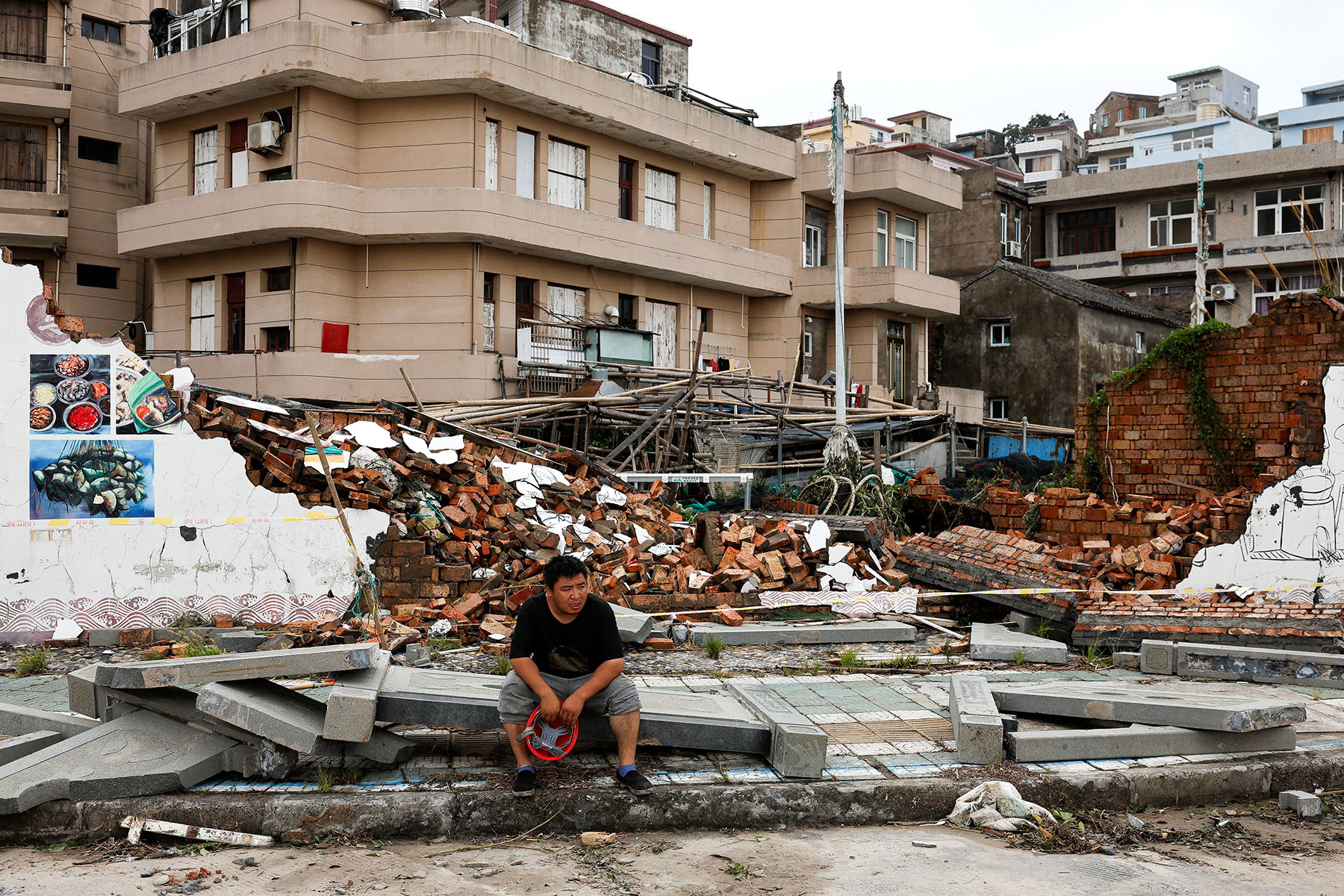
When Yang, a villager in the southern part of Zhejiang province, arrived home at 7 am on Saturday after receiving a phone call from her neighbors, floodwater was already knee-deep in the concrete square outside her house.
She waded through the muddy water to reach her residence in Jingren village, Yongjia county, only to watch the level continue rising.
"Our house sits on slightly higher ground, so the damage wasn't too bad," Yang told Qianjiang Evening News. "But the three houses next door are on lower ground. The water almost reached the height of the first floor. I even saw gas cylinders being swept away by the flood."
READ MORE: Typhoon weakens, but flood risk shifts northward
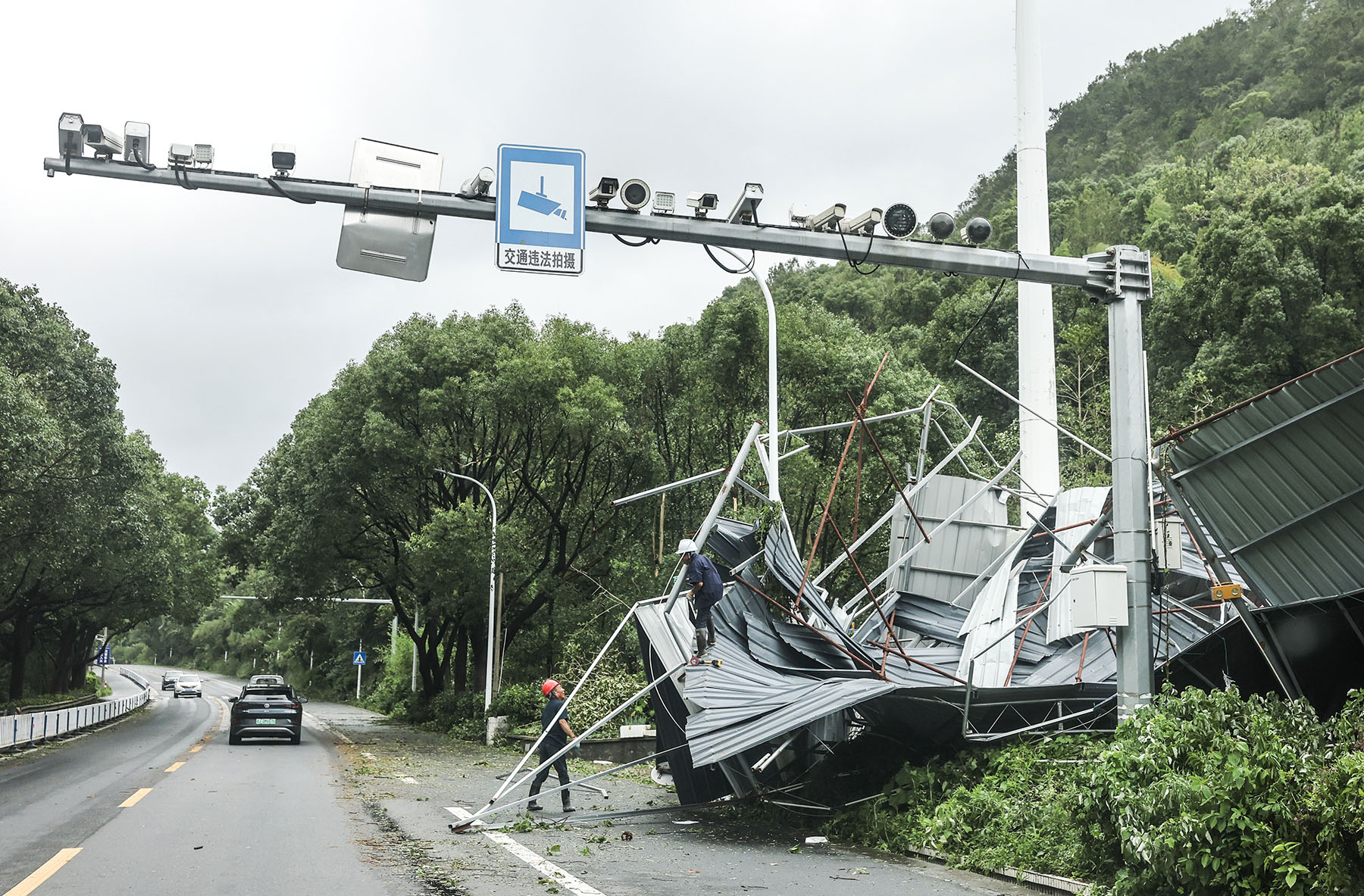
In neighboring Yueqing county on Friday night, wind and rain pounded against the glass walls of the Civic Activity Center as Typhoon Bavi headed for its second landfall.
Inside, where 500 people took shelter, the atmosphere was calm.
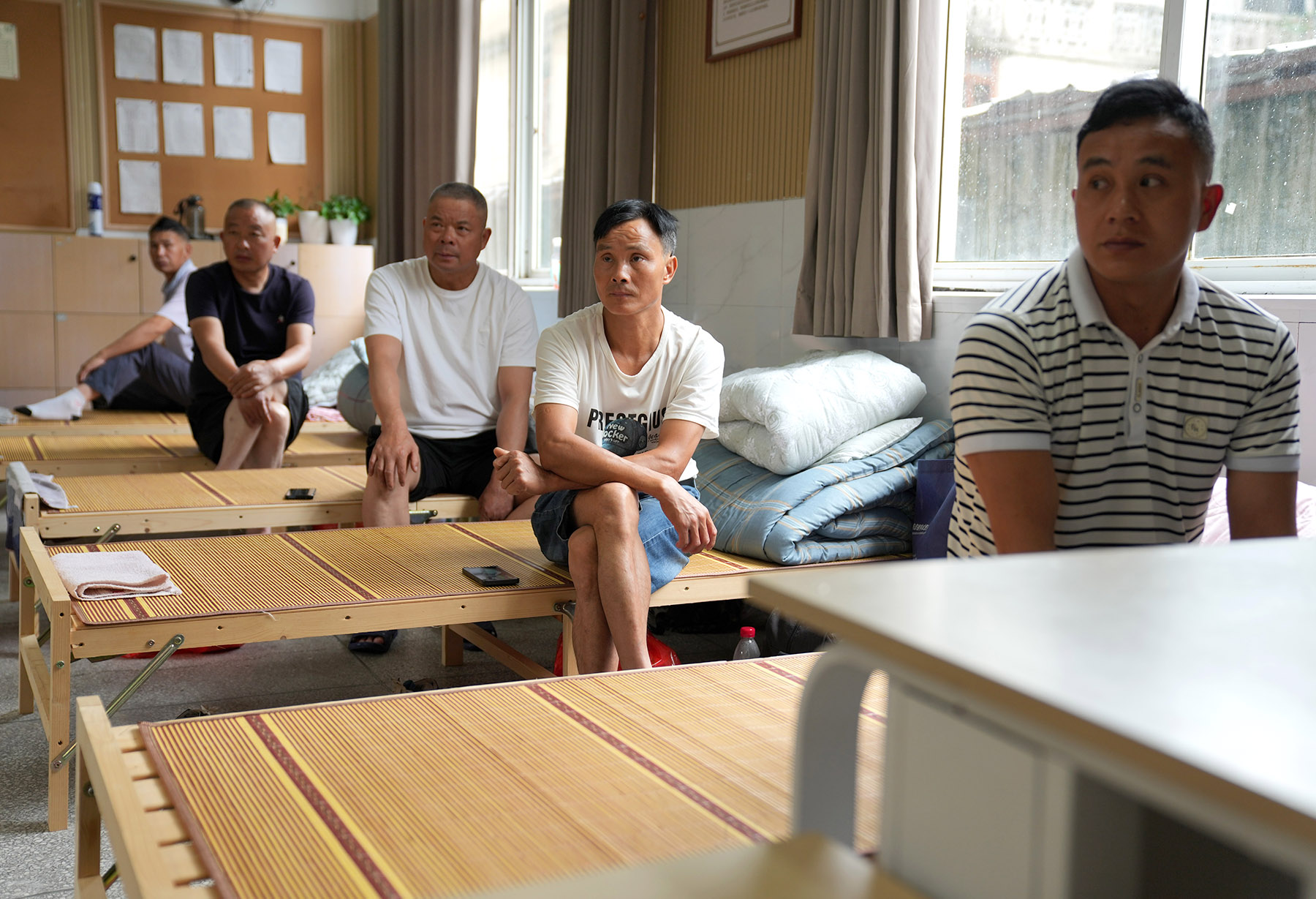
Rows of folding beds lined the hallways. Bottled water, instant noodles, medical supplies and emergency lighting had all been prepared. Volunteers moved quietly among evacuees, while doctors checked on elderly residents and police officers patrolled the shelter through the night, Xinhua News Agency reported.
"It's such a relief," a carpenter surnamed Li told Xinhua after being evacuated from a nearby construction site.
When work was suspended earlier that day, he had worried whether the temporary dormitory where he lived could withstand the approaching typhoon.
Now, lying in the cool air conditioning of the converted shelter, he said, "I finally feel at ease."
Outside, sandbags sealed the entrances against floodwater while wooden boards reinforced doors and windows. Inside, generators, emergency lights, food, drinking water and medicine stood ready.
As violent gusts shook the building and glass panels hummed under the pressure of the wind, many evacuees felt secure enough to get some sleep.
"That wind is really strong," one elderly man murmured before pulling his blanket tighter and drifting back to sleep, Xinhua reported.

Heavy rain spreads
Bavi, the ninth typhoon of the year, made landfall twice along the coast of Zhejiang late Saturday before moving inland. It was the strongest typhoon to strike the eastern province in July since 1949, according to the provincial emergency management department.
After battering Zhejiang's coastline, the storm continued its march north, carrying enormous amounts of tropical moisture across eastern China. Meteorologists warned that while the center of the storm was weakening, its footprint remained immense, with heavy rain spreading into the North China Plain and Northeast China.
The National Meteorological Center forecast exceptionally heavy rainfall across parts of Liaoning and Jilin provinces through Tuesday, with localized areas expected to receive extraordinary amounts of rain.
Authorities warned of heightened risks of flash floods, landslides and urban inundation as rivers already swollen by previous storms faced another surge of runoff.
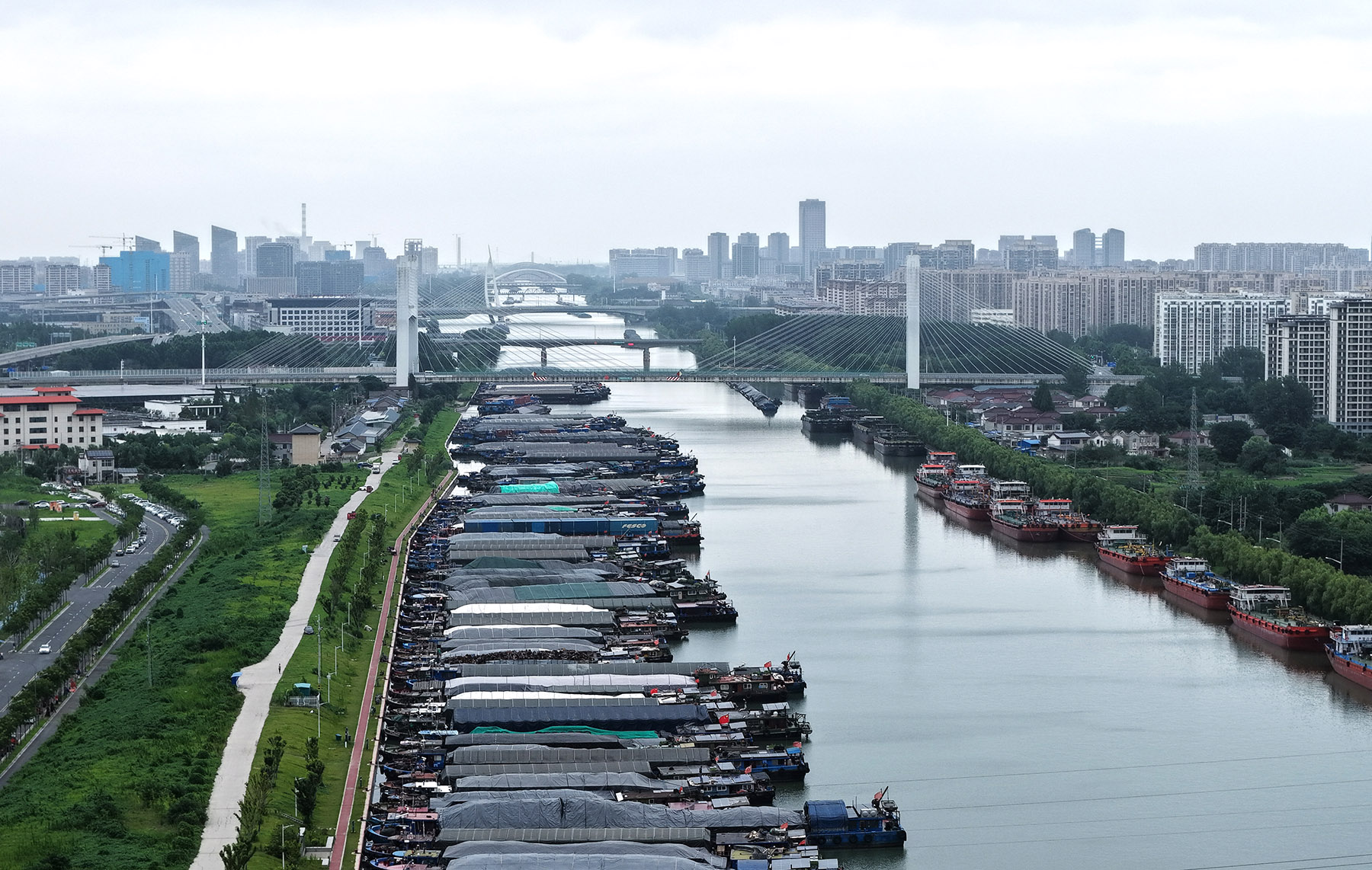
In Lingyuan, Liaoning, days of torrential rain fueled by Typhoon Bavi's outer rain bands and a cold vortex had by Sunday inundated waterways and submerged farmland before the storm arrived.
In Lingyuan's Daoerdeng township, muddy water swallowed cornfields, leaving stalks standing in nearly one meter of floodwater. A 110-meter-long bridge spanning a mountain river disappeared completely beneath the rushing current, forcing authorities to seal off the crossing on Friday night, China Media Group reported.
The township, crisscrossed by rivers and prone to flash floods, had already evacuated all residents from its riverbanks. According to local authorities, 542 people were relocated, with 117 staying in 18 centralized shelters while others moved in with relatives or friends, CMG reported.
More than 6,200 mu (about 413 hectares) of farmland and 1.5 kilometers of rural roads had been damaged as rivers overflowed after days of relentless rain, local officials estimated.
Eleven of the township's 12 reservoirs were above flood-control levels, prompting emergency water releases as rescue crews remained on round-the-clock standby ahead of another forecast round of heavy rain.
Precautions in place
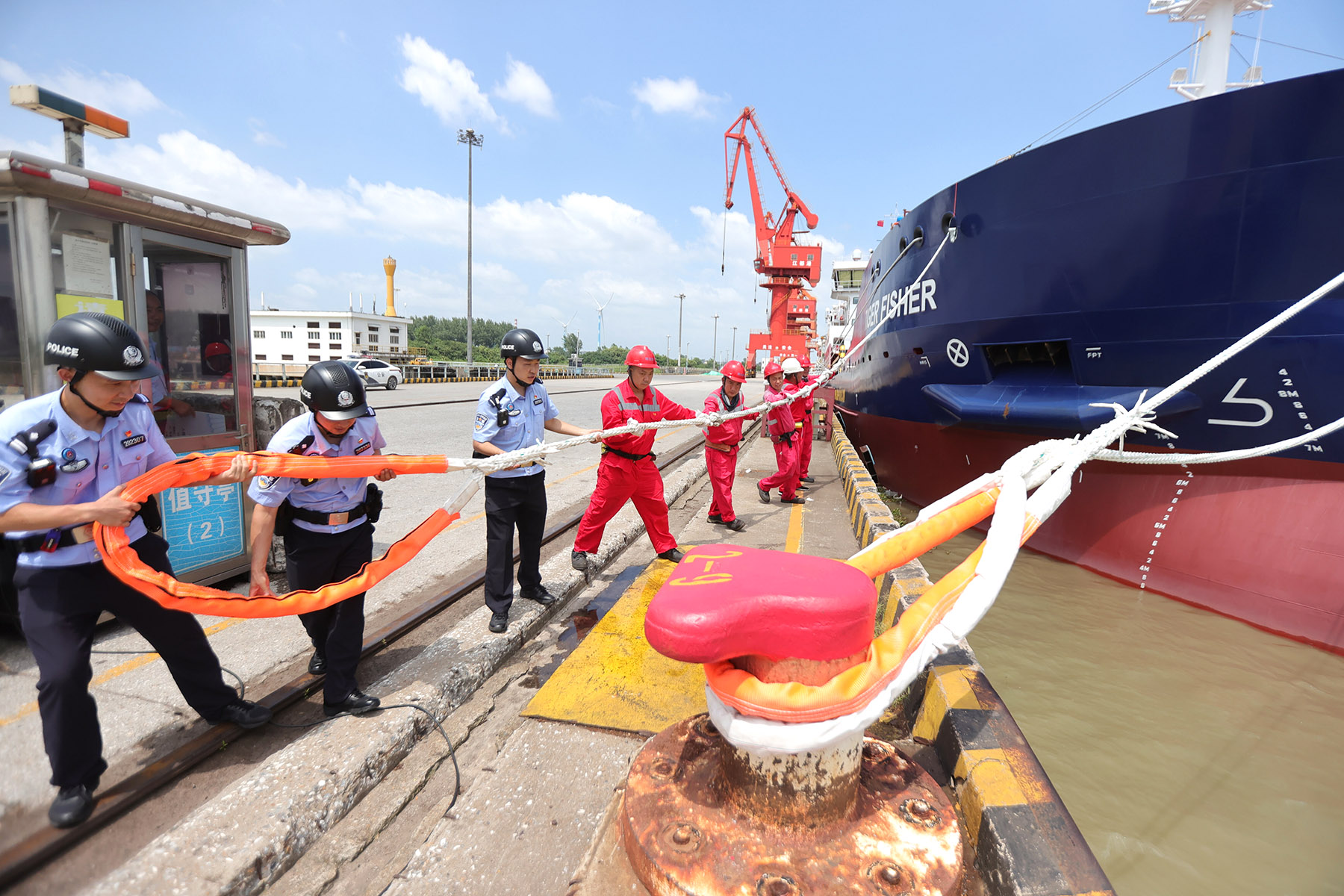
Before the storm arrived, Zhejiang launched one of its largest precautionary evacuations in recent years. Authorities relocated 2.68 million residents, opened more than 19,000 emergency shelters, suspended classes, shut down 830 construction sites and closed more than 400 scenic attractions.
In Anhui province, nearly 14,000 residents in Huangshan had been evacuated by Sunday evening as torrential rain lashed the city and water was released from reservoirs to make room for additional inflows.
Authorities also stepped up nationwide emergency preparedness. The Ministry of Water Resources upgraded its flood alert to yellow, while central authorities dispatched 70,000 relief items — including folding beds, blankets, summer quilts and emergency kits — to Zhejiang, Tianjin and Anhui to support evacuation and temporary resettlement efforts.
Before Bavi advanced inland, emergency responders had already begun anticipating and planning for its movements.
On July 10, shortly after completing tornado relief operations in Huanggang, Hubei province, the National Central China Regional Emergency Rescue Center and the Hubei Provincial Fire and Rescue Corps redeployed personnel across Hubei, Anhui, Henan and Jiangsu provinces ahead of the typhoon's arrival.
In Shexian county, Anhui, rescue teams established three forward operating units equipped with high-capacity drainage vehicles, amphibious rescue vehicles and inflatable boats to ensure they could respond immediately if flooding struck, according to Xinhua.
"When responding to extreme weather, rescue forces must be deployed in advance and stationed on the front line," Xu Changyou, political commissar of the Hubei Provincial Fire and Rescue Corps, told Xinhua.
Local governments across the typhoon's projected path also swung into action. In Shuanghe village in Anlu, Hubei, village officials went door to door issuing weather warnings, inspecting homes for safety hazards, and checking on more than 60 elderly residents living alone.
"We've established a one-on-one support mechanism for elderly and other vulnerable residents, with dedicated officials conducting regular checks to ensure everyone stays safe," Ye Xiaowu, the village's Party secretary, told Xinhua.
Meanwhile, the National Development and Reform Commission allocated 100 million yuan ($14.7 million) in emergency funds to Zhejiang for post-disaster recovery, including repairs to roads, schools, hospitals and water conservancy facilities.

Guangxi fighting back
Guangxi Zhuang autonomous region was already struggling to recover from another disaster before Bavi.
Days of torrential rain had triggered catastrophic flooding across the autonomous region, leaving 39 people dead and nine others missing, according to local authorities.
Among the hardest-hit areas was Zhenlong township in Hengzhou, where nearly 8,000 residents were cut off from the outside world after mountain roads collapsed, reservoirs overflowed and power and communications were knocked out.
For six days and five nights, rescue teams fought to reconnect what local residents described as an "isolated island".
Firefighters, soldiers, local officials and volunteers trekked through landslides carrying satellite phones, food and medicine. Helicopters later air-dropped emergency supplies to villages that remained inaccessible by road.
Excavators gradually cleared more than 200 landslides along a 17.5-km mountain road before finally reopening the township's main access road on Friday afternoon, Guangxi Daily reported.
"When responding to disasters like this, every meter of road matters," one rescue commander told Guangxi Daily, describing the final few hundred meters as the most difficult section, where half of the roadbed had been washed away and unstable hillsides continued to collapse.
For nearly a week, rescue workers operated more than 50 pieces of heavy machinery around the clock to reopen what many residents called their "lifeline".
Even before the road reopened, local officials walked for hours each day to deliver food and medicine to isolated mountain villages, while motorcycle volunteers navigated muddy tracks that larger vehicles could not reach. "Where trucks can't go, we'll go," one volunteer rider told Guangxi Daily. "If villagers can't get supplies, we'll deliver them."
Yet for many residents, reconnecting the road marked only the beginning of recovery.
Across Hengzhou, known as the "World Jasmine Capital", floodwater struck just as the region entered the busiest months of its annual jasmine harvest. The city supplies more than 80 percent of China's jasmine flowers and jasmine tea, supporting the livelihoods of some 340,000 people.
"We can finally harvest again," grower Huang said after returning to fields that had emerged above the floodwater. "As long as we can harvest, we'll still have income."
For others, the damage was far more severe. "The flood was so fierce that it washed away most of the jasmine fields in our village," grower Su Jinmei said.
"Most of our fields will have to be replanted. Even if we plant again later this year, the earliest we'll have income is next year."
ALSO READ: Typhoon Bavi brings heavy rain, flood alerts to North China
Lei Wancheng, another grower, said the disaster came after months of poor weather had already reduced earnings. "Now we've lost the harvest altogether. We'll have to find other ways to make a living," he said.
Song Qifeng, a jasmine tea trader with nearly three decades in the business, said she had never witnessed flooding on such a scale. Even during the flood, she continued buying flowers harvested from higher ground, despite knowing many would have to be discarded later.
"The farmers had already picked them," she said. "We couldn't just leave them with nowhere to go."
For many families, rebuilding homes, restoring roads and replanting jasmine fields will take months, if not longer.
Grower Su Jinmei anticipates the recovery will take some time.
Much of her jasmine fields will have to be replanted after the cleanup. Furniture and household appliances damaged in the flood will also need to be replaced, she said.
"But we're safe," she said. "As long as people are safe, we can slowly start again."
Contact the writers at zhengjinran@chinadaily.com.cn
