

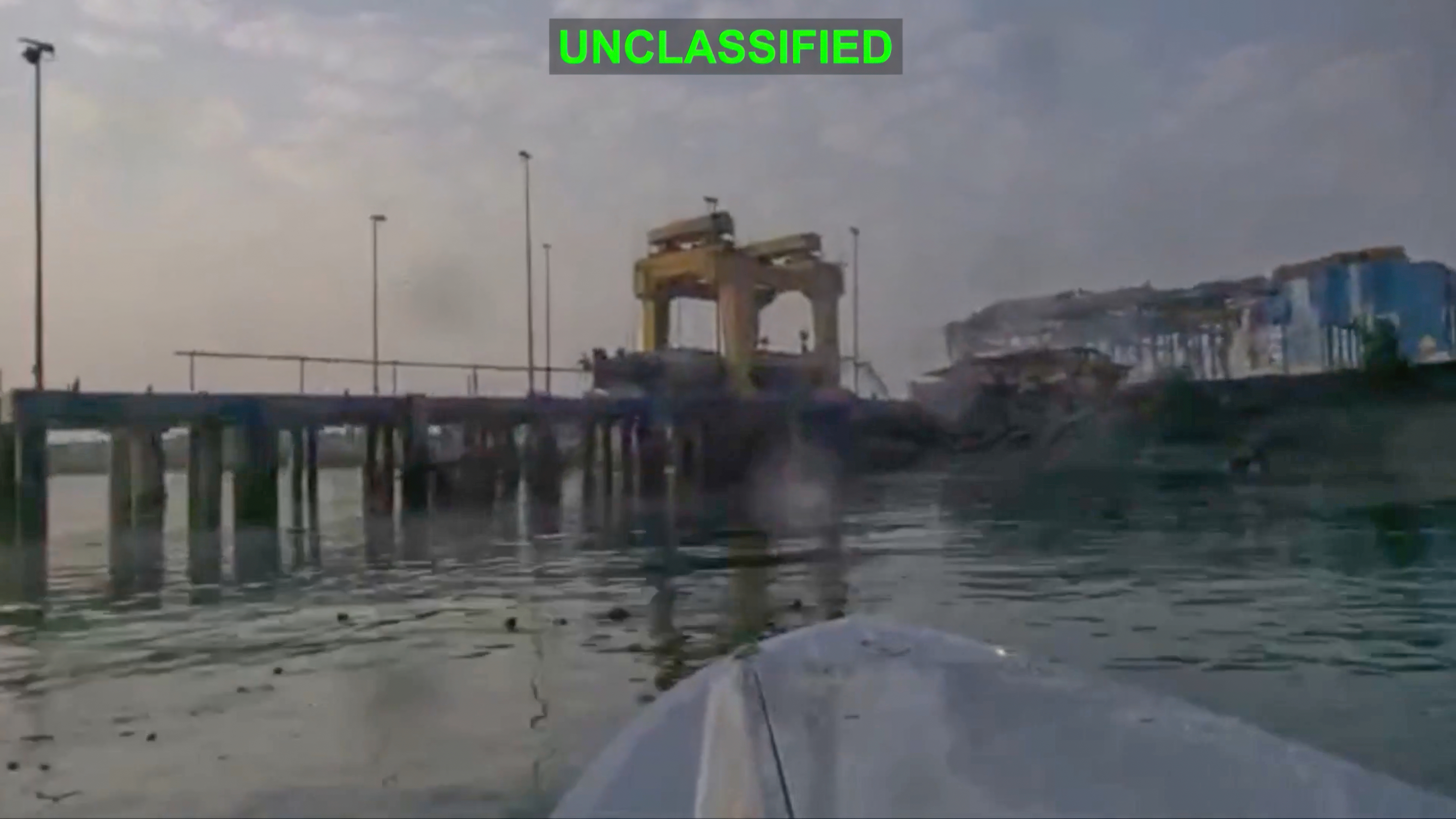
WASHINGTON/TEHRAN/ABU DHABI/RIO DE JANEIRO – The US Central Command (CENTCOM) has announced that more than 50,000 US service members are currently deployed across the Middle East as its forces have completed the latest wave of strikes on Iranian military targets.
The CENTCOM statement on X came as Iranian media reported on Tuesday that the US Fifth Fleet headquarters in Bahrain and a US military base in Jordan were hit by Iranian missile attacks. Two United Arab Emirates (UAE) tankers were also struck by Iranian cruise missiles, the Emirates News Agency reported, citing the Ministry of Defense.
Bahrain's Ministry of Interior said earlier in a statement that an air raid siren had been sounded in the country.
Separately, two UAE tankers were hit by two Iranian cruise missiles in the southern passage of the Strait of Hormuz in Omani territorial waters, leaving one crew member dead and eight others injured, reported the Emirates News Agency.
Explosions heard in Iran
Four explosions were heard east of the southern port city of Bandar Abbas on Monday night, according to Iran's official news agency IRNA.
The semi-official Tasnim news agency reported six explosions in the southeastern counties of Chabahar and Konarak in Sistan and Baluchestan province, adding the air defense system has been activated in Bandar Abbas.
Tasnim cited local sources as saying that a number of "violating" vessels have been targeted in the Strait of Hormuz.
ALSO READ: Iran's president says Tehran, Moscow reject unilateralism
However, the state-run IRIB news agency said that, despite reports circulating on social media, no explosions occurred Monday night in Bandar Abbas, the counties of Sirik and Jask, or the southern islands of Hengam, Larak and Qeshm.
Earlier in the day, Iran's Islamic Revolution Guard Corps said in a statement that the air defense of its aerospace division had shot down two LUCAS drones belonging to the US in southern Iran.
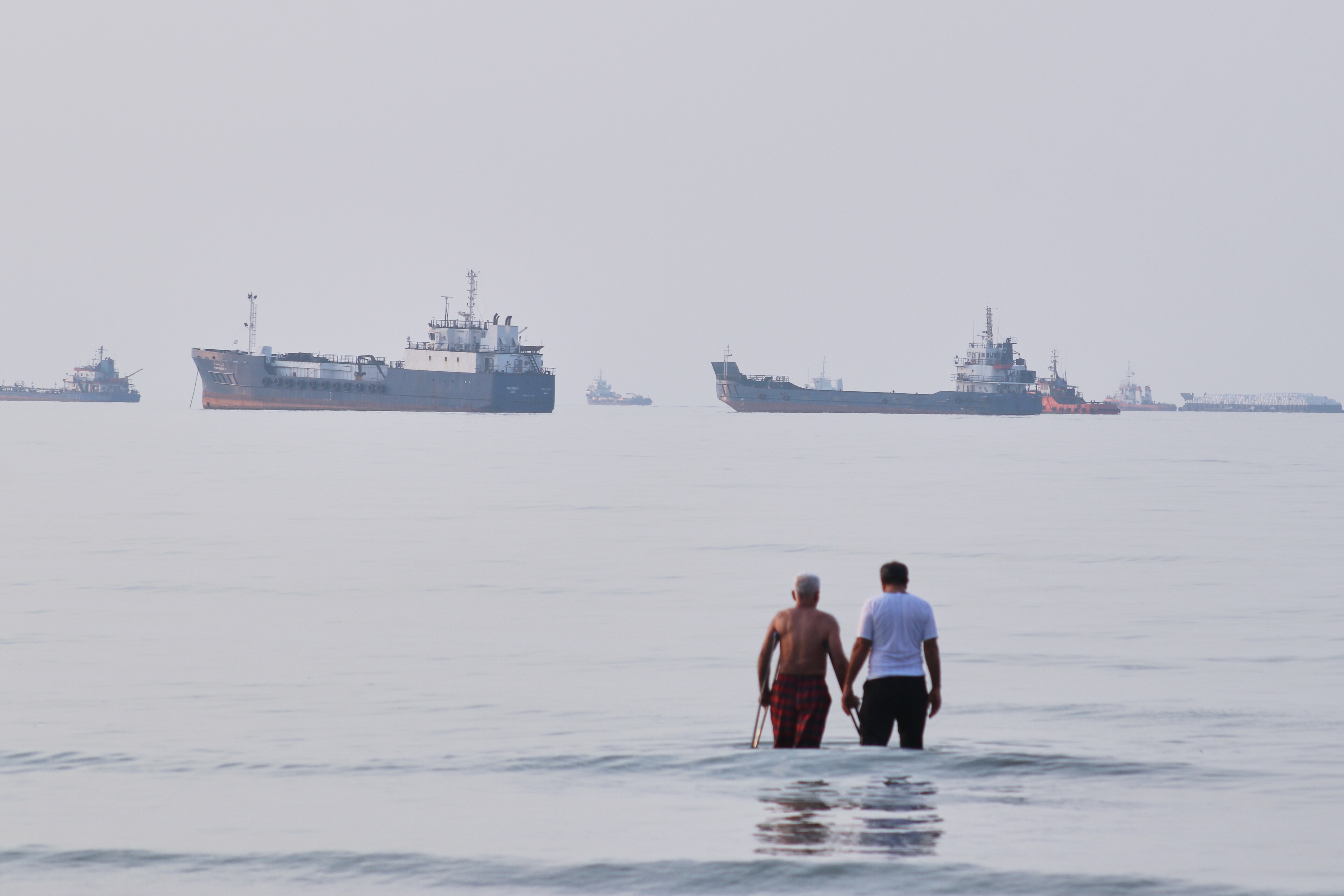
Iran: US actions in Strait of Hormuz jeopardize regional peace
Iranian Foreign Minister Seyed Abbas Araghchi said on Monday the US's "criminal and provocative" actions in the Strait of Hormuz have jeopardized regional peace and security.
Making the remarks in a phone call with Cypriot Foreign Minister Constantinos Kombos, Araghchi called on the international community to hold the US accountable in that regard.
He said the insecurity in the Gulf and the Strait of Hormuz is a direct consequence of the military "aggression" by the US and Israel against Iran.
Kombos, for his part, highlighted his country's concerns over peace and security in West Asia, underlining the need to pursue diplomacy to prevent escalation of tensions.
Also in a Monday post on social media platform X, Araghchi reacted to remarks earlier in the day by US President Donald Trump, who said the US will become the "guardian" of the Strait of Hormuz, and will be reimbursed "at the rate of 20 percent on all cargo shipped for any and all costs necessary to do the job of providing safety and security to this very volatile section of the world."
Iran vows to block US interference in Hormuz management
Meanwhile, Iran's main military command, Khatam al-Anbiya Central Headquarters, said Monday the country will in no way let the US interfere in the management of the Strait of Hormuz.
"The US adventurism" has "seriously jeopardized the security of the region, international trade and passage of oil tankers," Ebrahim Zolfaghari, the headquarters spokesman, said in a video message carried by Iranian media.
"We do not and will not, under any circumstance, allow the United States to interfere in the management of the Strait of Hormuz," Zolfaghar said, adding the Iranian armed forces remain ready to respond.
ALSO READ: China urges restoration of safe, free passage through Hormuz Strait
He warned regional countries that Iran considers any cooperation with the US and provision of logistical support to the US army as war against Iran's national sovereignty and security, saying that in case of the war's expansion, its flames will affect "all regional countries."

US Central Command to resume Iran port blockade
The US Central Command (CENTCOM) will resume blockading maritime traffic entering and exiting Iranian ports on Tuesday, the command said Monday.
"The resumption of the US blockade against Iran follows the initial implementation from April 13 to June 18," CENTCOM said in a post on X. "CENTCOM forces redirected more than 140 compliant vessels, disabled nine non-compliant ships, and allowed over 50 commercial vessels supporting humanitarian aid to pass through the blockade during the two-month period."
Trump notifies Congress of renewed action against Iran
Trump formally notified Congress that the US has resumed military operations against Iran, US media reported on Monday.
The notification letter, dated Friday, has raised questions about whether Trump can continue military operations without congressional authorization.
Congress has directed Trump to either end the war or seek approval to continue it, but he has maintained that he has the authority to make that decision.
Brazilian president slams Trump's Hormuz toll plan as 'piracy'
Brazilian President Luiz Inacio Lula da Silva on Monday criticized Trump's proposal to take control of the Strait of Hormuz and levy a 20 percent transit fee, calling it "piracy."
Lula made the remarks during a visit to laboratory facilities at the Maua Institute of Technology in Sao Paulo State, responding to Trump's earlier social media posts and television interviews, where the US leader claimed that the country would act as the strait's "guardian" and demand a 20 percent cargo surcharge for security.
"In the old days, this was called piracy," Lula said, noting that the US, a nation that has long combated piracy, should not turn into a pirate state itself.
The Brazilian president described the initiative to charge fees on maritime transit as neither democratic nor civilized, adding that it is "abnormal for someone to take advantage of a tragedy to make money" at the expense of others.
Lula strongly criticized the broader economic impacts of the US-led conflict on uninvolved nations, emphasizing how global tensions drive up local commodity prices. "The price of the war is reaching our beans, rice, and tomatoes," he said.
