

Annual production capacity of deep coalbed methane surges above 4 billion cubic meters in North China's Daji field
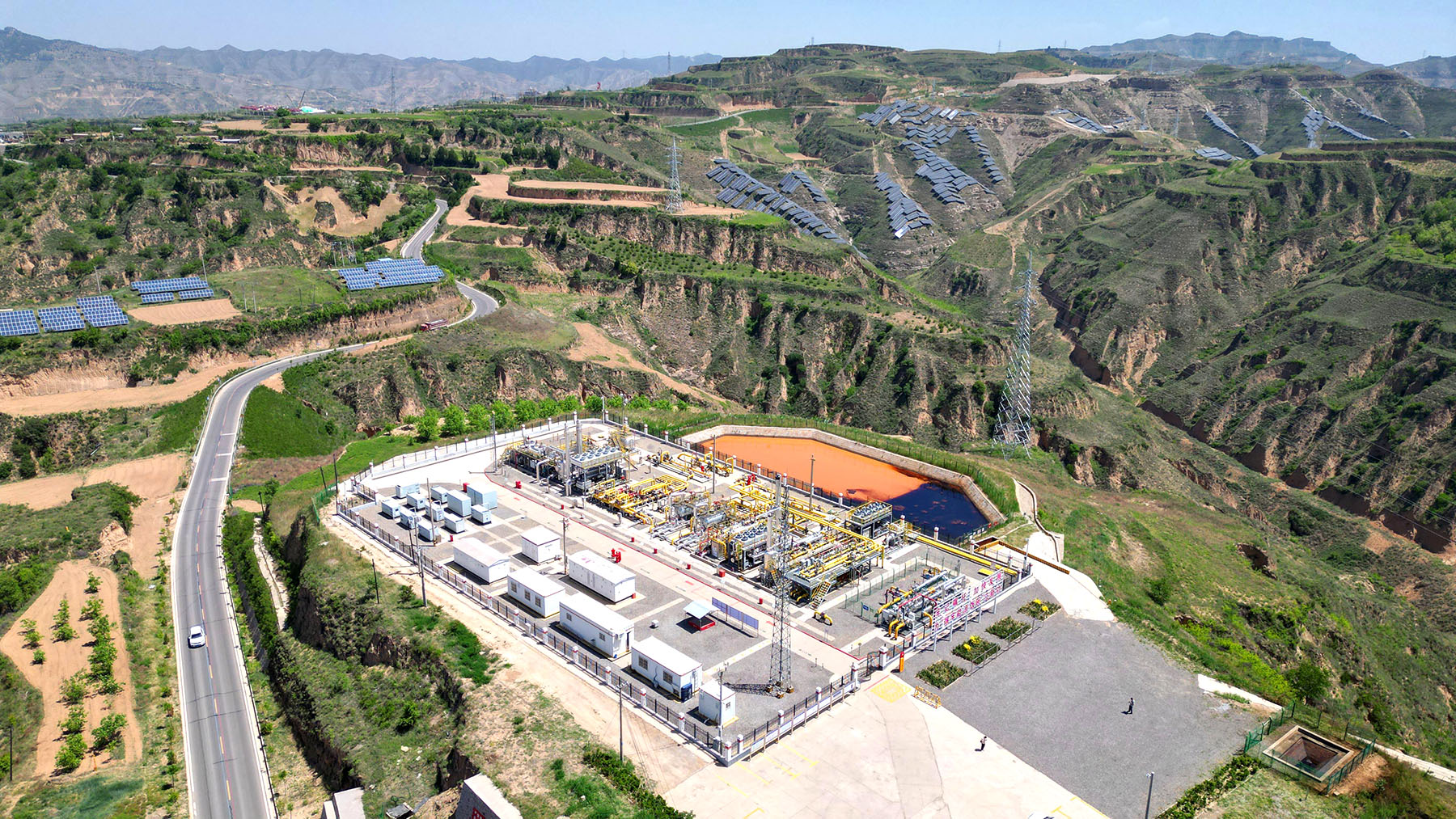
Defying long-standing global industry limitations, the Daji Gas Field in North China has achieved a historic milestone, pushing its annual production capacity past 4 billion cubic meters in March. Located on the eastern edge of the Ordos Basin in Shanxi province, the site now accounts for more than 80 percent of China's total deep coalbed methane output, according to PetroChina.
Deep coalbed methane is mined at depths exceeding 2,000 meters, and its large-scale extraction marks a massive technological leap.
Historically, the international oil and gas sector adhered to a strict technical "red line", where coal seams buried deeper than 1,500 meters were deemed off-limits for development. Anything below 2,000 meters was widely dismissed as the "forbidden zone within the forbidden zone", where poor physical properties and low gas content made commercial extraction impossible.
"The successful development of Daji Gas Field shattered these longstanding assumptions," said Chen Ming, manager of the Linfen Gas Production Management Area of PetroChina's Coalbed Methane Co.
When burned to generate electricity, coalbed methane produces roughly 50 percent less carbon dioxide than traditional coal.
READ MORE: China ramps up ultra-deep gas development
Despite intensified global exploration, China is the first country to achieve large-scale deep coalbed methane development, with industry standards being rapidly formulated that could eventually become international norms.
"Every extra meter drilled is a challenge to our limit," said Wang Wei, manager of the Exploration and Development Construction Branch of PetroChina's Coalbed Methane Co. To tackle the complex geological conditions of deep strata, PetroChina developed an integrated geological engineering guidance and 3,000-meter ultra-long horizontal drilling technologies, supporting the scaling up and efficient development of coalbed methane.
Coalbed methane is an unconventional natural gas resource and has vast exploration and development potential. With methane content ranging from 95 to 98 percent and minimal impurities, requiring only simple dehydration for use, it can be integrated into long-distance natural gas pipelines and urban networks.
Project beginnings
Established in November 2009, the Linfen Gas Production Management Area covers the old revolutionary districts of Daning, Yonghe, Jixian and Xixian counties in Linfen city.
Once deemed too deep for development, these rich coalbed methane resources were found to have significant development potential, accounting for nearly a third of the nation's proven reserves.
The area has become the most important natural gas production base in southwestern Shanxi, empowering the green transformation of traditional coal cities.
Zhang Lei, deputy chief geologist at PetroChina's Coalbed Methane Co, said that 16 new wells have been drilled in the Daji Gas Field this year, adding 250 million cubic meters of new production capacity, pushing daily gas output to over 11 million cubic meters — equivalent to a 3-million-metric-ton oil and gas field.
Research from the company indicates that China's coalbed methane geological resources could reach 50 trillion cubic meters, with the Ordos Basin alone holding over 25 trillion cubic meters.
"The large-scale development of the Daji Gas Field not only enriches the domestic clean energy supply but also effectively increases the natural gas self-sufficiency rate, reducing dependence on foreign sources and contributing to the construction of a strong energy nation," Zhang said.
The gas field's success owes much to the dedication of technical workers. In 2011, coalbed methane expert Sun Junyi and over 30 technical workers settled in the Daning-Yonghe block to commence exploration and development. For 15 years, they persevered on the Loess Plateau, initially targeting shallow coalbed methane at depths of 1,000 meters, only to face challenges of low output and high costs.
"The team broke away from traditional thinking, leveraging high-precision 3D seismic technology to extend exploration from the traditional 1,200-meter shallow layers to depths beyond 2,000 meters, akin to conducting a detailed CT scan of the strata," Sun said.
In 2019, the first coalbed methane well, Daji 3-7, achieved industrial gas flow.
Two years later, the block's newly proven reserves exceeded 112.1 billion cubic meters, and the Daji Gas Field was officially named, filling a global gap in deep coal resource development exceeding 2,000 meters. By December of that year, the Jishen 6-7 well's daily gas output surpassed 100,000 cubic meters, making it the world's first deep coalbed methane well to achieve commercial production at depths exceeding 2,000 meters.
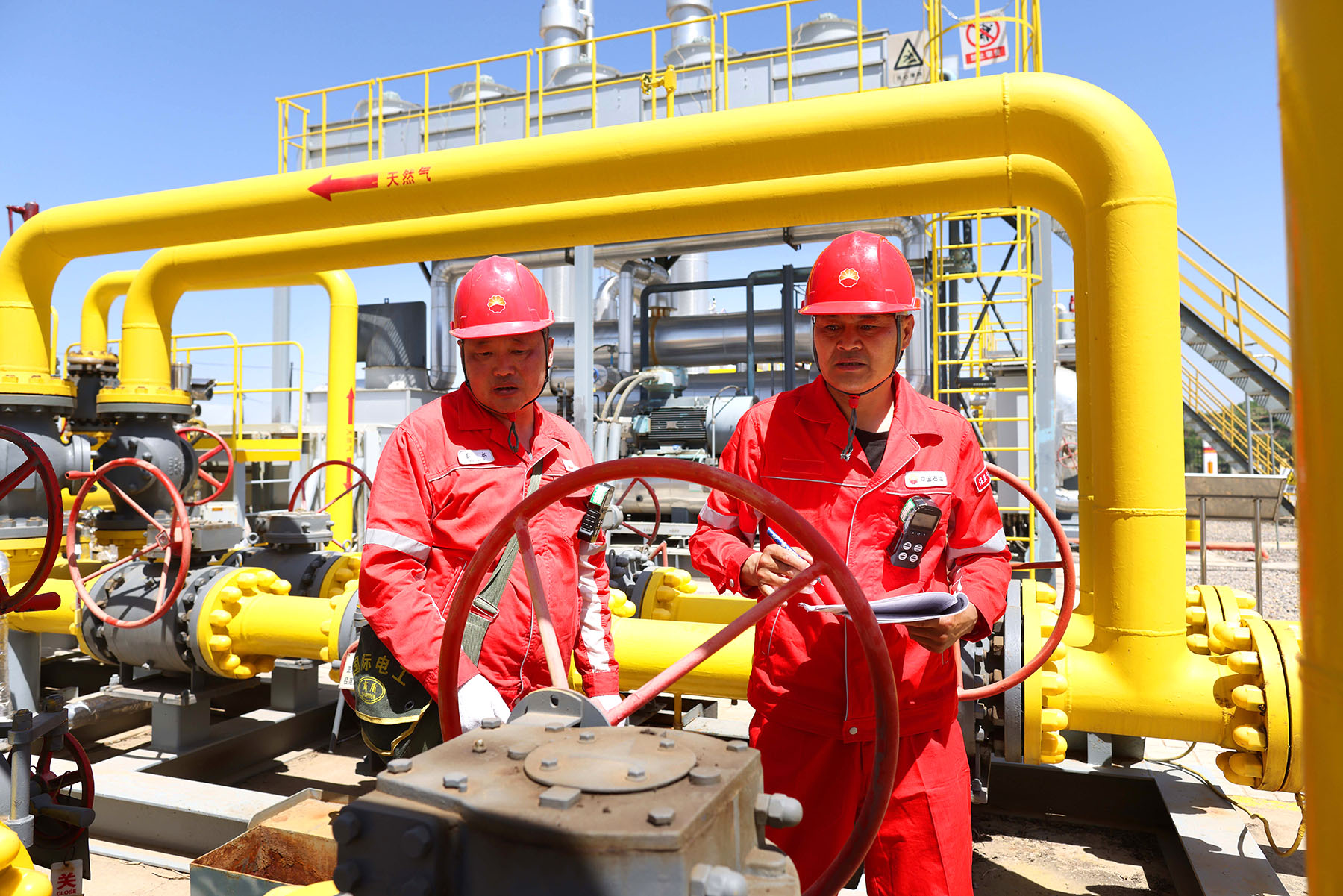
Zhang Gaixia, deputy director of safety at the Linfen Gas Production Management Area, has worked in the field for 16 years, meticulously crafting production plans, inspecting equipment and monitoring operational data with rigor and precision.
"In coalbed methane development, not a single data point can be off," he said. "Since the start of gas supply for last winter's heating season, the pipelines have carried not just natural gas, but also the public's expectations for a warm life."
The gas field has been established as a national demonstration area for deep coalbed methane development, with over 200 horizontal wells producing gas steadily. The natural gas produced not only meets local industrial and living needs but also flows through the West-East Gas Pipeline to the Beijing-Tianjin-Hebei region and North China.
ALSO READ: China, ASEAN to pool strength in blue economy
Production manager Chen said,"Gas extraction operations focus solely on gas, not coal, effectively avoiding surface subsidence issues and achieving a win-win for resource development and ecological protection."
The technical team is now tackling challenges to extend coalbed methane wells to reach 6,000-meter ultra-long horizontal sections to improve resource recovery rates and reduce unit development costs.
PetroChina said that by 2035, China's coalbed methane annual production is expected to reach 40-50 billion cubic meters.
Zheng Hongwei and Sun Zhefeng contributed to this story.
Contact the writers at zhuxingxin@chinadaily.com.cn
