

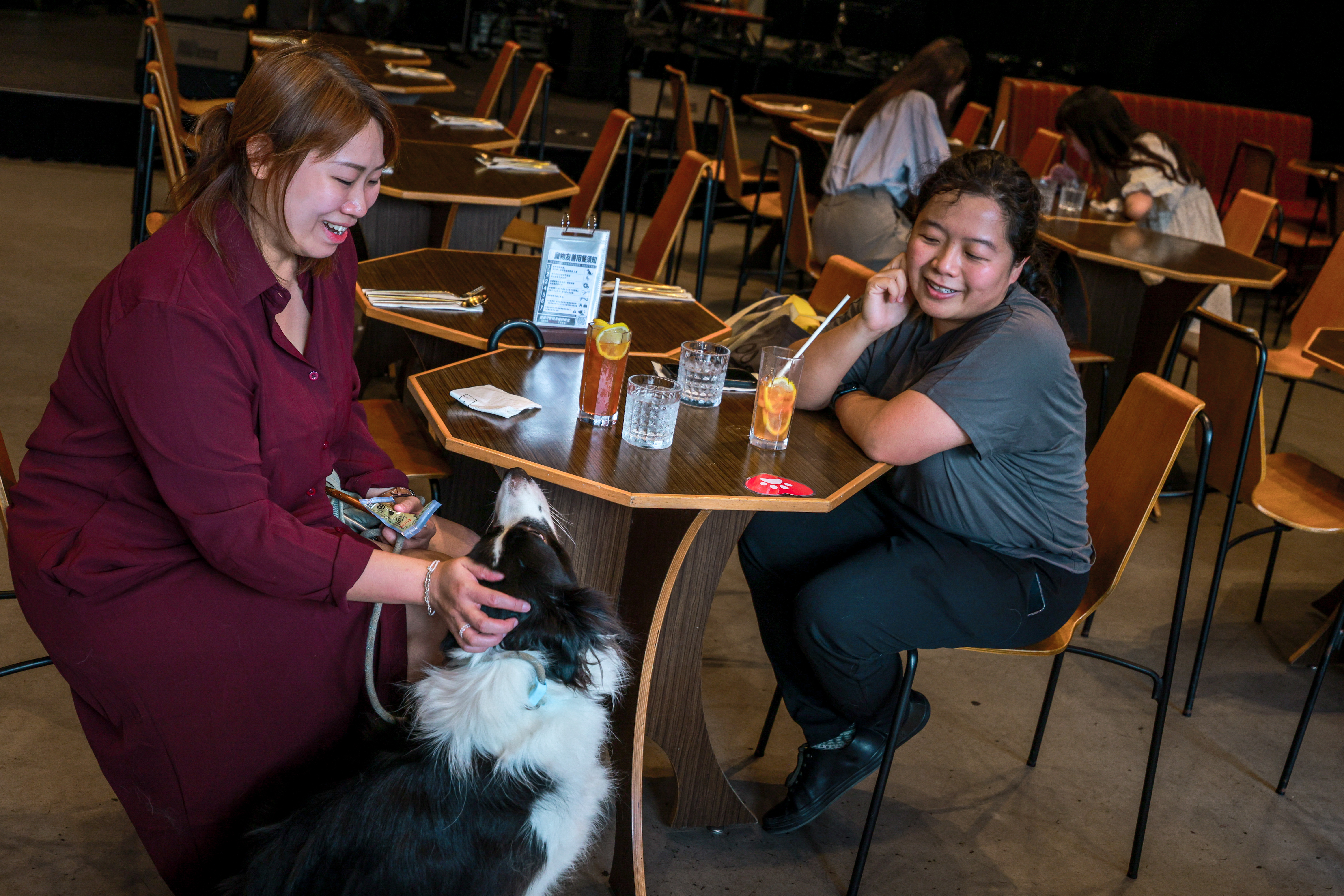
More than 940 eateries across Hong Kong have opened their doors to four-legged companions as of Thursday, as a regulatory relaxation officially allows eaters to bring their pet dogs into designated dining establishments.
Pet owners, customers and eateries have welcomed the new policy, with restaurant owners anticipating a revenue increase of up to 30 percent.
The move is part of the special administrative region government’s efforts to create a pet-friendly community and capitalize on the booming pet economy, as outlined in the city’s 2025 Policy Address.
During the initial phase of the program, 1,616 premises submitted applications from May 18 to June 8 for dog-friendly restaurant permits, with 940 getting approval.
Dog owners bringing their pets into these approved restaurants must adhere to the rules, including ensuring that the dog is held on a leash a maximum of 1.5 meters long by an adult, or is tied to a fixture on a leash.
Anyone flouting these rules will be liable to a maximum fine of HK$10,000 ($1,276), a daily fine of HK$300, or three months’ imprisonment.
RELATED ARTICLES
- HK to welcome dogs in restaurants with new license program
- Hong Kong's light rail pet-friendly scheme to go regular soon
- Invigorating city’s pet economy through comprehensive change
- Fur love’s pake
Restaurants must guarantee food safety and environmental hygiene, while providing necessary sanitization supplies.
Secretary for Environment and Ecology Tse Chin-wan, along with lawmaker representatives, visited a restaurant in the West Kowloon Cultural District on Wednesday to observe the policy’s implementation.
Tse said that the restaurant has made thorough preparations regarding sanitation facilities and seating arrangements, and that pet owners have been actively cooperative.
He said the new measure is a two-way selection for both eateries and the public. Restaurants can decide whether to apply for the permit based on their business considerations, and customers can choose whether to visit a pet-friendly venue or not.
Following his field visit, Tse said that promoting a culture of human-pet inclusivity requires a “step-by-step” approach, adding that the second round of permit applications will open in six months.
Lawmaker Kitson Yang Wing-kit, who is also vice-chairman of the Legislative Council’s Panel on Food Safety and Environmental Hygiene, said he is personally afraid of dogs but joined the visit to the restaurant to evaluate its arrangements for those who are not dog owners or those who fear “paw pals”.
After the visit, Yang praised the harmonious and quiet dining atmosphere, saying that the clear partitions allow those uncomfortable with dogs to “sit a bit further away” and dine in peace.
The joy of human-pet harmony found strong resonance among pet owners. One customer said they previously had to opt for takeout or dining outdoors when spending time with their dogs.
“Now, we can come inside,” the customer said with excitement.
A pet owner surnamed Wong visited the restaurant with her dog. The venue provided small bowls specifically for dogs to eat from, as well as pee pads on the floor.
Wong said that it is “not too difficult to cope” with the requirements, viewing them as natural responsibilities for pet owners.
She said she is “very happy” with the current policy but added, “In the long run, we naturally hope that more places will become accessible.”
Ball Mak, the restaurant manager, said that about one-third of the seating will be allocated to pet owners, a move he expects will boost turnover by 20 to 30 percent.
Mak acknowledged that an increase in costs after the policy’s implementation is inevitable, as the restaurant needs to install fixtures to secure dog leashes, procure corresponding supplies, and train employees.
“But that doesn’t matter. We just hope the policy can run more smoothly and stimulate consumption,” Mak said.
Roys Zhang contributed to the story.
