

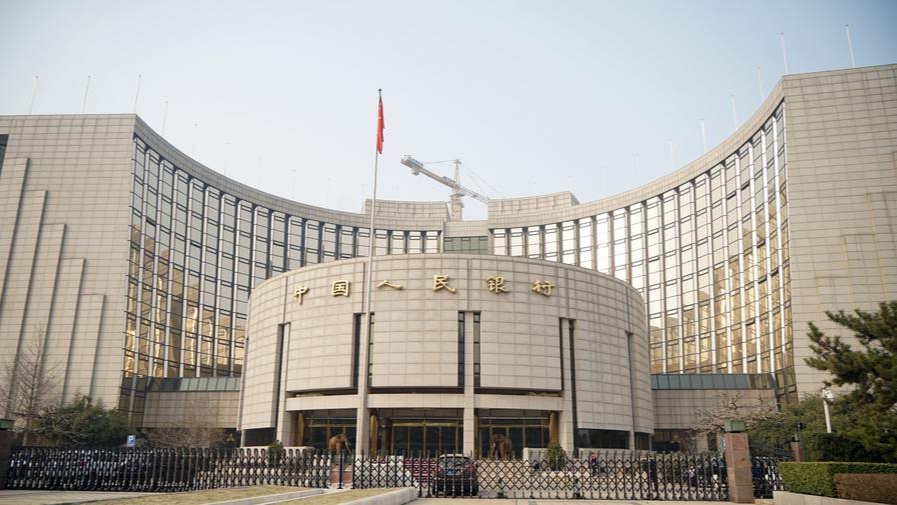
The central government unveiled a raft of new measures to consolidate and develop the Hong Kong Special Administrative Region into an international financial center, including increasing the annual investment quota for the southbound Bond Connect from 500 billion yuan ($73.5 billion) to 800 billion yuan and considering issuing central bank bills in the SAR on a regular basis.
The new measures aim to deepen financial cooperation between Hong Kong and the Chinese mainland, as well as support the development of Hong Kong’s fixed income and currency (FIC) market and offshore renminbi business.
“Regarding further enhancing and expanding the southbound Bond Connect, new measures will be introduced, such as increasing the annual investment quota, developing the bond repurchase (repo) business using southbound Bond Connect bonds as collateral, expanding the product scope to cover products with Hong Kong dollar bonds and renminbi-denominated bonds as underlying assets, connecting to the Macao bond market, and enhancing the management of southbound Bond Connect market makers,” People’s Bank of China Governor Pan Gongsheng told the Hong Kong Fixed Income and Currency & Bond Connect Summit in Hong Kong on Tuesday.
ALSO READ: Hong Kong launches trial run of gold central clearing operation
The summit, organized by the Hong Kong Monetary Authority, the Securities and Futures Commission, Hong Kong Exchanges and Clearing and Bond Connect Company, focuses on what kind of opportunities the evolving global FIC landscape can bring to the city’s bond market ecosystem.
The enhancement measures include supporting the collaboration of financial infrastructure institutions in Hong Kong and the Chinese mainland to develop a Hong Kong FIC electronic trading platform.
Pan said the PBOC — the country’s central bank — will consider issuing central bank bills in Hong Kong regularly and support the Ministry of Finance further to increase the issuance scale and the maturity of offshore renminbi sovereign bonds. He also said the country’s foreign exchange reserves will increase the proportion of assets allocated to Hong Kong in the future.
Hong Kong Financial Secretary Paul Chan Mo-po said the SAR government will enrich the offshore renminbi product ecosystem; strengthen the clearing, settlement and risk management infrastructure; and deepen market liquidity for promoting offshore renminbi business.
“More economies and market participants will use their own or regional currencies where it makes commercial and financial sense to do so. Countries and companies are looking for more options in clearing, settlement and financing to reduce concentration risk, manage external shocks, and improve cost and efficiency,” the finance chief said at the summit.
READ MORE: HKEX IPO fundraising in H1 surges 92% y-o-y
The HKMA will increase its total renminbi business facility size from 200 billion yuan to 500 billion yuan and extend tenors to include nine-month, two-year and three-year options, effective on Friday.
“We will also explore introducing a tendering mechanism of seven-day offshore renminbi liquidity, and the issuance of offshore renminbi short-term debt instruments to support the building of the offshore renminbi yield curve,” HKMA Chief Executive Eddie Yue Wai-man said on the sidelines of the summit.
SFC CEO Julia Leung Fung-yee outlined three key areas for development in the FIC market in Hong Kong — developing an FIC trading platform, expanding the application scenarios for fixed income products as collateral and providing more risk management tools.
