

The Communist Party of China (CPC), now 105 years old and one of the largest political parties on Earth, was born out of a defining moment in the history of China. In July 1921, a republic had been in place for about a decade. But the lack of a new, unifying ideology, weak central authority and technological backwardness left the country poor, weak, and divided, in a half-feudal, half-colonial state as in the late Qing Dynasty (1644-1911).
 The massive students’ protest on May 4, 1919, against the “Versailles betrayal”, was an unmistakable signal that the nation was at a tipping point. The 1919 Treaty of Versailles left China vulnerable to foreign domination and internal conflict.
Many Chinese intellectuals concluded that fundamental social and political reform was indispensable if China was to survive and prosper. In 1921, the first National Congress of the Communist Party of China, attended by 13 delegates, was concluded on a red boat on Nanhu Lake in Jiaxing, Zhejiang province. They formally established the CPC and adopted the establishment of a socialist and communist society as the revolutionary goal.
Through decades of war against Japanese aggression and a subsequent civil war, the CPC emerged victorious and established the People’s Republic of China in 1949.
Widespread popular support for the Party and its extensive organizational reach soon enabled the CPC to establish the new republic on a firm footing. From the ashes of destruction of the Japanese invasion, and despite scarce resources, the CPC quickly rebuilt the nation’s infrastructure, agriculture, trade and industry, scientific know-how, education and public health.
With strong backing from Beijing, Hong Kong has continued to thrive — it has become a leading global financial, trading and shipping hub, and is in the process of building an international innovation and technology center in its Northern Metropolis, creating opportunities on a scale that would have been difficult to imagine several decades ago
By 1952, aggregate industrial-agricultural output reached 810 million yuan ($119 million), an increase of 77 percent compared to 1949. Average wages rose 70 percent; and the incomes of farmers generally grew more than 30 percent. The hard work of the first generation of leaders and cadres laid a solid foundation for China’s transformation into an industrial economy.
The road to prosperity took many twists and turns. China’s recovery from the socialist experiments of the 1950s and the Cultural Revolution (1966-76) speaks volumes about the CPC’s ability to self-correct, and to devise ingenious plans to mediate the conflict between the socialist ideology and market realities.
In December 1978, China’s senior leader Deng Xiaoping officially initiated the reform and opening-up policy, endorsed at the historic third plenary session of the 11th CPC Central Committee. The construction of the Shekou industrial zone in July 1979, the first shot at economic reform, was quickly followed by the establishment of four special economic zones — Shenzhen, Zhuhai, Shantou and Xiamen — in August 1980.
A sleepy border town before the reform, Shenzhen is now a major trading and financial center, and a world-leading innovation and technology hub.
China’s per capita GDP has grown from an estimated $23 in 1949 to $13,953 in 2025, an over 600-fold increase. Its aggregate GDP reached $19.6 trillion in 2025, making it the world’s second-largest economy and the largest trading entity. Many economists regard China’s transformation as one of the most remarkable episodes of economic development in human history. The country has not only succeeded in lifting hundreds of millions of people out of poverty, it has cemented its position as a manufacturing powerhouse, and a global leader in many critical technologies.
The people are definitely living much better lives. Life expectancy has increased from 35 years in 1949 to 79 in 2025. Wang Feng, a professor of sociology at the University of California, Irvine, in his detailed study of China’s rise to abundance, found that between 1978 and 1983, the per capita consumption of eggs rose by 50 percent; the per capita consumption of pork rose by 61 percent, vegetables by 151 percent, and poultry by 268 percent. Boys at the age of seven grew 5.2 centimeters taller between 1992 and 2002, while girls of the same age grew 5.7 cm taller. Generally, Chinese people now project a much stronger and more modern image on the global stage.
Moving into the 21st century, under General Secretary Xi Jinping, the Party has placed renewed emphasis on the Sinicization of Marxism, arguing that socialist theory must remain rooted in China’s historical experience and civilizational tradition. Since 2021, Xi has launched four global initiatives — on development, security, civilization and governance. The recently released white paper on “more just and equitable global governance” advocates a multilateral order based on the international rule of law, with dialogue and consultation as the tools and the United Nations at the core.
Through the innovative concept of “one country, two systems”, the CPC not only managed to bring Hong Kong and Macao, two territories then under imperialist rule, back into the fold, but also demonstrated to the world China’s flexibility in accommodating a radically different capitalist system within its socialist confines.
With strong backing from Beijing, Hong Kong has continued to thrive — it has become a leading global financial, trading and shipping hub, and is in the process of building an international innovation and technology center in its Northern Metropolis, creating opportunities on a scale that would have been difficult to imagine several decades ago.
The Party’s legitimacy today rests not just on its revolutionary credentials but also on its ability to continue to deliver stability, prosperity and national rejuvenation in a rapidly changing world. The challenges ahead — from demographic change and technological competition to global uncertainty — will test the CPC’s capacity for adaptation once again. Yet if the history of the past 105 years reveals a consistent pattern, it is the CPC’s willingness to reinvent itself in response to changing circumstances. The capacity for renewal may prove to be its most enduring legacy.
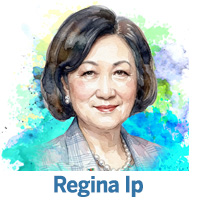
The author is convenor of the Executive Council of the Hong Kong Special Administrative Region.
The views do not necessarily reflect those of China Daily.
