

Editor’s note: As July 1 — the 105th anniversary of the Communist Party of China’s founding and the 29th year of Hong Kong’s return to the motherland — approaches, China Daily spoke with several Dongjiang Column fighters and their descendants. In their quiet recollections, the courage of that era still feels close — and still relevant.
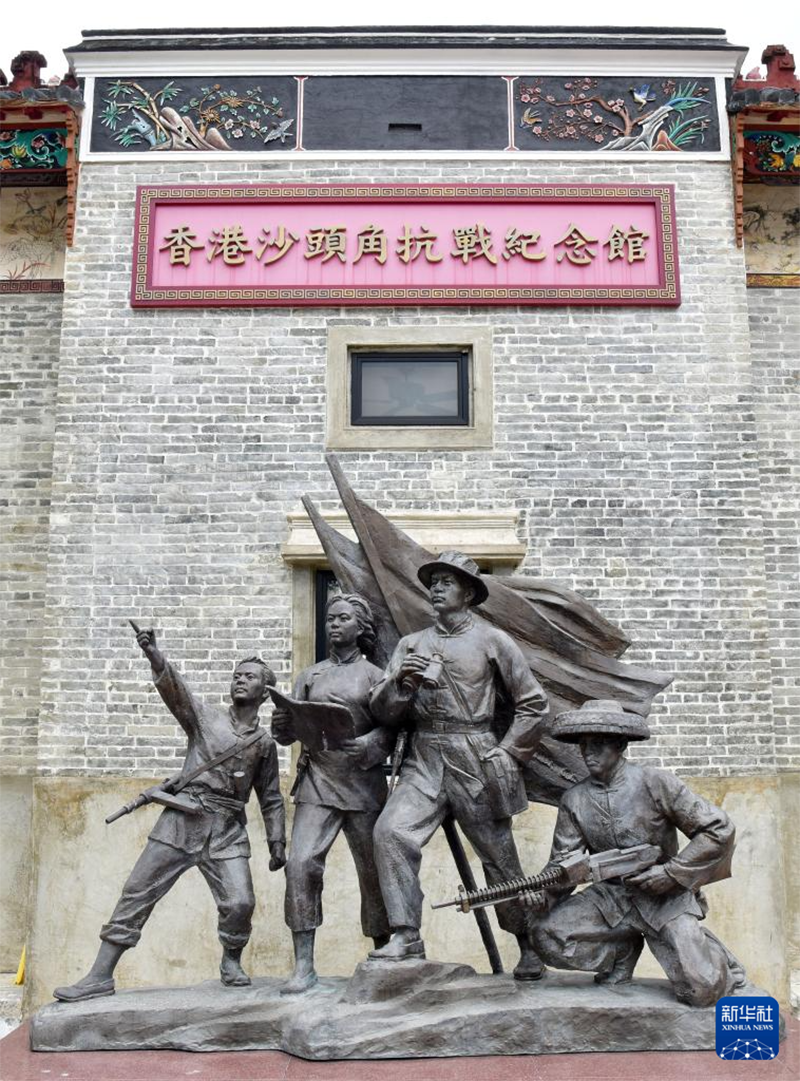
Nestled in Hong Kong’s northern frontier town of Sha Tau Kok, an old family home — nearly a century old and spanning around 500 square meters — has drawn 130,000 visits since 2022.
When visitors step back out, they leave with a far richer appreciation of the city’s valiant struggle during the Chinese People’s War of Resistance Against Japanese Aggression (1931-45).
It was Wong Chun-hong’s ancestral home, and from this house, his mother and 10 other members of the Law clan went off to join the resistance led by the Communist Party of China (CPC) against Japan’s occupation of Hong Kong.
READ MORE: Son of war hero strives to keep HK’s wartime resistance alive
In September 2022, the venue was reborn as the Hong Kong Sha Tau Kok Anti-Japanese War Memorial Hall, an anti-war museum dedicated to telling the history of the Hong Kong-Kowloon Independent Brigade. Under the command of the CPC-led Dongjiang (East River) Column, the brigade was a guerrilla force formed to oust the Japanese invaders during World War II.
In the lead-up to July 1 — marking the 105th anniversary of the CPC’s founding and the 29th anniversary of Hong Kong’s return to the motherland — Wong, 71, who is also the museum’s director, told China Daily that he will keep on preserving the wartime legacy and champion wider historical awareness.
His goal is that “in times of peace, the people of Hong Kong can develop a deeper appreciation for the sacrifices of earlier generations and a stronger dedication to the nation’s future progress”.
“There’s no better way to build our nation than upholding peace and honoring those who came before us,” Wong said.
When asked for the single most definitive description of his forebears, Wong said: “They were, above all else, proud members of the Party.”
Wong grew up listening to his elders’ recollections of those pivotal times — lives he now describes as those of “idealistic, principled, educated youths”, who followed the CPC’s lead because they saw its wartime commitment to the nation and its people, and admired its “clean, unyielding moral” character.
Two of Wong’s uncles joined the CPC on the Chinese mainland before Japan attacked Hong Kong, at a time when word of the invaders’ atrocities had already spread across the country, most horrific among them being the Nanjing Massacre, when Japanese troops ran amok in December 1937, taking more than 300,000 lives over several weeks.
“It made them aware of what was happening,” Wong said. “And that was all it took for them to join the resistance.”
The CPC-led guerrilla formations were the sole armed force that “fought from start to finish” during Japan’s three-year-and-eight-month occupation of Hong Kong — an effort Wong called the “mainstay of the city’s resistance”.
The Law clan was at its forefront. Late on Dec 8, 1941 — the opening day of Japan’s assault on Hong Kong — one of Wong’s uncles, a CPC member, led a dozen armed fighters to their family home in Sha Tau Kok and established the very first local anti-Japanese guerrilla base.
In time, eleven members of this family joined the CPC-led resistance, known as simply “Hong Kong’s family against Japanese aggression”.
Yet, the Law clan’s efforts were only a fraction of a broader groundswell of Hong Kong people united in active resistance.
The Hong Kong-Kowloon Independent Brigade was formed on Feb 3, 1942. By the summer of 1943, it had grown to some 800 fighters, with guerrilla strongholds scattered across the city.
A continuing legacy
Today, Wong said he is by no means working alone in his steadfast undertaking of documenting the experiences of war survivors and promoting history and patriotic education in Hong Kong.
He recalled that during the Chongyang Festival of 2017 — an occasion when Chinese families traditionally pay tribute to their ancestors — the Law descendants gathered and collectively resolved to donate their ancestral property to be used as an anti-war memorial and educational platform.
Wong took the lead in fundraising for the memorial hall’s construction, raising more than HK$28 million ($3.6 million).
He personally donated more than HK$15 million. But what “touched him most”, he said, were the donations from members of the Society of Veterans of the Original Hong Kong Independent Battalion of the Dongjiang Column.
“They chipped in whatever they could afford — hundreds, or thousands — and together they raised more than HK$100,000,” he recalled. “So many were donations from the old veterans of the brigade.”
Since opening in 2022, the memorial hall has recorded more than 130,000 visits, over half of which were from young school pupils. Last year, on the 80th anniversary of the victory in the War of Resistance, the museum’s collections were exhibited in Guangzhou, Guangdong province, attracting over 450,000 visitors.
ALSO READ: A son’s mission: keep Dongjiang Column’s spirit alive
Wong views the artifacts on display and the personal accounts of war survivors as “living history” — immediate, authentic resources that hold substantial educational value for fostering a greater sense of national belonging.
He added that patriotic education in Hong Kong has improved since its return to the motherland, with systematic enhancements to history curricula across schools of all levels.
“The city’s Education Bureau is promoting Chinese history and patriotic education with a level of effort never before seen in the city,” Wong said.
Hong Kong Chief Executive John Lee Ka-chiu, in his Policy Address, pledged to optimize the senior secondary history curriculum. The revised framework highlights a deeper understanding of the “one country, two systems” principle, with greater emphasis on modern Chinese history — including the founding of the CPC, the establishment of the country, and Hong Kong’s return to the motherland.
Wong revealed that the memorial is now working with a professional team to produce short films using AI — blending animation with real wartime footage, tailored to different age groups — in hopes of bringing the story of the brigade closer to today’s young people.
Contact the writers at gangwen@chinadailyhk.com
