

Fascinated by deserts and having a fondness for taking the tougher path, photographer releases a book about his adventures, including finding an unconventional protein source, Yang Yang reports.
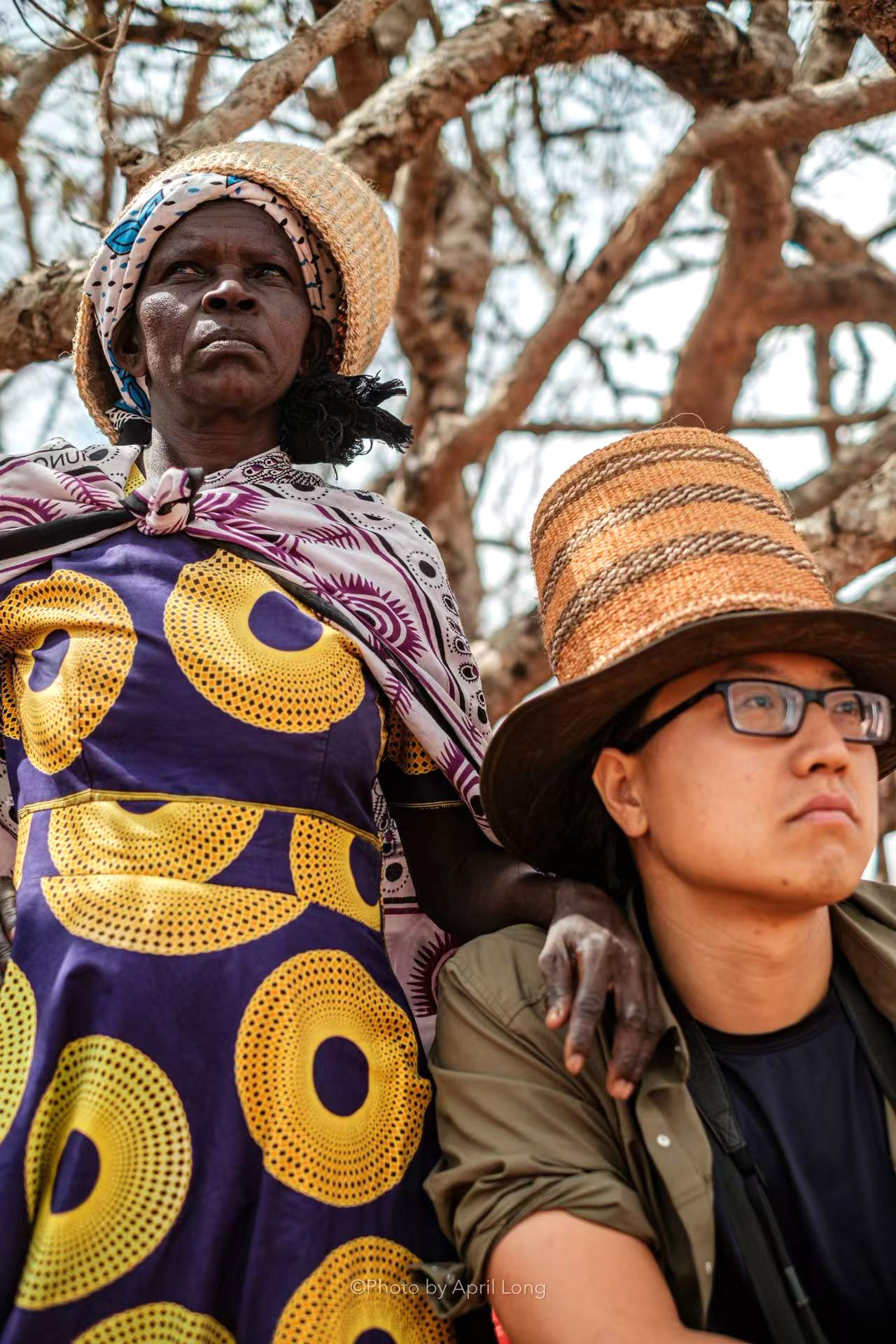
Driving from Lake Turkana in northwestern Kenya on the afternoon of Sept 14, 2021, 37-year-old Qi Lin and his assistant, 25-year-old Martin, reached their destination:Lake Kisima, a seasonal soda lake that often experiences periods of dryness. After nibbling on some corn, they decided to check the meat they had brought, only to find an army of white maggots wriggling on the surface of the mutton they bought two hours earlier.
Failing to get rid of the maggots by knocking the meat on a stone, they cooked the mutton with some cabbage and ate it.
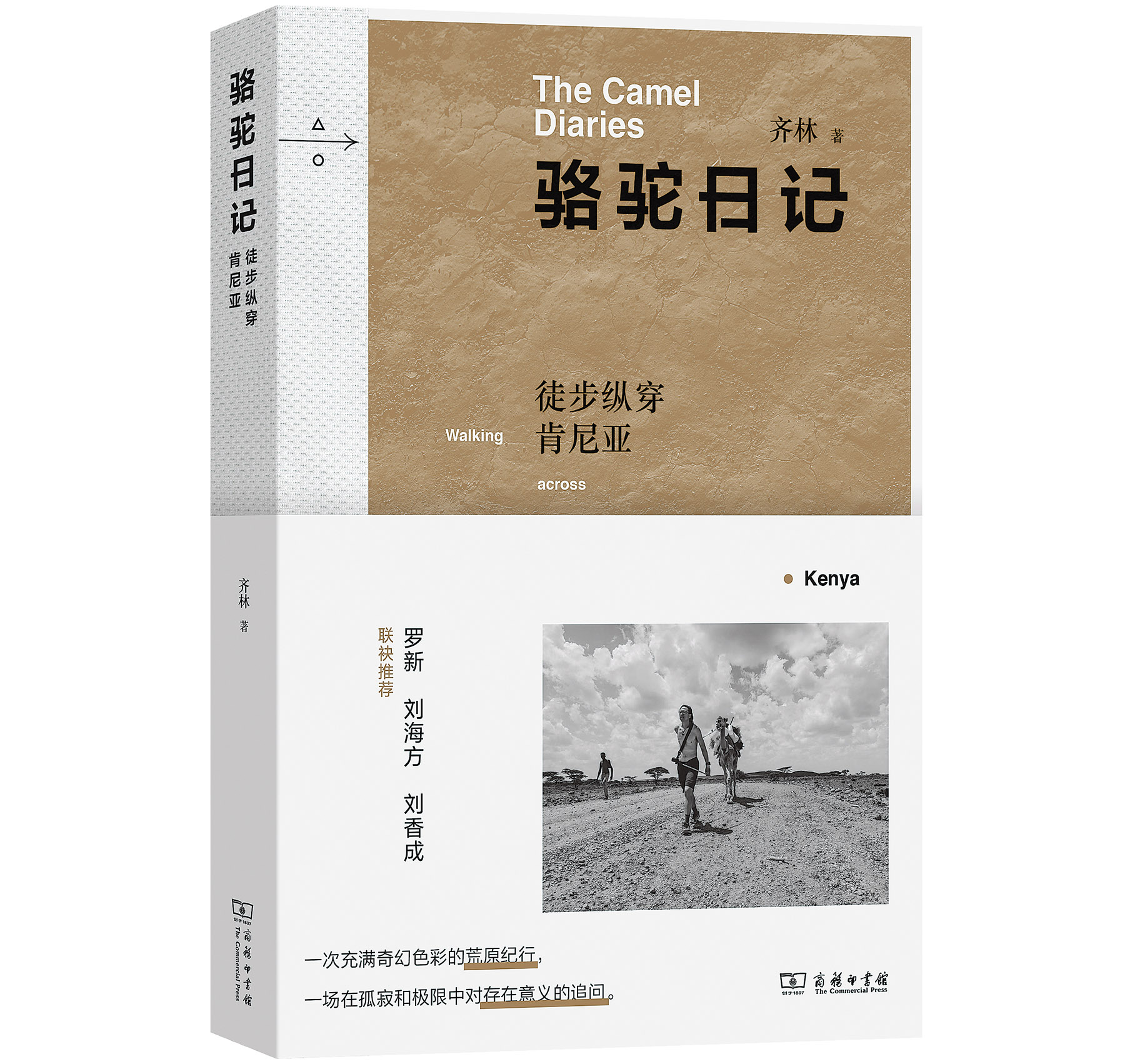
In his newly released book The Camel Diaries, Qi recorded this impressive excerpt from his 701-kilometer journey on foot north along the eastern side of the East African Rift.
"Maggot is protein, good stuff," he says very seriously.
"Some people might wonder how I can eat it, but my perspective might be completely different. When you're on a journey with nothing good to eat, and suddenly you find some animal protein, having a bit of meat or fat, even if it's not the freshest, is a joy," he says.
"You have to be grateful. Today, you have something to eat, even if it's maggots."
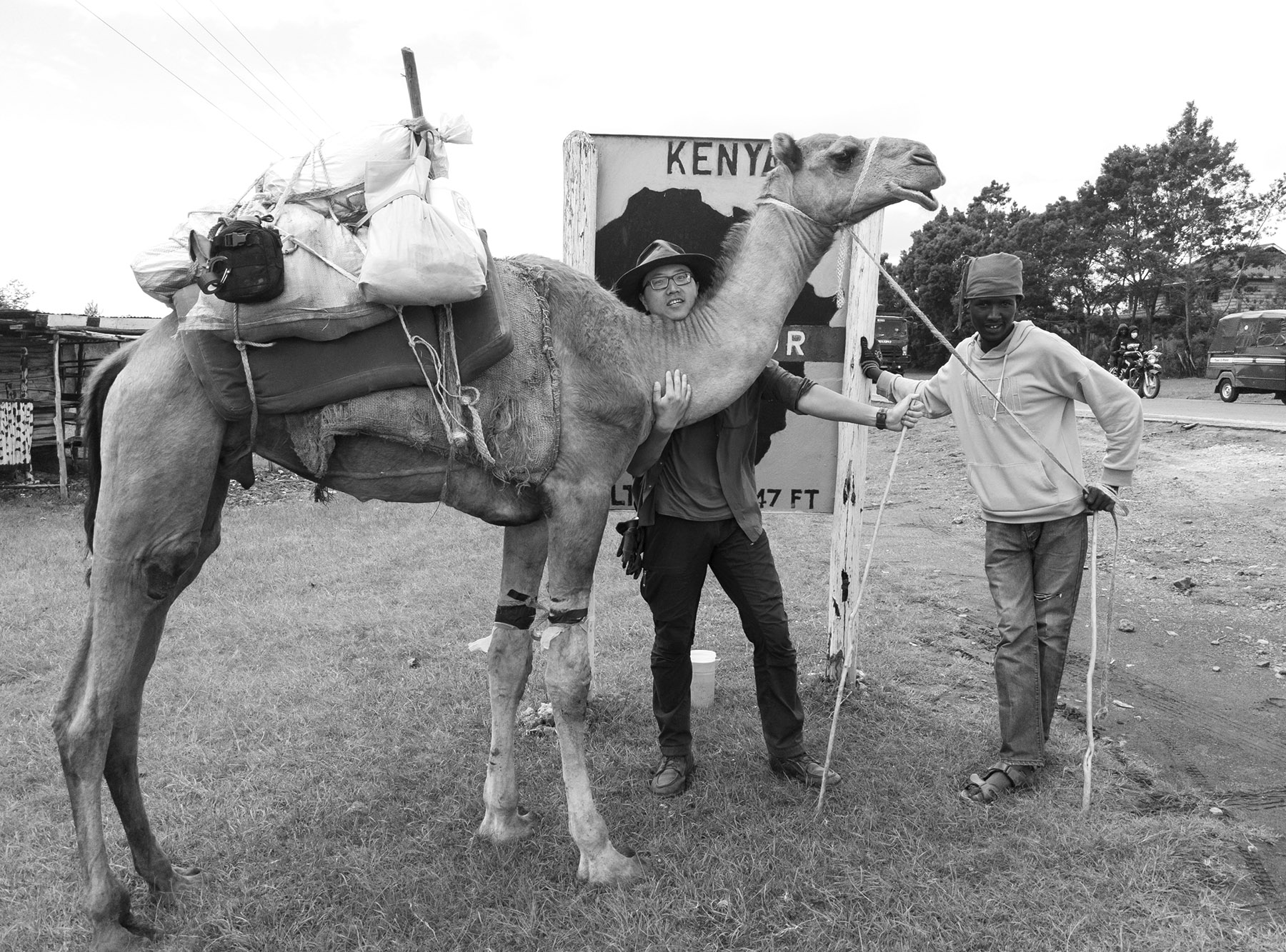
The Camel Diaries records the journey that began in September 2021 and ended in November of the same year. Qi, Martin, and their 3-year-old camel, Kipesh, crossed the equator and highlands, navigating diverse landscapes such as elephant forests and savannas until they reached Lake Turkana, known as the "Cradle of Humankind". From the lake, they circled Mount Kulal and ventured into the harsh desert wilderness.
It's a hard journey not only for humans but also for camels. Usually, to travel such a long distance, one person needs four camels to take turns carrying 50 kilograms of water, food, cooking equipment, tents, and more.
"My budget was very limited, so I only got one camel. For such a long-distance travel in the desert, a camel's carrying limit is 70 kg," he explains.
When they reached Lake Turkana, Qi had lost 10 kg. The camel weighed 100 kg and was in a dangerous condition.
Qi learned that when a camel dies, it often shows no warning signs. It might just tilt its head and collapse, or it might not get up after sitting down to rest. Therefore, he let the camel rest for over 20 days because the upcoming journey into the Chalbi Desert would be even more challenging, with less food and water.
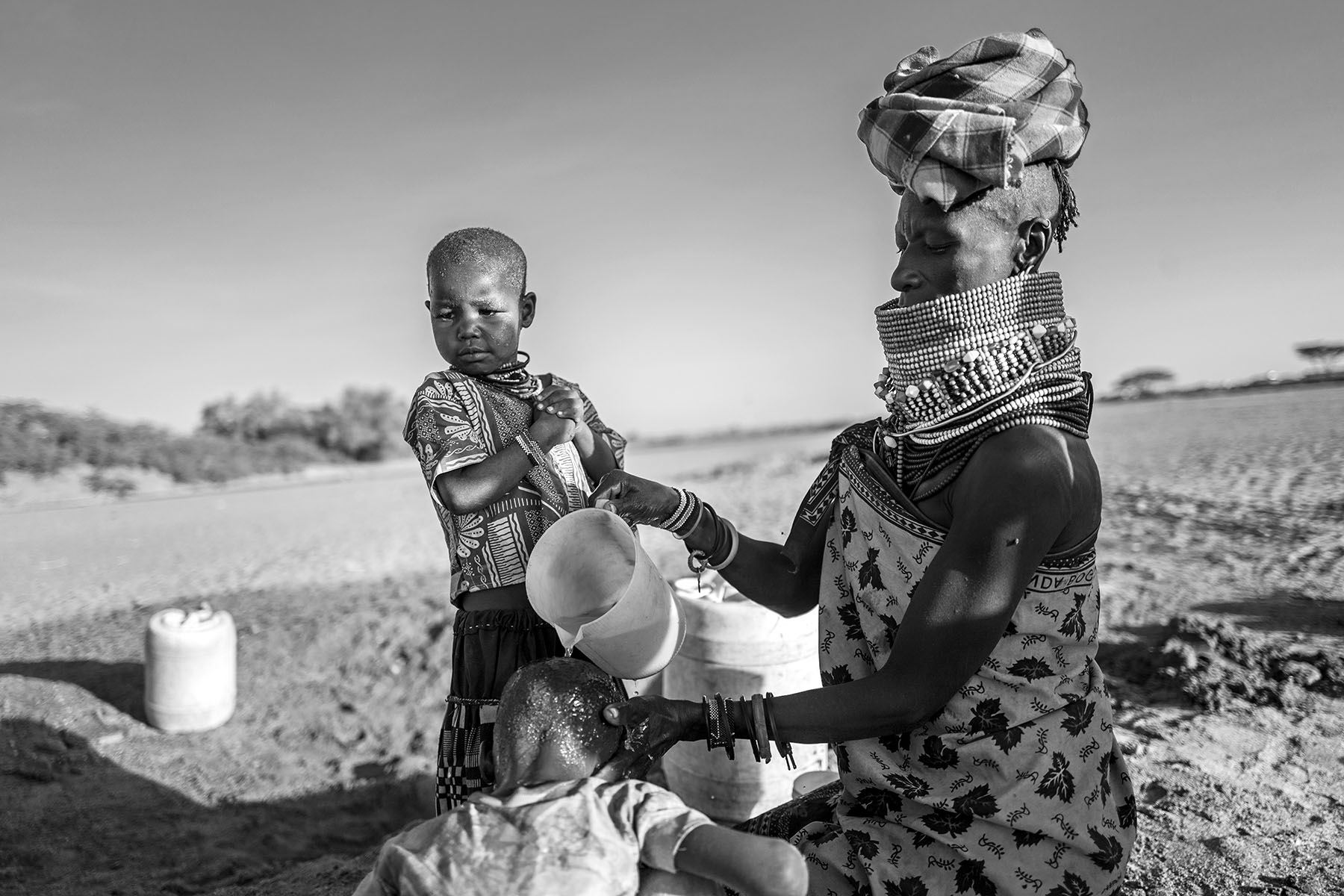
As expected, the Chalbi Desert became the hardest part of the whole journey, more dangerous than the place where they were surrounded by armed local people in tribal conflicts, or later, when the camel was robbed. It is a desert where Qi gained a direct understanding of the impacts of climate change. In the remote nomadic desert town of Maikona on the northern edge of the Chalbi Desert, a 4-year-old girl had never seen rain.
Traveling on foot, with a camel carrying all the necessities, the desert was still very challenging to traverse. Though Qi only mentioned it briefly in the book, he says, "I was probably on the verge of heatstroke (several times). My mouth felt numb, there was a metallic taste, and I started hallucinating."
At the end of each day, after walking 30 to 40 km and overcoming many difficulties, Qi finally set up his tent, often with low blood sugar, and wrote in his diary on his cell phone, which had a broken screen, then posted it on WeChat.
"My diaries are kept in a simple manner, without many thoughts running through my mind," Qi says, explaining his writing style.
"What mattered to me at that moment was survival. It might sound a bit exaggerated, but when I say I survived, I don't mean I was on the brink of death every day. It's more about having worked so hard and traveled such a long path, I finally have a place where I can catch my breath," he says.
Through this ascetic journey, Qi emerged not only from the dangerous deserts of northern Kenya but also from the lowest point of his life.
Qi's family has a tradition of working abroad. His grandfather was a doctor on the first Chinese medical team sent to Somalia. His mother, also a doctor, was sent to Nepal to work for three years. In 2011, inspired by his grandfather, he went to Africa and worked there until 2015, when he decided to quit a Chinese company and become a full-time husband.
In 2015, he and his wife, a UN employee, relocated to New York. Having spent four years in Africa, the full-time househusband felt lost in this cosmopolis known for its financial industry and high-rises. To pass the days and sleep well at night, he sometimes joined two other househusbands for long, aimless walks, covering about 20 km per day.
Since 2008, photography has been one of Qi's biggest passions. To pursue photography and map his future in New York, he attended master classes.
Since 2016, Qi has spent one to two months each year away from home on his documentary photographic series, exploring themes such as the experiences of overseas Chinese people and children's lives in Nairobi's slums.
He chooses destinations that are often the toughest, photographing Chinese workers installing power lines in Sudan, Chinese fishermen in Angola, and Chinese factory workers in Ethiopia, among others.
"Throughout this process, my understanding of photography, especially documentary photography, has evolved. Each year, this work supports me and makes my year worthwhile," he says.
However, in 2020, the retina in his right eye began to detach from the underlying supportive tissue. If not treated promptly, this condition would lead to vision loss. Unfortunately, due to the COVID-19 pandemic, proper treatment was delayed until 2023, by which time his eyesight had deteriorated to an irrevocable 0.3.
In 2021, he unexpectedly spent several months in Haiti, where he witnessed extreme street violence that was largely unreported outside the country. "From there, I lost all confidence in humanity," he recalls, explaining the motivation behind the journey chronicled in The Camel Diaries.
His depression worsened by the news of a good friend killed in an air crash. When he returned to Kenya in 2021, his perspective on the world had changed significantly.
"After Haiti, everything I saw felt like it was through a filter. I didn't experience things directly anymore. It was a protective mechanism. If I opened myself up, I would get hurt, and my emotions were overwhelming. Because of this, I developed an aversion to photography. I felt physically nauseous, like I wanted to vomit, which is something I never experienced before," he says.
"Photography used to be my remedy, but then it had turned into my poison," he says.
Having a special fondness for deserts, he had long aspired to lead a camel to retrace the ancient "Camel Rock Trail", the Timbuktu-Taoudenni caravan route in Mali, a key western route for the trans-Saharan gold and salt trade. However, Mali was too dangerous to travel in.
Then a friend, half-jokingly, suggested going to the deserts in northern Kenya on a camel if he really wanted such travel.
In the deserts of northern Kenya is Lake Turkana, a particularly fascinating place for him.
Situated in the Great Rift Valley in northwestern Kenya and extending into Ethiopia, Lake Turkana is the world's largest permanent desert lake and the largest alkaline lake. In 1984, a well-preserved skeleton of a Homo erectus youth who lived approximately 1.6 million years ago was discovered here. The fossil provides critical insights into the physical development and anatomy of early humans.
When these three elements — deserts, Turkana and a camel — came together, the journey became irresistible.
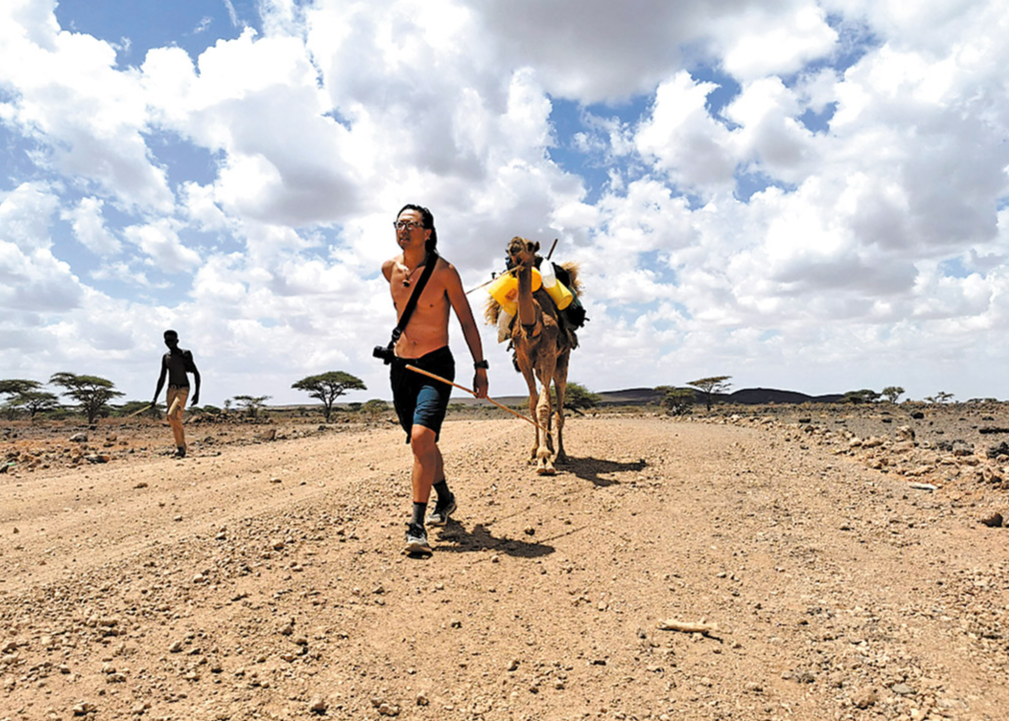
Previously, he had visited the lake twice: once by car and once by flying partway and then driving. This time, he traveled on foot, accompanied by a resilient camel and Martin, a member of the Samburu nomadic group from northern Kenya, who depend on camels for their livelihood.
"I didn't have a concrete plan. I just wanted to head out, without a clear idea of how far I'd go or which direction to take. Simply setting foot on the road is enough for me. I prefer to know as little as possible about what comes next," he says. "There are some things you mustn't tell me; no spoilers."
Despite challenges along the way, there were two or three moments when Qi suddenly felt connected to the whole of nature, becoming one with it.
"Each time was only for a short while, but I genuinely felt connected. You can hear the wind, feel the sunlight on your skin, and even smell the distant rain. Your senses not only open up but also feel interconnected in that moment," he says, talking about the best part of the journey.
It's not the beautiful scenery, but the feeling that is similar to meditation, he adds.
He remembers that during the journey, the scenery was the same as others', but suddenly the colors seemed more vibrant and full of infinite details. The whole world came alive.
"It comes unexpectedly; you might be bored, and then suddenly, you enter that state for a short while before coming out of it, realizing that the world is truly real. It's quite an important experience to me," he notes.
"With my background in science and engineering, I understand that many concepts, like truth, freedom, language, and reality, have limitations. But when I truly experience being a whole person in that environment, it transcends language," he says.
Qi resumed photography during the journey; after completing it, continued his previous lifestyle. Later, he was featured in Liu Na's Narrating the World: 12 Chinese Men and Women Tell Their Stories, published by the Commercial Press in 2024 and about the overseas Chinese. His diaries sparked editors' interest in publishing a book. This year, The Camel Diaries came out.
Cheng Ying, a tenured associate professor at Peking University's Department of Asian-African Languages and Literatures, highlights the book's groundbreaking nature in the context of African historical narratives. Qi's journey takes him through areas seldom visited by either Chinese or local Africans, plunging him into untouched wilderness.
Traditionally, Africa and its people have been observed and defined by outsiders, but the author's writing presents a more reciprocal relationship with the locals and environment, she says.
For instance, the camel Kipesh is portrayed as gazing at and even mocking his owner. Additionally, Qi meticulously captures details such as tire tracks, footprints and iron pots from Chinese construction sites in the wilderness, giving the work a timeless quality.
Cao Yin, a tenured associate professor of history at Peking University, observes that in today's travel trend of taking photos for social media, this book takes a different approach. The author embarks on a challenging journey, enduring hardships such as stomach troubles, blisters and sunburn. By sharing meals and living with locals, he integrates into African tribes and gains trust through empathy and mutual respect, capturing the authentic and vibrant essence of Africa.
Qi's grounded journal offers the public a look into the complex realities of African societies and provides valuable grassroots insights for academic understanding of Africa, he notes.
Contact the writer at yangyangs@chinadaily.com.cn
