

A traditional — and unique — taste of Xizang is evolving to suit the modern palate
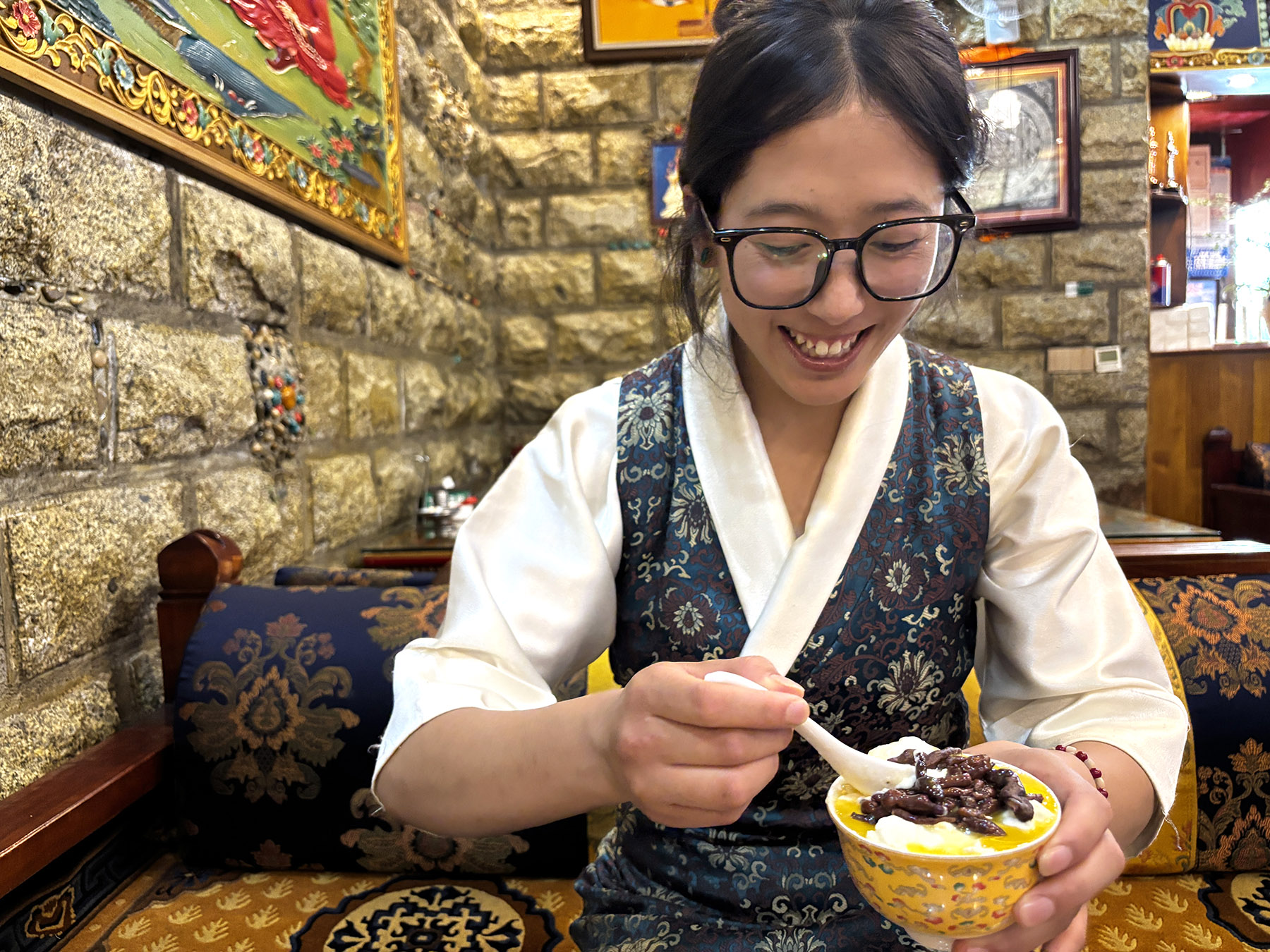
The first spoonful came as a shock.
"It was so sour that I couldn't help but shiver a little," recalled Liu Wanqing, a tourist from Henan province visiting the Xizang autonomous region for the first time.
Her first taste of Tibetan yak yogurt came on Barkhor Street in Lhasa, where pilgrims, tourists and shopkeepers mingle. Unlike the smooth, sweet yogurt she was used to, this one was thick, with a texture she compared to tofu pudding.
"You simply can't find another taste like it," she said.
For generations, yak yogurt has been an indispensable part of Tibetan daily life. Made from yak milk through natural fermentation, it is valued not only as a nutritious food, but also as a symbol of hospitality and blessing.
ALSO READ: Yaks, monks and poetry give zeal to Culture Counts: Two Sessions, One World
In Tibetan culture, yogurt is one of the "three white foods", alongside milk and cheese curds, representing purity, prosperity and good fortune.
Pema Tashi, a Tibetan studies scholar at the Xizang Academy of Social Sciences, said yogurt also lies at the heart of shoton, one of the region's most important traditional festivals.
"The word shoton literally means 'yogurt banquet'in Tibetan," he said."Originally, local farmers and herders offered yogurt to monks descending from monasteries after a period of summer retreat. Over time, the celebration evolved into a grand festival featuring yogurt feasts, Tibetan opera performances, Buddha unveiling ceremonies and other cultural activities."
Beyond tradition, yak yogurt is also prized for its nutritional value.
Drolma, a doctor at the Tibetan Medicine Hospital of Xizang, said yak yogurt contains indigenous probiotics unique to the plateau, and it can help stimulate appetite, improve digestion and promote better sleep.
She added that yak milk itself is exceptionally rich in nutrients, with almost double the calcium content of cow's milk, and significantly higher protein and fat levels.
The unique yogurt is also evolving to cater to modern tastes.
On a recent Sunday afternoon on Barkhor Street, customers streamed in and out of Patahey Yak Yogurt Ice Cream Shop.
The tiny store offers a handful of seats, and most customers place an order and leave within minutes. A cartoon yak flashes across a digital screen behind the counter, while tourists line up outside, many opting for the shop's signature Oreo yogurt ice cream.
Over the past decade, as tourism has flourished, yogurt stores catering to visitors have sprung up, offering yogurt ice cream, fruit jam yogurt and yogurt topped with chocolate powder or roasted highland barley flour.
Zhang Xinyue, another tourist from Henan, said she would also like to see more variations inspired by local ingredients.
"Adding honey, roasted highland barley or wild berries makes it more approachable while keeping its plateau character," Zhang said.
At the Patahey yogurt shop, the traditional flavor remains the best-seller.
"Most visitors say the yogurt tastes rich and natural," said Drukmokhar, a staff member at the store. "Many say (its sourness) is exactly what makes it special."
And it's a taste of Xizang that can only be properly experienced by going there.
The yogurt only remains fresh for about three days and requires cold-chain transportation, making long-distance shipping difficult, she said.
Science, though, is on the case. Over the past seven years, researchers at the Xizang Academy of Agricultural and Animal Husbandry Sciences have traveled the region collecting samples of traditional fermented foods, including yogurt and cheese curds.
ALSO READ: A journey to adventure and warm hospitality
Led by Zhang Yuhong from the academy's Institute of Agricultural Products Development and Food Science, the team isolated more than 2,000 microbial strains and eventually identified six stable indigenous lactic acid bacteria strains capable of re-creating Tibetan yogurt's signature "plateau flavor".
The breakthrough means that traditional fermentation methods, once passed down orally among herding families, can now be preserved, studied and standardized, allowing authentic Tibetan yak yogurt to be produced on a larger scale without losing its original character.
Back on Barkhor Street, tourists continue to pucker at its unexpected sourness. Others ask for honey or sugar to tone it down. But almost everyone leaves with the same realization: Your first taste of Tibetan yak yogurt is impossible to forget.
Contact the writers at zhengjinran@chinadaily.com.cn
