

From laboratory breakthroughs to industrial production lines, Tianjin is building a system that helps scientific ideas move further and faster.
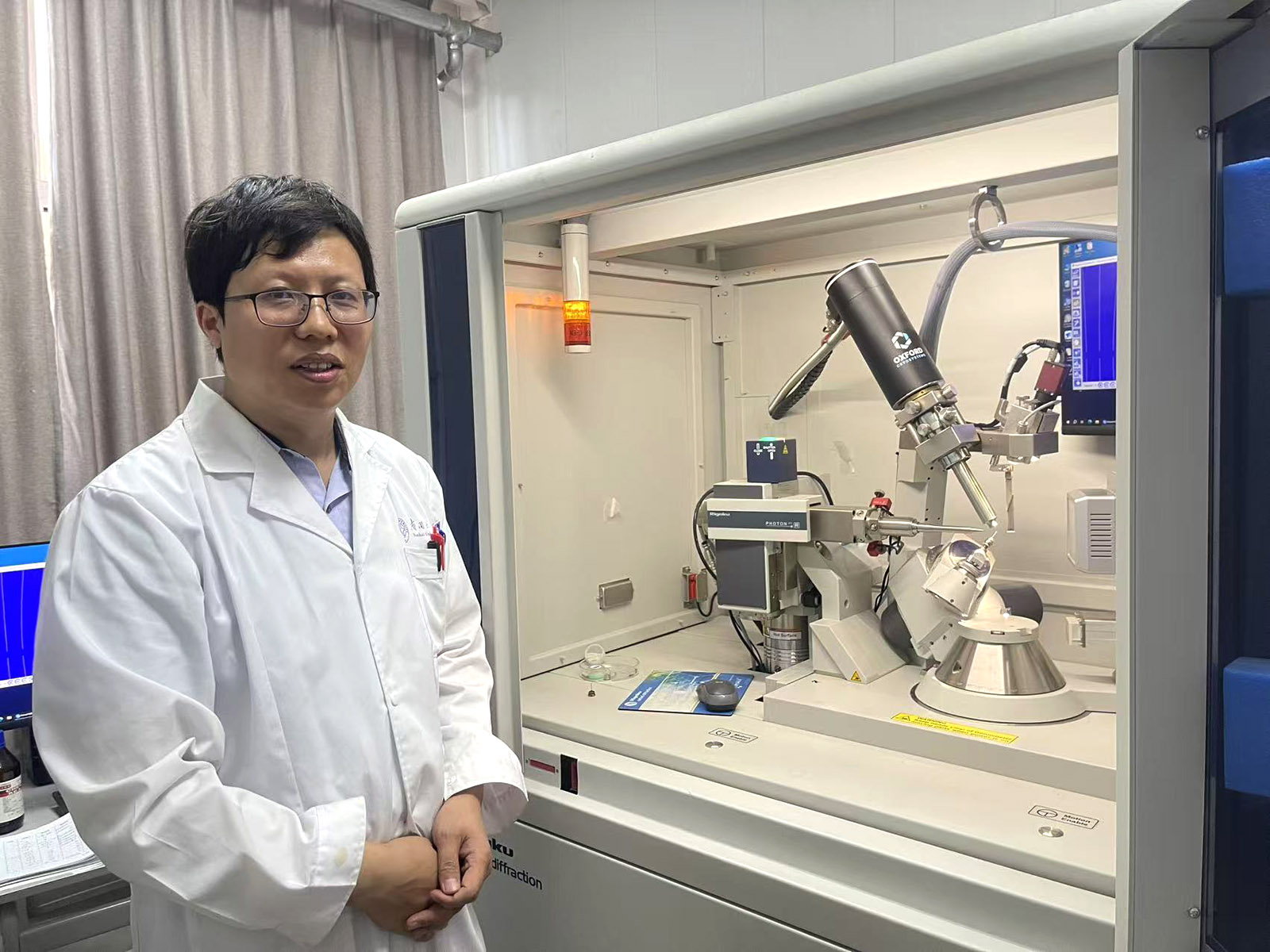
Inside a laboratory at the State Key Laboratory of Medicinal Chemical Biology at Nankai University (NKU), Professor Zhang Zhenjie held up a small vial of pale-yellow powder as he explained its possible applications to visiting journalists during a recent research tour.
Though visually unremarkable, the powder belongs to a class of porous crystalline materials known as covalent organic frameworks, or COFs, which can be used in gas separation, pharmaceutical purification and energy-related applications.
The small vial offered an early glimpse of the tour's broader theme: how Tianjin is working to move scientific ideas from laboratory benches into real-world production.
"When we first started, production was only at the milligram level," Zhang said. "At that scale, practical application was impossible."
The scene was part of the four-day "Vibrant China Research Tour" in Tianjin from June 15 to 18, which brought together more than 100 journalists from across China to explore the city's innovation ecosystem.
In recent years, COFs have drawn global attention for their tunable structures and potential in high-end industrial uses. Yet commercialization has long been limited by low synthesis efficiency and difficulties in scaling up production.
Zhang's team has helped achieve ton-scale production of COF materials for the first time. Holding multiple patents on COF synthesis, they have been invited to leading international conferences this year to share their progress in the field.
The breakthrough, however, was the result of years of sustained research rather than a single leap.
After completing his studies at NKU and conducting postdoctoral research in the United States, Zhang returned to Tianjin in 2016. At the time, he was part of a growing wave of overseas-trained researchers contributing to China's push for innovation-driven development.
Back at NKU, he focused on improving structural stability, optimizing synthesis pathways and reducing production costs, gradually moving COFs from laboratory samples toward scalable production.
"In the early stage, everything was done at the gram or even milligram scale," he said. "The real challenge was whether the material could be reproduced consistently, not just once."
Today, COF-based materials are already being explored in analytical instruments and high-end equipment supply chains, supporting efforts to replace imported core materials in key industrial sectors.
If Zhang's lab shows how new materials are born, another team just a few buildings away keeps the instruments running that make such research possible.
Li Ang works at the university's cryo-transmission electron microscopy platform, where he is responsible for the operation and maintenance of large-scale instruments used in materials science, chemistry and life sciences.
His work represents a less visible but essential layer of innovation: the people who keep advanced research infrastructure stable, precise and accessible.
One of the most urgent parts of his job often arrives without warning. Cryogenic biological samples are highly sensitive. If the system fails, they can thaw quickly, forcing researchers to restart experiments that may have taken weeks or months to prepare.
"That usually means all previous work is lost," he explained. "For example, if a microscope suddenly stops working, we have to respond immediately."
Because of this, stability and rapid troubleshooting have become part of Li's daily routine.
Over time, he said, the job has shaped not only his technical skills but also his understanding of precision.
"Sometimes a very small adjustment can make a noticeable difference in data quality," Li said."That's where much of the value lies."
Beyond maintenance work, Li also helps run training courses that allow students from different disciplines — including chemistry, biology and even non-science majors — to operate advanced instruments.
For many students, it is their first direct exposure to how modern scientific research is conducted.
"It helps them understand what high-level research actually looks like," he said.
Scaling the breakthrough
Beyond the campus, Tianjin's innovation chain extends into office buildings, industrial parks and factories, where research outcomes face the test of mass production.
The Tiankai Higher Education Innovation Park, established in 2023 and developed with strong links to NKU and Tianjin University, has become a key platform connecting research institutions with industry.
It provides rent subsidies, shared facilities, financing support and technology transfer services, reducing the friction between laboratory research and commercialization.
Ren Chengzu, founder and chief scientist of Tianjin Chuangjin Jinggong Technology Co Ltd, credited Tianjin's broader innovation environment for his company's long-term progress.
"In the early stage, we received rent reductions and access to shared facilities, which significantly lowered operational pressure," Ren said. "More importantly, it allowed us to focus on technical challenges."
Ren's company is engaged in the development of ultra-precision bearing rollers, key components in high-end manufacturing systems.
In this field, the challenge is not only achieving precision in controlled laboratory conditions but maintaining it consistently in mass production.
Through years of process optimization, Ren's team has reduced dimensional deviations to below 0.5 micrometers, surpassing widely used international benchmarks.
He said such precision is critical in advanced equipment such as robotic systems, where component stability directly affects performance and reliability.
"The final step from research to industrial application is always the hardest. It takes time to stabilize processes and solve problems that do not exist in theoretical models," Ren said.
"As application scenarios expand, precision requirements will become even more demanding," he continued.
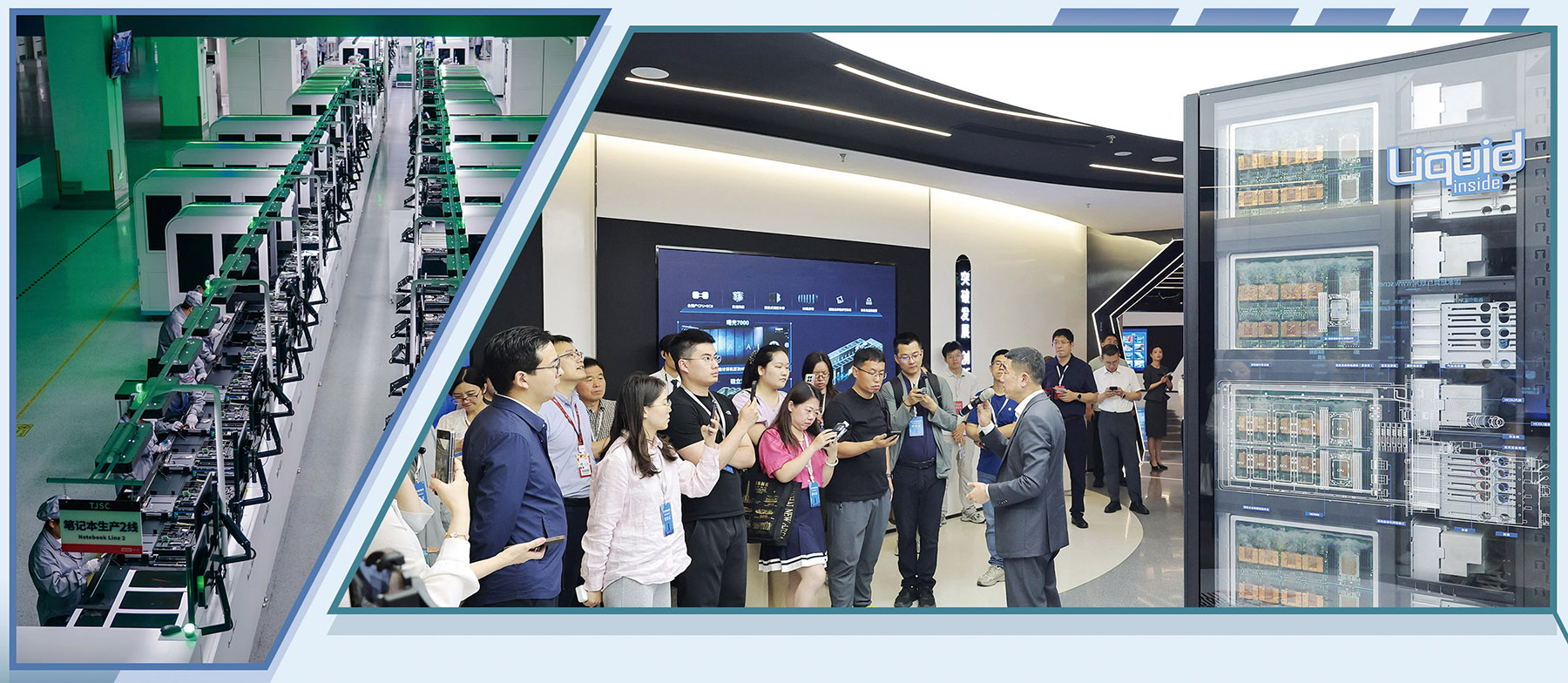
Precision manufacturing is only one part of the picture. In computing and digital services, companies such as Sugon are also helping connect academic research with industrial demand.
Zhang Lei, general manager of Sugon's solutions and innovation business, said Tianjin has developed a diversified industrial base covering computing, life sciences, advanced manufacturing and digital technologies.
He noted that closer collaboration among universities, research institutes and enterprises is helping accelerate the transformation of research outcomes into practical applications.
ALSO READ: Chinese mourners turn to AI avatars to reconnect with departed
In recent years, such collaboration has become increasingly central to Tianjin's innovation strategy.
"Tianjin has built a relatively complete industrial chain. That makes it easier for technologies to move from laboratories into real-world use," Zhang Lei said.
Sugon maintains close ties with universities and continues to recruit talent from academia, while expanding joint training programs to better align education with industrial demand.
During the four-day research tour, journalists moved between laboratories, research centers and manufacturing sites.
What they observed varied widely in form but shared a common thread: a city steadily building the capacity to turn scientific ideas into industrial reality.
In Tianjin, innovation is no longer an abstract idea or a laboratory pursuit. It is taking shape across a connected ecosystem — from research institutes to production lines — as the city works to turn scientific discovery into everyday reality.
Contact the writers at guojiatong@i21st.cn
