

Chinese fans and firms in full force at FIFA soccer showpiece despite national team’s absence
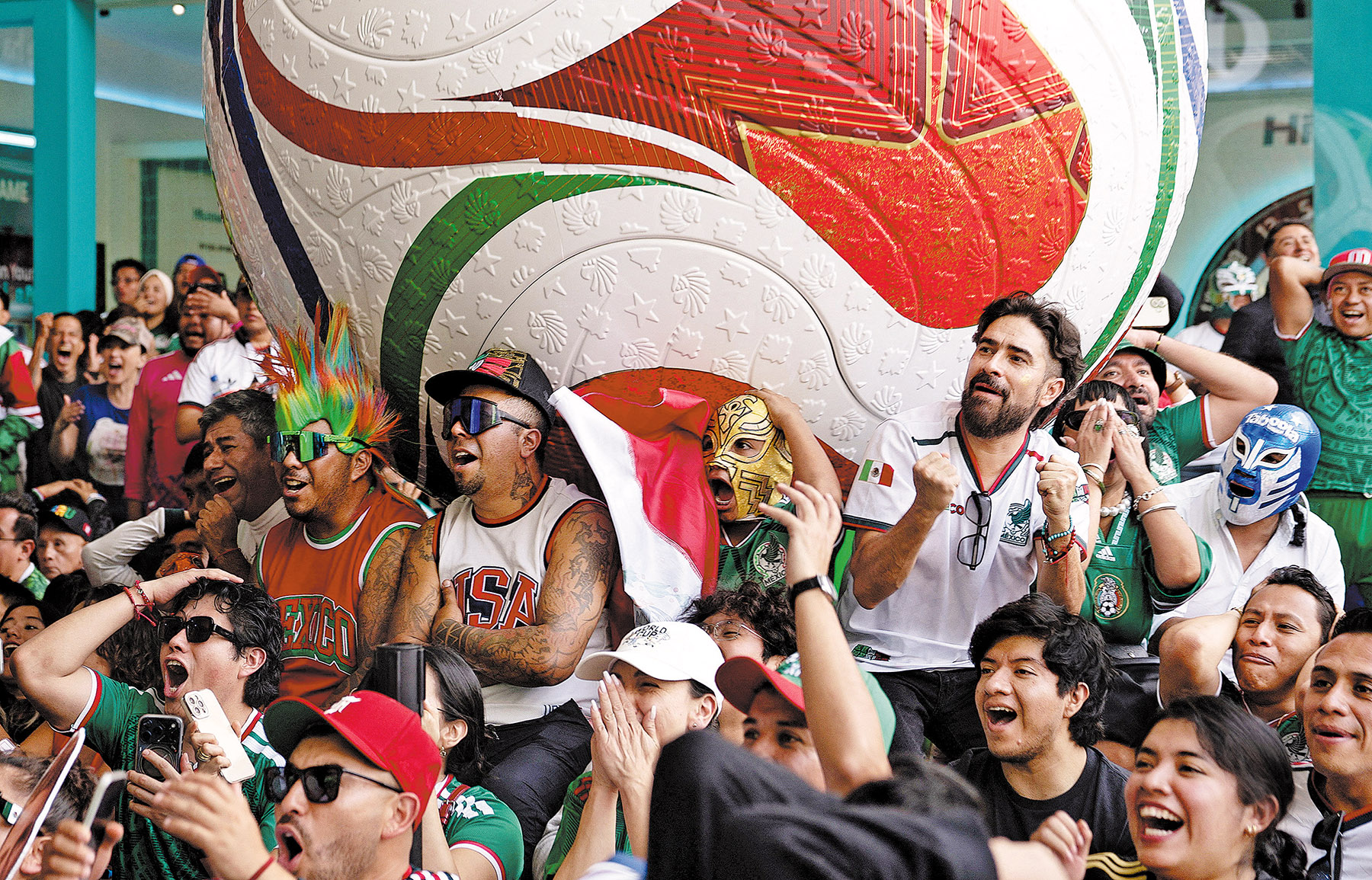
Even without a home team to cheer for at the quadrennial soccer showpiece, China’s presence at the 2026 FIFA World Cup is being felt both on and off the pitch, underlined by fervent fan following, tech and infrastructure support, and robust sponsorship investment.
From a guest appearance made by Pop Mart’s toy character Labubu and the unbridled enthusiasm of Chinese spectators in the stands to the tech support for referees provided by Chinese companies, the nation’s footprint was all over the Estadio Azteca in Mexico City on June 11, when FIFA’s marquee men’s tournament kicked off its 48-team expanded edition with a thrilling curtain-raiser in front of the world.
Buoyed by the festive opening ceremony, which saw two people in Labubu costumes dancing on the sidelines, host Mexico rewarded its cheering home crowd with a 2-0 win over South Africa in the Group A opener. It was the first of a record 104 matches scheduled through July 19 in this year’s World Cup, co-hosted by the United States, Canada, and Mexico.
Among the rapturous crowd at the packed Azteca stadium was a group of Chinese fans who joined the global soccer carnival despite the absence of their home squad, long travel times between venues, and skyrocketing ticket and accommodation costs.
“Team China didn’t make it, but we’re all here,” He Sheng, a die-hard soccer fan from Sichuan province, said in a video he posted on social media platform Weibo, which showed him cheering with other compatriots outside the stadium before the match.
“Everyone’s there, but Team China,” the pre-tournament punchline delivered by China Central Television anchor Bai Yansong, before the 2018 edition of the World Cup in Russia, remains a bitter, yet fitting summary of China’s continued involvement in the FIFA showpiece.
This is the sixth straight time China’s national team has failed to make the tournament since its sole appearance in 2002, following another disappointing Asian qualifying campaign.
Chinese fans, however, remain committed to their passion for soccer, even if that means spending a fortune on a live experience at the most expensive FIFA World Cup in history.

The most expensive tickets for the 2022 edition in Qatar cost around $1,600 at face value, while this year a premier ticket for the final match is priced at an astronomical $32,970.
After missing out during FIFA’s official ticket lottery in January, Gu Xin and his wife, a soccer-loving couple from Shanghai, each had to spend $1,700 — more than twice the original face value of $700 — to secure tickets on a resale platform for a group match between Argentina and Austria scheduled for June 22 in Dallas, Texas.
“We hesitated for a while due to the super expensive ticket price, but decided to give it a go anyway. You cannot miss (Lionel) Messi’s World Cup finale,” Gu said.
Chinese enterprises are matching the fans’ enthusiasm with their high visibility. Tech giant Lenovo, dairy brand Mengniu, and home appliances manufacturer Hisense have secured official sponsorship roles at different tiers in FIFA’s commercial system, with a reported total investment of over $500 million.
Instead of buying exposure for their brands, Chinese sponsors have become more active, demonstrating their latest technology and services through operational participation at the tournament, experts said.
“Chinese enterprises are no longer merely purchasing ads. They are leveraging the tournament’s global appeal to promote technological strength and brand value,” said Jiang Xiaojuan, a professor at the University of Chinese Academy of Social Sciences, during a World Cup marketing event hosted by Lenovo in Beijing on June 11.
“This is a pivotal shift from passive brand promotion to active industrial empowerment,” Jiang added.
The new match replay footage from the referee’s view on the pitch, provided by an artificial intelligence-powered Lenovo device, was among the broadcasting highlights of the opening match. It offered viewers a more immersive way to experience the game.
The latest display technology from Hisense, as the tournament’s Video Assistant Referee partner, enables the officiating system to reproduce match details accurately and make precise calls.
“There is so much potential to be unlocked across China, and they have such an important role to play within the region and as a FIFA member,” said Mattias Grafstrom, secretary-general of FIFA, during a visit to Beijing in May.
Contact the writers at sunxiaochen@chinadaily.com.cn
