

When Chan Cho-kwong called it a day with the Hong Kong Police Force seven years ago, his deep-rooted desire to do more for the community did not fade, despite having devoted nearly half a lifetime to maintaining peace and order.
In his words, he “still has plenty of energy to spare”.
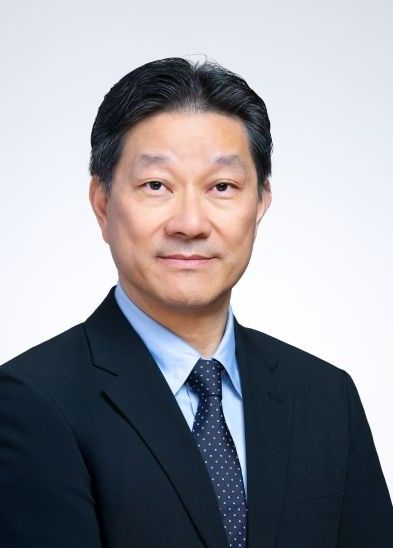
Chan is always on the lookout for platforms to drive positive changes. He first took up community work before hitting the road for cultural exchanges on the Chinese mainland and overseas. This year, he landed his most significant job yet: being sworn in as a lawmaker of the Hong Kong Special Administrative Region for the first time.
In an exclusive interview with China Daily, Chan says being a legislator allows him to address broader social and livelihood issues at a strategic level.
His primary tasks in this new post will involve national security and public safety, as well as the welfare of public servants, plus the mechanisms needed to keep their performance standards high.
Chan’s goal is also to improve housing for grassroots residents, support elderly care at home, optimize cross-boundary retirement arrangements for the elderly, and promote youth exchanges between the city and the mainland.
His initial focus as a lawmaker is rooted in staunchly upholding the HKSAR’s national security laws which, he says, have given the city a “cornerstone for stable development”.
Since the enactment of the Hong Kong SAR National Security Law in 2020, the city has witnessed a suite of legislative efforts to safeguard national sovereignty, security and development interests.
“From then on, Hong Kong’s transition from chaos to order and its advancement from stability to prosperity are plain for all to see,” he says.
Today, a key aspect of a lawmaker’s work is to uphold national unity and maintain Hong Kong’s stability and prosperity, embodying a “pragmatic” approach within the Legislative Council under the city’s executive-led system.
This calls for legislators to constructively identify areas for improvement and propose well-prepared, sound solutions, he said.
Chan aims to champion initiatives that reinforce a sense of national belonging and pride among Hong Kong’s public servants and residents.
Having helmed the Junior Police Officers’ Association from 2012 to 2018, he says public officers could use a lift in their professional pride and dignity.
He plans to propose educational programs to promote the “serve Hong Kong, serve the public” ethos among civil servants, thereby uprooting the “clocking-in-and-no-more” mentality that seems to still cling to some. “This would, in turn, strengthen administrative efficiency and rein in buck-passing within the bureaucracy,” he says.
Issues concerning people’s livelihoods are also central to his legislative focus. Chan is no stranger to social inequality, having been raised in a hillside hut himself and spent years addressing community issues as a police officer.
He believes that people’s living standards have, “for sure, moved for the better”, but warns that daily hardships for the grassroots residents still exist. “At the end of the day, politics is about normal folks’ daily lives — the food they eat, the clothes they wear, where they live, how they get around. And, a lawmaker must be ready to engage with every issue that affects them.”
Elderly care a must
Chan cited community elderly care arrangements and cross-boundary retirement programs in the Guangdong-Hong Kong-Macao Greater Bay Area as sound initiatives. However, he said that neither has yet reached its full potential.
He became acutely conscious of the situation during his 2019 district council run, when he went door-to-door and participated in neighborhood activities. With Hong Kong’s population greying fast, many seniors have expressed a preference to age at home, he said.
As a first step, Chan plans to propose having government-backed elderly care services for residents in public housing. For example, the government could allocate full-time caregivers to each residential building.
Regarding initiatives for retirement on the mainland, Chan said residents have been hesitant primarily due to concerns that their children wouldn’t be able to visit them conveniently, rather than financial worries.
To address this, he aims to propose measures to streamline cross-boundary family visits, helping to strengthen family bonds on both sides.
Contact the writer at wanqing@chinadailyhk.com
