

From robotic exoskeletons to smart-driving and village homestays, China's capital is expanding its tourism offerings, Yang Feiyue reports.
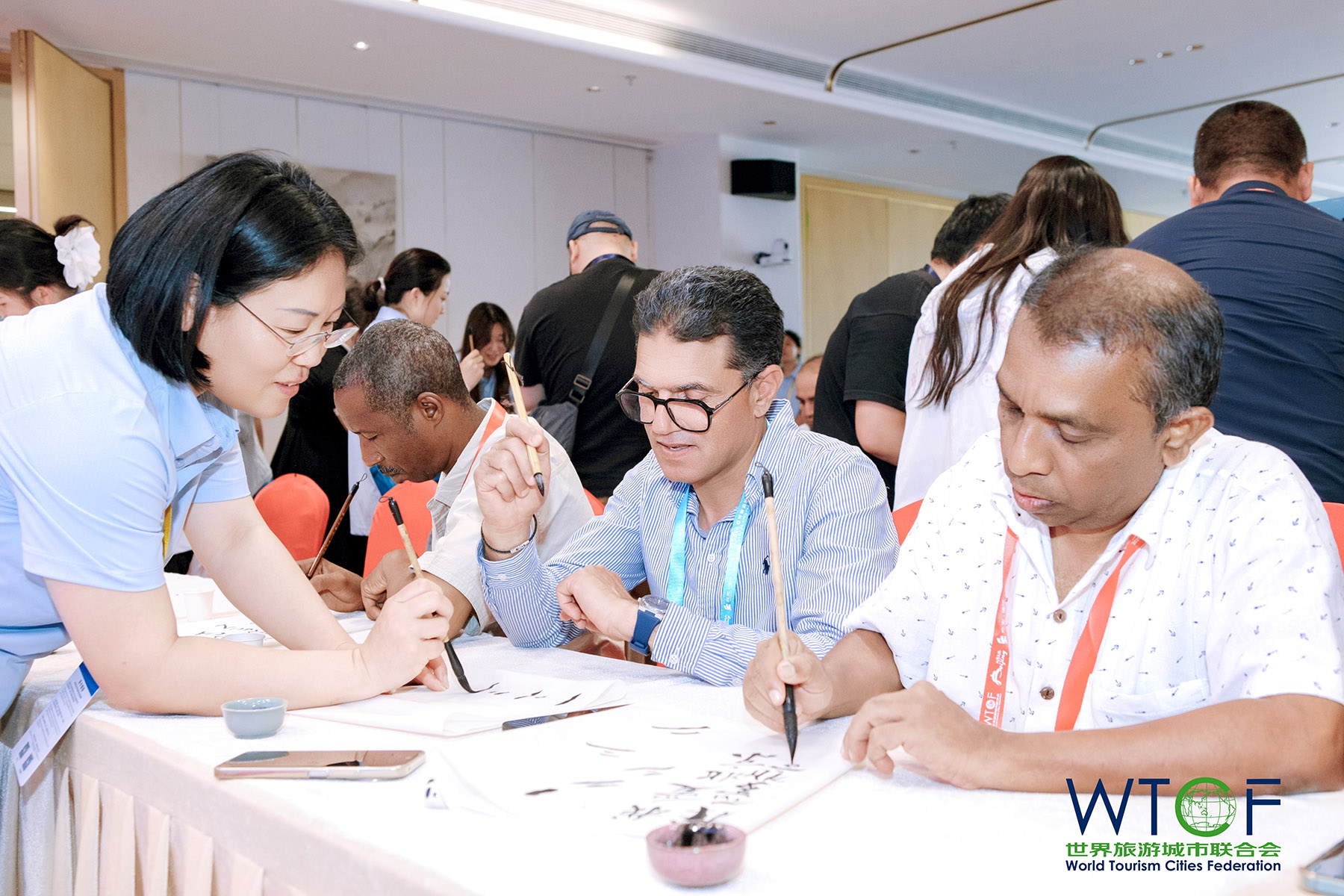
At the Mutianyu section of the Great Wall, Spanish travel buyer Eduardo Pineda prepared for a climb unlike any he had experienced before.
Strapped to his legs was a robotic exoskeleton designed to assist hikers on steep terrain. As he made his way up the ancient stone steps, the device helped ease the effort.
"The experience is really amazing," he said afterward.
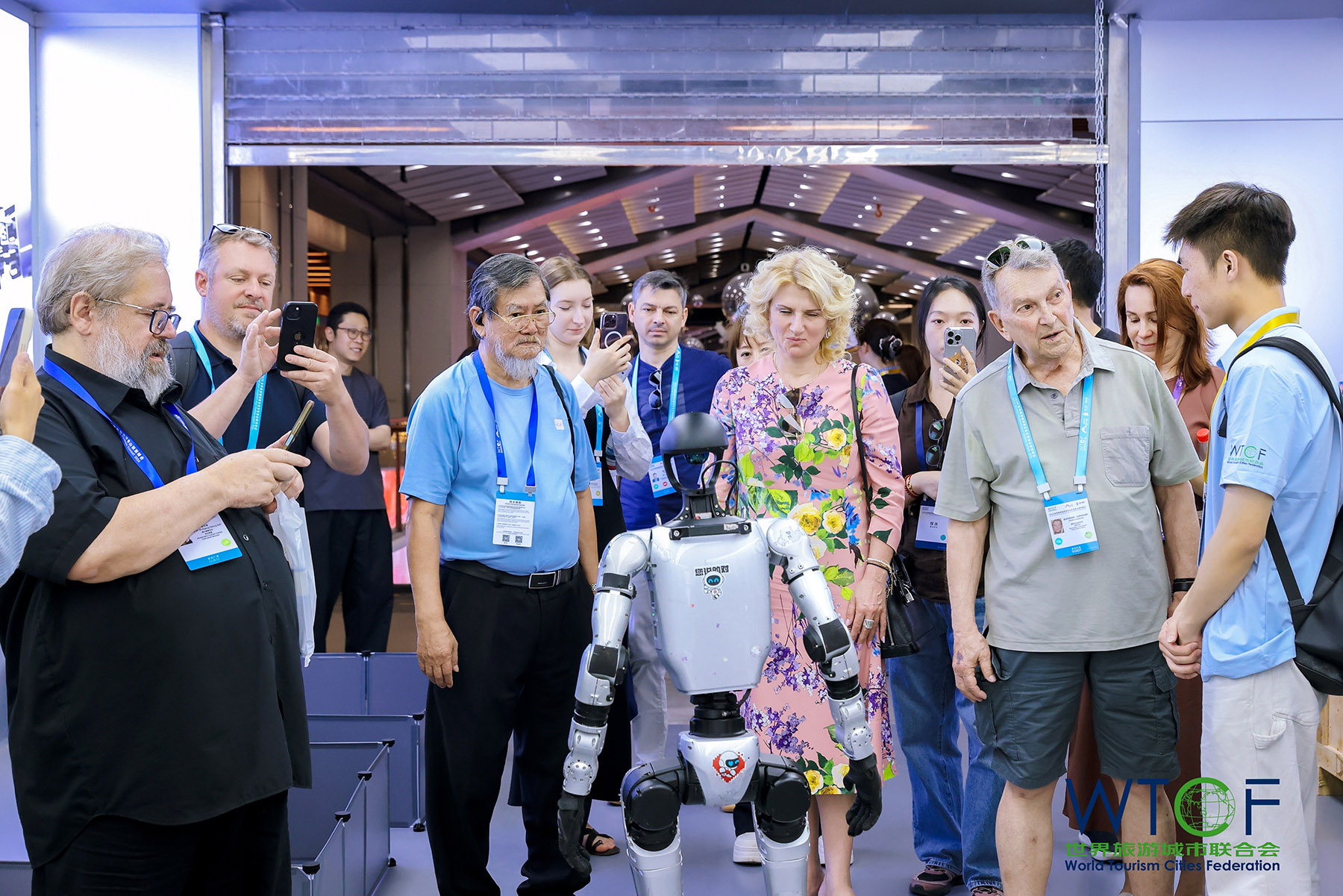
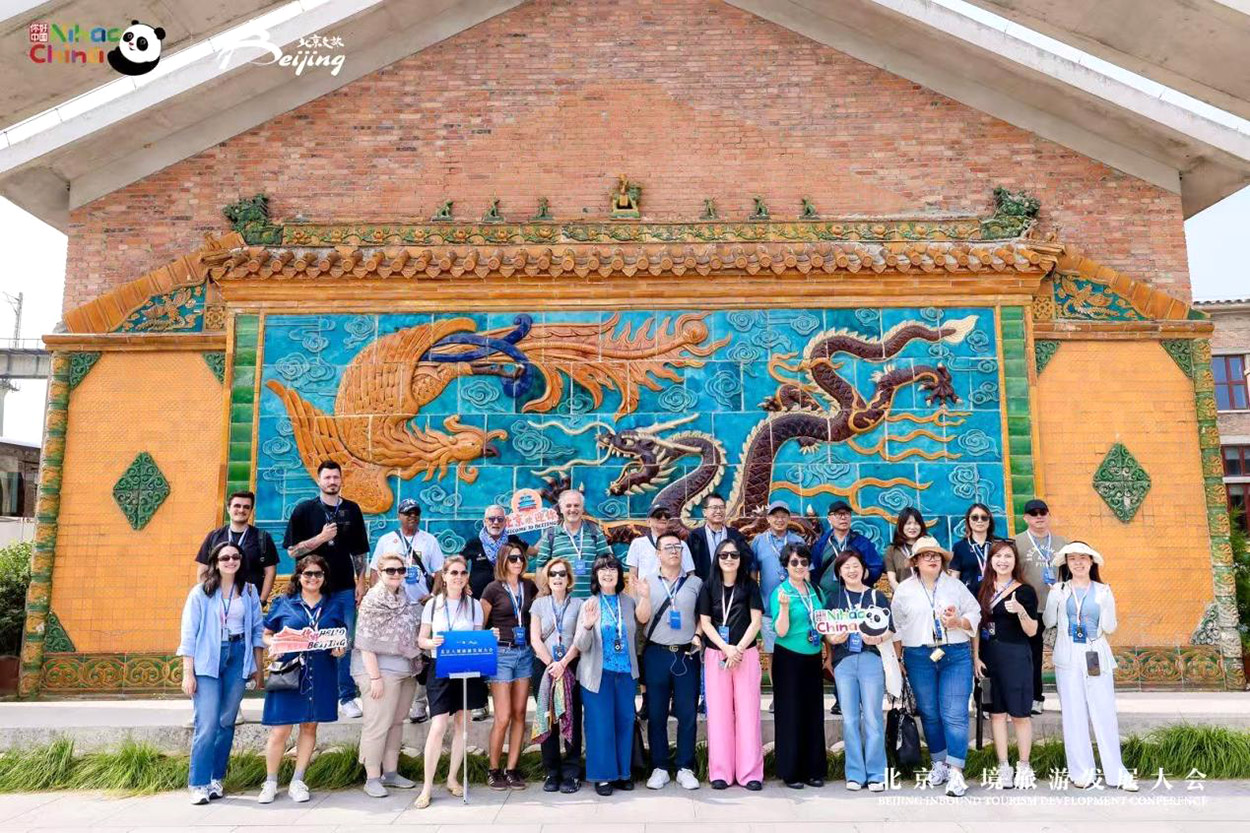
The technology-assisted ascent was one of a series of immersive experiences showcased during the 2026 Beijing Inbound Tourism Development Conference, held from June 1 to 6. For city officials and tourism operators, reactions like Pineda's reflect a broader shift underway in China's capital: convincing international visitors that Beijing offers more than iconic landmarks — it offers opportunities to experience how the city lives, works and innovates.
READ MORE: Mystic beauty at its peak
For decades, Beijing's appeal to overseas travelers rested largely on its world-famous attractions, from the Great Wall and the Forbidden City to the Summer Palace. Today, tourism officials are increasingly focused on a different proposition — one built around participation rather than observation.
The shift comes as inbound tourism continues to recover strongly.
From January to May, Beijing received 2.67 million inbound visitor trips, up 35.3 percent year-on-year. Tourism spending reached $3.64 billion, an increase of 42.4 percent, according to the Beijing Municipal Bureau of Culture and Tourism.
The fact that spending is growing faster than arrivals is particularly encouraging, says Wang Jinxiao, deputy director of the bureau's external exchange and cooperation division.
"Not only are more tourists coming, they are also willing to spend," she says.
The momentum mirrors a broader national recovery. Speaking at the conference, Gao Zheng, vice-minister of culture and tourism, said that China recorded 154.5 million inbound visits in 2025, up 17.1 percent from the previous year. Foreign visitor arrivals reached 35.17 million, while visa-free entries exceeded 30 million.
Consumption has grown alongside visitor numbers. According to Gao, the number of overseas travelers applying for departure tax refunds increased by more than 300 percent year-on-year, while sales of tax-refunded goods rose nearly 96 percent.
Frictionless travel
Industry insiders attribute part of the recovery to efforts aimed at making travel to China easier and more convenient.
At Beijing's ports of entry, digital arrival cards have streamlined immigration procedures. Since the National Immigration Administration launched an online arrival card system in late 2025, more than 97 percent of inbound foreign travelers entering through Beijing have chosen to complete the process electronically, according to Liu Yan, deputy director of the border inspection division at the Beijing General Station of Exit and Entry Frontier Inspection.
The multilingual system allows travelers to upload passport information before arrival, reducing paperwork and shortening processing times after landing.
Spending has also become easier.
In April, Beijing introduced a "one-click" tax-refund function through Alipay, allowing eligible visitors to complete applications digitally. A month later, the city launched the country's first online departure tax-refund store, enabling overseas travelers to purchase eligible products online and process tax-refund documentation electronically.
The measures form part of a broader effort to improve the travel experience from arrival to departure, Liu says.
Yet convenience alone is not the story Beijing wants to tell.
Throughout the conference, organizers repeatedly emphasized a concept they called "Becoming Chinese" — encouraging visitors to engage more deeply with local life rather than simply moving between major attractions.
The idea reflects a growing trend in global travel, where visitors increasingly seek authentic, personalized experiences and opportunities to connect with local communities.
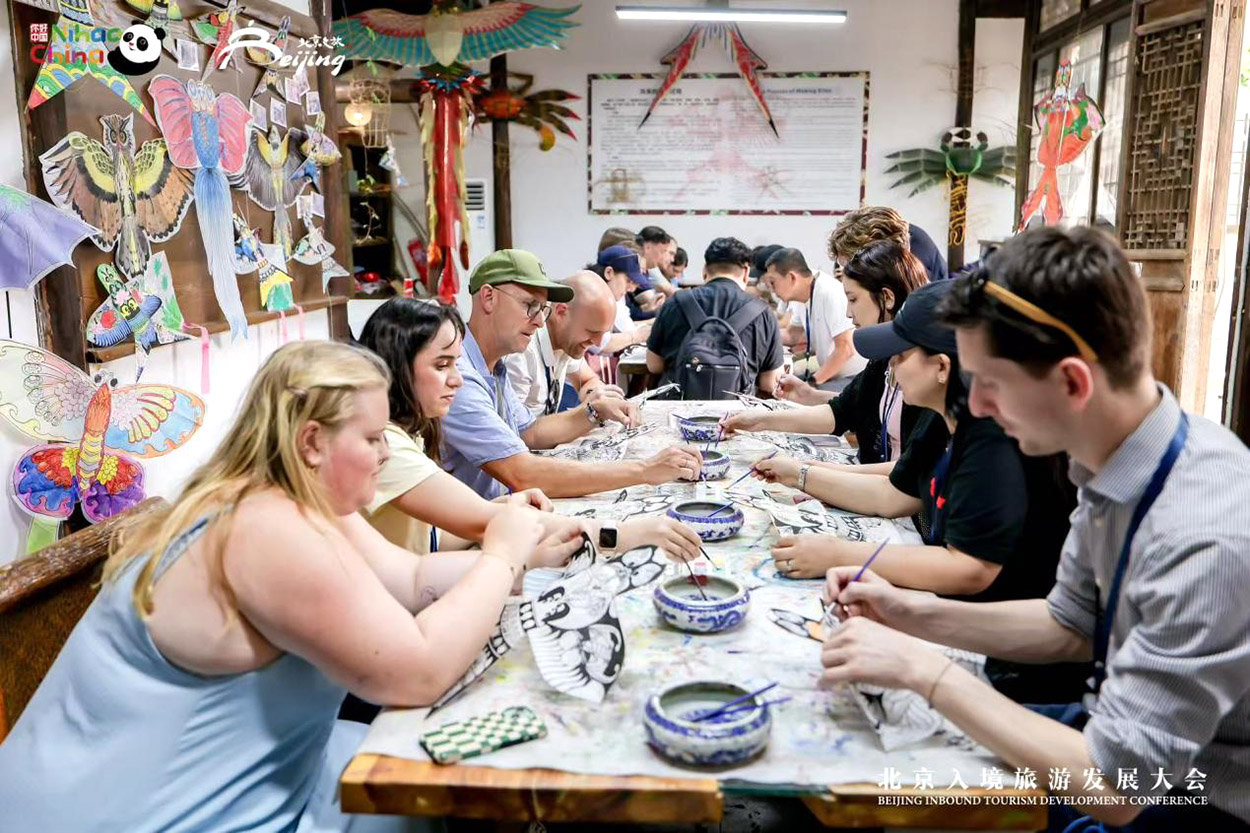
In response, the conference unveiled 10 new inbound tourism experience scenarios designed to showcase different facets of the capital.
Some focus on traditional culture and neighborhood life. Visitors can sample douzhi, a fermented mung bean drink long associated with old Beijing, in historical hutong alleys, or explore cultural districts tucked away from the city's main tourist routes.
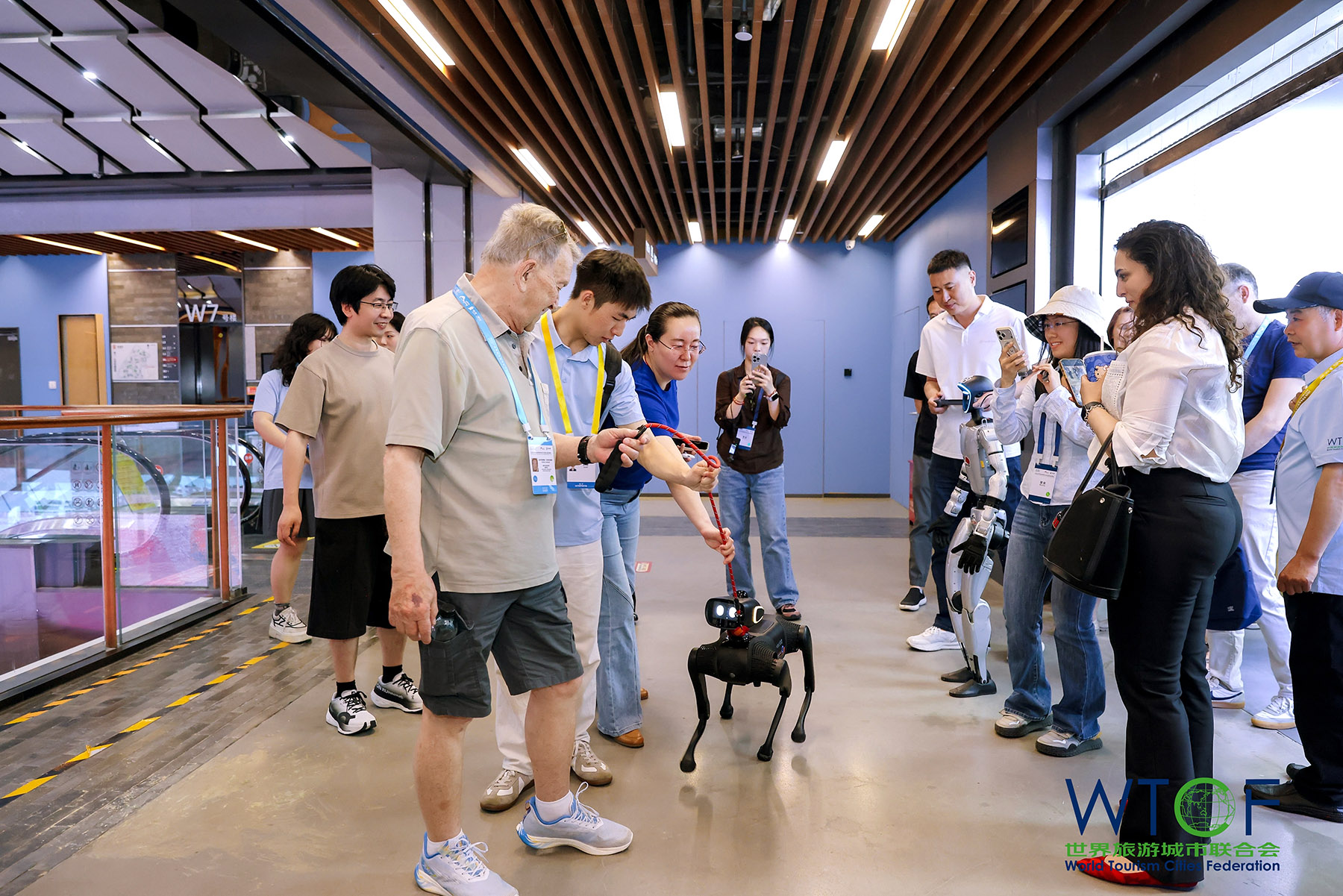
Others highlight Beijing's role as a center of innovation. Travelers can ride autonomous vehicles in Shougang Park, the former steel complex transformed into a hub for sports, culture and technology, or experience cutting-edge smart-driving technologies at Baidu's Apollo Park.
Still, others take visitors beyond the urban core, offering stays in boutique courtyard hotels and rural guesthouses near the Great Wall, where mountain landscapes and village life provide a different perspective on the capital.
To complement these offerings, the capital has also launched its first "Must-Eat List" and "Must-Buy List" for inbound travelers. Developed in collaboration with major international online travel platforms and reviewed by Chinese and international tourism experts, the rankings aim to guide visitors toward distinctive local flavors, products and experiences.
"We hope overseas visitors can see a Beijing that is authentic, fashionable and culturally rich," says Wang from the Beijing Municipal Bureau of Culture and Tourism.
Growing interest
The inbound tourism conference was designed not only to showcase new experiences, but also to convert growing interest into commercial opportunities.
Before arriving in Beijing, overseas buyers and Chinese tourism companies conducted more than 3,000 online matchmaking sessions through a dedicated business platform. During the event, more than 150 Chinese enterprises participated in face-to-face negotiations.
Rather than confining discussions to conference halls, organizers moved many exchanges directly into tourism sites and experience venues.
Travel buyers visited destinations ranging from rural guesthouses in Huairou district to digital entertainment attractions at Shougang Park.
Haitham Ebady, a travel industry representative from Saudi Arabia, described Beijing as a city where history, culture and nature coexist.
"If I were to give advice to tourists coming to China, they must come to Beijing," he says. "They can find everything they are looking for here."
Beijing welcomed 5.48 million inbound visitor trips in 2025, generating more than 50.5 billion yuan ($7.5 billion) in tourism revenue.
Officials say the next stage of growth will depend not only on attracting more visitors, but also on encouraging them to stay longer, spend more, and engage more deeply with the city.
ALSO READ: Travelers take in city through new lenses
Many overseas buyers appeared eager to bring the newly developed tourism products back to their home markets.
Among them was Marco Peci, marketing and sales manager of Italy-based Mistral Tour International, who first visited Beijing in 1995.
At the time, he recalls, finding a suitable hotel or a reliable restaurant could be challenging for foreign visitors.
Three decades later, he sees a very different destination.
"There are a lot of new ideas here in Beijing to bring to the market," he says. "This is the right place to learn about them."
Peci plans to introduce some of the new tourism products and experiences to Italian travelers in the coming months.
When he first arrived in Beijing three decades ago, navigating the city could be a challenge. This time, he left with a notebook full of new tourism products, new business contacts and new ideas for the Italian market.
Contact the writer at yangfeiyue@chinadaily.com.cn
