

Cities seeking talented young people unleash unprecedented arsenal of perks — from free short-term accommodations to long-term life and career support
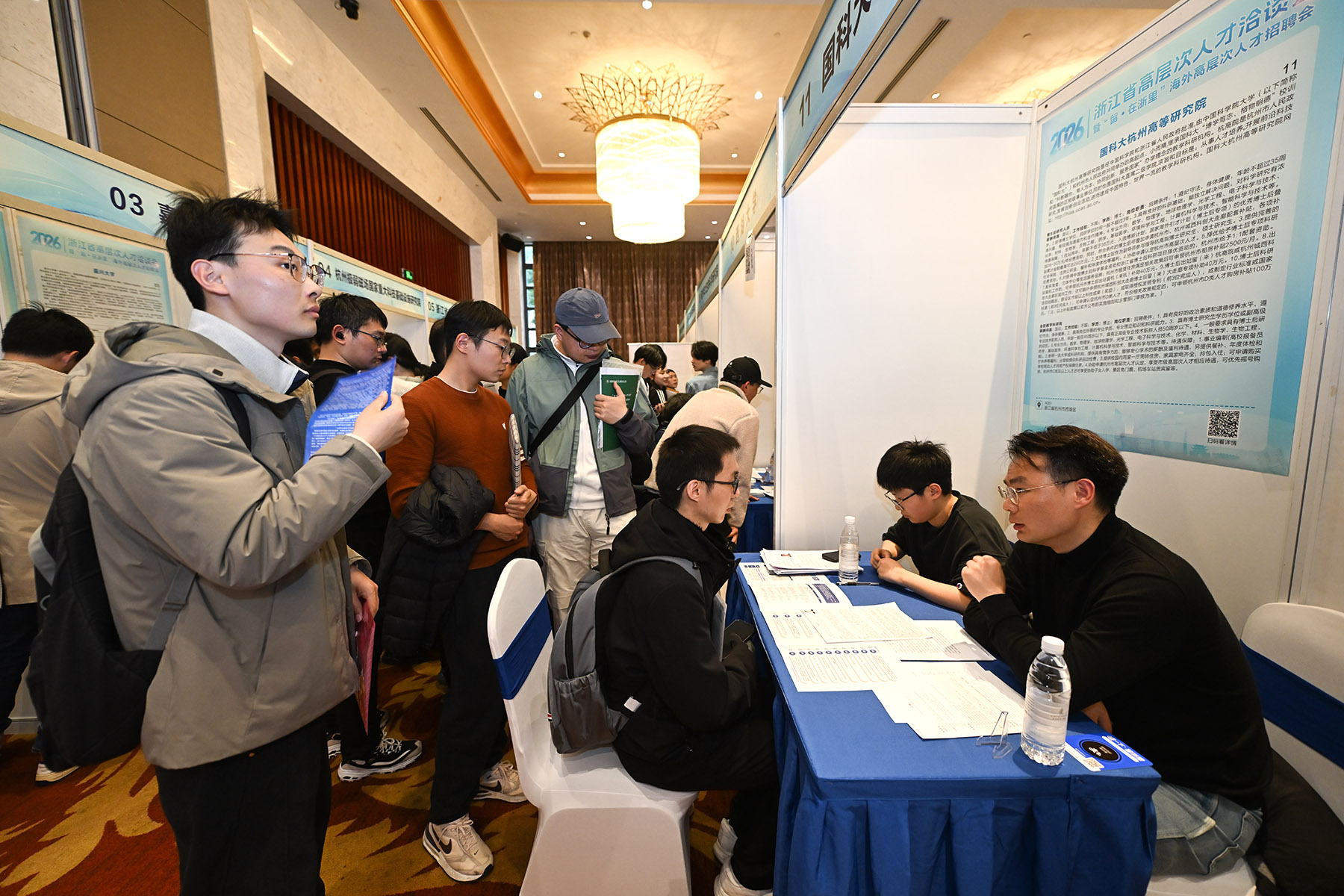
For Wang Jing, a student in Northeast China who is about to graduate from college, moving to a new city for employment is not just about a good paycheck, but also about proper recognition of talent, a decent lifestyle and a sense of belonging.
Before traveling to Hangzhou, East China's Zhejiang province, for an interview, Wang learned that she could stay for free up to seven days at a local government-run accommodation for job seekers. She quickly uploaded her Chinese ID, her student ID and the interview notice online, and received approval for stay in less than half a day.
"Not only did this save me from spending extra on accommodation, the lodging conditions were pretty good and the members of staff warm and helpful," she said, adding that the well-lit, 20-square-meter room came equipped with a refrigerator, an air-conditioner and a washing machine.
While millions of young people across China are weighing employment pros and cons like Wang, cities with opportunities are responding with an unprecedented arsenal of perks — from free lodging for a week to "life cycle support", covering marriage, housing and even entrepreneurial failure.
Welcome to the new era of China's talent hunt.
READ MORE: Action plan unveiled to stabilize employment
As of March, Hangzhou, which has 97 government-run accommodations with more than 4,400 available rooms, had served 240,000 stays. The provincial capital is continuously optimizing its "soft environment" for talent, and the latest data shows that the results have been remarkable.
According to the municipal bureau of human resources and social security, Hangzhou attracted more than 428,900 university graduates under the age of 35 in 2025, continuing its strong momentum of recent years.
Last year, the city distributed a total of 2 billion yuan ($295 million) in various employment and entrepreneurship subsidies, and provided living allowances to fresh graduates 247,000 times.
The quest for attracting talent has intensified in recent years, with many cities easing restrictions for hukou (household registration) or offering free accommodations and generous cash subsidies. Some are even providing long-term advantages, covering recruitment, retention, career advancement and general well-being.

Policy cushion
In Shanghai, the country's first provincial-level legislation on building youth-friendly cities took effect on June 1.
The metropolis, with a resident population of 24.85 million as of 2025, aims to provide policy support for young people in employment, housing, dating, marriage and entrepreneurship, making it more youth-friendly and enabling young people to better contribute to its development.
Earlier this year, Nanjing, the capital of East China's Jiangsu province, released a new talent policy that aims to attract about 10 top-tier talented young people annually, with comprehensive support of up to 100 million yuan.
The city also intends to draw about 300,000 talented young people each year, and plans to provide a one-time living subsidy of 10,000 yuan for newly employed graduates with a bachelor's degree, 30,000 yuan for those with a master's degree, and 100,000 yuan for those with a PhD.
On May 10, Hunan province in Central China took its recruitment drive all the way to Hangzhou, seeking to hire talent from the Yangtze River Delta region. More than 7,500 positions were offered by about 280 companies.
"Hunan is a land of hope and vitality," Jiang Difei, vice-governor of the province, said during the event. "Come find your stage and shine."
Li Qian, a graduating master's student in environmental engineering at Zhejiang University of Technology, signed an employment contract at the event with a State-owned industrial investment enterprise based in Loudi, a city in Hunan.
"I am originally from Hunan. The rapid development of my province's digital economy and advanced manufacturing sectors is the reason I accepted the job. Besides, I had already planned to move back home after graduation," she said.
Liu Yehuan, founder and CEO of internet-related enterprise Hunan Vmonkey Technology Co, shared his entrepreneurial story that unfolded in Changsha, the capital of Hunan. The province "is a fertile ground that dares to let young people make mistakes", he said.
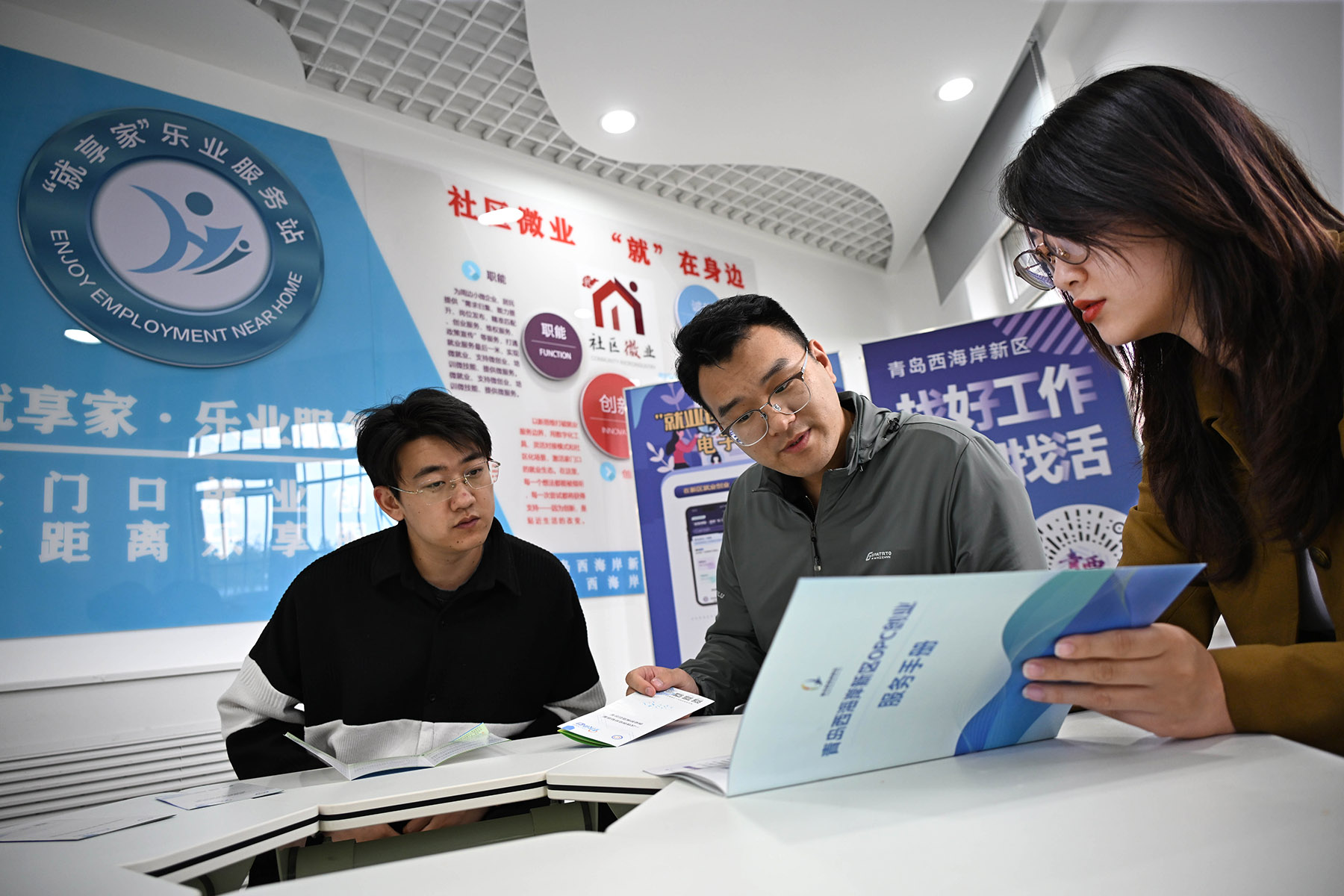
After enrolling at Hunan University in 2011, Liu embarked on four startup projects, all of which failed. In 2014, with support from the local government, he moved into a startup park with his small team to set up a company, benefiting from rental discounts and one-stop services such as business registration and tax guidance.
During a critical low point, when Liu's company faced nearly 10 million yuan in losses over three years, the park's entrepreneurship service center proactively helped him. "The most heartwarming moment in policy implementation is not when things are going well, but when you are in dire need of support," Liu said.
Today, one of the mini-programs made by his company to help university students print study materials has become China's top online printing brand in terms of sales volume.
Magnetic appeal
According to a report on the talent attractiveness of Chinese cities in 2025, which was released last month, Beijing ranks first, followed by Shanghai and Shenzhen in Guangdong province. The other cities in the top 10 are Hangzhou, Guangzhou in Guangdong, Suzhou in Jiangsu, Chengdu in Sichuan province, Nanjing, Wuhan in Hubei and Wuxi in Jiangsu.
An introduction to the report, jointly published by experts from Zeping Macro, a private economic research team, and the recruitment portal Zhaopin, points out that while the population of a city is the foundation for all socioeconomic activities, talent is its primary resource for growth.
"People move with industries and people move to higher ground," the report said, noting that as the population concentration increases in metropolises and other big cities, the value of talent becomes more prominent amid fading demographic dividend.
While China's top 10 cities attracting maximum talent remain the same as last year, Hangzhou and Suzhou have risen in rank.
Beijing has held the topmost rank for several consecutive years due to its huge advantages in terms of salary package, diversified industrial structure and concentration of top universities and research institutions.
Shanghai, with its large, steadily growing economy and booming high-tech and modern service sectors, has been a clear second, while Shenzhen has remained stable in the third place in recent years with its robust innovation capacity and lower household registration barriers.
Among the top 50 talent magnet cities of last year, 36 are in eastern China, six each are in the central and western regions, and two are in the northeastern part of the country, according to the report released in May.
Seven cities of Guangdong are among these top 50, while all 11 prefecture-level cities of Zhejiang have made it to the list.
Another report on the most attractive cities for the post-1995 generation, which was released late last year, said that China has approximately 200 million people in that age group and they are redefining the competitive landscape of Chinese cities.
The top three cities for talent from the post-1995 generation are Shenzhen, Beijing and Shanghai, which are followed in order by Hangzhou, Guangzhou, Suzhou, Chengdu, Nanjing, Wuxi and Tianjin.

Shared features
The Yangtze River Delta and the Pearl River Delta regions are clearly ahead in the race for attracting talent.
The report released last year notes that in a "talent war", cities should fully respect the objective laws of population and industrial agglomeration in advantageous regions, leverage their comparative strengths and follow the natural trend.
Zhang Kangsi, a professor at the School of Economics at Dongbei University of Finance and Economics in Dalian, Liaoning province, said cities that attract most young people generally share common characteristics.
"Cities with relatively concentrated job opportunities, strong industrial and innovation platforms, well-developed urban services, and a better balance between career opportunities and the quality of life are among the top draws," Zhang said.
Shenzhen, which has topped the post-1995 talent attraction list for three consecutive years, boasts a net talent inflow that is 1 percentage point higher than the national average, thanks to its low household registration threshold and industrial innovation advantages.
Last year, the city welcomed more than 400,000 talented young people with its innovative industrial structure, which provides many job positions and relatively high incomes, along with the strong capacity of leading companies, such as Huawei and BYD, to absorb fresh graduates.
Liu Mengtong, a university junior in Zhuhai, Guangdong, who originally hails from a major city in Northeast China, said that she doesn't plan looking for a job back home after graduation.
"Instead, I will stay in the Guangdong-Hong Kong-Macao Greater Bay Area. I feel a stronger sense of identity here. Also, my university major in communication studies will allow for better job opportunities in this region," she said.
The student added that Shenzhen would most likely be her first preference, given its strong development momentum, open and inclusive atmosphere, comfortable natural environment, and abundant cultural and leisure options.
Value addition
While a fat paycheck and focused job environment remain important, young people increasingly value emotional connection, a sense of belonging, a comfortable lifestyle and the entertainment quotient of a city.
Survey data shows that work-life balance is considered more important than high income, and young people are making rational choices based on a city's inclusiveness, development prospects and tolerance for failure, among other factors.
In 2018, Yanggong Yifan, a former Google engineer specializing in core tensor processing units, or chips to accelerate artificial intelligence, led a team of AI experts from Silicon Valley to return to China and start a business. Their company, CL Tech, was officially registered and established in Hangzhou in 2020.
"Back then, AI development in China was in a trough and the confidence in large models was generally low. Hangzhou, however, had a certain AI ecosystem and was making forward-looking moves," recalled Huang Xu, chief marketing officer of CL Tech.
In the initial phase, the company received dedicated fund support coordinated by the local government, effectively resolving teething financing problems, she said, adding that in 2024-25, the company also received financial support from Hangzhou's innovation funds.
"Strong government support not only addressed the core funding needs at a critical stage of chip R&D and industrialization, but also buoyed market confidence, attracting more social capital to the company and driving its rapid growth," Huang said.
ALSO READ: Amid tech boom, young Chinese gear up for new job opportunities
CL Tech is dedicated to developing high-performance tensor processing units and intelligent computing clusters that support ultra-large-scale AI model computation. It has become the first company in China to master core TPU architecture and achieve mass production of such chips.
Huang said that when recruiting high-end talent, she can feel Hangzhou's strong appeal, because the city boasts a comfortable living environment, rich history, and keen industrial and policy development efforts — everything that aligns with the aspirations of young people.
Zhang, the professor from Dongbei University of Finance and Economics, noted that young people value a space where they can fully use their abilities, where they have ample scope for growth, and where they can live comfortably and potentially raise a family.
Cities competing to accumulate human capital crucial for industrial upgrading and innovation-driven development may need to reconfigure their outlook, Zhang said, adding that they should focus on envisioning and implementing policies that nurture both professional and personal growth.
For Wang, the college student who interviewed in Hangzhou, the choice is clear. But for cities seeking young talent like her, the road ahead is long and arduous.
Zhang sums it up best: "Whichever city can attract and retain high-end talent will gain the sharpest edge. And this winner of the 'talent war' will ultimately lead the region's economic growth."
Chen Ye in Hangzhou contributed to this story.
Contact the writers at zhangxiaomin@chinadaily.com.cn
