

As the Russian Federation prepares to mark its National Day on June 12, it is a good moment to reflect on the robust and dynamic cooperation we continue to build with our Chinese friends in “Asia’s World City”. Crucial geopolitical changes 35 years ago opened a new chapter in Russian-Chinese relations based on the principles of peaceful coexistence, good-neighborliness, friendship, and mutual benefit. Expanding its trade and economic relations with Beijing, the new Russian government paid special attention to restarting relations with Hong Kong, which became truly multifaceted after 1997, when China resumed the exercise of jurisdiction over the city and designated it as a special administrative region.
 The official visit of Russian President Vladimir Putin to Beijing on May 19-20, at the invitation of Chinese President Xi Jinping, was timed to coincide with the 25th anniversary of the signing of the China-Russia Treaty of Good-Neighborliness and Friendly Cooperation, which serves as the basis for interstate relations. These regular top-level contacts between Moscow and Beijing are an integral part of our joint efforts to advance the full gamut of our relations. It is noteworthy that they are self-sufficient, do not depend on changing world events, and serve as a model of how understanding between countries and peoples should be built.
Russia-HKSAR engagement has continued to evolve over the years, bolstered by the “no limits” strategic partnership between the two capitals. For Russian entrepreneurs targeting the vast Chinese mainland market — including the dynamic Guangdong-Hong Kong-Macao Greater Bay Area — Hong Kong has served as more than just a gateway; it is a reliable partner and a unique cultural intermediary. In 2025 and the first quarter of 2026, bilateral interaction saw notable advances, with significant progress in trade and cultural and humanitarian outreach. Hong Kong’s transparent regulatory environment and internationally acclaimed legal system have become key assets for Russian businesses seeking stable and sustained expansion of their contacts with the mainland. The city’s consistent policy of not recognizing unilateral sanctions has further reinforced its role as a potential center for Russian economic activity in Asia.
As the Greater Bay Area emerges as a global economic force, the HKSAR is strategically positioned to facilitate and strengthen Russian business and cultural ties with China. For us, Hong Kong remains a promising and reliable platform for fostering pragmatic cooperation and sustained dialogue in this vital region
Russian exports are gaining steady traction in Hong Kong’s retail and hospitality markets. Goods ranging from meat and confectionery to seafood and premium cosmetics are becoming increasingly visible on local store shelves. Initiatives such as the “Made in Russia” specialty store, launched with support from the Russian Export Center, exemplify how Hong Kong serves as both a launchpad and a showcase for Russian brands preparing to enter the broader Chinese and Asian markets. As a superconnector city, Hong Kong streamlines access to the Greater Bay Area, where Russian companies are contributing to regional infrastructure and economic growth. I witnessed this firsthand during a business trip organized by the Commissioner’s Office of China’s Foreign Ministry in the Hong Kong SAR for the consular corps in the HKSAR last June. I was particularly impressed by the progress of the Guangdong-Macao In-Depth Cooperation Zone in Hengqin, which is actively developing mutually beneficial partnerships with major Russian online retailers and e-commerce platforms. It is also evident that Russia has established a presence at various international events in Hong Kong, including the Fur and Fashion Fair, the Jewelry Show, and the Film and TV Market.
It has become a tradition for Moscow and Beijing to jointly commemorate every May 9 the victory of the Soviet Union over Nazi Germany in the Great Patriotic War (1941-45) and the victory, marked every Sept 3, of the Chinese People’s War of Resistance Against Japanese Aggression (1931-45). Last year, the consulate general of Russia curated a unique historical exhibition at the Hong Kong Central Library, featuring documents and photographs related to the Soviet Red Army’s military operation against Japanese troops in Northeast China in August 1945, which contributed to the liberation of the region. We also take action to preserve our shared heritage in Hong Kong by documenting the burial sites of Imperial Russian Navy seamen and by researching the location of graves of Soviet merchant mariners who perished during the Japanese occupation of the city in December 1941.
Cultural dialogue has intensified significantly, driven by initiatives such as the Russia-China Years of Culture. Renowned Russian performers, including the Borodin Quartet, pianist Nikolai Lugansky, and violinist Vadim Repin, have captivated Hong Kong audiences. Looking ahead, this year will see a landmark exhibition at the Hong Kong Palace Museum, featuring a rare collection of Russian Orthodox icons from Moscow’s State Tretyakov Gallery. This highly anticipated event promises to further enrich cultural exchange by presenting masterpieces of Russian sacred art to the Hong Kong public and is certain to become a highlight of cultural diplomacy.
Educational collaboration represents another growing dimension of our partnership. Academic ties between Hong Kong and leading Russian universities are supported by government scholarships and exchange programs. The designation of 2026-27 as the Russia-China Years of Education is set to further accelerate this trend, creating new opportunities for expanded student exchanges, dual-degree programs, and collaborative research. Annual events such as the Hong Kong Trade Development Council’s Education and Careers Expo play a pivotal role in introducing talented young people in Hong Kong to Russian educational opportunities.
The mutual visa-waiver agreement between Russia and China has boosted tourist flows, including to the Greater Bay Area. Russian tour operators now plan integrated travel itineraries that combine Hong Kong and Macao with destinations across the mainland. Interest among Russian travelers in exploring the diverse cities of South China is rising sharply, reflecting the region’s growing appeal. According to the latest data, 160,000 of my compatriots visited Hong Kong last year, making Russian tourists the largest group from Eastern Europe. With direct flights from Moscow by Aeroflot Russian Airlines, these numbers are likely to keep rising.
Although the local Russian community numbers just over 2,000, it plays a notable role in Hong Kong’s social and cultural life. The Hong Kong Russian Club’s annual “Russian Autumn” festival — a vibrant celebration of art, cuisine, film, and literature — attracts both the diaspora and local residents. The Saints Peter and Paul Orthodox Church, together with its affiliated Russian Language Center, serves as a cornerstone for cultural preservation.
As the Greater Bay Area emerges as a global economic force, the HKSAR is strategically positioned to facilitate and strengthen Russian business and cultural ties with China. For us, Hong Kong remains a promising and reliable platform for fostering pragmatic cooperation and sustained dialogue in this vital region.
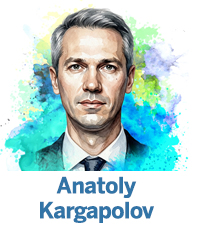
The author is the Russian consul general in the Hong Kong Special Administrative Region.
The views do not necessarily reflect those of China Daily.
