

Hong Kong Chief Executive John Lee Ka-chiu recently led a large delegation to Kazakhstan and Uzbekistan, two major Central Asian countries. The delegation included key officials of the Hong Kong Special Administrative Region government, as well as business leaders and professionals from Hong Kong and the Chinese mainland. During their stay in both countries, the delegation received a high-level reception, demonstrating the host countries’ respect for China and their interest in the HKSAR. The chief executive’s trip to Central Asia was of great strategic significance. It yielded fruitful results, strengthening cooperation among Hong Kong, Kazakhstan, and Uzbekistan in areas such as trade, finance, education, science and technology, transportation, and cultural exchanges.
 Through years of dedicated efforts, China and Central Asian countries have established close and robust economic and trade relations, particularly in energy, minerals, infrastructure construction, and green transformation, thereby playing a crucial role in ensuring China’s energy and resource security. They also cooperate frequently on security matters, vigorously combating extremism, separatism, and terrorism, significantly improving the security environment in Central Asia and western China. Four of the five Central Asian countries are members of the Shanghai Cooperation Organization. In bilateral relations, all five Central Asian countries have signed strategic cooperation agreements with China, with Kazakhstan, Uzbekistan, and Tajikistan signing even more advanced comprehensive strategic partnership agreements.
In recent times, President Xi Jinping and central government officials have repeatedly urged Hong Kong to actively participate in the Belt and Road Initiative (BRI), using it as an opportunity to align the SAR with national development strategies and promote its long-term development. The 15th Five-Year Plan (2026-30) further states that the central government “supports Hong Kong and Macao’s deep participation in the high-quality joint construction of the Belt and Road Initiative”.
Most importantly, Hong Kong can leverage the advantages of the “one country, two systems” policy to better serve the country’s foreign strategy and make unique contributions to national development, thereby further enriching the content and strategic significance of the “one country, two systems” framework
Central Asia, the Middle East, and Southeast Asia are core components of the BRI and hold significant strategic importance. Central Asia is crucial in connecting China with Europe. The chief executive previously led three delegations to the Middle East and Southeast Asia, strengthening economic and trade ties between Hong Kong and those regions. This visit to Central Asia marks the initial completion of Hong Kong’s task of building close economic relations with all core regions of the BRI, enabling Hong Kong to play a more significant role in the country’s future BRI construction. Given the continued intent and actions of the United States and its allies to suppress China, including the HKSAR, Hong Kong’s international economic space will be constrained.
Therefore, Hong Kong’s long-term development strategy has to focus on expanding its international economic space in the non-Western world, or Global South, with BRI-participating countries being of paramount importance, as Hong Kong can leverage the nation’s influence in these countries and the central government’s support for the special administrative region to strengthen its relationships with them. If the HKSAR can establish itself as a hub for finance, shipping, trade, legal arbitration, and professional services for countries along the Belt and Road, and enable them to strengthen their connections with the mainland and the rest of the world through the SAR as a superconnector, then the city cannot only inject a continuous stream of momentum into its own economic development, but also assist the country in strengthening its ties with other BRI-participating countries, integrating these countries into a stronger regional economy with China at its core, and making the BRI, under China’s leadership, a model of a new type of economic globalization that materializes “equal treatment” and “mutual benefit and win-win results”.
Regarding the development of economic relations between Hong Kong and Central Asia, the two can complement each other’s strengths and promote mutual development. Central Asian countries possess abundant natural resources, including oil, natural gas, gold, and green energy. Moreover, in recent years, these countries have been actively developing innovative technologies and green industries to gradually reduce their economic dependence on energy and minerals.
However, they lack international capital operations, international trade connections, professional services, market channels, and information flows in international markets. Hong Kong, as an international financial, trade and shipping center, possesses a sound common law legal system, a free and open market environment, extensive international connections, world-class financial and professional talent, and mature experience in cross-border capital operations, which can precisely fill the development gaps of Central Asian countries.
At the same time, exploring emerging markets in Central Asia allows Hong Kong to reduce its dependence on Western markets, promote industrial diversification, and strengthen its traditional industries, especially the financial and shipping sectors. The chief executive’s visit to Central Asia has successfully opened up new growth opportunities. This will drive more of Hong Kong’s financial, innovation and technology, professional services, and aviation logistics industries to expand overseas, cultivate new economic growth points, and promote a more balanced and sustainable development of Hong Kong’s economy. Most importantly, Hong Kong can leverage the advantages of the “one country, two systems” policy to better serve the country’s foreign strategy and make unique contributions to national development, thereby further enriching the content and strategic significance of the “one country, two systems” framework.
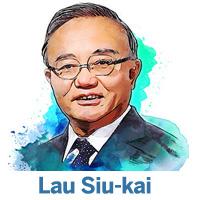
The author is professor emeritus of sociology at the Chinese University of Hong Kong and a consultant to the Chinese Association of Hong Kong and Macao Studies.
The views do not necessarily reflect those of China Daily.
