

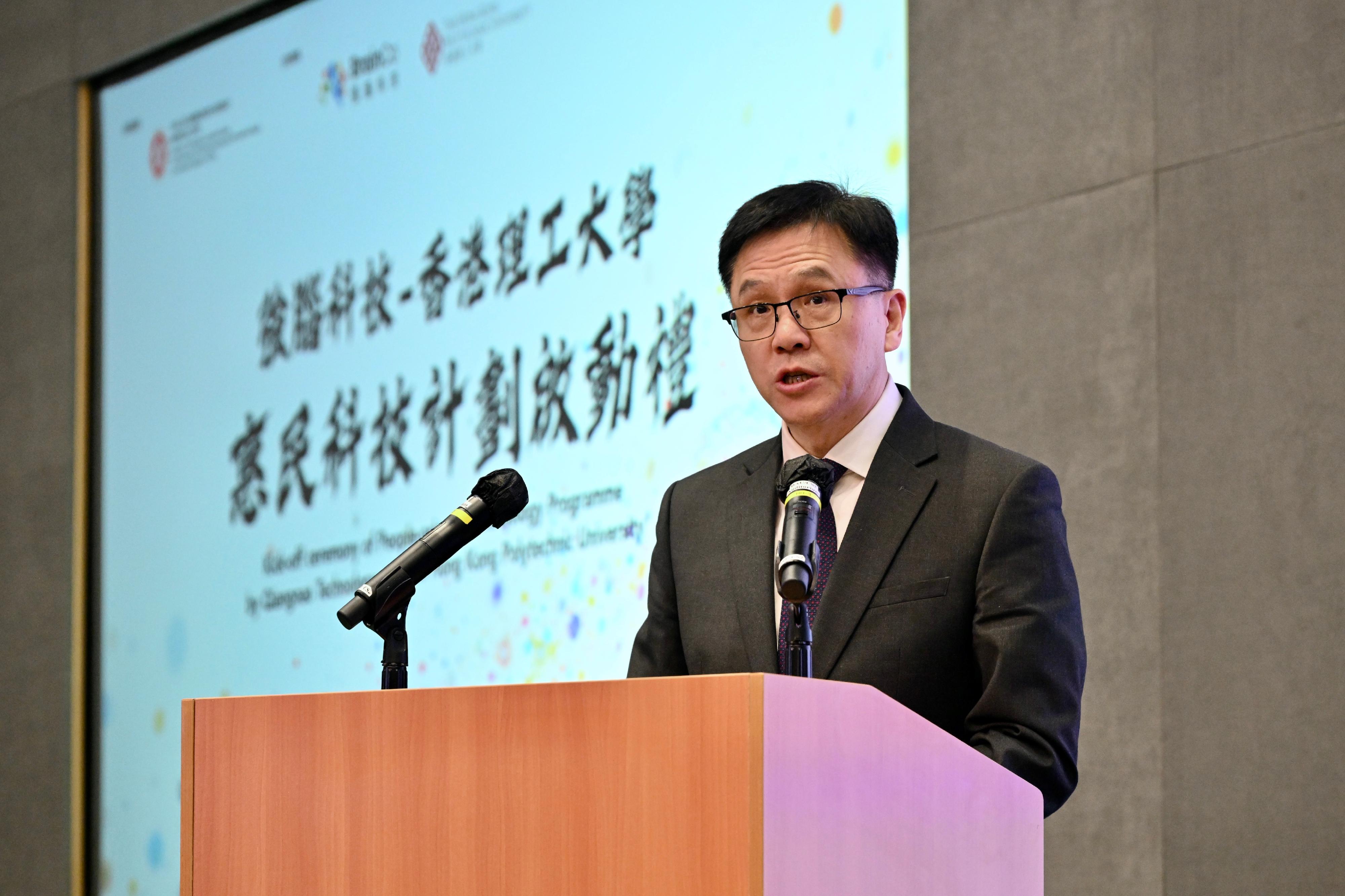
Hong Kong’s technology chief, Sun Dong, said on Sunday that the Shenzhou XXIII crew — including Hong Kong’s first space traveler, Lai Ka-ying — could visit the city as early as the first half of next year.
Sun, who is secretary for innovation, technology and industry, also revealed that the Hong Kong SAR government is in talks with Chinese mainland aerospace companies over cooperation on low-earth-orbit satellites — chasing a Starlink counterpart from Elon Musk’s rocket firm, SpaceX.
Sun added that the local authorities plan to set up a new space manufacturing research center before the year’s end under the InnoHK initiative — a government-backed funding program that incubates laboratories. The center will be tasked with employing 3D printing and artificial intelligence to meet future demands of the space industry, he said.
ALSO READ: 'Sky is the limit' takes on new meaning for Hong Kong, Macao youth
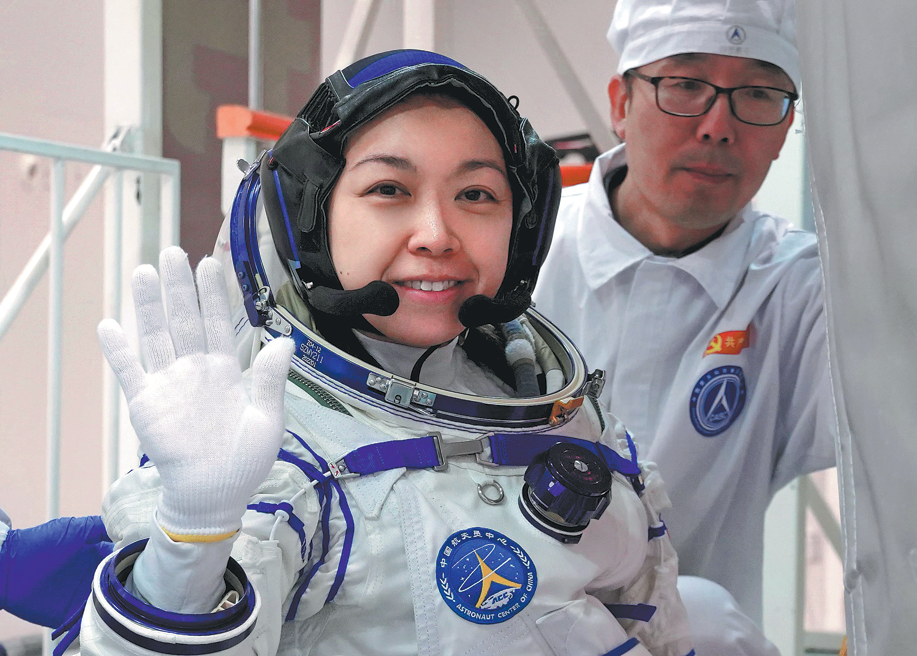
Lai Ka-ying, a Hong Kong police superintendent who is also the country’s first female payload expert, is a member of the threeperson crew on the Shenzhou XXIII mission, the country’s latest space flight.
The six-month mission, launched at night from the Jiuquan Satellite Launch Center on May 24, docked with the Tianhe core module of the Tiangong space station around 3.5 hours after lift-off.
Speaking to local media, Sun told reporters he is hopeful that the crew, once back on Earth, will make a trip to Hong Kong during the first half of next year.
Asked if Lai would be able to speak from orbit with students in Hong Kong via a live “Tiangong classroom” session, Sun said the SAR government has proposed the idea to the mainland authorities and the response has been positive.
Sun said he is confident that such an event would encourage youngV people from the city to pursue careers in innovation and technology, and to take an active interest in the nation’s space ambitions.
“Lai Ka-ying, a mother of three who speaks fluent Cantonese, serves as an inspiration to many in Hong Kong,” he said. “I hope the city can see more Lai Ka-ying-inspired scientists emerge in the years ahead.”
READ MORE: Mainland: First HKSAR astronaut result of 'one country, two systems'
On how Lai was selected, Sun said the process looked at “overall performance” and that Lai’s “excellent academic ability”, “optimal physical and psychological fitness”, and professional attitude set her apart among 120 candidates from walks of life as varied as university teaching, research and corporate roles.
Sun said the nation’s 2030 moon landing goal is already in planning, with the SAR government ready to support the mission and recruit astronauts from the city to take part.
Hong Kong is on course to reach its space technology goals, said Sun, with growth strategies for the sector included in the city’s first local five-year plan, which is scheduled for release later this year.
READ MORE: HK's Lai Ka-ying begins maiden spaceflight
Hong Kong has “pronounced strengths” in scientific research that can be “directly applied” to national space-exploration efforts, he said. Local universities are now actively marshalling their research resources accordingly, he added.
Hong Kong has been intensifying its efforts to promote aerospace science and technology while throwing its weight behind the space economy.
According to Hong Kong Chief Executive John Lee Ka-chiu’s 2025 Policy Address, a special funding stream named the Innovation and Technology Support Programme Special Call on Aerospace Technology has allocated over HK$100 million ($12.76 million) to relevant research at six local universities.
