

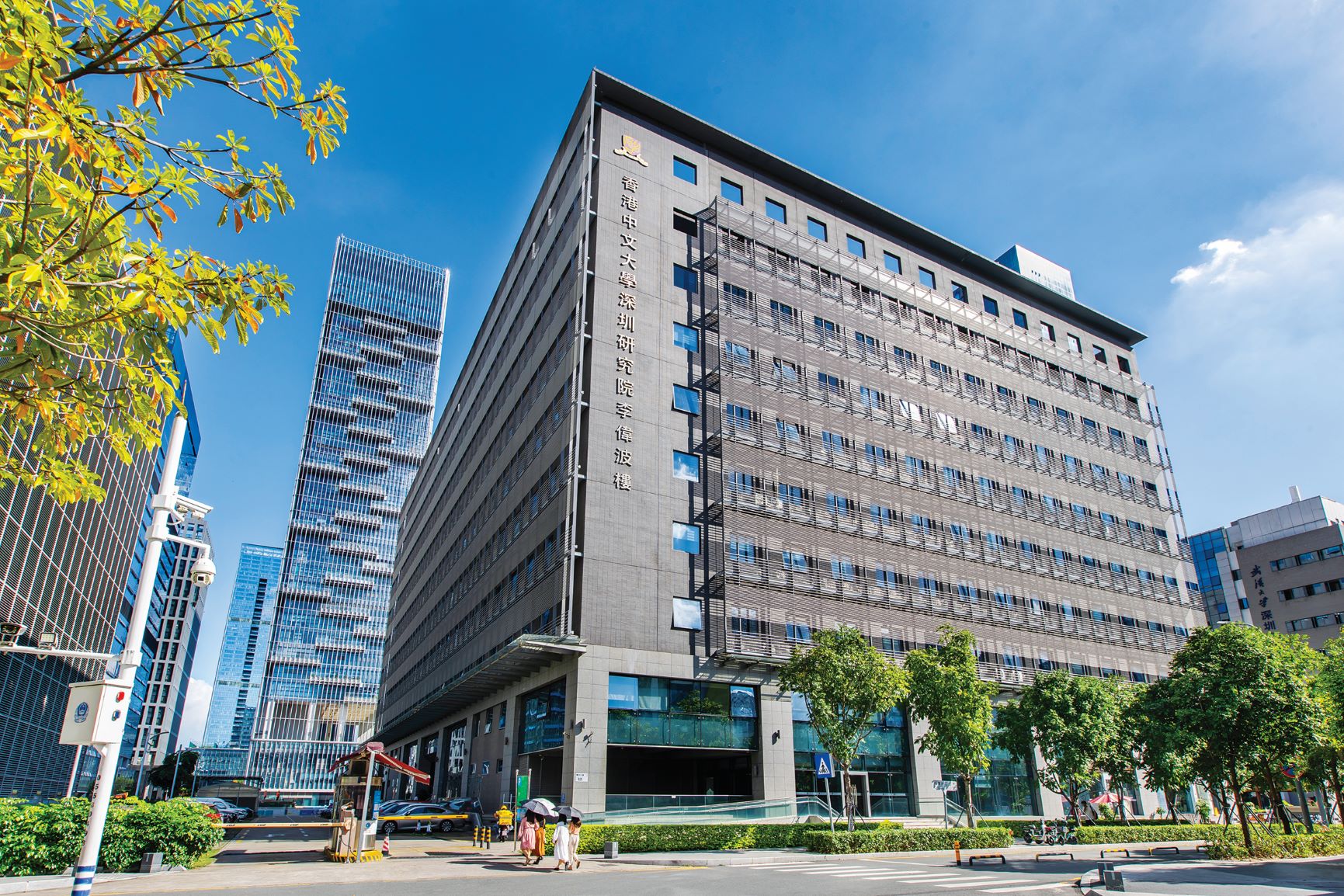
With a clear strategic vision for the Guangdong-Hong Kong-Macao Greater Bay Area, the Chinese University of Hong Kong (CUHK) is actively aligning its education, research, and innovation efforts with national development priorities.
Through a growing network of industry-academia-research partnerships, the university is contributing to the cultivation of new technologies and talent to meet the evolving needs of societal, industrial, and national development.
Serving as the spearheading body of CUHK’s innovation and technology development in the Greater Bay Area, the university’s Shenzhen Research Institute (SZRI) has played a pivotal role in transforming academic excellence into industrial impact.
As the first wholly owned research institute established by CUHK on the Chinese mainland, SZRI marked an early foothold for Hong Kong universities in the vast economic hinterland.
In an exclusive interview with China Daily, Lin Huangquan, executive director of SZRI, said that amid rapid social development and technological changes, the emphasis on talent cultivation in universities has developed from basic research to industrial applications.
Hong Kong universities’ cooperation with the mainland has also evolved from scattered joint projects in the initial stage to more strategic, proactive research initiatives, especially since a group of research institutions were established on the mainland around 2010. Today, technology transfer has become a priority, highlighting closer integration with industry.
In line with these trends, SZRI has achieved numerous accomplishments. Leveraging its institutional frameworks familiar to Hong Kong and profound connections with mainland government agencies, enterprises, public institutions, and industrial organizations, SZRI has become a comprehensive hub for cross-boundary scientific collaboration.
Established in 2007, the institute has developed more than 20 highly active international research teams. Building on CUHK’s strengths, it focuses on cutting-edge research in biomedicine, engineering, basic science and other sectors.
The institute has undertaken more than 700 research and industrial projects, published over 3,000 papers, and filed 120 patents. It has trained nearly 50 postdoctoral researchers, leading the push among Shenzhen-based university research institutions.

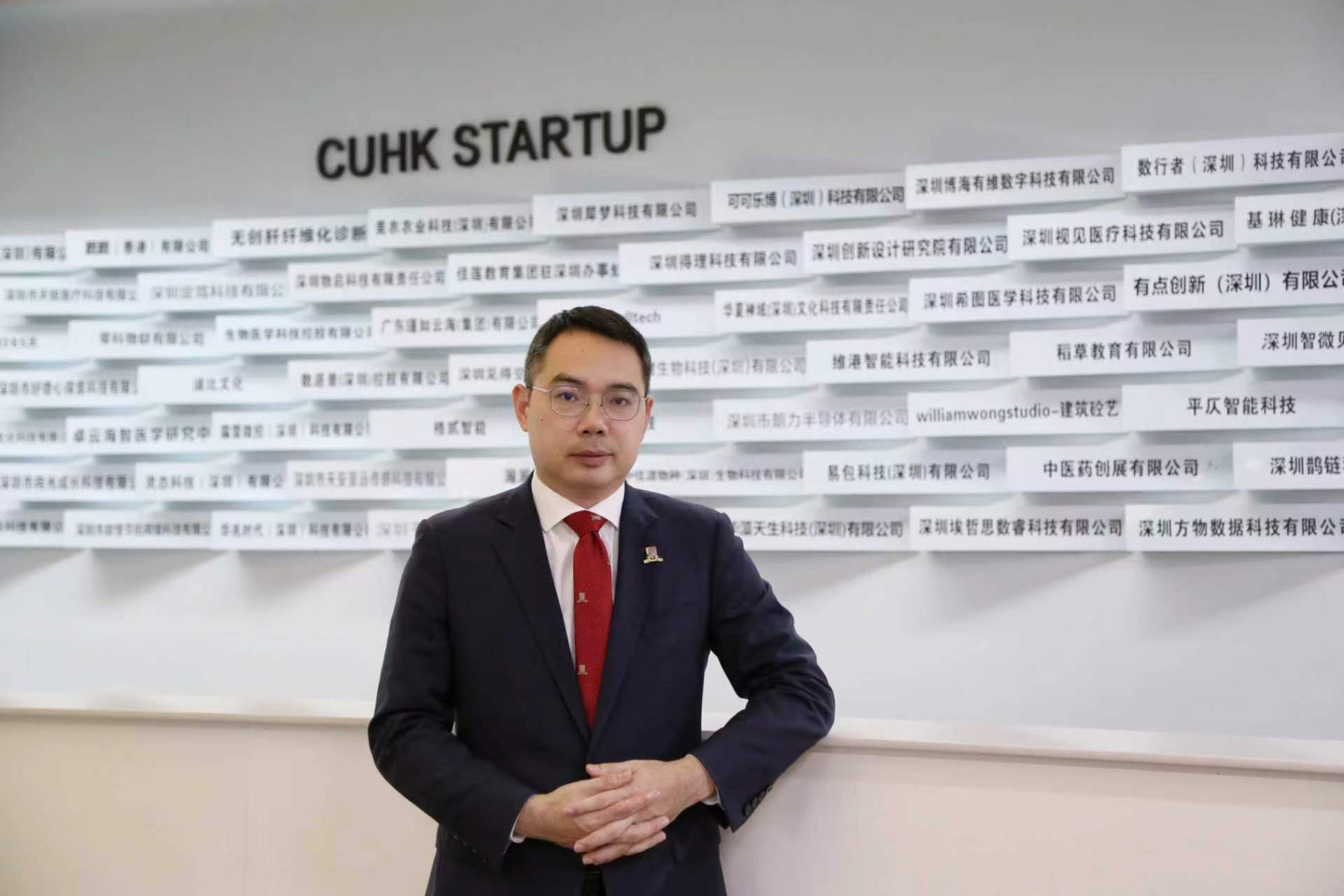
Its innovation hub, founded in 2018, has attracted 138 startup teams, including 20 national high-tech enterprises and nine specialized and sophisticated small and medium-sized enterprises certified by mainland authorities.
Startups incubated by the hub have secured over 2.09 billion yuan ($307 million) in social financing and more than 78.5 million yuan in government funding, generating over 3,100 jobs and holding more than 823 valid intellectual property rights, including over 130 invention patents.
Under a pilot program, SZRI has facilitated the cross-boundary transfer of the mainland’s clinical human genetic resources and bioinformatics data to Hong Kong, supporting high-level medical research on multiple fronts, such as Professor Dennis Lo Yuk-ming’s project for screening early-stage cancer using plasma DNA.
Through SZRI, a leading study on the gut microbiome and digestive system cancers, led by Professor Yu Jun, has been selected for the country’s flagship “Science and Technology Innovation 2030” initiative, marking a milestone for the institute in undertaking national-level research.
With the support of SZRI, Professor Yu Bei’s team utilized AI-generated technology to overcome bottlenecks in industrial foundational resource databases, strengthening China’s technological self-reliance in this area.
Looking to the country’s 15th Five-Year Plan (2026-30) period, Lin said the institute aims to focus on the development of new quality productive forces and further strengthen the collaboration model of “conducting R&D in Hong Kong, achieving technology transfer in Shenzhen, and advancing industrialization across the Greater Bay Area”.
SZRI also plans to leverage two major strategic cooperation platforms — Hetao and Qianhai — to establish a more efficient mechanism for cross-boundary flow of research elements such as samples, data, talent, funding, and intellectual property rights, he added.
In addition to this comprehensive platform in Shenzhen’s Nanshan district, CUHK has established another research institute in Hetao focused on basic research collaboration between Shenzhen and Hong Kong, as well as the new InnoHub for New Quality Industries in Qianhai, building a multitiered collaborative innovation network.
The establishment of InnoHub marks the latest milestone in CUHK’s innovation road map in the Greater Bay Area, representing a new phase in technology commercialization and new quality productive forces.
Isabella Poon Wai-yin, provost of CUHK, said that the university has established a network of affiliated and partner institutions across the mainland, including the CUHK-Shenzhen Campus, to deepen ties in education and research and knowledge transfer.
In the future, the university seeks to expand exchanges with these mainland institutions to strengthen their capacities. It will enrich the curriculum of a pioneering “2+2 double major program” with CUHK-Shenzhen, which allows undergraduates to spend two years at each campus with flexible course options, according to Poon.
Beyond Shenzhen, CUHK also launched a joint funding initiative with CUHK-Shenzhen and the Guangdong provincial government, pledging 90 million yuan to support in-depth technological cooperation from 2024 to 2026.
She hopes to expand ties with Greater Bay Area cities like Foshan and Dongguan, while eyeing deeper collaboration with Shanghai and Beijing, both viewed as national-level innovation powerhouses.
Meanwhile, amid intensifying global competition for talent, Poon said CUHK has unveiled a series of initiatives to support Hong Kong’s bid to become an international education hub.
In February, CUHK hosted the Asia-Pacific Association for International Education (APAIE) Conference and Exhibition 2026 — one of the world’s top three international education conferences — attracting over 600 organizations from around the world.
In response to the growing demand for top-tier mathematical talent driven by technological advancements, the university established the Zhizhen School of Interdisciplinary Mathematical Sciences last year, led by internationally renowned mathematician Professor Shing-tung Yau.
This year, amid expeditious developments in geopolitics and international diplomacy, CUHK will launch the Diplomacy and International Studies Major Programme, the first such program in Hong Kong dedicated to the study of diplomacy.
In graduate education, the university is establishing a dedicated “Graduate College” at its Sha Tin main campus, aiming to foster high-impact research communities and attract top global talent to pursue careers in Hong Kong.
In line with the nation’s strategy to build a leading education powerhouse during the 15th Five-Year Plan, Poon pledged that CUHK will focus on student experience, research and innovation, and a global perspective to enhance its influence within the global higher education landscape.
Against this backdrop, the continued development of platforms such as InnoHub reflects CUHK’s long-term commitment to advancing innovation and new quality productive forces in the Greater Bay Area.
Contact the writers at bingcun@chinadailyhk.com
