

Expansion of domestic demand seen as crucial to nation's modernization drive
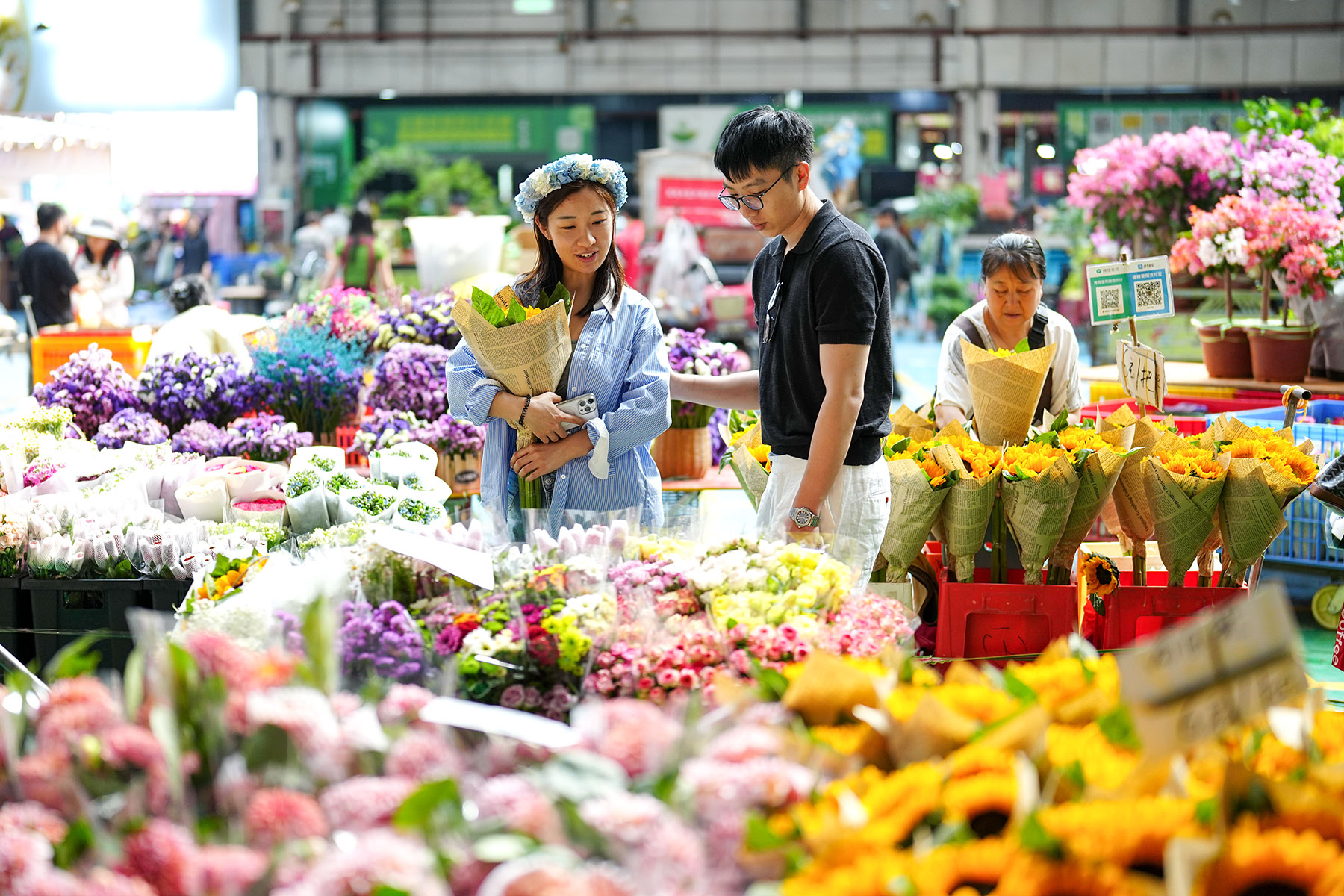
As China shifts from high-speed to high-quality growth, the engines of its consumer market are evolving in tandem, with vast potential fueled by rising demand for premium goods, quality services and new consumption scenarios, economists and executives said.
The world's second-largest economy is doubling down on expanding domestic demand and further opening its vast market to the world — a move that will offer an important source of predictability and create massive opportunities for Chinese and foreign businesses alike, even as global trade remains tepid and protectionist pressures mount, they added.
In late April, a meeting of the Political Bureau of the Communist Party of China Central Committee, which was chaired by President Xi Jinping, reiterated the need to fully tap the potential of domestic demand, and called for efforts to expand the supply of quality goods and services and promote the upgrading of consumption.
READ MORE: Fiscal, monetary tools to boost consumption
Xi, who is also general secretary of the CPC Central Committee, had stressed in December, in an article published in Qiushi Journal, the flagship magazine of the CPC Central Committee, that expanding domestic demand is not a stopgap effort, but a strategic measure that bears on economic stability and security.
Implementing a strategy of expanding domestic demand is necessary for maintaining the long-term, sustained and healthy development of China's economy and meeting the people's ever-growing demand for a better life, he added.
Zhang Yansheng, a veteran economist and expert on global economic affairs, said Xi's remarks underscored that expanding domestic demand and boosting consumption should not be viewed merely as short-term policy tools to counter cyclical pressures, but as a long-term strategy closely tied to China's modernization drive.
"A Chinese modernization with a huge population, a huge economic size and deep integration with the global economy cannot possibly be built on external demand," Zhang said. "No external market in the world can accommodate such a scale. Therefore, China's modernization must be rooted in domestic demand."
According to Zhang, expanding domestic demand and consumption requires a broader shift in policy thinking — taking the people's growing need for a better life as the fundamental starting point, while strengthening support for public services, social welfare and income growth.
That shift has been underway. Supply has been continuously improved to meet consumers' growing demand for better quality and personalized offerings, helping drive the expansion of domestic demand.
In fact, China's economic miracle did not happen by chance. It testifies to the effectiveness and adaptability of China's socialist economy under the guidance of Xi Jinping Thought on Economy, according to Yang Weiyong, an associate professor at the University of International Business and Economics in Beijing.
Retail sales of cultural, sports and leisure services all grew at double-digit rates in the first four months of this year, the National Bureau of Statistics said. Spending on physical goods is also shifting toward higher-quality categories, with retail sales of communication equipment up 17.7 percent year-on-year and cosmetics up 5.6 percent.
"With per capita GDP having exceeded $10,000, China is currently in a stage of rapid upgrading of the consumption structure," said Fu Linghui, spokesman and chief economist of the bureau, adding that such trends in demand will go in tandem with a broader and more diversified supply of goods and services to continue driving consumption growth.
Analysts said that China's consumption upgrade and efforts to expand demand are critical, not only to China's growth, but also for the potential to serve as a stabilizing anchor for global demand, as protectionist winds sweep through major economies.
Louis Kuijs, S&P Global Ratings' chief economist for the Asia-Pacific region, said that the economic policies of big players like China, and particularly how the country stimulates consumption, are closely followed by overseas analysts, as these policies hold significant implications for driving global economic growth.
The "Big Market for All: Export to China" initiative, launched by the Ministry of Commerce, is in full swing, with a series of events this year designed to meet rising domestic demand for quality foreign goods while offering global exporters a stable outlet.
Supachai Junkeiat, president of TCP China, the Thai conglomerate behind the energy drink brand Red Bull, said the company has always been optimistic about the upgrade potential of China's supersized consumer market.
"Going forward, we will continue to closely track the country's consumption trends and leverage product innovation to precisely meet new demands for consumption upgrades," he said.
Nevertheless, China's overall retail sales of consumer goods from January to April rose 1.9 percent year-on-year, down from 2.4 percent for the first quarter, the NBS said.
Economists expect consumption to continue its gradual recovery, but the pace will depend on how quickly income growth catches up, how effectively social safety nets reduce precautionary saving, and whether the property market stabilizes more broadly.
Nobel laureate economist Michael Spence told China Daily that income in the economy flows to government, corporates or households. "If you want consumption to rise, you need to shift more of that flow toward the household sector," he said.
One viable route, according to Spence, is to have State-owned enterprises pay out higher dividends, redirecting to the people some of the income that now flows to the government.
ALSO READ: Experts urge swift rollout of household income plan
Spence also pointed to a "well-built social security system" as a way to offset Chinese households' deep-rooted propensity to save, reducing the precautionary share and unlocking more consumption potential.
In March, policymakers vowed to unveil an income growth plan for urban and rural residents this year, with a range of practical measures to boost the earnings of low-income groups, increase property income and refine the social security systems.
Zhang, the economist, said that raising people's incomes is of fundamental importance in China's endeavors to meet people's aspirations for a better life, and called for efforts to uphold market-oriented resource allocation and foster a more supportive institutional environment for entrepreneurship and employment to boost people's wage growth.
Contact the writers at wangkeju@chinadaily.com.cn
