

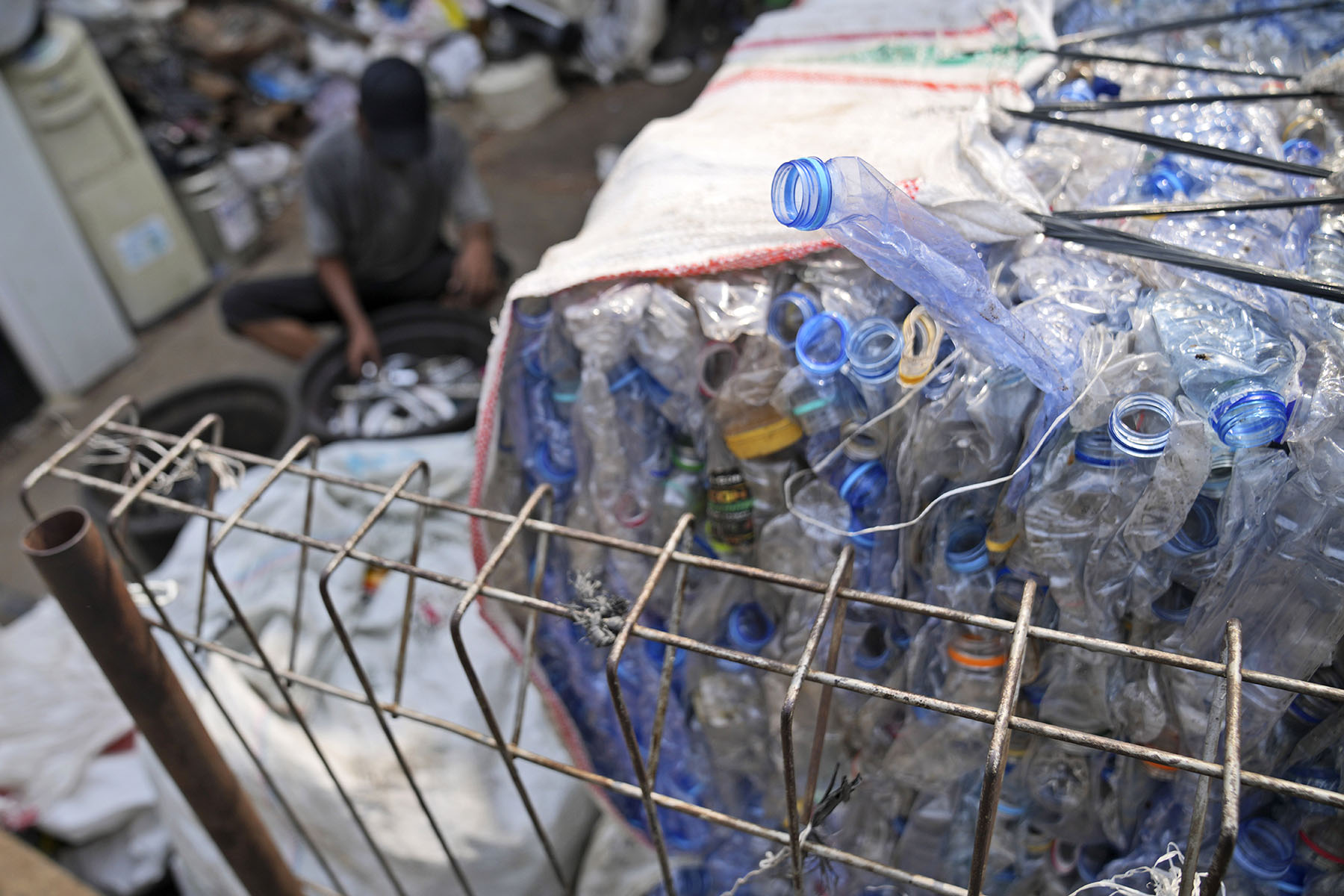
Jakarta now requires households to sort their trash for composting and recycling, and to reduce the amount of waste sent to landfills, in an effort to ease pressure on the overloaded Bantar Gebang landfill in Bekasi, West Java, as it heads toward a tipping point driven by more than 9,000 metric tons of garbage per day.
Through Instruction No. 5 of 2026 on the Source-Based Waste Sorting and Processing Movement, which went into force on April 30, Jakarta Governor Pramono Anung has ordered residents to sort their waste at home into four categories.
These are: organic waste for composting, such as food scraps; inorganic waste for recycling, such as plastics and cardboard; B3 waste, referring to hazardous and toxic materials; and general or residual waste, referring to materials that cannot be recycled or composted, such as disposable diapers, Styrofoam and tissues.
READ MORE: Hovering danger
Official data show that food waste accounts for almost 50 percent of the city's garbage composition at almost 50 percent. Plastics contribute around 23 percent, followed by paper and cardboard at 17 percent and glass, metals, textiles and other materials comprising the rest.
"Hazardous waste must be taken to designated facilities such as B3 collection sites because of its dangerous nature. Residual waste, meanwhile, will be processed through refuse-derived fuel plants and waste-to-energy facilities so that not all of it ends up in landfills," Pramono said.
The instruction also enhances local monitoring by involving subdistrict heads to ensure household waste is properly sorted and prevent unsorted waste from being transported to temporary disposal sites.
The city is also aiming for each community unit to develop independent waste management systems, offering incentives for areas that achieve 100 percent sorted waste. Noncompliant residents may face administrative sanctions, as determined at the community unit level.
Cyril Raoul Hakim, special gubernatorial staffer for communications, told The Jakarta Post on Tuesday that the initiative would be rolled out in stages toward a targeted 50 percent reduction in the volume of waste sent to Bantar Gebang by Aug 1.
In early March, seven people were killed when a landslide tore through the country's largest landfill following hours of heavy rain, exposing the deadly consequences of Jakarta's chronic waste mismanagement.
Greener, wider systems
As part of its wider waste management efforts, Jakarta has signed a memorandum of understanding with sovereign wealth fund Danantara to accelerate the development of two waste-to-energy facilities, one in Bantar Gebang and the other in North Jakarta's Kamal Muara, with a combined waste processing capacity of 2,500 to 3,000 tons per day.
The city also commenced operations last year at the Rorotan refuse-derived fuel processing plant in North Jakarta, which has a daily capacity of 2,500 tons and can produce around 875 tons of alternative fuel at full capacity.
ALSO READ: Death toll rises to 7 in Indonesia's waste mound collapse
According to Yayat Supriatna, an urban expert at Trisakti University, aside from the high volume of garbage, poor public awareness and insufficient infrastructure also contributed significantly to Jakarta's waste crisis.
Yayat stressed that household waste sorting must be supported by downstream systems, while warning that the new policy risked becoming impractical without supporting facilities and public initiatives.
In particular, he pointed to a critical need for continuous education with a hands-on approach, rather than just public appeals, to achieve lasting behavior change.
"If we want public participation in waste management, the program must be instilled through education and practical facilitation," he said.
