

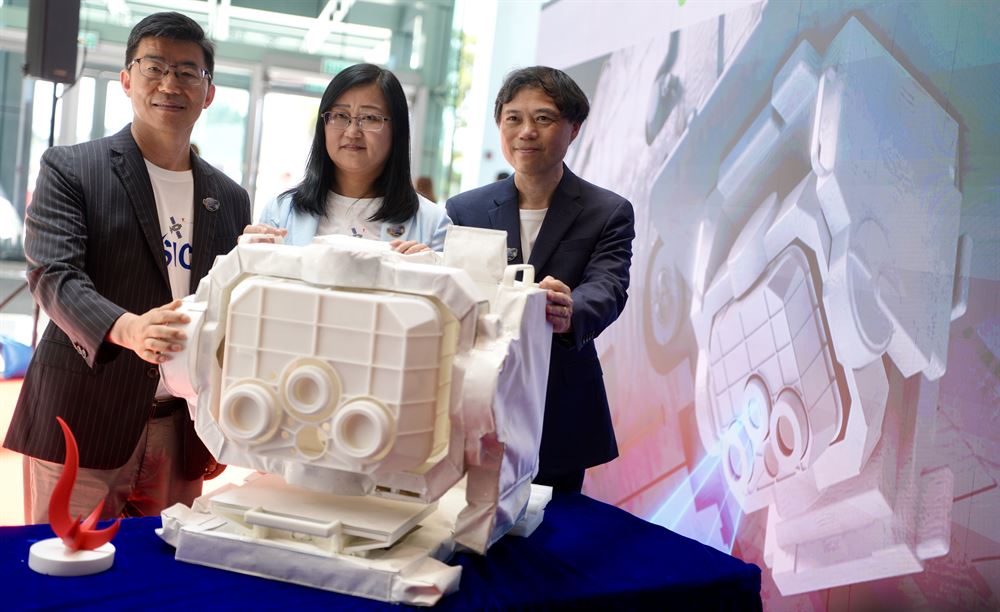
The world’s first lightweight, high-resolution, high-precision carbon dioxide (CO2) and methane (CH4) point-source detector, developed by Hong Kong scientists, has arrived at the orbiting Tiangong — making it the city’s first scientific payload aboard the national space station.
The project, hailed as a proof of the Hong Kong’s ability to support the nation's space development and carbon neutrality drive, is able to detect over 99 percent of CO2 emissions from the nation's coal-burning power plants and CH4 emissions from its coal mines, providing precise and reliable data for policymakers in China and around the world, said Su Hui, co-leader of the project and chair professor of the Department of Civil and Environmental Engineering at Hong Kong University of Science and Technology (HKUST), on Wednesday.
The Hong Kong-made payload, a Multi-Spectral Imaging Carbon Observatory (MUSICO) nicknamed “eye for space”, arrived at Tiangong at 1:11 pm on Monday aboard the Tianzhou-10 cargo craft, among other essential deliveries such as artificial human embryos and ultra-thin solar cells, and supplies including an extravehicular spacesuit.
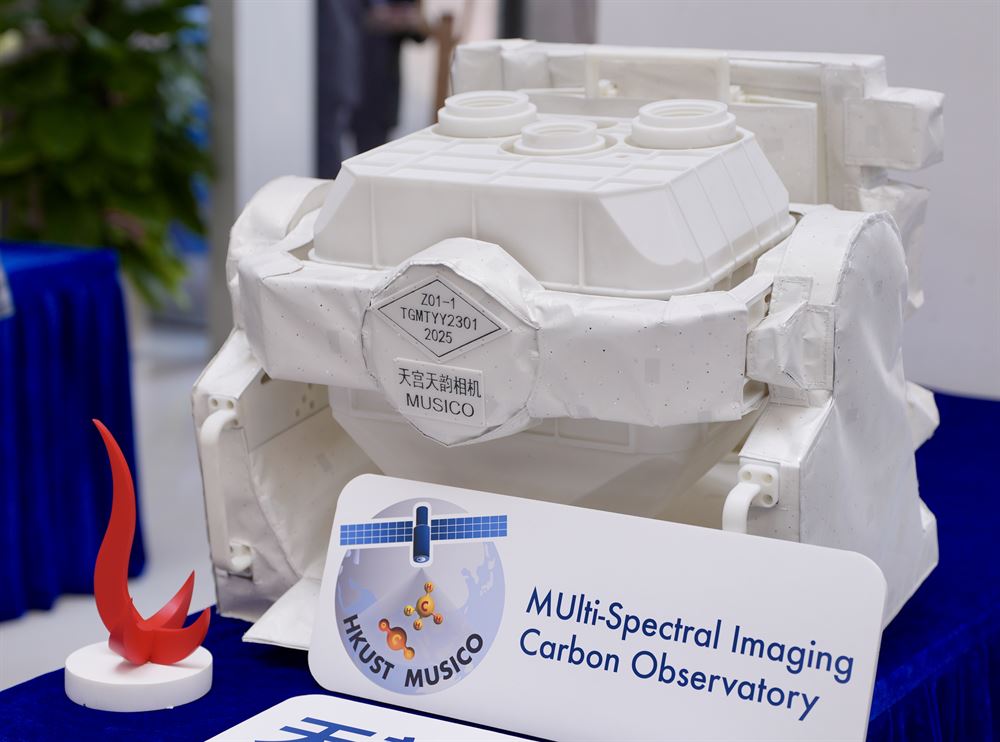
The MUSICO will participate in China's first Earth observation project under its human spaceflight program.
Weighing less than 80 kilograms and smaller than a domestic washing machine, the payload is capable of accurately measuring CO2 and CH4 — two major greenhouse gases — from space, with extra-high spectral resolution and 100-meter spatial resolution, said the research team.
ALSO READ: First HK payload to support nation's carbon targets reaches Tiangong
By analyzing intensity changes of sunlight over specific spectral bands as it passes through the atmosphere and reflects off the Earth's surface, the payload identifies gas-specific absorption features to determine gas concentrations and pinpoint individual emission sources, enabling effective monitoring of key facilities such as power plants and landfills.
Su said the detector's observation range covers latitudes from 42 degrees south to 42 degrees north — encompassing most of the world's densely populated and industrially active regions. The data it collects will be shared with government departments and research institutions in China and abroad under the nation’s data management policies. Recipients include the nation’s Ministry of Ecology and Environment, and the United Nations Environment Programme which will add it to an open global dataset for researchers and authorities worldwide.
Zhang Limin, another co lead of the project and head of HKUST's Department of Civil and Environmental Engineering, said that while the Hong Kong SAR has participated in many of the nation's space projects in the past, this payload is the first mission led by the SAR — a milestone.
He highlighted that the project's results will also provide a scientific basis for cross regional climate research and emissions reduction efforts in economies engaged in the Belt and Road Initiative, contributing to the global response to climate change.
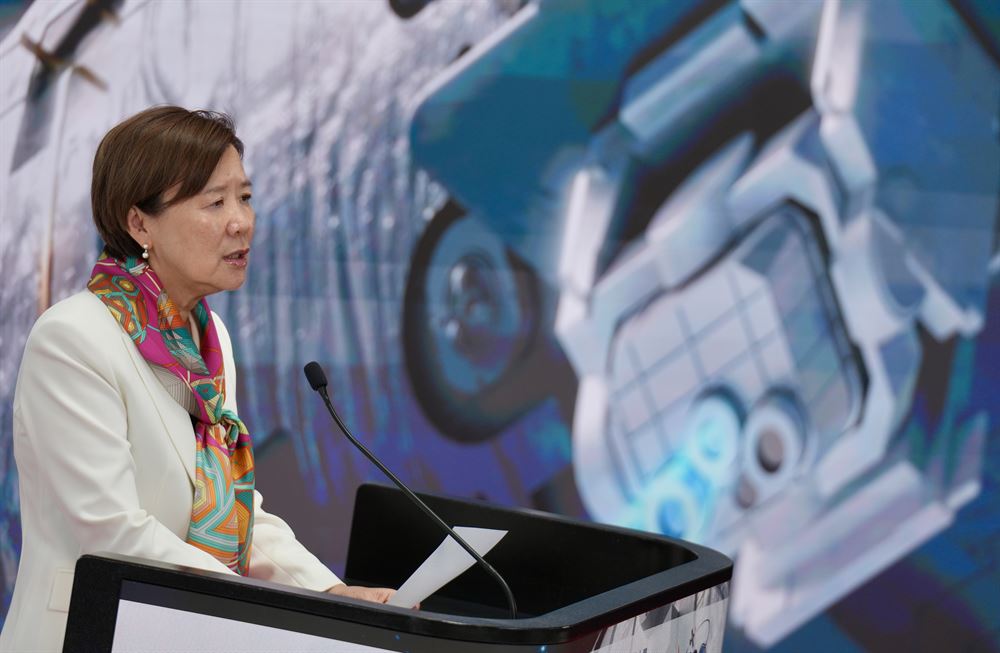
Also addressing the briefing, HKUST President Nancy Ip Yuk-yu said the project proves that Hong Kong's research capabilities can make substantial contributions on the nation's highest-level aerospace platforms.
It also supports the nation's dual-carbon goals and provides scientific backing for the Beautiful China Initiative and global climate governance, Ip said.
Contact the writer at amberwu@chinadailyhk.com
