

Sector's strengthening being driven by second-hand home sales in key cities

China's real estate market is navigating a pivotal transition toward more sustainable growth, with early signs of stabilization emerging as policy support gains traction and market confidence gradually strengthens.
While the sector's adjustment has weighed on home sales and mortgage demand, the moderation in lending reflects a broader shift toward improved asset quality and more prudent risk management.
Against this backdrop, annual reports from listed banks show that by the end of 2025, the combined outstanding balance of residential mortgages at China's six largest State-owned commercial lenders stood at about 24.48 trillion yuan ($3.6 trillion), down 711.52 billion yuan from the end of 2024, a year-on-year decline of 2.82 percent.
READ MORE: Big cities see pro-property stimulus steps
Among them, the outstanding balance of residential mortgages at Industrial and Commercial Bank of China fell by 207.31 billion yuan to 5.88 trillion yuan; China Construction Bank declined by 196.53 billion yuan to 5.99 trillion yuan; Agricultural Bank of China dropped by 168.24 billion yuan to 4.82 trillion yuan; Bank of China declined by 106.48 billion yuan to 3.98 trillion yuan; Bank of Communications fell by 24.15 billion yuan to 1.44 trillion yuan; and Postal Savings Bank of China decreased by 8.81 billion yuan to 2.37 trillion yuan.
These six major banks are the backbone of China's mortgage lending market. According to the People's Bank of China, the country's central bank, the outstanding balance of residential mortgages across financial institutions stood at 37.01 trillion yuan at the end of the fourth quarter of 2025, down 1.8 percent year-on-year, with a full-year decrease of 676.8 billion yuan.
All six banks reported negative growth in mortgage balances last year, though to varying degrees. The smallest decline was at PSBC (0.37 percent), followed by BOCOM (1.65 percent) and BOC (2.6 percent), while larger declines were seen at ICBC (3.41 percent), ABC (3.38 percent) and CCB (3.18 percent).
Xue Hongyan, a special researcher at Jiangsu Su Merchants Bank, said the decline in mortgage balances is a natural result of the real estate cycle adjustment, reflecting both weak demand for new mortgages and the runoff of existing loans.
Wang Pengbo, chief analyst at market consultancy Botong Analysys, echoed this view, noting that the decline was driven by a combination of early mortgage repayments by households and subdued homebuying demand last year.
Affected by macroeconomic conditions and the downturn in the property sector, nonperforming mortgage loan ratios have generally risen across the banking industry. By the end of 2025, among the six largest State-owned commercial lenders, only BOC saw its nonperforming mortgage loan ratio edge down by 0.01 percentage point to 0.6 percent, while the other five recorded increases. ICBC's ratio rose by 0.33 percentage point to 1.06 percent, and BOCOM's ratio increased by 0.43 percentage point to 1.01 percent.
Wang Jingwu, senior executive vice-president of ICBC, said that amid economic restructuring, property market adjustment and temporary imbalances between supply and demand, the bank's nonperforming residential mortgage loan ratio has entered a short-term upward trend, which is broadly in line with the banking industry-wide trend.
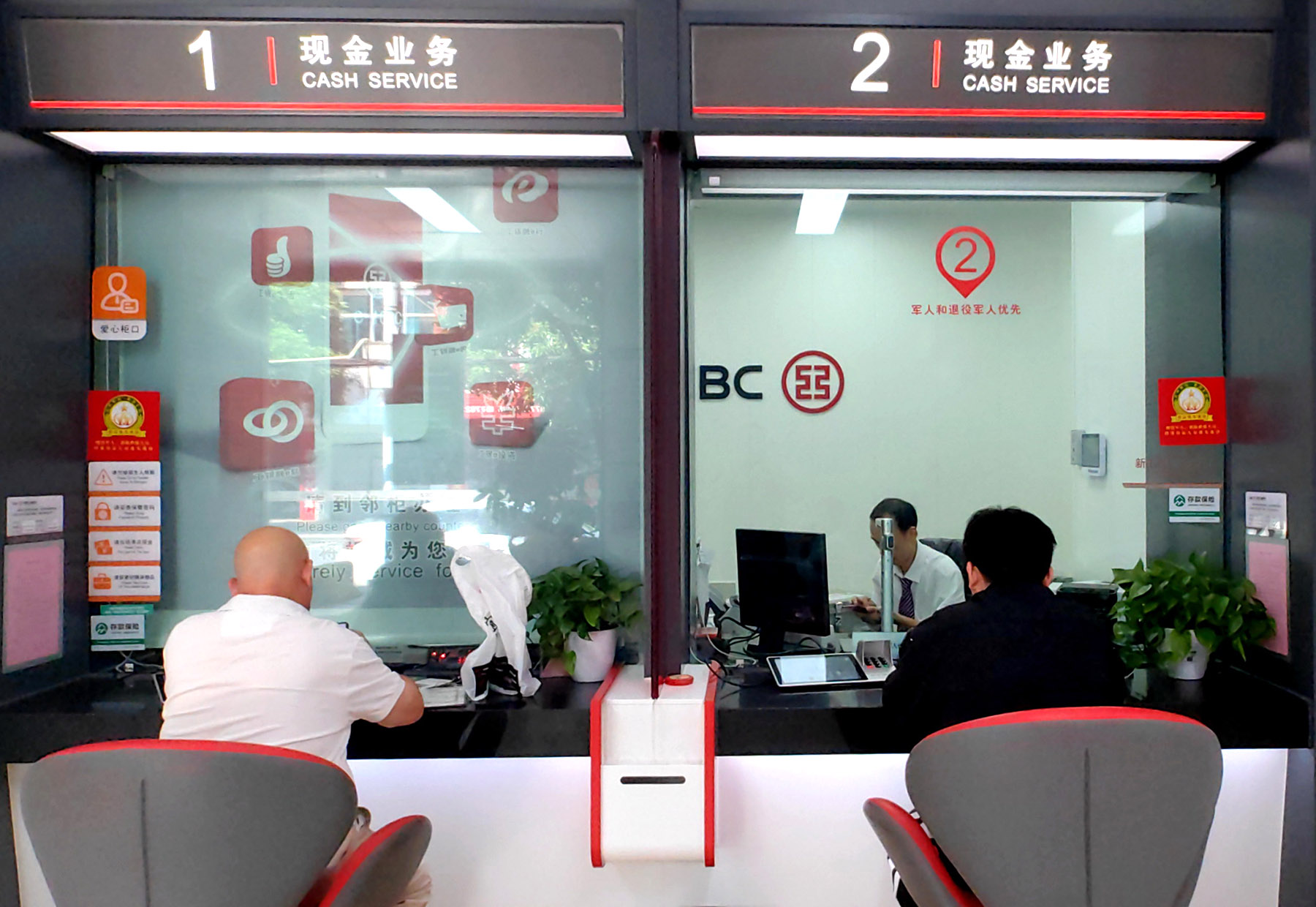
However, he emphasized that China's economic fundamentals remain solid, with strong resilience and significant potential, and that the long-term positive outlook remains unchanged. Risks in personal lending are therefore manageable. He added that ICBC is closely monitoring real estate market trends and implementing national policies aimed at establishing a new development model for the property sector, promoting better housing and stabilizing the market.
Wu Jian, executive vice-president of BOC, said that despite increasing external uncertainties, the underlying conditions supporting China's long-term growth remain intact. BOC will strengthen forward-looking risk assessment, firmly guard against systemic risks, further optimize its credit structure, and enhance risk management in areas such as real estate, local government debt and structural imbalances in key industries.
Zhang Hui, president of BOC, said the bank supported efforts to stabilize the property market last year by issuing more than 500 billion yuan in residential mortgages. This year, it is steadily expanding both mortgage lending and non-housing consumer loans, promoting coordinated development across products, customer segments and consumption scenarios to build a comprehensive consumer ecosystem.
From late 2025 to early 2026, the real estate market exhibited new characteristics: on the one hand, the reduction in interest rates for existing mortgages and housing provident fund loans has pushed the cost of home purchases to a new low; on the other hand, further targeted, effective and sustainable policy support is still needed to bolster market confidence, said Li Yong, an analyst at Soochow Securities.
Zhou Wanfu, executive vice-president of BOCOM, noted that while the real estate market experienced a brief upswing in the first quarter of last year, with mortgage loans growing year-on-year, it remained in a period of deep adjustment in the first quarter of this year, and BOCOM saw mortgage repayments exceed new disbursements, resulting in negative growth. However, he also pointed out that the volume of mortgage applications at the bank has risen significantly since March, up around 15 percent compared with both the first two quarters and the latter half of last year.
Zhou believes this signals a stabilization in the property market. If the trend continues, mortgage lending could gradually return to positive growth this year, helping drive retail loan growth toward target levels.
Supported by a series of ongoing policy measures, China's real estate market showed a trend of steady improvement in the first quarter. Transaction volumes for existing homes in some major cities have rebounded significantly since March.
ALSO READ: Realty mkt sees broad rebound
On March 22, the number of contracts signed at second-hand home agencies in Shenzhen, Guangdong province, hit a five-year high for a single day. On April 11, Shanghai's daily online transaction volume for second-hand homes also reached a five-year high. Some institutions view this as a positive signal that the real estate market is likely to bottom out by the end of 2026.
Data from real estate information provider CRIC show that the transaction area for second-hand homes in 20 major cities nationwide reached about 17.97 million square meters in March, up 117 percent month-on-month and 6 percent year-on-year. In April, the transaction area for second-hand homes in the 20 key cities was approximately 17.93 million sq m, up 17 percent year-on-year. The cumulative transaction area for the first four months in these cities was approximately 59.18 million sq m, an increase of 8 percent year-on-year.
Analysts said this is not merely a short-term rebound from an oversold market, but rather a sign that market confidence is steadily strengthening as mortgage rates are gradually lowered and home purchase policies are gradually relaxed. Furthermore, this trend is likely to continue into the second quarter.
Contact the writers at jiangxueqing@chinadaily.com.cn
