

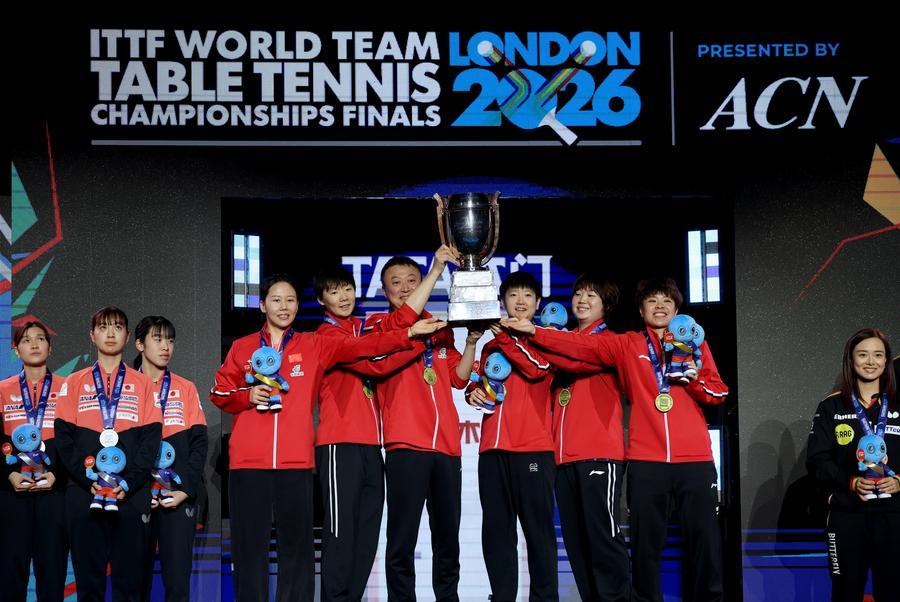
Despite a double delight at the world team championships, China's mighty table tennis squad has refused to revel in complacency, as it braces for a challenging lead-up to LA28 with sobering takeaways from London.
With a convincing defeat of archrival Japan in both finals, China's formidable national program has left the sport in awe of its resilience and depth, both of which proved vital and are still unrivaled, for securing its seventh women's and 12th men's team titles in a row at London's OVO Arena Wembley on Sunday.
As Chinese fans celebrate widely for both squads having lifted their respective trophies — the Corbillon Cup for women and Swaythling Cup for men — for a record-extending 24th time, China's top paddlers know it was anything but a smooth sail, hailing the test along the way as being equally valuable to the silverware lifted in the end.
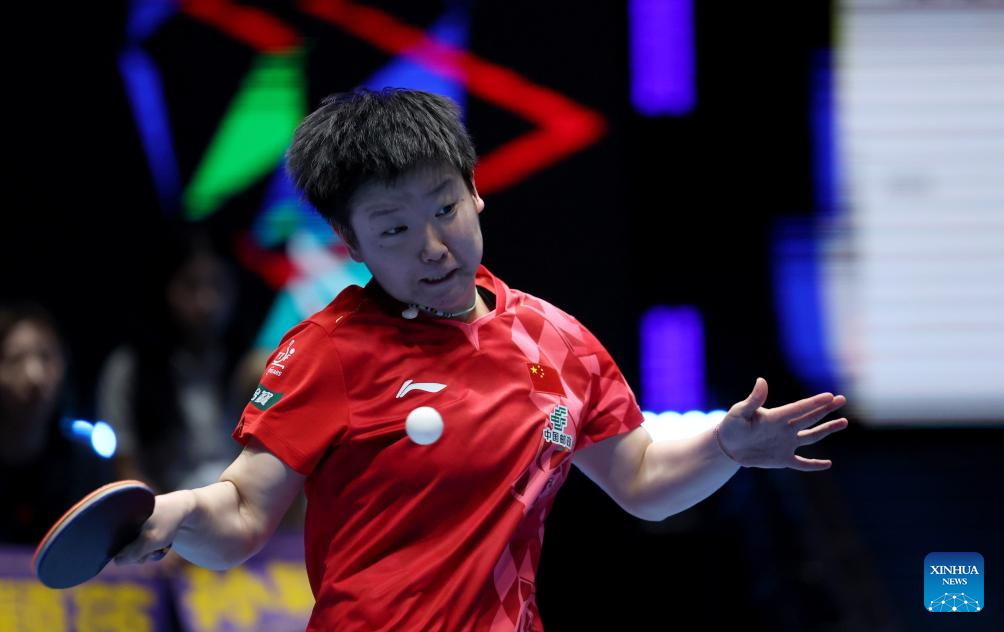
"The result eventually went our way today, but the process was far more challenging than the outcome," world No 1 women's star Sun Yingsha said after helping China outlast Japan 3-2 in a close final.
"We'd prepared the hardest as we could to face such a competitive opponent, and we really had to stay extremely focused (to clinch the victory)," said the 25-year-old who won both her rubbers in the final.
Having racked up 20 world titles at the World Cup, world championships and Olympics, Sun's composure, experience and seamless game proved critical, as she twice leveled the battle for Team China by beating Hina Hayata and Miwa Harimoto in the second and fourth matches, following teammates Wang Manyu's opening loss to Harimoto and Kuai Man's defeat by Honoka Hashimoto in the third rubber.
With the title on the line, Wang delivered under pressure by routing Hayata in straight sets to complete China's comeback win, while clinching its sixth straight final win over Japan at the team worlds since 2014.
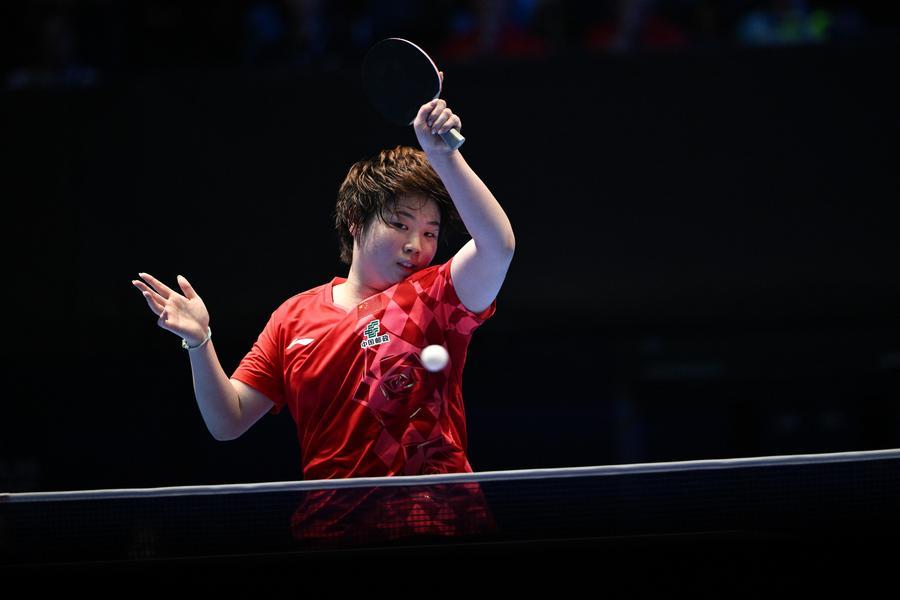
The victory was built as much on resilience as on quality, as Sun reckoned, with Team China pushed harder by its East Asian neighbor than in any previous encounter between the two nations.
"There were a lot of ups and downs in today's final. The Japanese team has developed comprehensive strength and is really performing better and better. The battle between us could really have gone either way," said Sun.
"Our strength lies in our depth, and we proved that, collectively, Team China is always the best."
ALSO READ: China edges Japan for 7th straight women's title at table tennis team worlds
The progress of the ambitious Japanese women, though, shouldn't be overlooked, underlined by teen sensation Harimoto's fearless style that stunned the experienced Wang in the opener, and the unique game of chopper Hashimoto that disrupted Kuai's pace in the third matchup.
"Credit to Sha Sha who steadied the ship," Wang said of Sun's pivotal role. "She gave me a chance of redemption ... Overall, we had a tough final that we should learn from to help us get better."
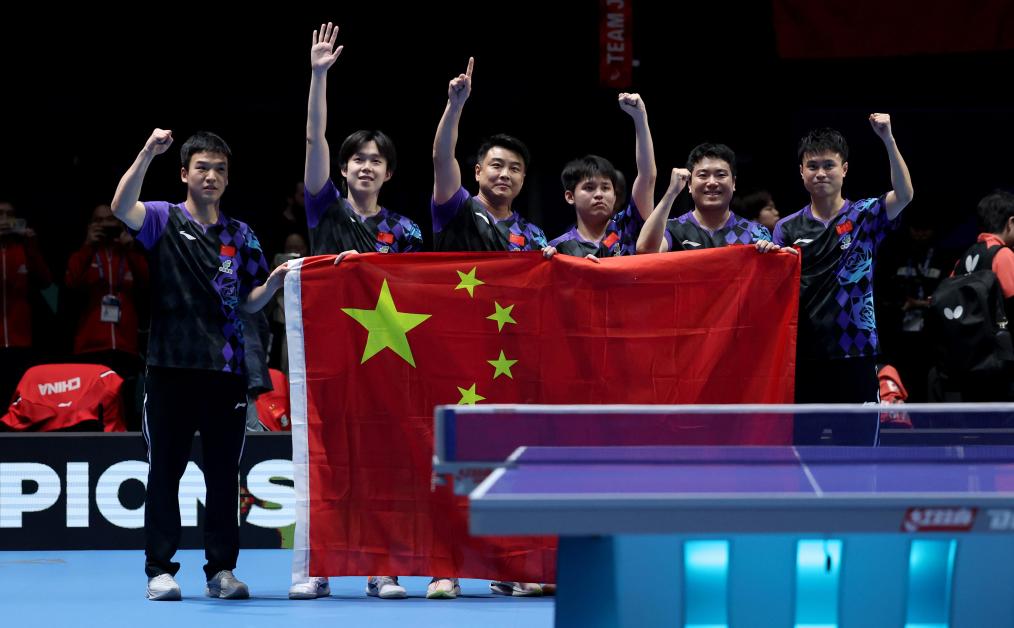
On the men's side, Team China also got the job done, but not before a bumpy ride that tested its grit and rebuilt its confidence en route to meeting Japan, which was contesting its first team worlds final in 10 years.
With reigning singles Olympic champion Fan Zhendong opting to skip the London showdown, the young Chinese men's squad, led by current world No 1 Wang Chuqin, suffered rare group-stage defeats to South Korea and Sweden, raising concerns over its gold-defending mettle, even before the knockout round kicked off in London.
Thanks to Wang's consistency, and the maturing game of teammates such as Liang Jingkun, Team China regrouped and responded like a champion during the high-stakes knockout stage, saving its best for last to demolish the Japanese side 3-0 in the final, after successfully avenging its earlier group loss to Korea in the quarterfinals and ousting European power France in the semis.
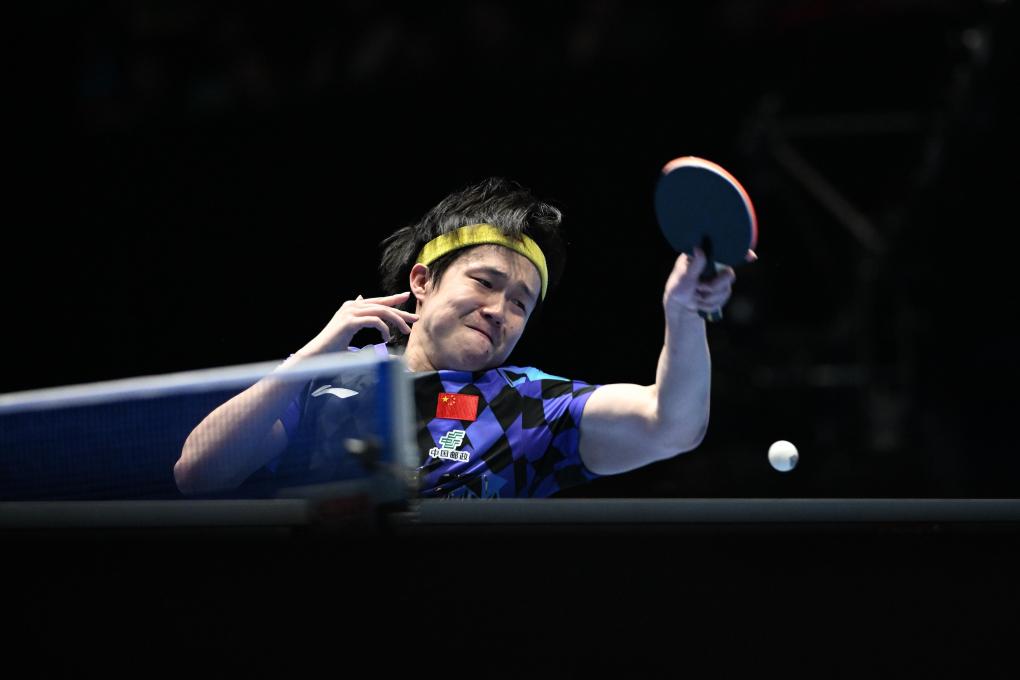
Citing the team's strong mental edge under pressure, Wang said he takes extra pride from being able to hit back at the doubters on the table.
"A lot of people said they didn't know that would happen with Team China before the championships, and I said: 'Bring it on and we will show you what we've got!' This is how we responded," Wang said after the final.
"Of course, the international competition we are facing is getting stronger. We have to prepare for each and every international event with utmost caution, like treading on thin ice," said Wang, who celebrated his 26th birthday on Monday, a day after the final.
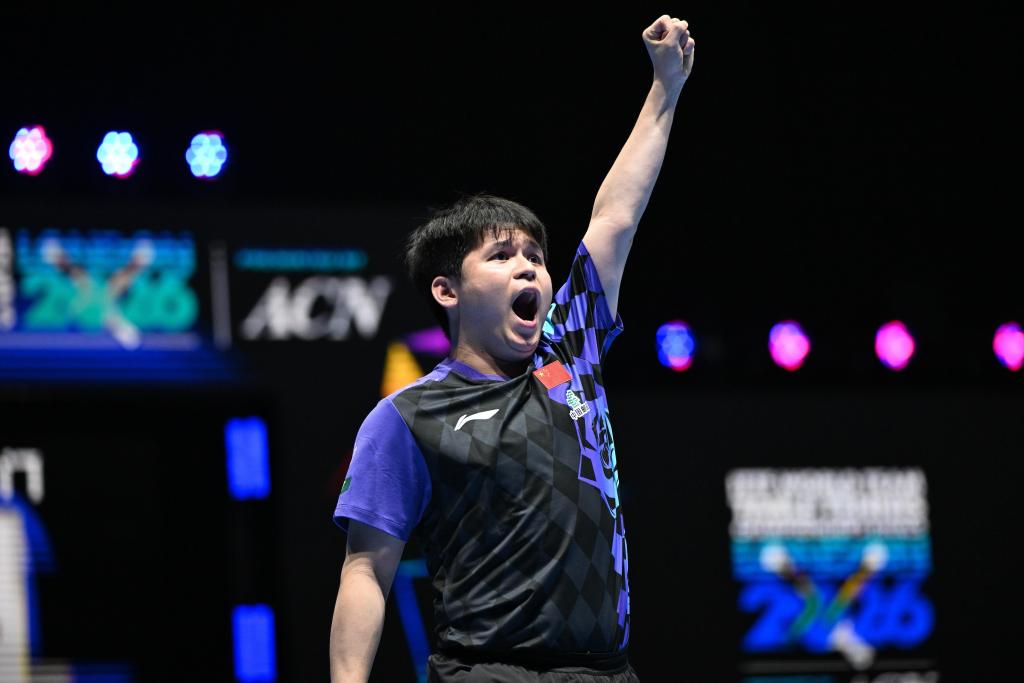
Still, the absence of Fan's finesse was felt, with both Liang and another teammate, Lin Shidong, proving not yet as dominant as Wang on the biggest international stage.
Making his team worlds debut, the 21-year-old Lin, despite his potential, had his lack of consistency fully exposed with four losses in London, while Liang's slow start, which saw him have to battle back the hard way from 2-0 down against Japan's Tomokazu Harimoto to deliver Team China's opening win in the final, has emerged as a concern for future major events.
Their respective old injuries, on Lin's shoulder and Liang's waist and knee, should be taken into perspective, yet Team China refuses to make any excuses.
"Our young athletes have gained major experience and have learned lessons about their weakness," Wang Liqin, president of the Chinese Table Tennis Association, said in his review of the championships.
"Looking ahead, we should carry forward the fighting spirit of the Chinese table tennis program, identify our weakness in training and improve them for future competitions in order to strive for more honors in the buildup to the 2028 Los Angeles Olympics," said Wang.
