

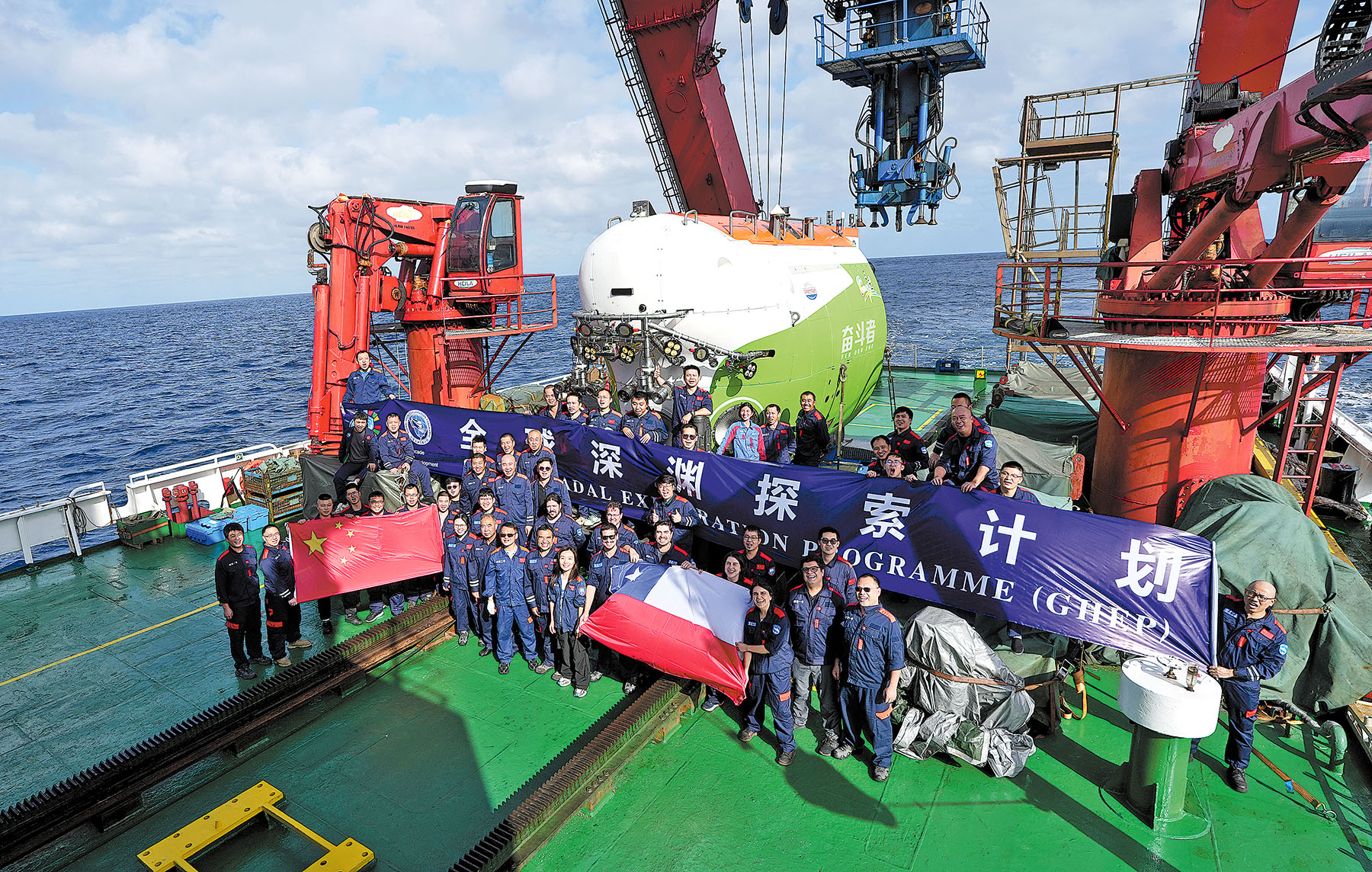
The Chinese scientific research vessel Tansuo 1 arrived in Guangzhou, Guangdong province, on Sunday after completing the first China-Chile joint manned deep-sea expedition to the Atacama Trench off the coast of Chile, marking a major step forward in international marine scientific cooperation and China's active participation in global ocean governance.
The hadal trench — the ocean's deepest layer below 6,000 meters -is one of the least understood scientific frontiers, but it is key to studying life under extreme conditions, uncovering the mechanisms of earthquakes and tsunamis, and identifying unique genetic resources.
The 156-day expedition, led by the Institute of Deep-Sea Science and Engineering of the Chinese Academy of Sciences, set sail from Sanya, Hainan province, on Dec 6. It covered more than 40,000 kilometers — equivalent to circling the Earth — and involved 83 researchers from China, Chile, Germany, Denmark, Canada and Spain.
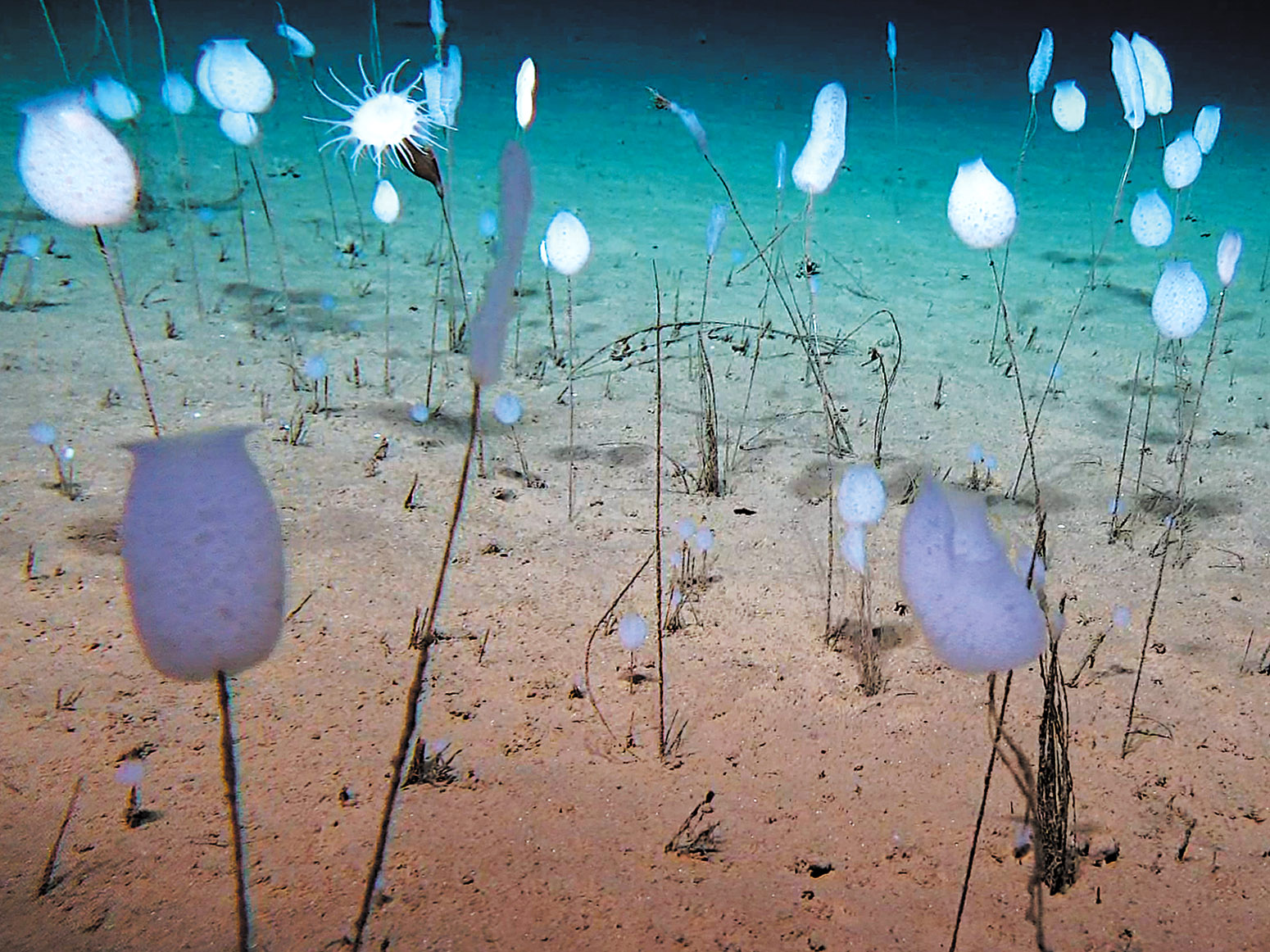
The expedition focused on the Atacama Trench — which reaches depths of over 8,000 meters and holds significant scientific value for biodiversity and geology — and the largely unexplored Mussau Trench in the western Pacific, an area key to understanding tectonic plate formation.
During the mission, China's domestically developed manned submersible Fendouzhe, carried by Tansuo 1, completed 63 dives, 50 of which exceeded 6,000 meters. The team collected a large number of biological and geological samples, as well as high-definition underwater footage, laying a solid foundation for multidisciplinary research in deep-sea geology, biology and environmental science.
In a breakthrough, scientists identified for the first time the deepest chemosynthetic ecosystem in the Southern Hemisphere — a system sustaining life on the seafloor without sunlight or photosynthesis -providing crucial evidence for the hypothesis of a global chemosynthetic corridor on Earth.
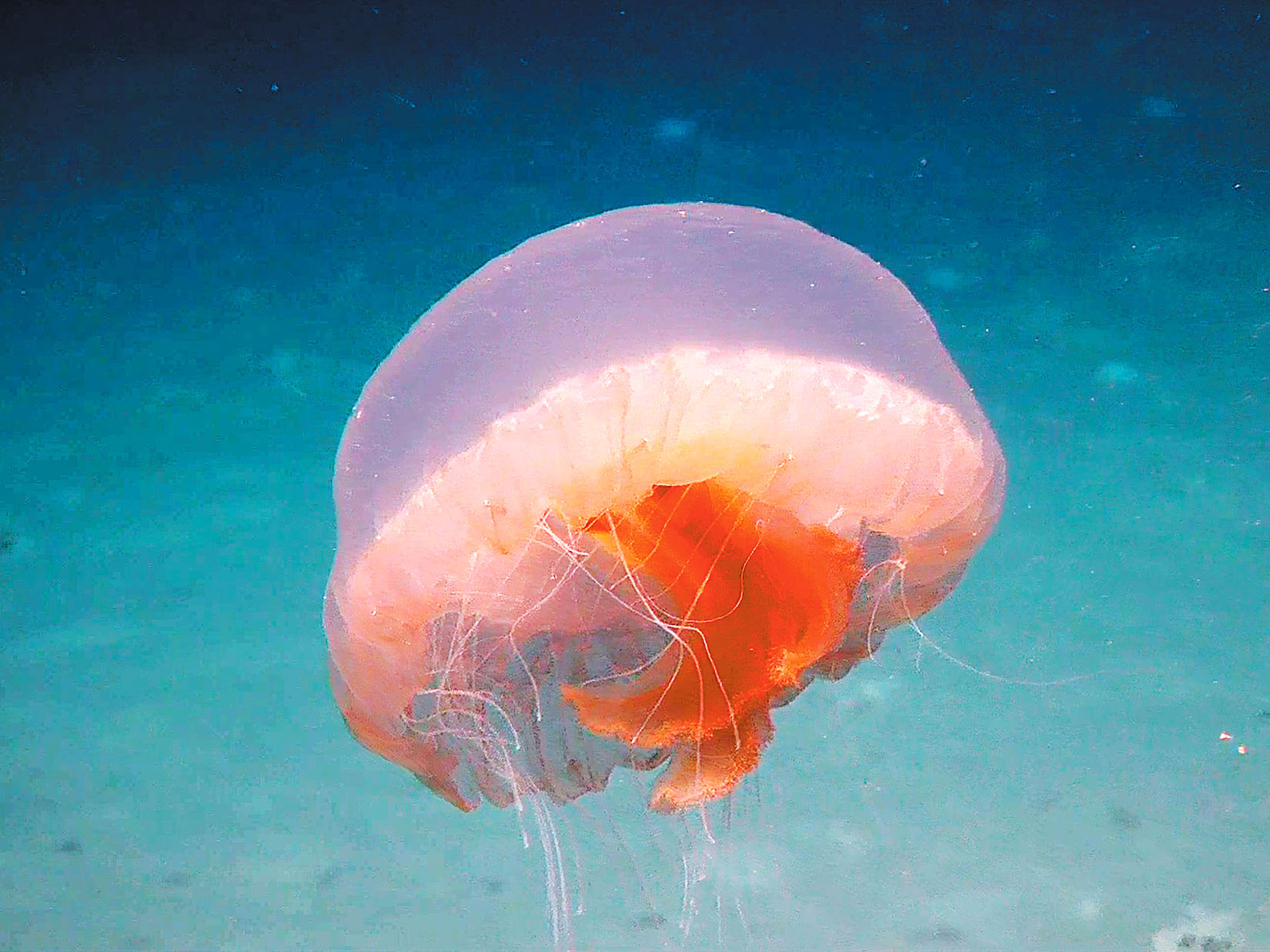
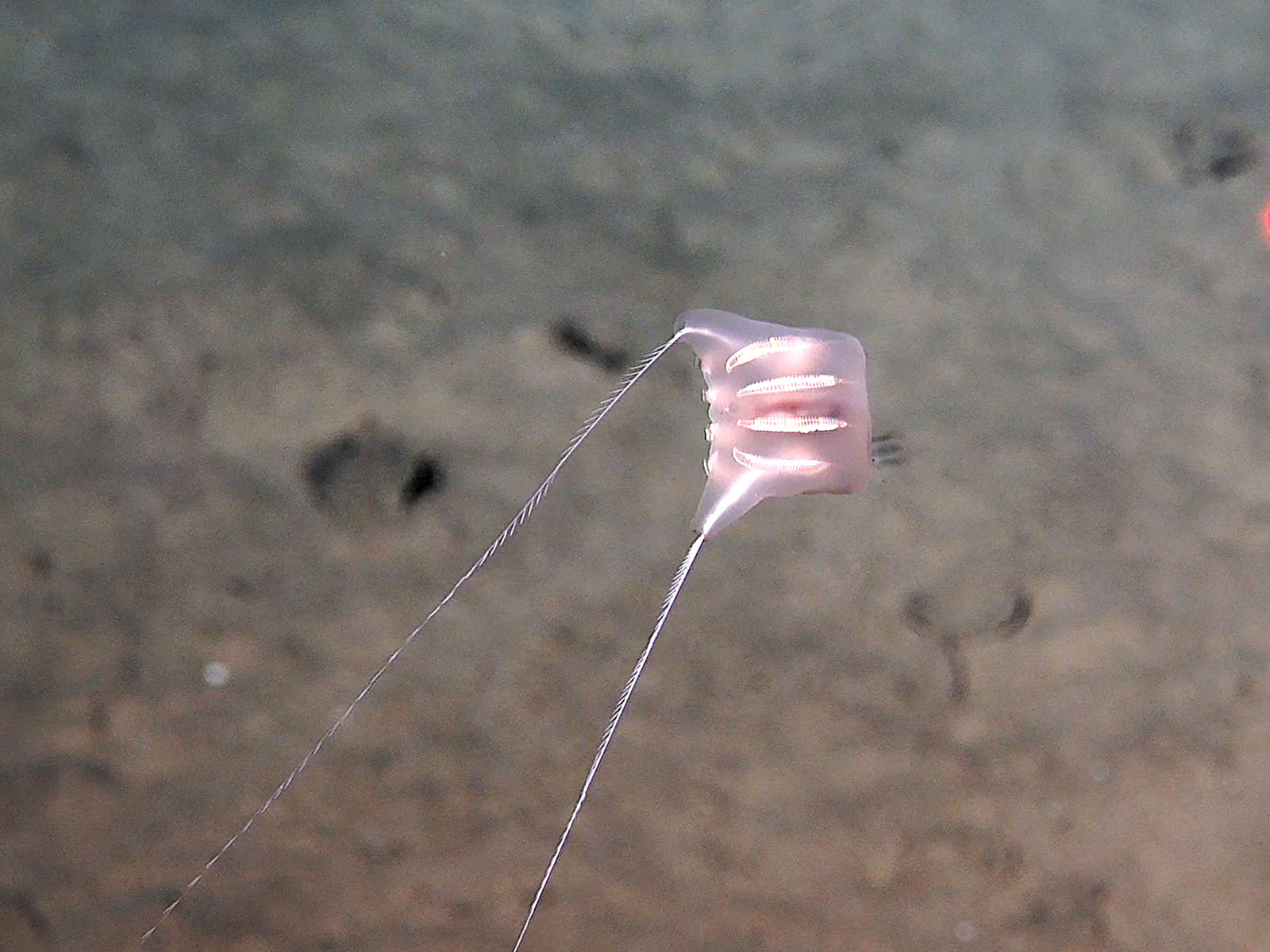
Additionally, researchers discovered several species of deep-sea snailfish and captured numerous images of benthic animals, most of which were identified as new species, highlighting the region's rich fish biodiversity. They also identified fault ruptures on the seafloor caused by historical major earthquakes, offering valuable evidence of how seismic activity shapes deep-sea geomorphology and affects biological habitats.
Due to ultrahigh pressure, extremely low visibility and frigid temperatures, deep-sea exploration is considered even more challenging than space exploration. However, China's homegrown submersible Fendouzhe has addressed many of these challenges, enabling operations at full ocean depth.
Building on this capability, the Institute of Deep-Sea Science and Engineering launched the Global Hadal Exploration Programme in 2022 to bring together global expertise to explore, understand and protect deep-sea environments. The program was officially endorsed by the United Nations Decade of Ocean Science for Sustainable Development (2021-2030), marking significant recognition of China's leadership in international deep-sea cooperation.
ALSO READ: China unveils undersea drilling robot to boost deep-sea exploration
As a flagship operation of the program, the joint expedition has provided valuable experience in global deep-sea scientific data sharing, talent cultivation and long-term seafloor observation. The mission aligns with China's emphasis on fundamental research, deep-sea exploration and global scientific cooperation outlined in the 15th Five-Year Plan (2026-30), demonstrating the country's commitment to active participation in global ocean governance and international mega-science cooperation.
Contact the writers at limenghan@chinadaily.com.cn
