

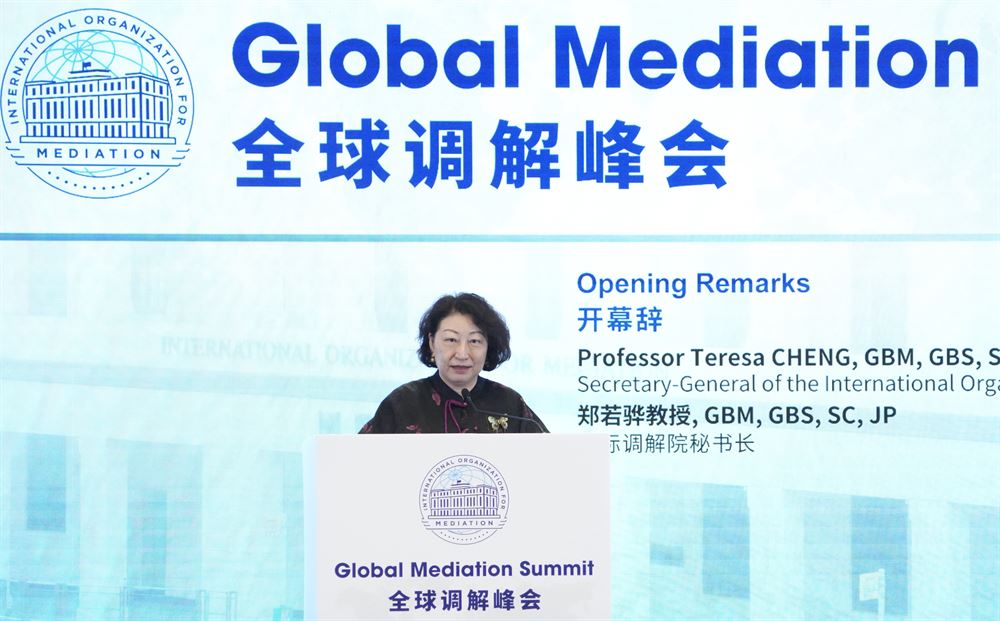
The International Organization for Mediation (IOMed) successfully settled a maritime dispute between China and Singapore earlier this month, a case that demonstrates the effectiveness of mediation and the Hong Kong Special Administrative Region’s legal prowess, a high-profile summit — part of Hong Kong’s Mediation Week 2026 — heard on Friday.
Launched last year, the Hong Kong-based IOMed is the world’s first intergovernmental legal organization dedicated to resolving international disputes through mediation, aiming to provide friendly, flexible, economical and efficient services. Its office is in the historic Old Wan Chai Police Station.
In early May, the case — involving parties from China and Singapore — was successfully settled and resulted in a written settlement agreement bringing the disputes across the charter party chain to a full and effective conclusion, said IOMed Secretary-General Teresa Cheng Yeuk-wah on Friday at the Global Mediation Summit, a flagship event organized by the IOMed to promote exchanges among mediators and stakeholders.
The successful resolution demonstrates the value of amicable dispute resolution and the effectiveness of mediation as a practical means of resolving complex maritime disputes, she said.
It is also a landmark achievement for the IOMed, and a significant moment for the Hong Kong SAR’s maritime industry, particularly its maritime legal and dispute resolution services, Cheng said.
ALSO READ: Lee: HK committed, well-poised to become global mediation capital
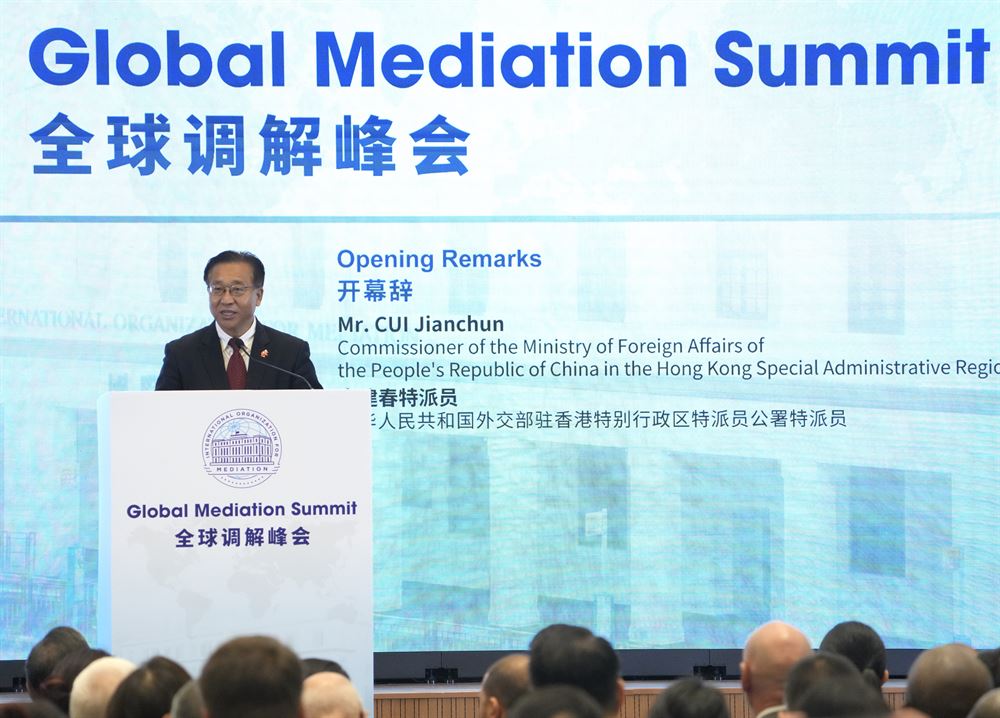
Cui Jianchun, commissioner of the Ministry of Foreign Affairs of the People's Republic of China in the HKSAR, said that the establishment of the IOMed is an innovative initiative in international rule of law and a significant development in the history of international relations.
The nation has provided its unwavering support for the development of the IOMed, Cui said, adding that he believes the IOMed will attract more members in the coming three to five years.
Nonpeaceful means, such as the use of force or engaging in warfare, should not be the preferred choices when seeking to resolve differences and disputes. Instead, peaceful means, including litigation, arbitration and mediation, should be the primary options, he said.
“Litigation, arbitration and mediation are not substitutes for or exclusions of one another. Rather, they complement and reinforce each other, forming a diverse dispute settlement system,” Cui added.
The summit, a key highlight and the concluding event of the city’s inaugural five-day Mediation Week, was attended by more than 1,000 participants from 60 countries or regions.
Contact the writer at atlasshao@chinadailyhk.com
