

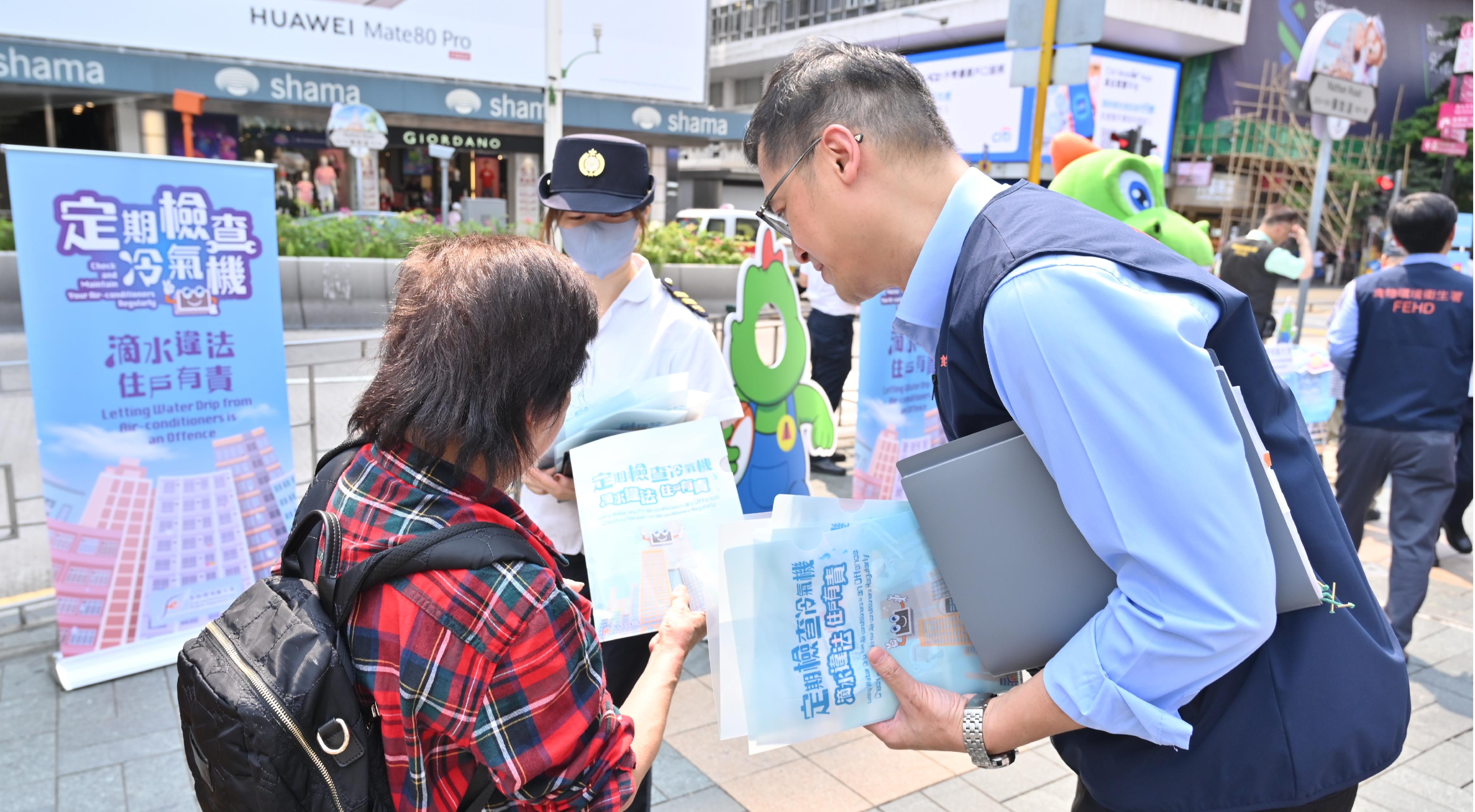
Hong Kong is deploying an AI system, with infrared night vision, to deal with the nuisance of dripping air conditioners this summer, according to the Food and Environmental Hygiene Department.
The FEHD said it is adopting the third-generation Dripping Air Conditioner Investigation System with AI functions in all districts starting this summer, targeting more than 300 dripping blackspots across the territory that have often been the bane of pedestrians and waiting passengers.
Armed with high-precision visual image recognition technology, the system can automatically detect dripping locations and accurately identify sources, the FEHD said in a statement
It can also operate effectively despite low-light conditions at night, when the problem of dripping air conditioners peaks, overcoming the constraints posed by the difficulties of pinpointing dripping sources.
ALSO READ: Enhance environmental hygiene and public health with stricter rules
Speaking on a radio program on Thursday, Wan Chi-shun, assistant director for operations at the FEHD’s Environmental Hygiene Branch, said the system has an infrared night-vision function and can detect the source of dripping up to 40 floors high.
Its innovative technology has been recognized internationally and earned the Bronze Award in the category of Engineering and Robotics – Optical Sensing and Spatial Intelligence of the Edison Awards 2026 in April.
Before the AI system was available, FEHD dealt with 3,000 cases of dripping air conditioners in 2023, Wan said. That ballooned to 8,600 last year when the second-generation version of the system was deployed.
With the frequent use of air conditioners in summer, the FEHD said it will carry out large-scale operations from May to September to deal with dripping air conditioners.
Under the city’s Public Health and Municipal Services Ordinance, owners of dripping air conditioners who fail to address the problem face a penalty of up to HK$25,000 ($3,192), and a daily fine of HK$450 as long as the nuisance continues.
