

WASHINGTON/JERUSALEM/TEHRAN/ABU DHABI - The United States' war with Iran has "terminated" for the War Powers Resolution purposes, US media cited a senior Trump administration official as saying on Thursday.
The same day, US Defense Secretary Pete Hegseth said on Thursday he believes the ceasefire with Iran "pauses" a 60-day clock on congressional authorization for war.
Hegseth made the remarks when asked by Democratic Senator Tim Kaine at a congressional hearing about whether the Trump administration would seek authorization from Congress for the war with Iran on the 60-day mark of the war as required by law.
"Ultimately, I would defer to the White House and White House counsel on that. However, we are in a ceasefire right now, which our understanding means the 60-day clock pauses or stops in a ceasefire," Hegseth said.
"I do not believe the statute would support that," Kaine said. "I think the 60 days runs (out) maybe tomorrow, and that's going to pose a really important legal question for the administration there."
ALSO READ: China denies supplying drones, defense systems to Iran
On Feb 28, Israel and the United States launched joint attacks on Tehran and other Iranian cities, killing Iran's then Supreme Leader Ali Khamenei, senior commanders, and civilians.
Trump notified Congress of the military campaign against Iran on March 2, making May 1 the 60-day milestone at which point the US War Powers Act requires the president to start winding down a war unless he receives congressional authorization, according to media reports.
'Bright future' of the Gulf
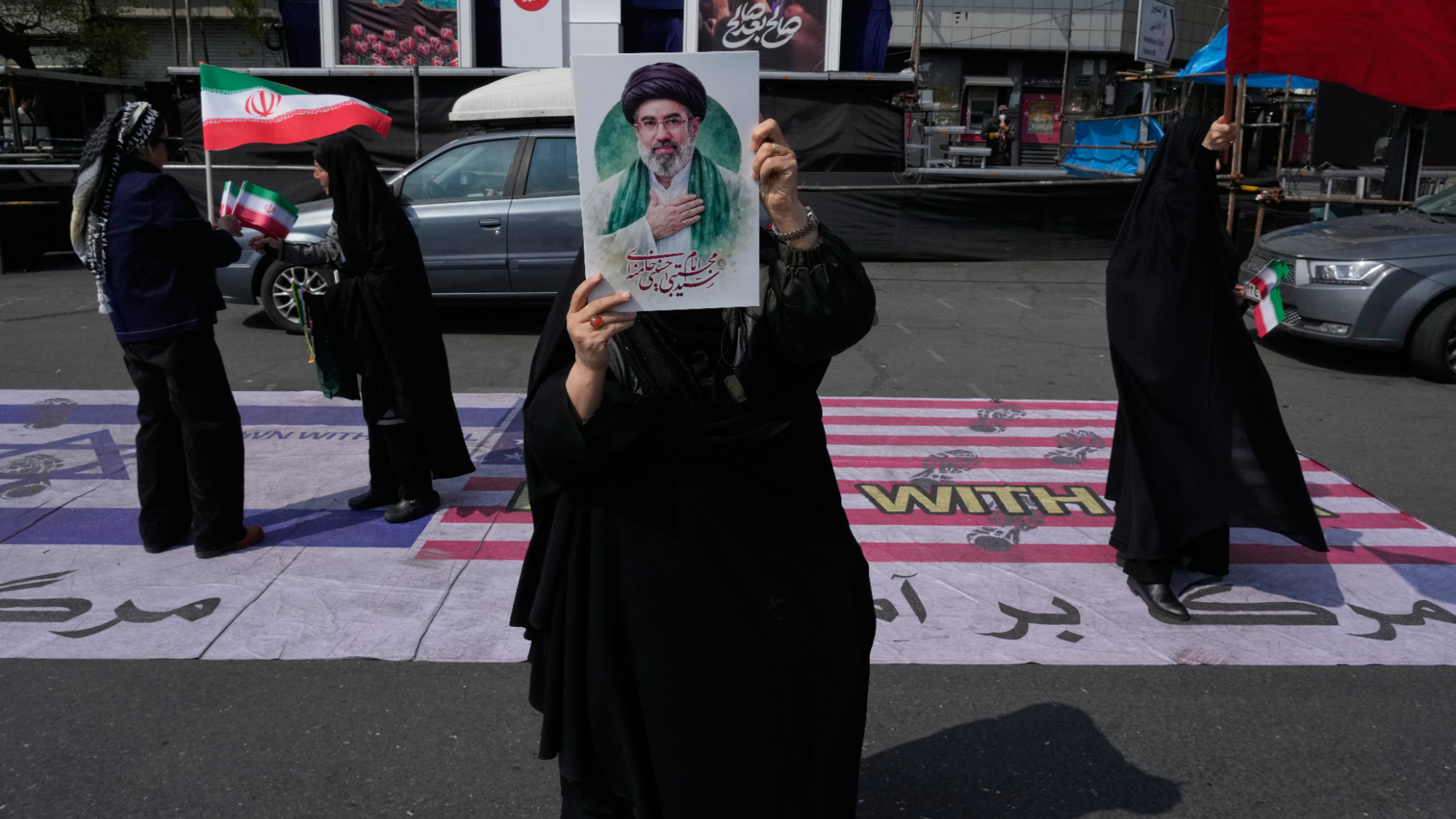
Iran's Supreme Leader Mojtaba Khamenei said on Thursday that the "bright future" of the Gulf will be one without the US presence and at the service of the progress, comfort, and welfare of the regional nations.
Khamenei made the remarks in a message marking the Persian Gulf National Day, calling the waterway an "unparalleled divine blessing" for Iran and the Muslim states of the region.
He said that Iran shares a common fate with its neighbors in the Gulf and the Gulf of Oman, adding that the foreigners, "who greedily commit malicious actions" in the region, will have no place in it, "except at the bottom of its waters."
Khamenei noted that the victory against the US in the regional waters, which has been achieved on the back of the resistance front's measures and policies and the strategy of a "strong" Iran, will be the beginning of a new order in the region and the world.
He stressed that Iran, which has the longest coastline along the Gulf, has made the greatest sacrifices to ensure the independence of the body of water and counter foreigners and aggressors throughout history.
Iran 'ready to continue path of diplomacy'
Iranian President Masoud Pezeshkian said on Thursday that Iran is ready to continue the path of diplomacy if the US "maximalist" approach stops, according to the official news agency IRNA.
Pezeshkian made the remarks in a phone call with Japanese Prime Minister Sanae Takaichi, while stressing that the US "maritime piracy" against Iranian ships must be "explicitly" condemned and brought to an end.
He listed some of what he called "war crimes" committed by the US and Israel during their 40-day war against Iran, including their assassinations of the country's then-Supreme Leader Ali Khamenei, high-ranking military commanders and political officials and civilians, as well as targeting of civilian and vital infrastructure and "peaceful" nuclear facilities under the supervision of the International Atomic Energy Agency.
Pezeshkian described the US officials' "provocative" remarks concurrent with the blockade of Iranian ports as "unacceptable and contrary to international laws and regulations," emphasizing that such actions would further complicate the situation in the region of West Asia.
He affirmed Iran's determination to defend its legitimate rights, expressing readiness to continue pursuing diplomacy for a "fair" solution that guarantees the country's rights and ensures peace and calm in the region.
Israel 'may soon resume military action'
Meanwhile, Israeli Defense Minister Israel Katz said on Thursday that Israel "may soon have to resume military action against Iran."
Speaking at a military ceremony, Katz said Israel supports negotiations between the United States and Iran on a possible agreement but may soon be required to renew strikes to ensure its security.
"Iran has suffered extremely heavy blows over the past year, blows that have set it back years in all areas," he said.
He added that Israel would continue its offensive against Hezbollah in Lebanon "just as we did in Gaza," saying the military would act to destroy all militant infrastructure in what it calls the "yellow line," an Israeli-declared buffer zone along the border extending to the Litani River.
Israeli forces remain deployed in southern Lebanon, carrying out daily strikes despite a temporary ceasefire that took effect earlier this month. To establish the buffer zone, troops have demolished buildings in Lebanese villages and towns along the border area, displacing residents.
ALSO READ: Iran: 'Unprecedented action' if US continues maritime 'banditry'
Air defense sound 'heard in Tehran'
The sound of air defense has been heard in some parts of capital Tehran, Iran's semi-official Tasnim news agency and Mehr news agency reported Thursday evening.
Tasnim said minutes later that the sound is related to "countering small aircraft and reconnaissance drones."
The sound is "still ongoing" in western, central and southeastern areas of the city, Tasnim said.
UAE bans travel to Iran, Lebanon and Iraq
The Ministry of Foreign Affairs of the United Arab Emirates (UAE) announced Thursday evening a ban on its citizens traveling to Iran, Lebanon and Iraq, citing the "current developments" in the region.
In a statement posted on social media platform X, the ministry called on all UAE citizens currently in those countries to leave immediately and return to the UAE as soon as possible, to ensure their safety.
It also urged citizens in Iran, Lebanon and Iraq to contact the ministry via a designated emergency number, as part of precautionary measures taken by the state to safeguard its citizens.
The development came amid a ceasefire between Iran, the United States and Israel that took effect on April 8 following 40 days of fighting, and a ceasefire between Israel and Lebanon that took effect at midnight between April 16 and 17.
