

The world that we thought we understood is changing in ways that would once have seemed unthinkable. Wars, trade tensions, and fragmented supply chains are reshaping the global landscape. Major Western economies are increasingly divided, and policy direction is less predictable. This is not just volatility. It is a structural change.
 What is most striking is the normalization of the once unthinkable: Financial sanctions at scale, the freezing of sovereign assets, the weaponization of currencies and systems, the capture of another state’s leader, and war seemingly at a whim. These are no longer exceptions; they have become recurring features of the new global order.
In this environment, trust becomes a premium. For businesses and investors, risk is no longer just about returns but about predictability and resilience. It is against this backdrop that Hong Kong’s position should be reassessed. What was once seen as risk is being reinterpreted as stability.
In this context, relative positioning matters more than ever. Hong Kong’s longstanding strengths are the rule of law, deep financial markets, global connectivity and institutional credibility. These have not disappeared. Rather, they are being reassessed in a world where stability is increasingly valued.
Recent policy signals reinforce this shift. The Hong Kong Special Administrative Region government’s 2026-27 Budget, with its continued commitment to infrastructure and long-term capacity building, reflects confidence in the city’s future. At the same time, financial market reforms, from listing rule adjustments to support for new economy companies, demonstrate a willingness to adapt to changing global conditions. Taken together, these developments point to something more fundamental: Hong Kong is not simply maintaining its role as an international financial center — it is repositioning itself for the next phase of global capital flows. To understand this repositioning, it is useful to look at the evolving dynamics of capital itself.
On one side, Chinese capital has undergone a transformation. In the past, limited domestic investment channels led many local investors to look outward. Today, the Chinese mainland offers a range of opportunities, from advanced manufacturing to green technologies. Yet, the need for diversification, liquidity and international exposure remains.
On the other side, international capital is interested in Chinese assets. China’s scale, industrial depth and role in global supply chains make it impossible to ignore. But concerns about regulatory complexity and capital controls mean many investors prefer to access these opportunities through familiar, trusted systems.
This creates a dual challenge for mainland authorities: How to expand access to mainland assets while maintaining financial stability and regulatory oversight? Hong Kong is uniquely positioned to address this challenge. It operates under international financial norms, with a fully convertible currency and a well-established legal system, while maintaining deep connectivity with the mainland. This combination allows it to function not merely as a gateway but as a buffer and interface between two financial systems operating at different levels of openness.
Mechanisms such as Stock Connect and Bond Connect have already demonstrated how this model works in practice. They allow cross-border investment flows while retaining regulatory safeguards and policy control.
Hong Kong’s repositioning at the intersection of global capital and the mainland’s evolving financial system suggest that it is better placed than many think to meet the demands of this new era
Looking ahead, the next phase of this evolution is likely to be shaped by the renminbi. The internationalization of the RMB is progressing steadily. Trade settlement in RMB is expanding, and financial linkages across Asia, the Middle East, and other regions are deepening. As this process continues, the question is no longer whether RMB-denominated assets will grow in importance, but where they will be intermediated.
Hong Kong is well placed to become that core intermediary. Expanding the use of RMB within Hong Kong’s financial markets through instruments such as RMB-denominated equity counters, bonds and derivatives would reduce currency friction for mainland investors and deepen the offshore RMB ecosystem. At the same time, it would provide international investors with a way to access RMB assets within a familiar and trusted regulatory environment.
This has important implications. For mainland investors, Hong Kong can serve as a platform to deploy capital more flexibly, without requiring full liberalization of the capital account. For international investors, it offers a way to gain exposure to Chinese assets while mitigating some of the complexities associated with direct participation in mainland markets. For mainland policymakers, it provides a mechanism to advance financial opening in a controlled and measured manner.
In this emerging architecture, Hong Kong plays a dual role. It is both a gateway for capital flows and a testing ground for financial innovation. New mechanisms can be introduced, refined and scaled within before being expanded more broadly. This role may be less visible than headline-grabbing initial public offerings, but it is arguably equally if not more significant in shaping the future of regional and global finance.
Of course, challenges remain. Competition from other financial centers is real, and global geopolitical uncertainties persist. But financial centers do not stand still. They evolve in response to changing economic and geopolitical conditions. London adapted after the decline of its empire. New York reinvented itself through successive waves of financial innovation. Hong Kong is now undergoing its own transition. The key question is not whether Hong Kong can compete on the same terms as other financial centers. It is whether it can leverage its unique position to define a different set of terms to suit this era of geopolitical shift.
In a world where disruption has become normal and trust is increasingly scarce, stability itself has become a premium asset.
Hong Kong’s repositioning at the intersection of global capital and the mainland’s evolving financial system suggest that it is better placed than many think to meet the demands of this new era.
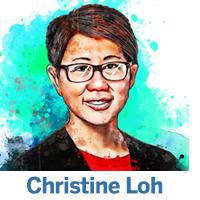
The author is chief development strategist at the Hong Kong University of Science and Technology’s Institute for the Environment
The views do not necessarily reflect those of China Daily.
