

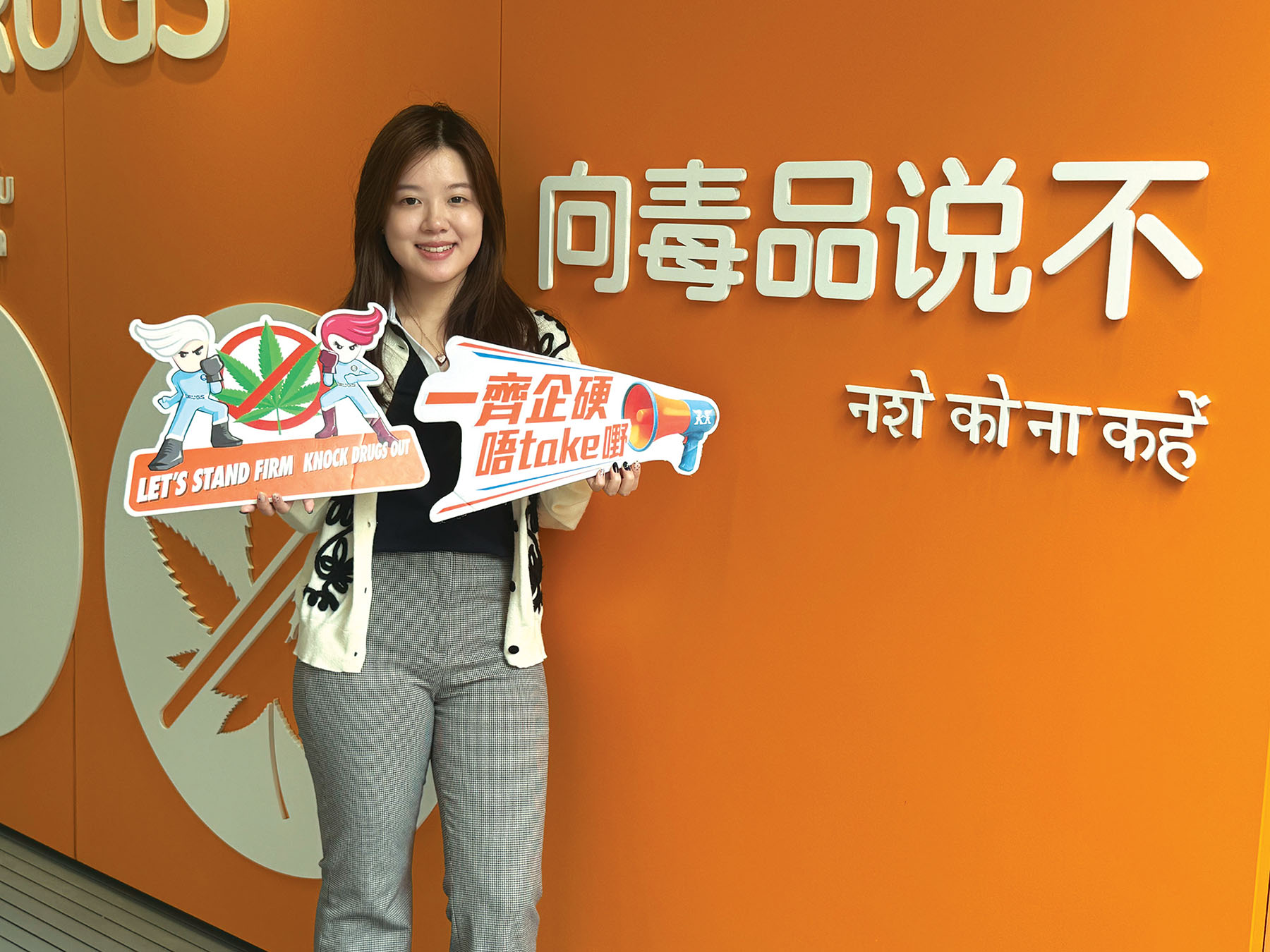
Hong Kong youth delegate Andrea Chow Tsz-ting briefed a United Nations youth forum recently on the city’s district-tailored anti-drug measures, which she said won praise from international attendees at the event.
She called for anti-drug education to be “youth-led”, not merely “youth-focused” at the forum, adding that the valued opportunity of attending the high-profile international event has motivated her to further explore and study the issue.
Chow, an active participant in the Security Bureau’s “Youth Uniformed Group Leaders Forum”, was recommended by the central authorities to attend the United Nations Office on Drugs and Crime (UNODC) Youth Forum, as one of two delegates from China.
Over three consecutive days at the UNODC Youth Forum at the Vienna International Centre, UNODC headquarters, in Vienna, Austria, which began on March 9, Chow introduced Hong Kong’s anti-narcotics strategies to 25 delegates from 21 countries and regions.
ALSO READ: Hong Kong logs 2% drop in drug abuse in 2025
Each of Hong Kong’s 18 districts operates a District Fight Crime Committee that, supported by corresponding district offices, devises and rolls out targeted anti-drug measures and publicity campaigns informed by local crime patterns and demographic profiles, she told the forum.
For instance, in some border-adjacent districts, she said, district councilors and police are especially attuned to cross-border drug flows.
Chow took part in the Customs and Excise Department’s “Custom YES” youth program in 2021, the Security Bureau’s “Youth Uniformed Group Leaders Forum” in 2024, and then interned with the bureau’s Narcotics Division in the summer of 2025.
In that role, she attended multiple District Fight Crime Committee meetings, observing how eachlocality calibrates its anti-drug operations and outreach.
Speaking to China Daily earlier this month, Chow said delegates at the forum worked to “accommodate diverse views”, “unify around shared goals”, and as a result, produced a joint anti-drug declaration addressed to global policymakers, calling for youth-centered anti-drug efforts, greater youth engagement, and stronger preventive education.
Chow, one of the two delegates leading the declaration reading at the forum, said young people ought to play a bigger part in anti-drug messaging. Peer pressure drives much teenage drug-taking, and while young people may avoid confiding in adults, they trust that their peers “who speak the same language” can relate to them, she said.
Hong Kong offers young people many pathways to engage in anti-drug publicity, Chow said. Some workshops on mental health and drug prevention, for instance, prepare adolescents for peer-support roles, equipping them to refuse drugs and to help their peers stay drug-free.
Chow called for more youth-led anti-drug initiatives. Such platforms, she said, can “empower young people to evolve from passive message recipients into creators and disseminators”.
READ MORE: GBA anti-drug forum to strengthen cooperation
Moreover, Chow said her conversations with delegates from elsewhere revealed opportunities for mutual learning.
Chow said she learned much from talking with the Chinese mainland delegate. With the whole nation holding a “zero-tolerance” stand on drugs, they agreed that cross-border law enforcement could be boosted to keep up the pressure on drug trafficking.
The two sides can also complement each other’s strengths to enhance overall national anti-drug performance, Chow added.
Chow recalled a European delegate at the forum who said in their country, teenage drug use largely stems from educational deprivation in disadvantaged areas, as bullying and inadequate supervision force youngsters to the streets, where they are more susceptible to using illegal substances.
Chow said sharing information and knowledge at the event inspired her to consider the critical role of schools in anti-narcotics work.
“Schools are closest to children and most likely to notice any mental or physical irregularities,” she .said
Contact the writer at wanqing@chinadailyhk.com
