

A playful online phrase has taken on deeper significance, offering a window into how a generation is learning to slow down, reflect and care for itself.
“Love you, laoji, see you tomorrow” — a quirky phrase that started as a line from a popular video game — has quietly become one of the most talked-about expressions among young people in China.
The term laoji is a playful twist on ziji, meaning “oneself”. It turns the self into a familiar, almost adorable companion. The phrase itself comes from a League of Legends character who says, “Love you, mom, see you tomorrow”. By simply replacing “mom” with “oneself”, netizens turned a phrase into a humorous and tender act of self-love, care and encouragement.
What may sound like just another internet meme has struck a deep chord. It speaks to something real; in a time of intense pressure and uncertainty, many young people are quietly learning to treat themselves with the same care they would offer a close friend.
For young people in China, saying, “Love you, laoji” is a small but profound act. It is the student who, after a late night of work, decides to treat themselves to a simple bowl of noodles. It is the exam-taker who, after weeks of stress, buys them selves a bubble tea.
In January 2026, Xiangtan University released a survey of its students that shed light on the phenomenon. The report, which explored the psychology behind the “love you, laoji” trend, found that nearly 70 percent of students saw the phrase as a kind of “utopia”, a mental space for rest in an intensely competitive environment.
For these students, saying, “Love you, laoji” is a way to momentarily step off the treadmill of grades, internships, and an uncertain future, declaring, “Laoji, today you belong to yourself.”
A further 61.95 percent of respondents described it as a form of “self warming” in an era of increasing social alienation. Whether facing a doctor’s visit alone or witnessing a beautiful sight with no one to share it with, turning inward to acknowledge laoji provides a reliable source of comfort.
The report concluded that “love you, laoji” softens the guilt often associated with rest. The language of self-dialogue shifts from the harsh, “Why didn’t you do better?” to a gentle, “Laoji, you’re tired today. Take a break”. As the survey noted, it doesn’t solve all problems, but it provides a new way to heal, allowing individuals to be both the gardener tending to their well-being and the flower in need of care.
Wang Xiulin, an 18-year-old fresh man at Beijing Foreign Studies University, discovered the phrase in late 2025 and said it felt immediately heartwarming.
“It made me feel like society is starting to pay attention to self care,” she said. For her, “love you, laoji” is not tied to a single moment but is a tool for encouragement during challenging times.
Unlike high school, where she constantly worried about others’ opinions, university has offered a more accepting environment. “It’s helped me realize that I can be who ever I am,” she explained.
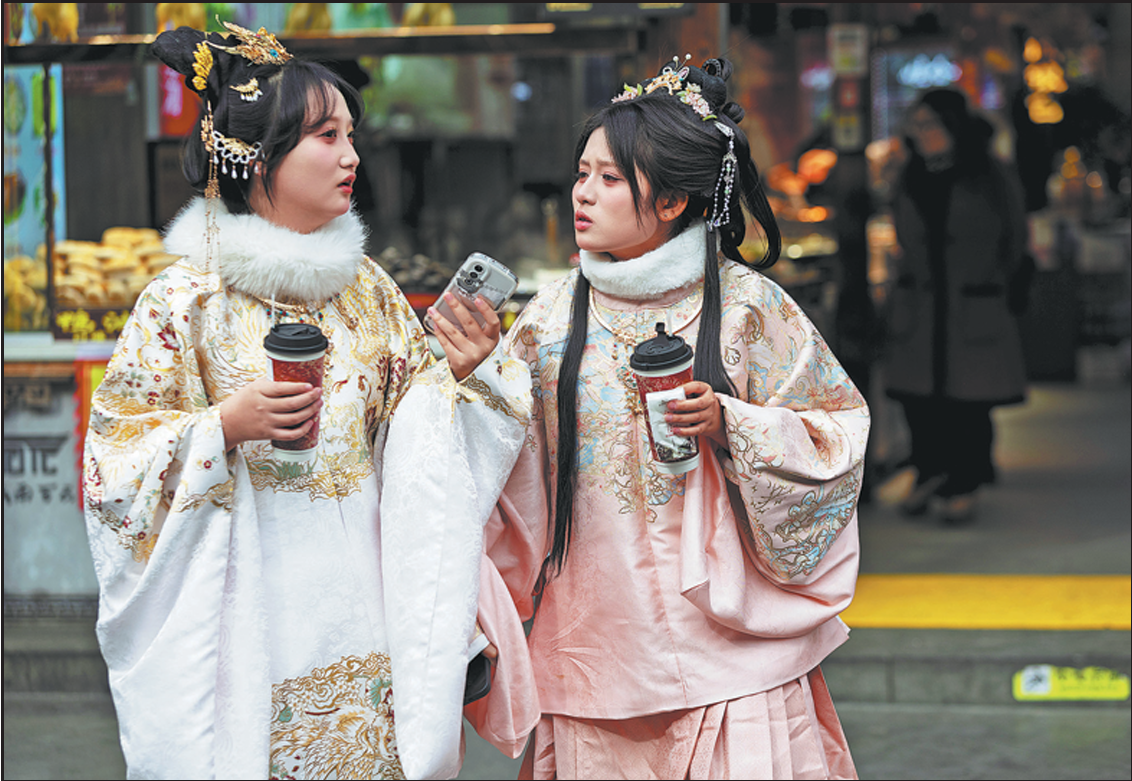
She practices “love you, laoji” in simple, tangible ways — treating herself to milk tea or fruit after a grueling day of classes. “People are easily satisfied. Eating something good can really lift your spirits.”
For her schoolmate, Dong Liang zehui, also 18, the term hit during a pivotal moment: her first university exam period. After studying until the library closed to master a challenging political theory course, she felt a surge of pride. “I wanted to encourage my hardworking self, so I said to myself in my heart, ‘Love you, laoji’,” she recalled.
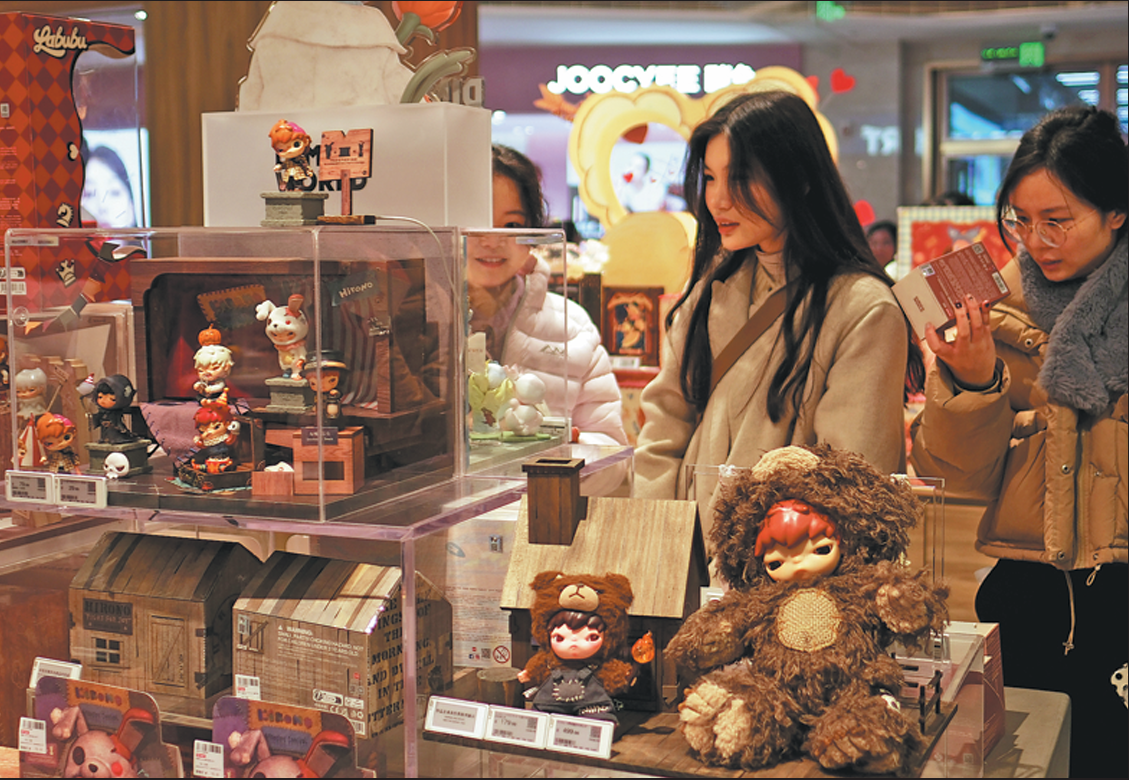
She practices this self-care by rewarding herself, recently buying a blind box she had long coveted. While she posts about these moments on social media, it’s less about seeking validation and more about documenting a personal pact.
“Many people felt the same way and shared their own laoji promises in the comments,” she said, highlighting the communal aspect of this seemingly individualistic practice.
Li Yuting, a 19-year-old freshman at the University of International Relations, remembered first hearing the phrase from a friend and finding it “adorable and a little cheesy, but in a way that really hit home”.
For her, “love you, laoji” crystallized during the stress of gaokao (the national college entrance exam). Despite battling health issues and seeing her mock exam scores decline, she persevered and earned her university admission. “Looking back, that was the perfect time to say ‘love you, laoji’,” she said.
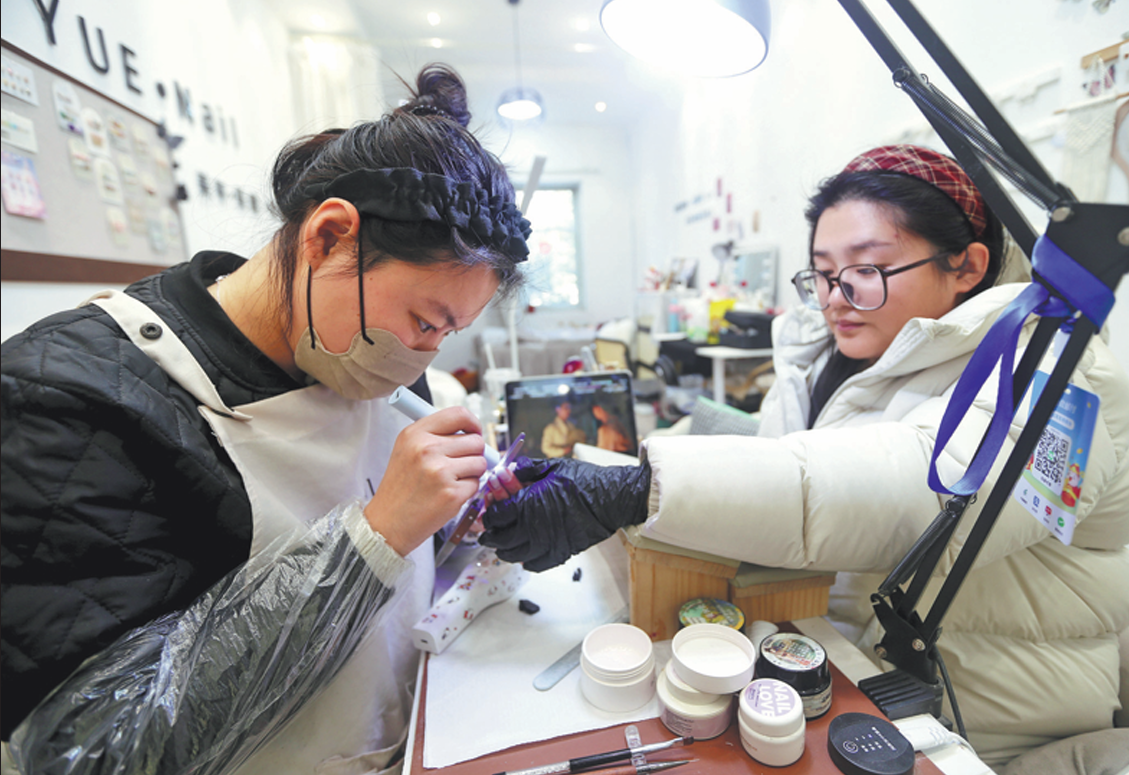
For her, caring for laoji means allowing small indulgences — a new manicure, a comforting meal, buying a small item — and permitting herself to rest. “It’s not about being lazy. It’s about allowing yourself to be imperfect so you don’t get crushed by anxiety.”
She said she did not know how to love herself in the past and started to realize that the most important thing is to take care of oneself and stay healthy.
Wang Wei, a 19-year-old male student at the University of International Relations, found the phrase “down-to-earth” and “endearing”.
A recent moment of self-appreciation came after a tiring journey back to campus for the new semester, when he was feeling exhausted and a little low.
“As I lay in bed, I suddenly realized starting school wasn’t so bad,” he said. “After I got settled, I ordered my favorite takeout. At that moment, I really wanted to tell myself, ‘You’ve worked hard. Love you, laoji’.”
Wang emphasizes that for him, caring for “laoji” is about building a healthy lifestyle, exercising, eating good food, and allowing himself downtime. He sees the trend not as a sign of weakness or laziness but as a straightforward, heartwarming reminder to practice self-acceptance in a high-pressure world.
Xu Gaoyang, a psychotherapist at Beijing Anding Hospital, affiliated with Capital Medical University, said that the popularity of “love you, laoji” points to a fundamental psychological need: the search for stable, unconditional positive attention, which is often scarce in a society with rigid external evaluations.
He noted that this is a powerful countermeasure to the “excessive introspection” and self-criticism, that plagues many, such as feeling that “I am a failure” or “It’s all my fault”.
By adopting a “love you, laoji” mindset, individuals perform a healthy psychological adjustment, initiating emotional self-regulation that alleviates anxiety and protects self-esteem.
Xu particularly highlighted the power of using a third-person nickname. This simple linguistic shift creates crucial “psychological distance”.
“When we experience difficulty or fatigue, using the third person allows us to step back, like a friend or observer,” he explained.
This distance reduces the emotional intensity of a situation, leading to clearer thinking and a greater capacity for self-encouragement.
“In our culture, we’re often more tolerant and understanding toward others. So when we think of our selves as laoji, we can apply that same kindness inward.”
Meng Man, a history professor at Minzu University of China, told China Youth Daily that “love you, laoji” is a reflection of young people’s deep-seated desire to be seen and acknowledged.
“Why do young people always say, ‘Love you, laoji’? They truly hope someone sees them, someone pays attention to them,” Meng said.
She draws a parallel between this trend and the popularity of “ugly cute” toys among youth, like a poorly stitched, frowning plush horse. “It shows a mindset: ‘This world and I might not be perfect, but it’s still worth embracing,’” she explained.
Meng argued that this psychological state deserves serious attention and calls for strengthening “love education” from an early age. “I believe that only when a person has love within can they live with vitality and go on to create a better world,” she said.
As “love you, laoji” becomes prevalent, a natural question arises: Where does healthy self-care end and mere self-indulgence begin? Xu, the psychotherapist, offered a clear distinction based on motivation and outcome.
Healthy self-acceptance starts with acknowledging one’s limitations or current state, with the goal of understanding and accepting oneself, he explained. In contrast, “lying flat” or self-indulgence stems from a sense of fear or hopelessness — the feeling that “I will never succeed at this”.
The follow-up action is also key. Healthy self-care allows for rest in moments of fatigue, but it doesn’t abandon the goal. It permits a pause before trying again. Self-indulgence, however, often leads to long-term avoidance and giving up, he said.
“Loving oneself is not selfish. Only ‘loving oneself too much’ becomes selfish.” He warned against the opposite extreme — a sense of shame associated with self-care, leading to self-neglect. “We often want to love others, but the prerequisite for that is learning to love oneself. Without it, it’s hard to genuinely love others or life itself.”
When everyone wants to re-learn how to love themselves, it reminds people of the need to find this self compassion. It’s a call for a more caring society, both from within and from without, he said.
“We should let people know that ‘even though I’m a bit overweight, I still do well academically,’ or ‘even though my grades aren’t great, I have many friends’.”
When children and young people can view their own worth in such a diverse way, they can truly allow themselves to love themselves. Otherwise, if they always fixate on their own shortcomings, it becomes very difficult to practice self-care, headded.
Wang Nasi and Li Qianya contributed to this story.
Contact the writer at zoushuo@chinadaily.com.cn
