

Authors jump off the page and onto painted portraits in a new London exhibition making its debut on the Chinese mainland, Zhang Kun reports.
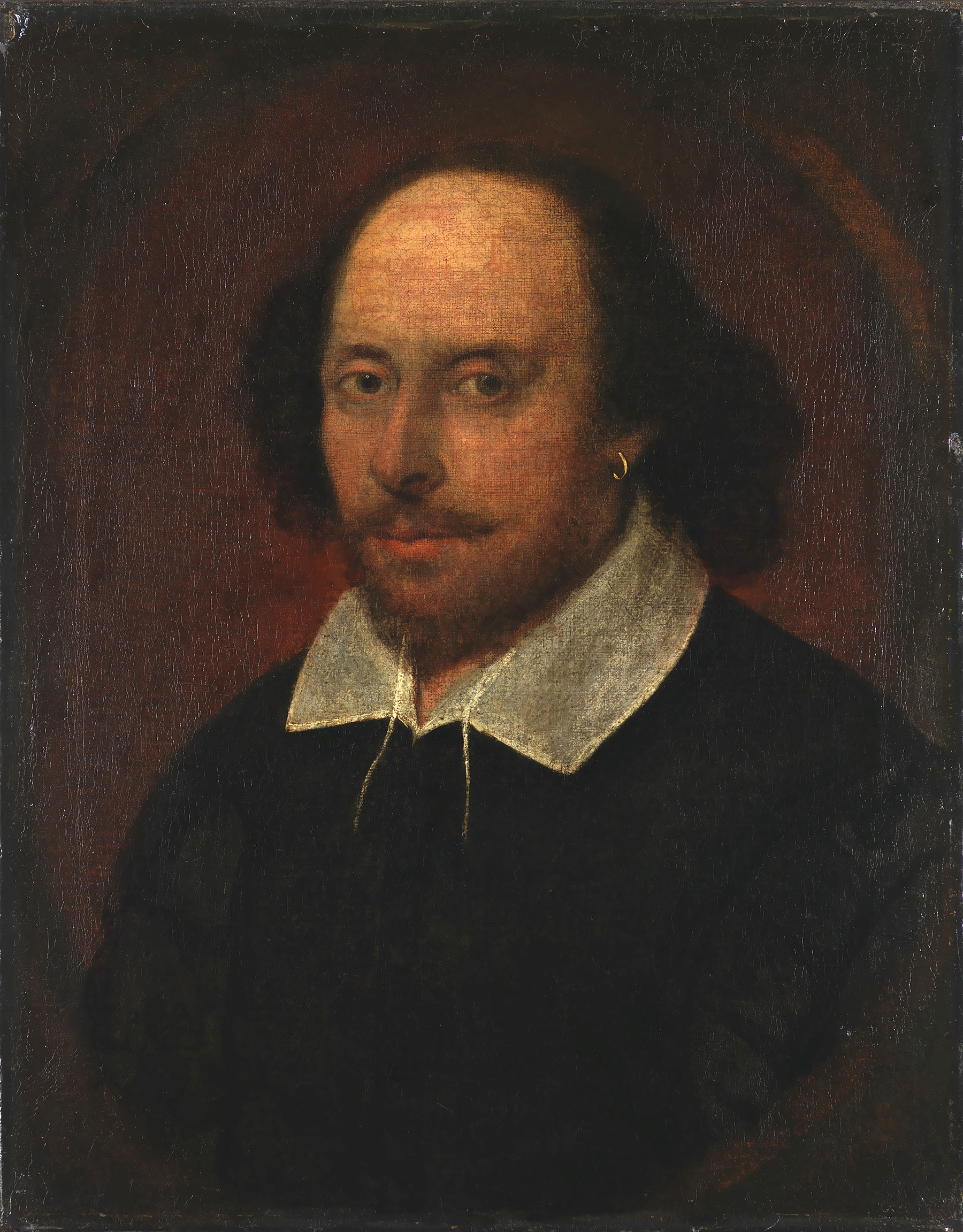
The only known portrait of William Shakespeare (1564-1616), painted from life, is debuting on the Chinese mainland at the National Portrait Gallery exhibition from London.
Taking place at Shanghai Museum East from March 18 to July 13, Writers Revealed: Treasures from British Collections and the National Portrait Gallery, London, features 135 treasured works, including portraits, manuscripts, rare first editions, and more, celebrating 82 literary giants.
It is a landmark exhibition that marks the British institution's debut on the Chinese mainland. "In uniting author portraits with original literary manuscripts and rare first editions, we are presented with new opportunities to examine writers and their works from the last 500 years," writes Victoria Siddall, director of the National Portrait Gallery, London, in her foreword to the exhibition.
ALSO READ: Victorian vitality
It also marks the first time the Shanghai Museum presents an exhibition dedicated to literature, according to Chu Xiaobo, the museum's director. "This exhibition is born from the deep friendship and close cooperation between our museum and the National Portrait Gallery, with invaluable support from many British institutions and private collectors. We hope these cultural treasures, shared by all humanity, will shine with new brilliance in this context of East-West exchange," he said at the opening on March 17.
"We really want to share some of our most significant works: Shakespeare, Jane Austen, J.K. Rowling …people who were internationally recognized and hopefully speak to a Chinese audience," says Catharine MacLeod, senior curator of 17th-Century Collections at the gallery. "I hope audiences will come, enjoy and look at the relationships between the manuscripts and the works, and read the books as well."
The portrait of Shakespeare is modest, depicting the head and shoulders only without any elaborate clothes. It is "the only portrait of Shakespeare that has a good claim of having been painted from life", according to the gallery. It may have been painted by John Taylor and acquired by the gallery when it was founded in 1856.
The portrait, along with the first publication of Shakespeare's collected plays, known as The First Folio, is on its first public exhibition on the Chinese mainland, MacLeod says.
The exhibition is structured into five thematic sections. The first section, In Search of the Author, explores different facets of the authors' lives and illuminates otherwise hidden stories behind the finished literary product.
In this section, MacLeod highlights a Cubism-style portrait of T.S. Eliot by Patrick Heron. Heron became a renowned artist later, but he was quite young when he painted the portrait of Eliot after the poet won the Nobel Prize in Literature in 1948.
The Picasso-influenced style seems well-suited to Eliot, who wrote The Waste Land after World War I, depicting a bleak perspective on life and humanity.
Later, Heron recounted his experience as a young artist who was intimidated by the great poet, but then, "I think maybe Heron was trying to reassure himself that Eliot wasn't such a scary person after all," MacLeod says.
MacLeod wants to draw attention to the white outline of a cat with an arched back on Eliot's shoulder. "I think Heron is referring to Eliot's cat poems, which were completely different from his other works," she says, culminating in the first edition of Eliot's Old Possum's Book of Practical Cats, which features a dust jacket designed by Eliot himself. Later, Andrew Lloyd Webber composed his renowned musical The Cats based on the book.
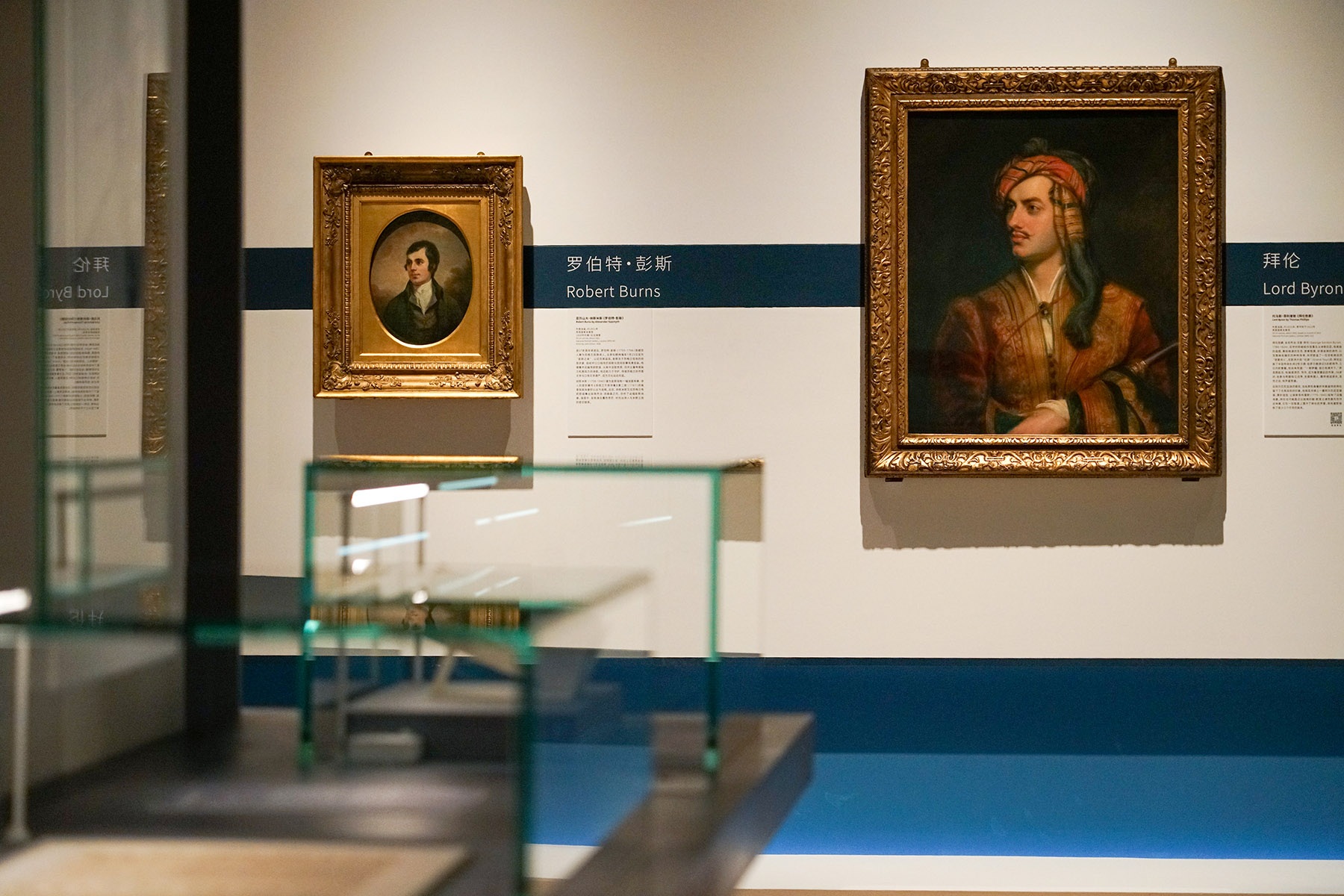
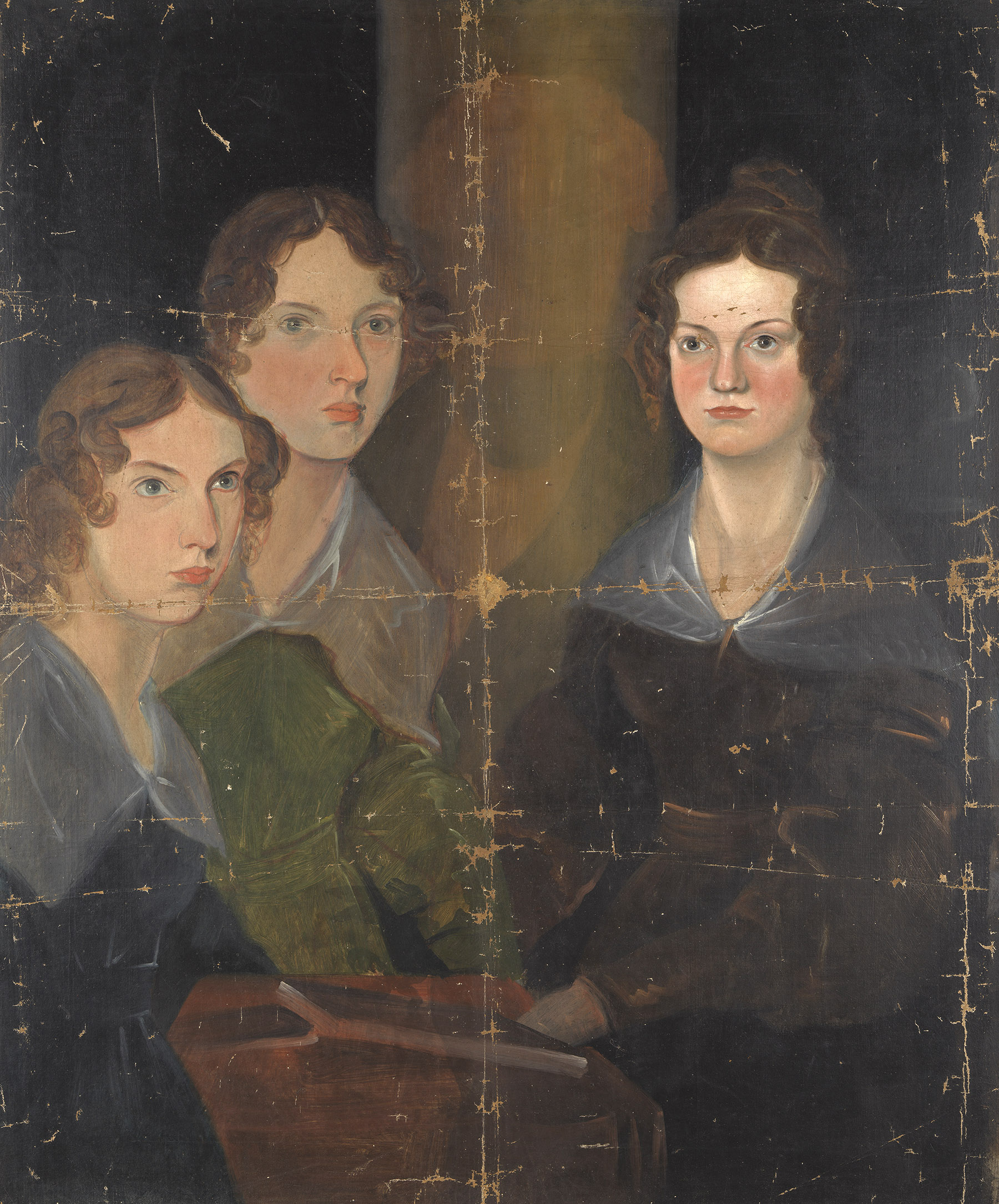
The second section is The Journey to Success, revealing writers' struggles and route to recognition and achievement. The third section focuses on Suppression, Censorship and Secrecy. Female artists, represented by the Bronte sisters, used to publish under men's names. The creased portrait painted by their brother Branwell Bronte is the only surviving painting of Anne, Emily and Charlotte Bronte together, and one of "the most missed (since it was moved to Shanghai) paintings in our gallery," Macleod says.
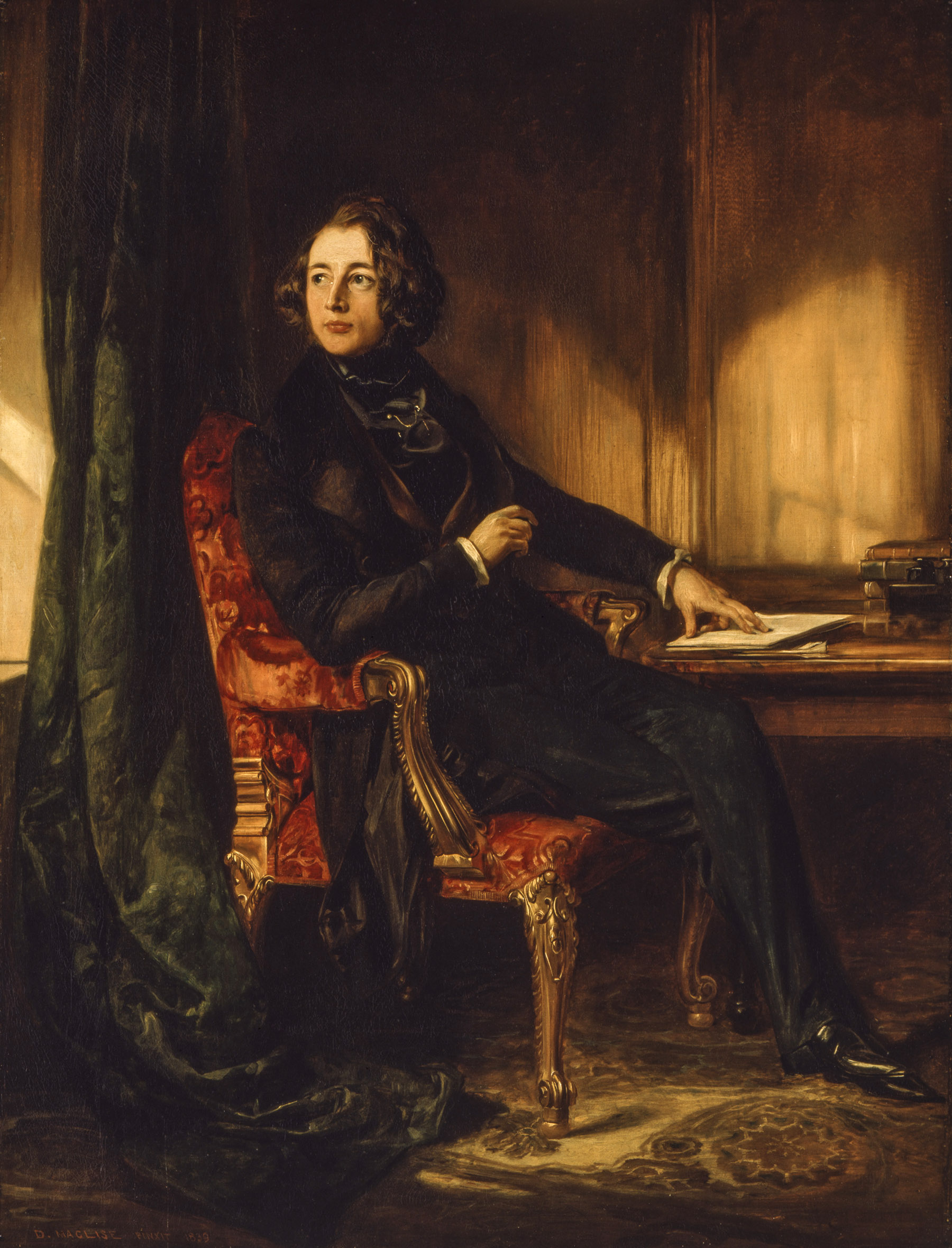
The Shakespeare portrait is a highlight of the fourth section, Fame. In this section, visitors will find a beautifully rendered portrait of Charles Dickens in his prime, alongside his manuscript of Great Expectations.
Contemporary readers may be drawn to the charcoal drawing of J. K. Rowling, which depicts the creator of the Harry Potter saga in the act of writing, deeply concentrated and immersed in her mind. It is displayed alongside a copy of the first edition of Harry Potter and the Sorcerer's Stone.
On the open page is a picture of the coat of arms, with the four Hogwarts houses drawn by Rowling, and a handwritten note under the title that reads, "Changed my life forever".
The final section, Writing to Change the World, focuses on writers who have sought to create social and political change through prose, fiction, poetry and autobiography.
Anna Starling, deputy director of the National Portrait Gallery, says: "We're finding books and manuscripts to go with the paintings, and those are in collections across the country, England and Scotland. It was challenging to find those and to persuade people to lend them, because they're very precious and ancient and fragile objects, a lot of them.
ALSO READ: Shakespeare's portrait sent to space edge for 400 years of 'First Folio'
"But in the end, everybody was really excited to bring the portraits to Shanghai and to show them to people here. We love sharing our collection, and we hope to encourage people to come back and see the rest of it in London and these paintings when they return to London."
She adds: "We're all intrigued to know more about the people who wrote the books that we're interested in. In the exhibition, you can come a little bit closer to those authors, but also, I hope that it will introduce people to new authors."
Contact the writer at zhangkun@chinadaily.com.cn
