

Areas along the capital's Central Axis are evidence of the city's commitment to preservation while serving contemporary lifestyles, Yang Feiyue reports.
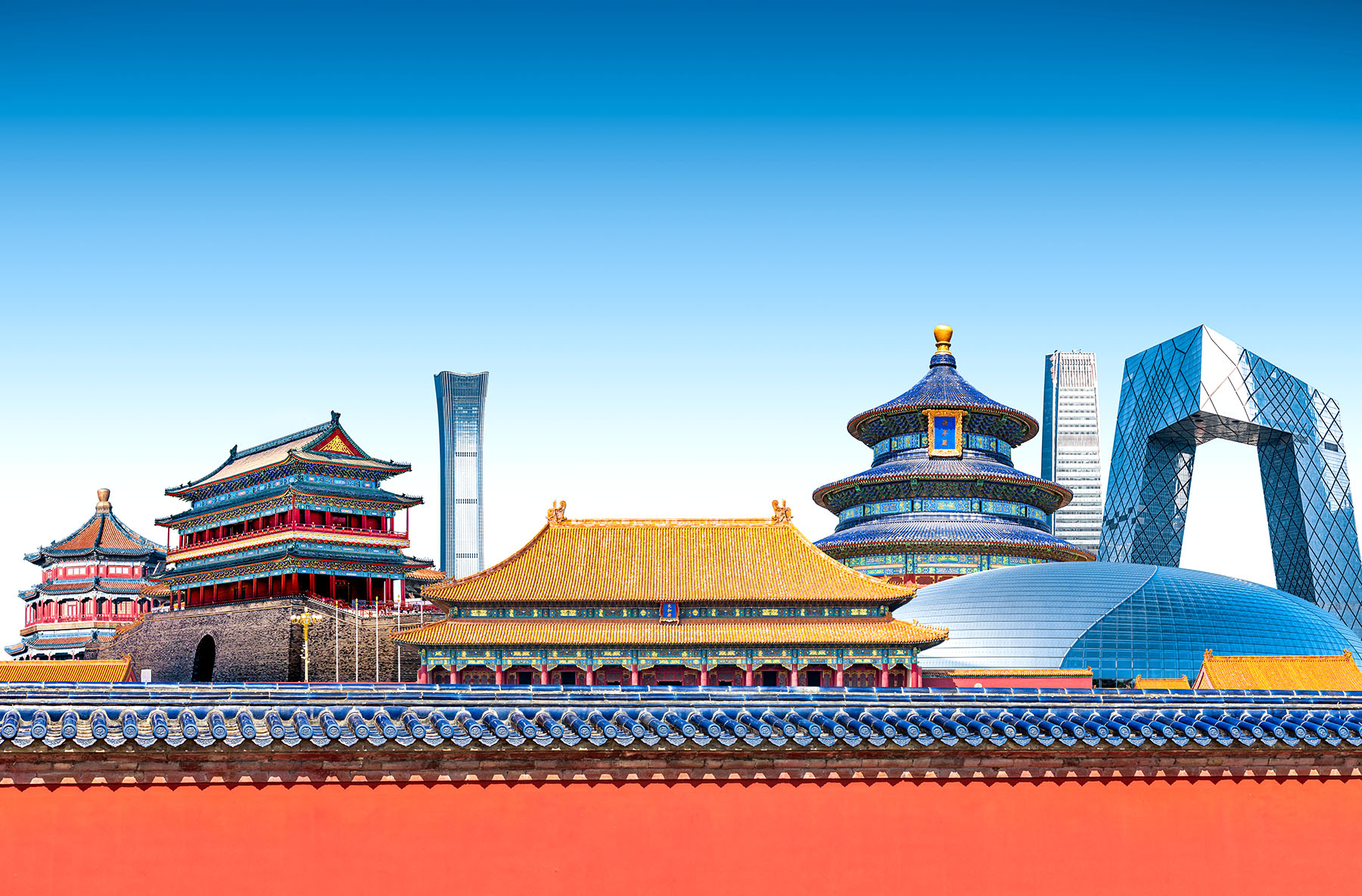
Running 7.8 kilometers from Yongding Gate in the south to the Drum and Bell Towers in the north, the Central Axis forms the architectural spine of Beijing, China's historic capital. Inscribed on the UNESCO World Heritage List in 2024, the line of imperial palaces, ceremonial gates and temples has long symbolized the city's political and cosmological order.
The axis also remains a living corridor of urban memory. Today, on both its eastern and western flanks, historical districts are reimagining how centuries-old neighborhoods can coexist with contemporary life.
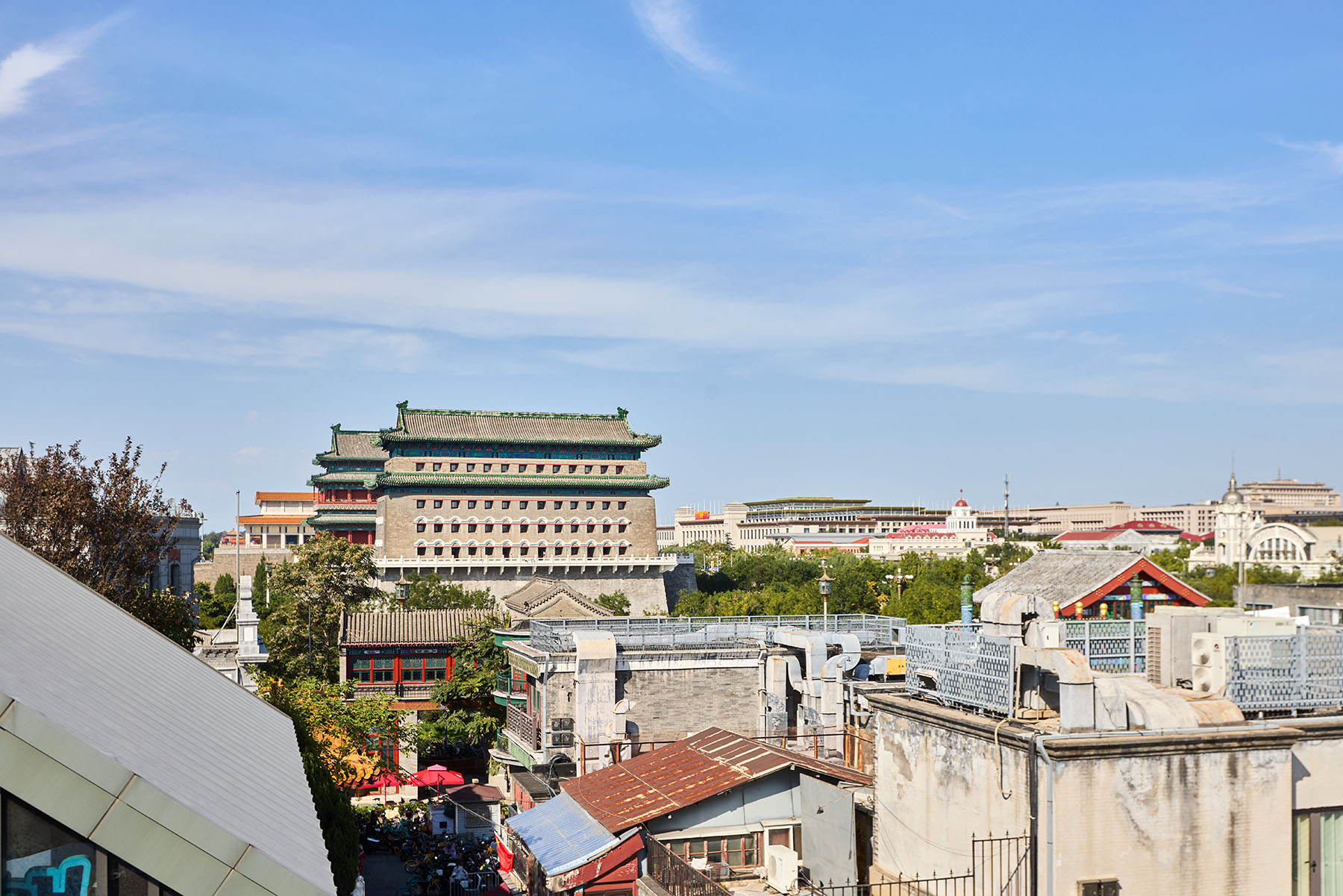
Standing atop the arrow tower of Zhengyang Gate and looking west, rows of gray-brick buildings stretch toward the horizon. This is Dashilar, one of Beijing's oldest commercial districts, where narrow hutong lanes and traditional storefronts have thrived for centuries.
READ MORE: Rhythms in flux
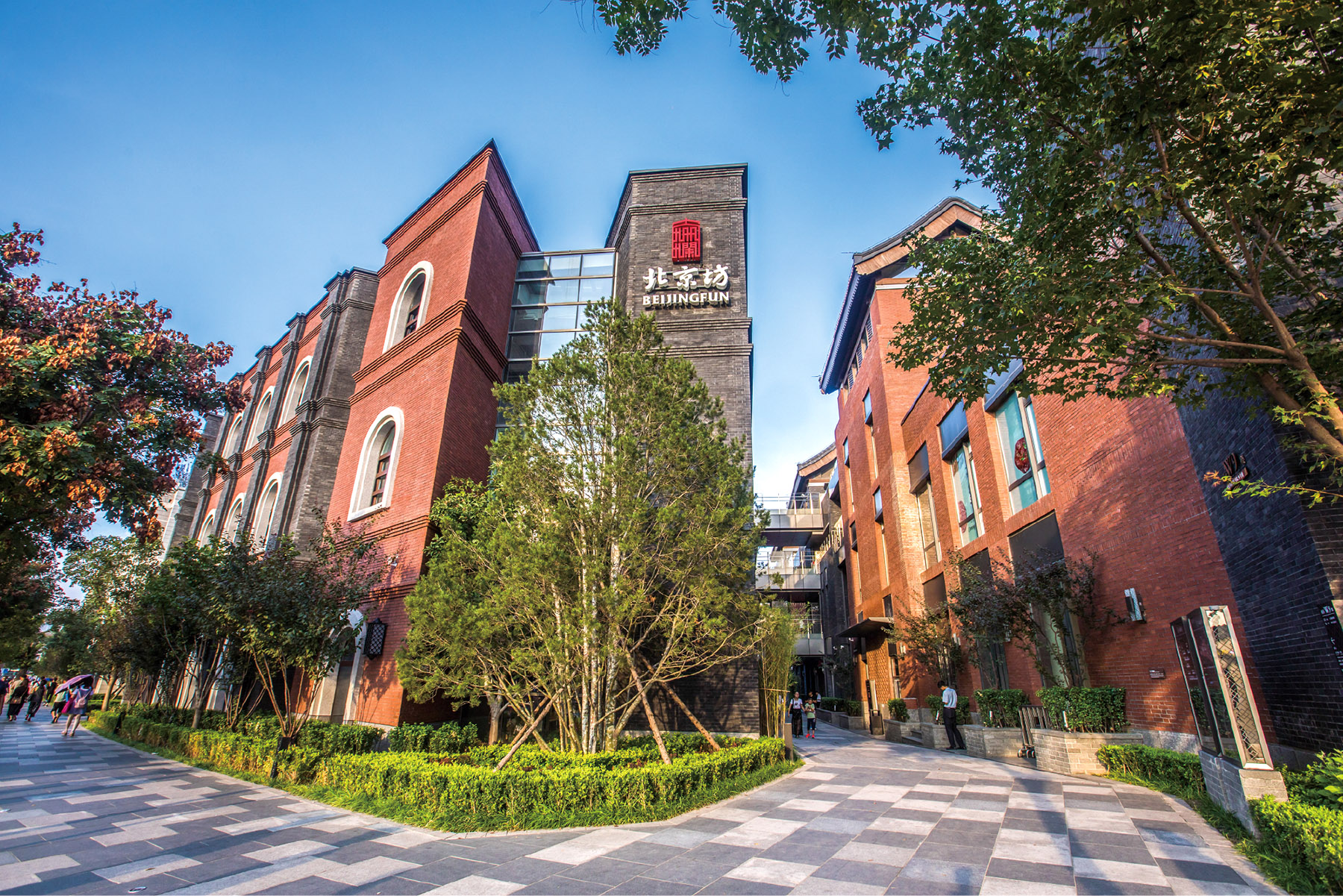
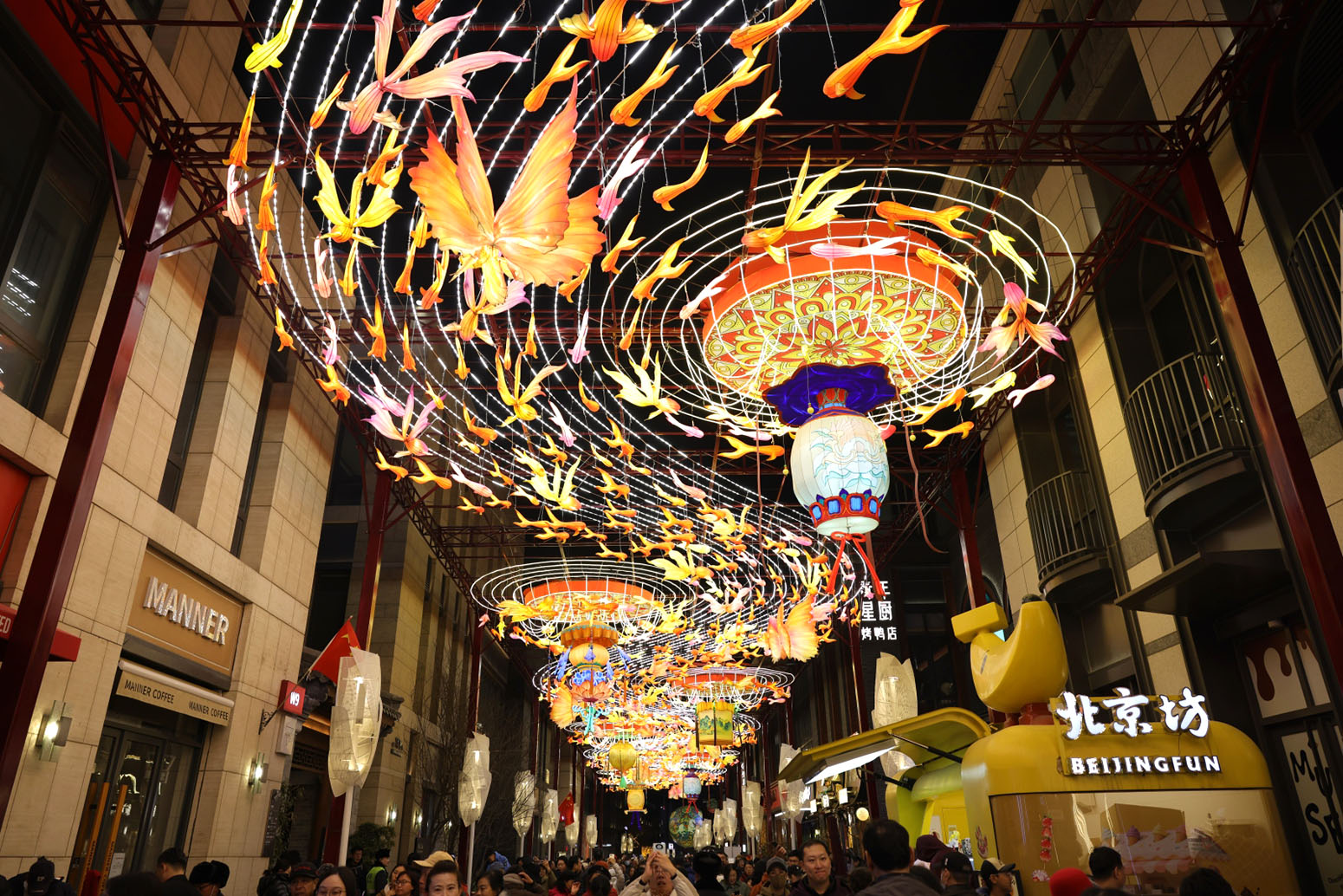
At its heart lies Beijing Fun, a cultural-commercial complex designed to bridge the city's past and present.
"We prefer to think of ourselves as a 'dialogue partner,'" says Liu Jianwei, deputy general manager of Beijing Guangan Commercial Management Co, the complex's operator, describing the relationship between Beijing Fun and the Central Axis.
"The area boasts deep history, hutong culture, and strong commercial heritage."
The most visible evidence of this dialogue between old and new lies inside the area's shops. According to the project's operators, more than 40 percent of Beijing Fun's tenants are first-time stores or flagship outlets at the global, national or local level.
History made of chocolate
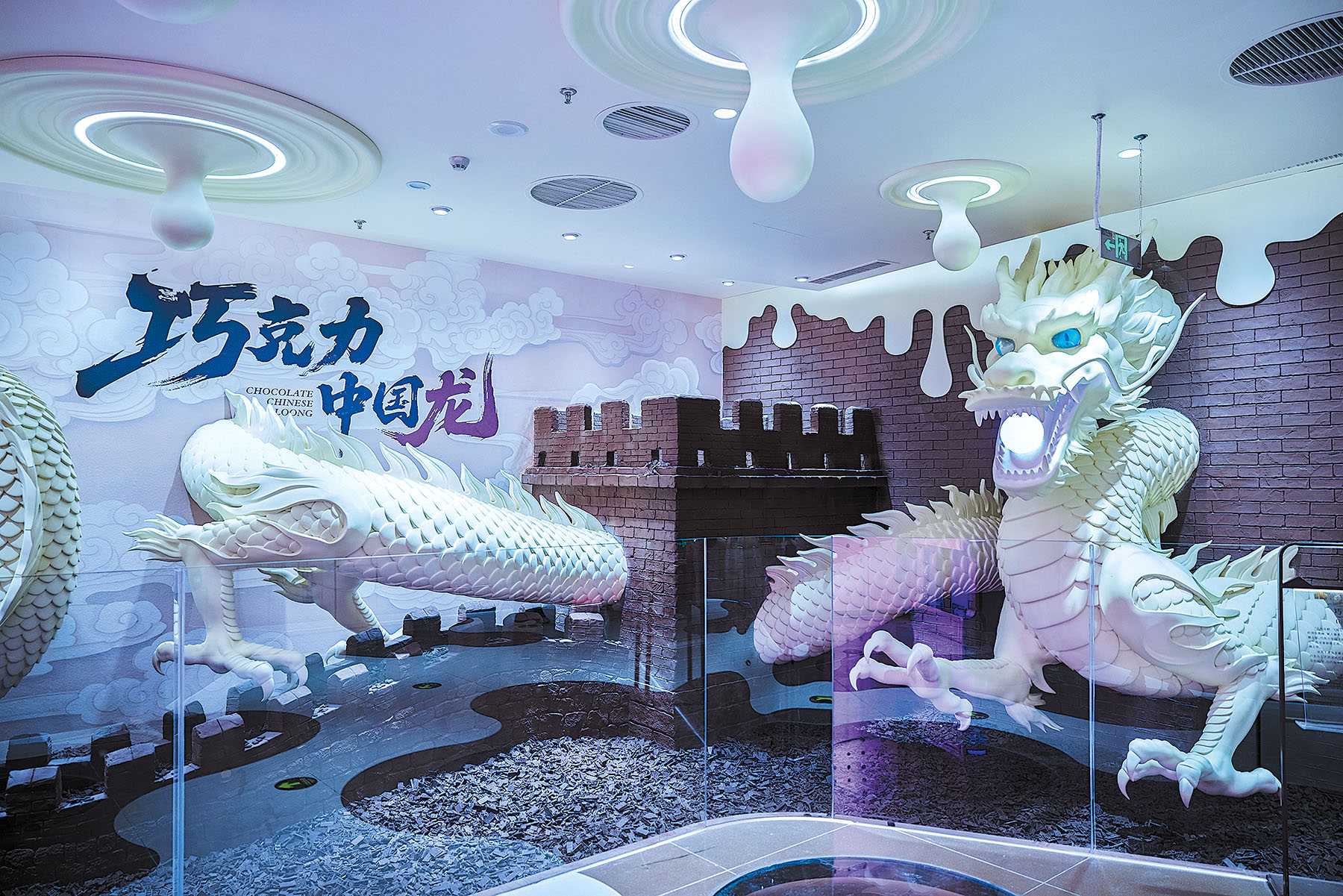
Inside a newly opened chocolate museum stands a 22.8-meter-long dragon sculpted entirely from white chocolate, crafted to resemble polished marble.
Nearby sits a painstakingly carved chocolate replica of an imperial phoenix crown, assembled from more than 1,700 miniature components — each tiny pearl and gem hand-glued.
"You might have to wait two hours just to see the real crown at the National Museum of China. Here, you can take a photo right next to it," says store manager Ma Li.
The museum, part of a small chain with locations in Shanghai, Xi'an in Shaanxi province and Qingdao in Shandong province, customizes its exhibits for each city. In Beijing, it chose the dragon, the Central Axis, mythical roof guardians, and ornate ceilings known as zaojing (caisson ceilings), all quintessential Beijing symbols, fashioned out of chocolate.
Children peer into glass cases, identifying the mythical animals that decorate Forbidden City rooftops — 10 for the Hall of Supreme Harmony, reserved for the emperors alone. Young visitors pose with chocolate "gold coins" beneath a wall inscribed with a famous Chinese saying: "Within books lies a house of gold".
This interplay between tradition and innovation has grown from a deliberate philosophy of urban renewal that began more than a decade ago.
Meticulous restoration
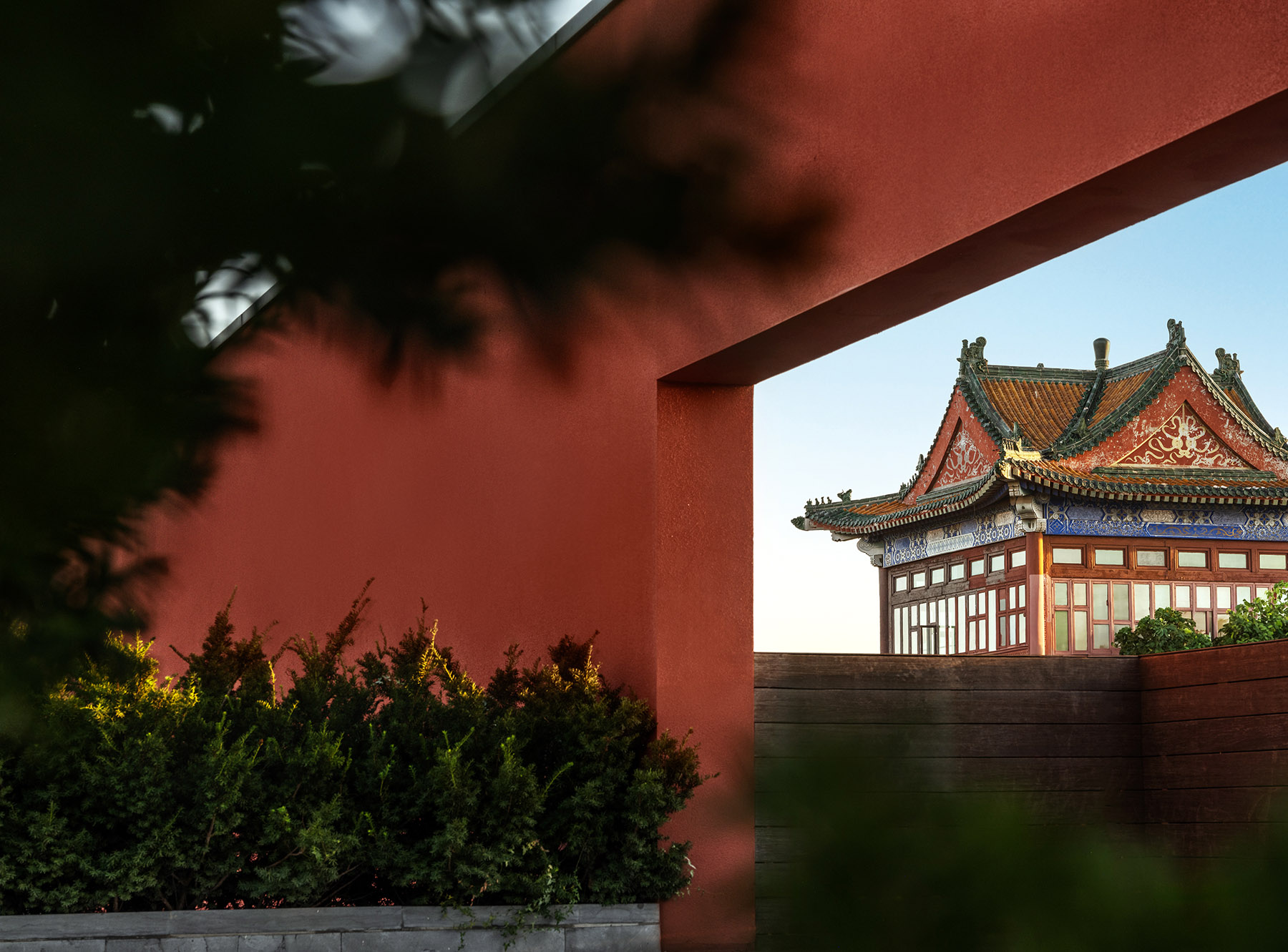
In 1905, Quanyechang, an institution established to promote Chinese manufacturing, opened west of Zhengyang Gate.
Over the next hundred years, the building survived fires, political shifts and multiple reinventions from a department store to a hotel, before being designated a protected cultural relic in 2006.
It then underwent a meticulous restoration from 2011 to 2015.
"The restoration team invited master craftsmen who had worked on Tian'anmen," Liu recalls. One tassel carving alone took a week to complete by hand.
During the renovation, workers discovered a massive brass chandelier hidden within the building's octagonal dome.
"It had been sealed in there for years and forgotten. International artisans helped restore it according to the original design," Liu says.
Today, the century-old chandelier lights up the hall during major events.
Around 2012, planners debated whether the site should become a massive modern shopping complex. Instead, they adopted architectural principles that highlighted "holistic preservation with creative renewal".
"The value of this district isn't in how tall we build but in how deeply we preserve it," Liu says.
Renowned architects collaborated to design eight interconnected buildings, creating rooftop gardens, sky bridges and open courtyards that link historical structures with new ones. It rendered Beijing Fun as one of the first projects in a historical district to adopt a cluster design model, which has maintained the spatial texture of traditional neighborhoods while accommodating modern leisure and the retail lifestyle.
In April, the second phase of Beijing Fun will open a 3,000-square-meter rooftop garden to the public. From this elevated vantage point, visitors can gaze east toward Zhengyang Gate and the southern stretch of the Central Axis.
The garden has been designed in three sections: one for outdoor leisure and social events, such as themed camping; another for art exhibitions and brand launches; and a third, featuring a small stage for live performances.
"From here you can see the axis, overlook Dashilar, and view the historical lantern street from a completely different perspective," Liu says.
Urban renewal
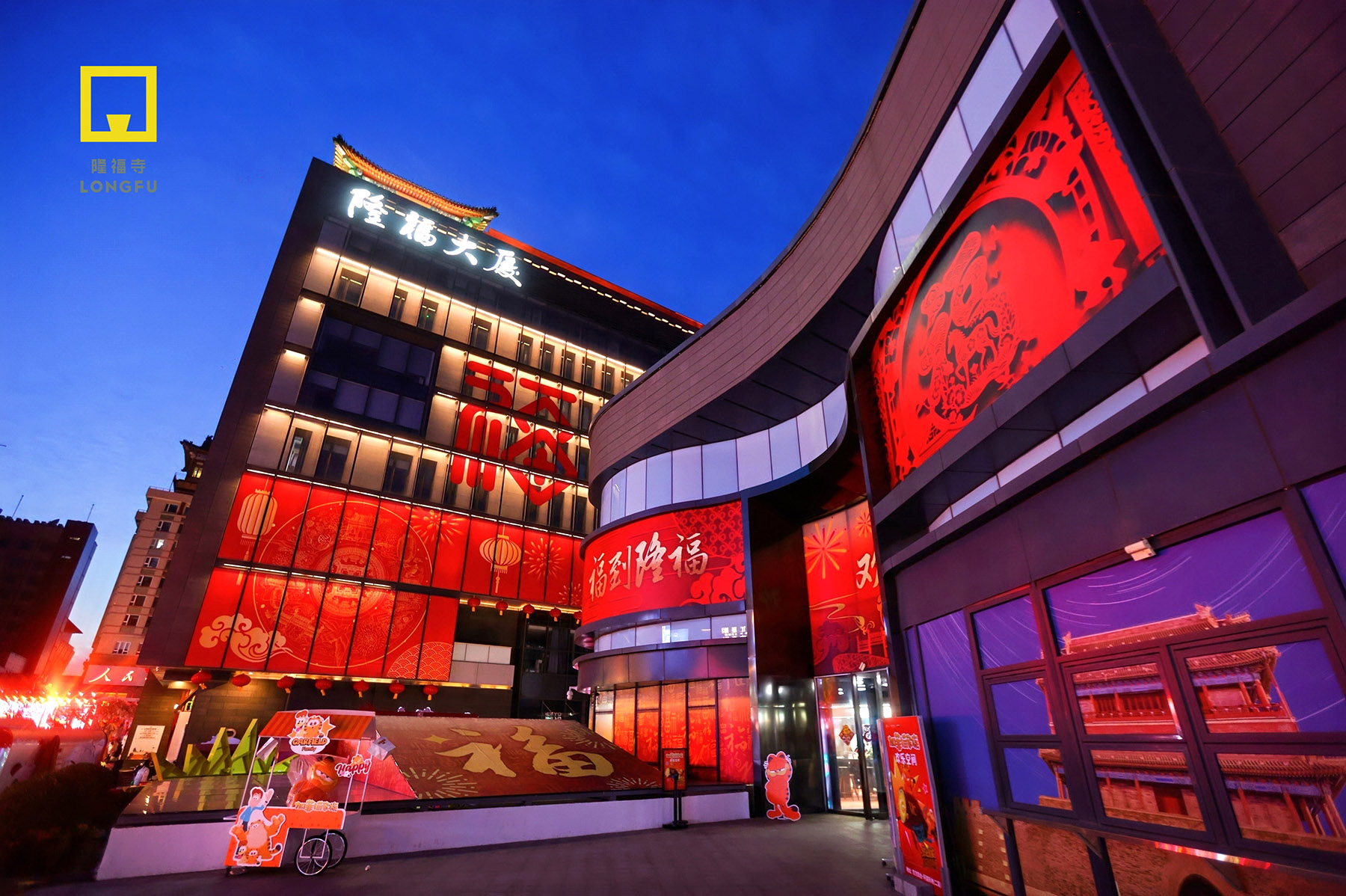
Travel east across the Central Axis and past the bustling Wangfujing commercial street, and another historical neighborhood, the Longfu Temple area, emerges.
Built in 1452 during the Ming Dynasty (1368-1644), Longfu Temple was once a grand imperial complex that later evolved into one of Beijing's most famous temple markets.
By the Qing Dynasty (1644-1911), monthly temple fairs rivaled those of Huguo Temple on the western side of the city, forming the capital's two largest and most popular marketplaces. Vendors sold antiques, calligraphy, clothing, and street snacks, while opera performances and folk arts filled the courtyards.
According to historians, the area flourished thanks in part to the Grand Canal trade network. Goods arriving from southern China passed through Tongzhou and entered the capital via the nearby Chaoyang Gate, making the neighborhood a natural commercial hub.
Unfortunately, it was severely damaged over time, and later restoration efforts turned the site into a space for restaurants, a market for clothing and small goods, and a digital square.
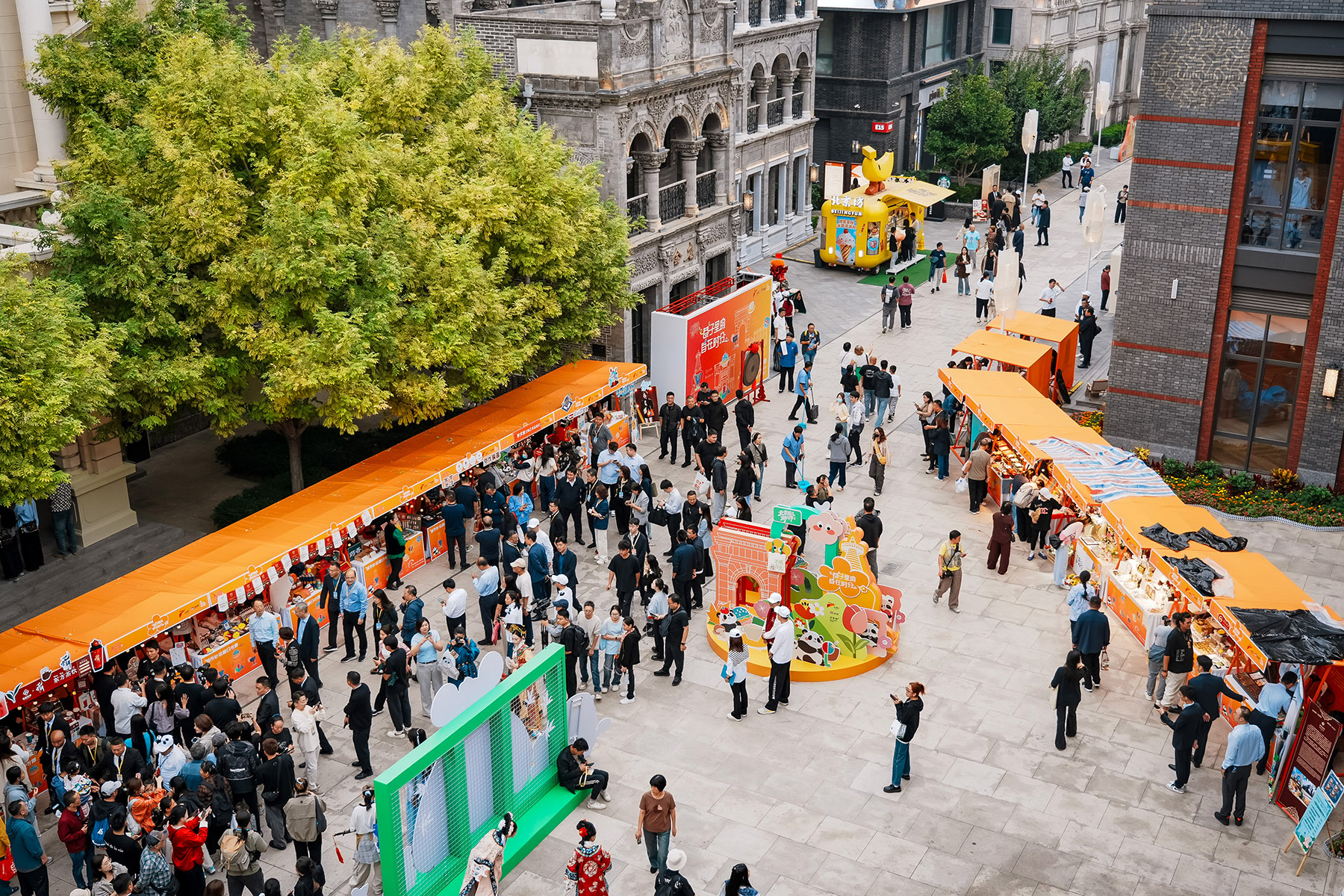
Yet, in recent years, Longfu Temple has begun undergoing a different kind of revival, as local planners adopted what Chinese architects call "embroidery-style urban renewal", which is a careful, incremental process that preserves historical layers while introducing new functions.
"We're always seeking balance," says Gao Tianliang, assistant general manager of Beijing Xinlongfu Cultural Investment Co.
One balance lies between heritage preservation and modern functionality. Former cafeterias have been converted into contemporary art galleries, while empty garages now house sports and lifestyle spaces.
Another balance is between urban memory and modern public life. Open plazas, seating areas and pedestrian corridors encourage residents and visitors to linger rather than simply pass through.
The district blends gray brick facades reminiscent of old Beijing, with terraces, sky bridges and contemporary storefronts. Traditional wooden signboards hang beside neon-lit boutiques.
"You can almost touch history," says Dai Qihong, store manager of Tongrentang Zhima Health, a modern concept brand created by Tongrentang, the Chinese medicine company founded in 1669.
East meets West
One of the most distinctive stores in the Longfu Temple area, Tongrentang carries a curious blend of coffee, baked bread and faint herbal notes.
"You can smell the medicine, but it's mixed with coffee and pastries. It's East meeting West," says Dai, who is also a cultural enthusiast.
The design incorporates architectural elements inspired by traditional Chinese temples — the ornate zaojing pattern of Longfu Temple and the mortise-and-tenon joints used in classical wooden structures.
"Our brand and Longfu Temple both have hundreds of years of history. We wanted a deep cultural connection," Dai explains the decision to set up shop at the site.
Besides running the store's business, it has become routine for her to explain the history and culture of Longfu Temple to her customers.
The store's layout encourages visitors to explore bakery displays featuring herbal-infused pastries, a coffee bar serving drinks like monk fruit Americano and goji berry latte, and, deeper inside, a wellness area selling traditional medicinal herbs and handcrafted products.
Since opening eight months ago, the store has hosted dozens of cultural workshops — from incense bead-making to traditional calligraphy and the Chinese wellness exercise baduanjin.
Older residents come out of nostalgia for the old Longfu Temple markets, while younger customers arrive out of curiosity, Dai observes.
The mix of generations has become part of the neighborhood's charm, she adds.
ALSO READ: Cultural flowers bloom in central Beijing
The imperial monuments along the Central Axis remain stoic. Yet, on either side, spaces like Beijing Fun and Longfu Temple are quietly extending their conversation with the past.
Together, they tell a story of how Beijing continues to evolve, protecting its history while keeping the ancient capital vibrantly alive.
"China's ancient culture is inexhaustible. You can dig into it endlessly — and still find something new," Dai says.
Contact the writer at yangfeiyue@chinadaily.com.cn
