

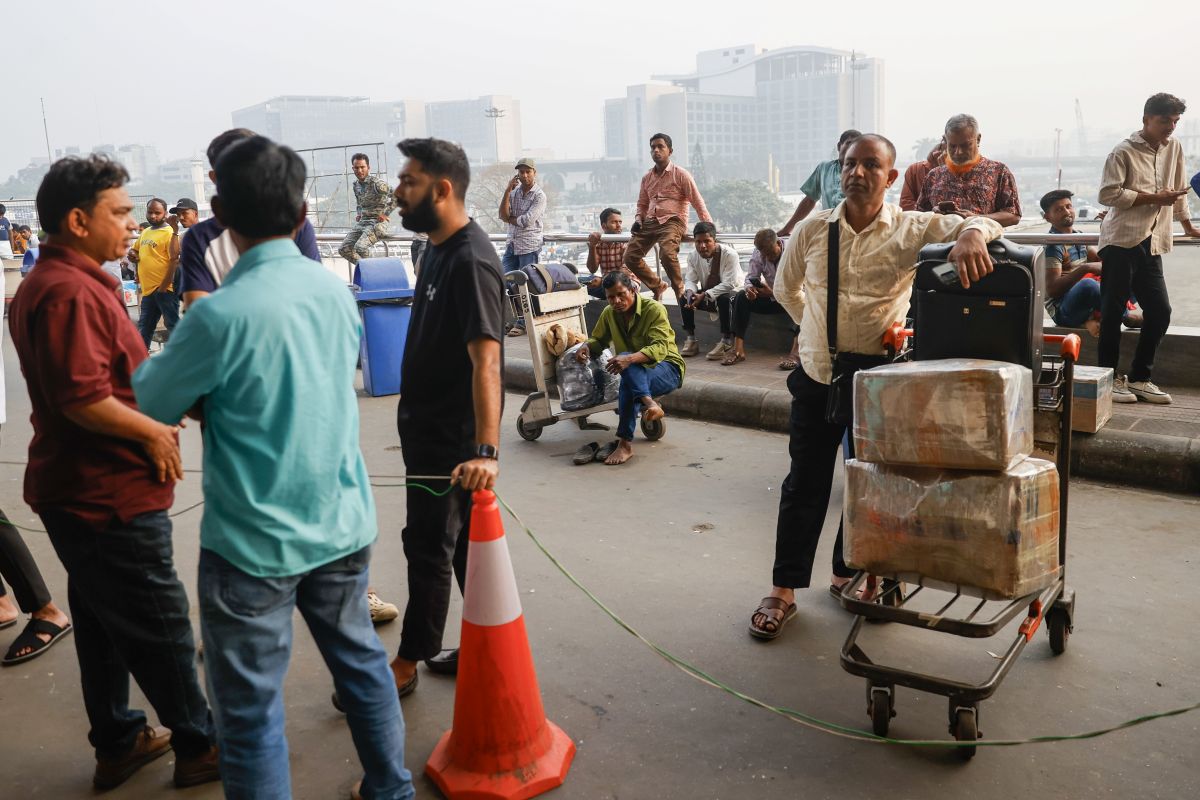
Tens of thousands of passengers remain stranded weeks into the Iran conflict, as mass cancellations across Gulf hubs overwhelm carriers and leave travelers scrambling to find ways home.
Retired photographer Bernard Kuhn and his wife were stuck in Sri Lanka after Qatar Airways canceled their London-bound flight. After days of failed attempts to reach the airline — with calls dropping and no follow-up — they gave up, flew to Bangkok and waited 10 days before buying new tickets. The detour cost 5,000 pounds ($6,700), forcing them to scrap next year’s vacation.
“Airlines are overwhelmed and are not communicating, so you’re left completely blind,” Kuhn said. “No one’s sending you emails or calling you. You really need to sort it all out on your own.”
The Kuhns’ experience reflects a broader breakdown as more than 50,000 flights have been canceled, disrupting one of the world’s busiest transit corridors. Many travelers say airlines have failed to rebook them promptly — or at all — leaving passengers to navigate limited alternatives and soaring fares themselves.
Their complaints come as Gulf airlines face a rare level of disruption as airspace closures trigger sudden cancellations across one of the world’s busiest long-haul networks. About a third of Europe-Asia flights transit through Gulf hubs, so even short shutdowns can ripple globally. With crews and aircraft out of position, recovery is slower and passenger assistance can be limited.
RELATED ARTICLES
- US-Israeli strikes cause global travel disruptions
- Global airlines hike fares, cut routes as fuel costs balloon
- Asian airlines raise fares, mull groundings as fuel crunch looms
- Here are the airlines raising fares amid wild oil-price swings
Some people booked on Gulf carriers have described hours on hold to reach customer service, repeated cancellations with little explanation and automatic refunds without rebooking options. Others say airlines continue selling high-priced seats on available flights while stranded customers struggle to secure them.
While some travelers in the Gulf or European Union are entitled to care and assistance, many others — especially on Asia-Europe routes — have little recourse when airlines fail to rebook them or delay alternatives, leaving passengers to cover hotel costs and other expenses out of pocket. Travel insurance offers little relief, as most policies exclude war-related disruptions.
“There aren’t any unifying global passenger protections,” said Steven Berger, a lawyer with the European Consumer Organisation.
In response to requests for comment on booking and refund delays, Qatar Airways, Etihad and Emirates directed Bloomberg to areas of their websites that address frequently asked questions related to war disruptions.
‘Let Down’
Still, their social media channels remain flooded with requests for rebookings, including from elderly travelers and those with medical needs. Users have reported receiving refunds instead of alternative flights, leaving them to purchase new flights at exorbitant costs.
X user Bruno Lopes posted that he and his wife were stranded in Bali after their flight home to Brazil was canceled, and that they were unable to secure a rebooking despite seats still being sold.
“Stop pushing refunds just to sell the same ticket at more than double the price,” he wrote. “Prioritize rebooking us instead of profiting off the crisis! We need a flight home now.”
Diane Clement said she encountered that firsthand after Etihad canceled her return flight to Atlanta from a vacation in Thailand’s Phuket. While trying to rebook, she found seats still selling on the same route for more than $4,000 — nearly four times what she had originally paid.
“I felt they were doing us dirty, and it’s really unfair,” Clement said. Unable to secure a rebooking, she borrowed money to purchase a separate $3,700 ticket home on Delta.
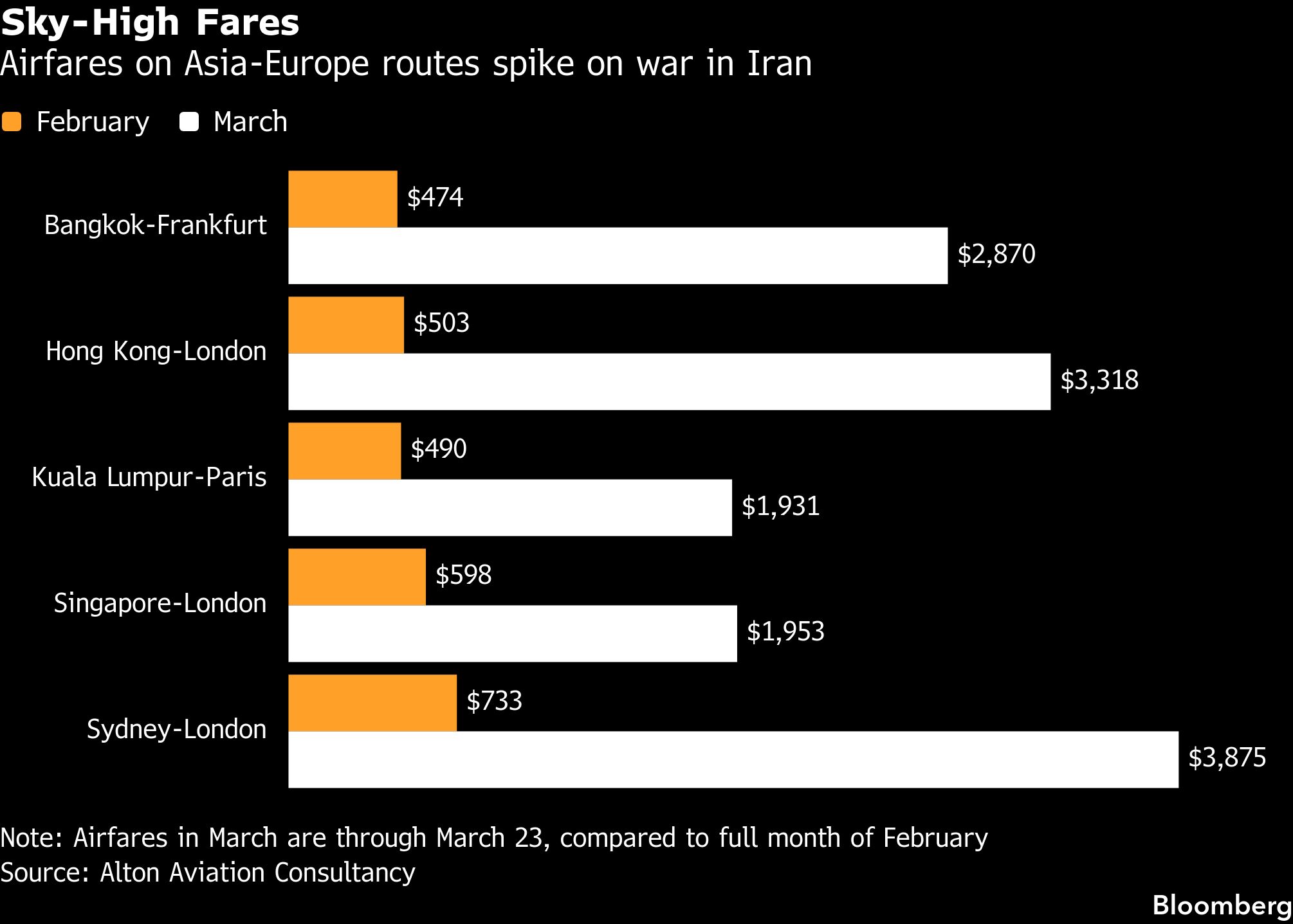
On some popular routes between Southeast Asia, Australia and Europe for March, airfares have spiked two to five times from February, according to consultancy Alton Aviation. June fares are about 40 percent to 110 percent higher than a year earlier, with October prices up 15 percent to 30 percent, it said.
Although some European and Asian carriers have added direct flights to bypass the Middle East, the additional capacity hasn’t been enough to absorb displaced passengers.
“The extra capacity still hasn’t filled the entire void,” said Bryan Terry, Alton’s managing director. “The demand still exists and that’s why flights are so high on some of these routes.”
The disruption, alongside rising jet fuel costs, is expected to weigh on the summer travel season, particularly on long-haul routes. Summer bookings from Europe to the US have fallen 15 percent from a year earlier, while Asia-to-Europe bookings — heavily reliant on Middle Eastern hubs — are down 4.4 percent, according to analytics firm Cirium.
“For travelers heading into summer 2026, the message is clear: Expect higher fares and fewer cheaper Gulf connections,” Terry said.
About 90,000 passengers a day typically transit through Gulf airport hubs on Emirates, Qatar and Etihad, Cirium said. Much of the current strain is concentrated on routes that rely on the Gulf hubs, where service has been cut following escalating security risks, including a recent drone incident in the vicinity of Dubai International Airport. Airlines including British Airways, Virgin Atlantic and Cathay Pacific Airways Ltd. have also suspended key routes, tightening capacity.
UK-based travel agent Kate Moore said she was forced to buy 2,500-pound tickets via Hong Kong after her Etihad Airways flight home from Thailand was canceled and refunded. With little communication from the airlines, she began posting travel updates on Instagram and has heard from more than 400 passengers facing similar issues — many unable to afford replacement fares. Some have had flights canceled up to five times and feel abandoned, she said.
“People have lost a lot of confidence in the airlines,” Moore said, adding that many who are still stuck have sought her help to book them on alternate routes that avoid the Gulf. “They’ve been really badly let down and can’t get help from anyone.”
