

Global demand for vessels increases as energy security becomes major focus, environmental controls tighten
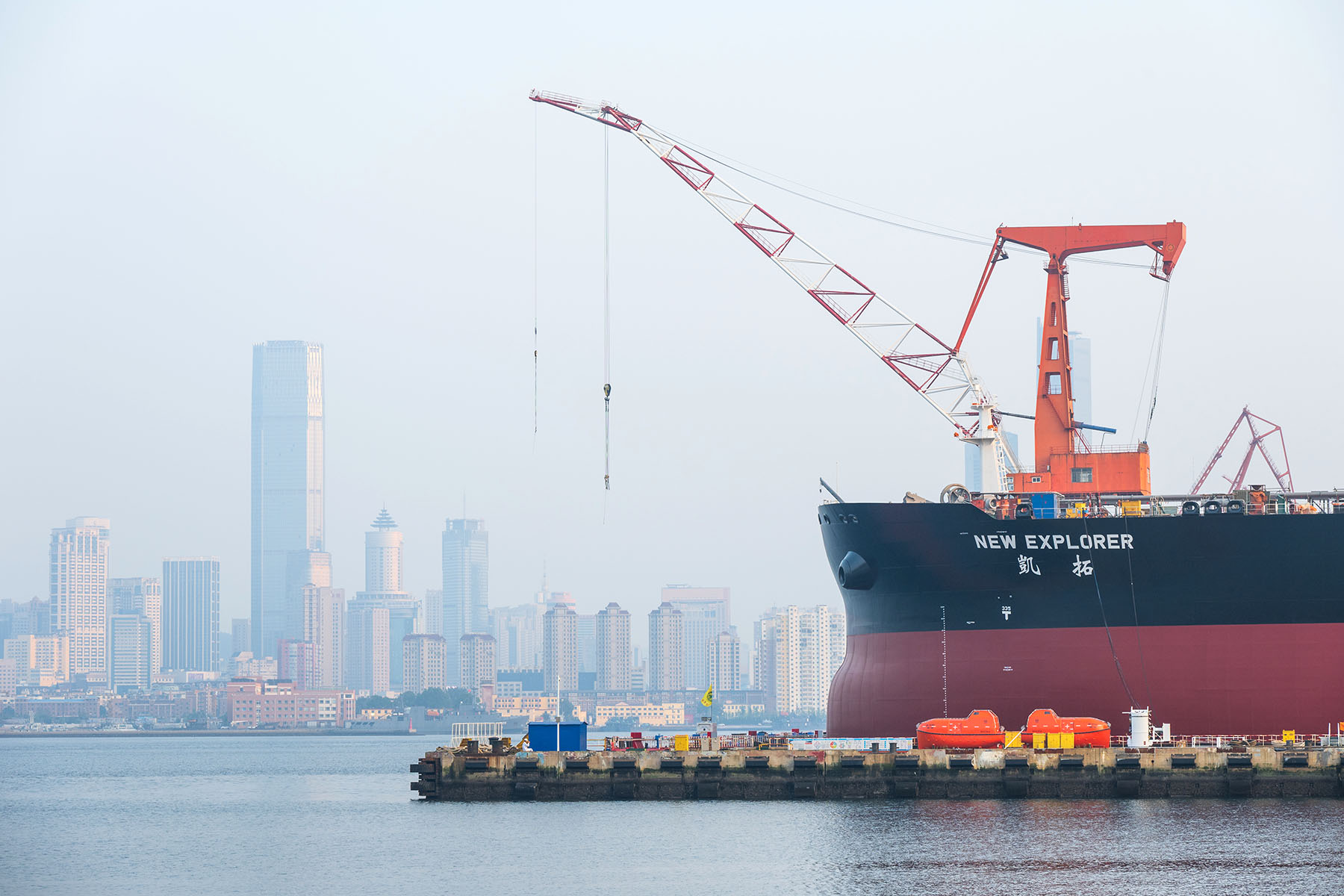
Rising geopolitical tensions and growing energy security concerns are fueling a new wave of global demand for oil tankers, with Chinese shipbuilders primed and ready to fill orders.
Disruptions at key choke points such as the Strait of Hormuz, a critical oil shipping corridor in the Middle East, are pushing shipowners to expand their fleets and diversify transport routes.
Market watchers said shifting trade patterns are reshaping tanker demand, as changes in crude flows lengthen shipping routes even without a proportional increase in volumes.
READ MORE: Largest intelligent container ship sets sail
Regulatory shifts and fleet renewal cycles are also adding to the need for new ships, with stricter environmental standards accelerating the replacement of aging vessels with more fuel-efficient ships, they said.
The multitude of factors are creating fresh market opportunities for Chinese shipbuilders given their strong delivery capacity, cost competitiveness and improving technological capabilities, they added.
A recent market analysis released by the Baltic and International Maritime Council, an international shipping association based in Denmark, said orders for crude oil tankers surged during the first quarter, pushing global shipbuilding orders to a 17-year high.
The spike has been driven mainly by a tripling in oil tanker orders and a rebound in orders for large liquefied natural gas (LNG) carriers. Oil tankers accounted for about 32 percent of all new ship orders during this three-month period, the report said.
New deliveries
These trends are already being reflected in deliveries of new vessels.
On April 1, two 50,000-deadweight-ton (DWT) medium-range (MR) oil and chemical tankers entered the mooring and commissioning phase in Jiangyin, Jiangsu province, and are due for delivery to European shipowners in May and June. The tankers were independently developed by China State Shipbuilding Corp (CSSC) Chengxi Shipyard Co.
MR tankers, typically with a deadweight of around 45,000 to 55,000 metric tons, are used for transporting refined petroleum products and chemicals across regional and intercontinental routes, and are valued for their flexibility and broad cargo compatibility.
The latest development follows the delivery of a 50,000-DWT MR oil tanker to a Cypriot shipowner on March 26 by the State-owned shipbuilder, a subsidiary of Shanghai-headquartered CSSC.
Zhang Xinlong, the company's president, said this type of vessel has become one of his company's core self-developed ship types, gaining traction in overseas markets due to its performance and adaptability.
In the first quarter, CSSC Chengxi delivered eight new vessels and its backlog stood at 103 ships, with deliveries scheduled through 2029, data from Nanjing Customs showed.
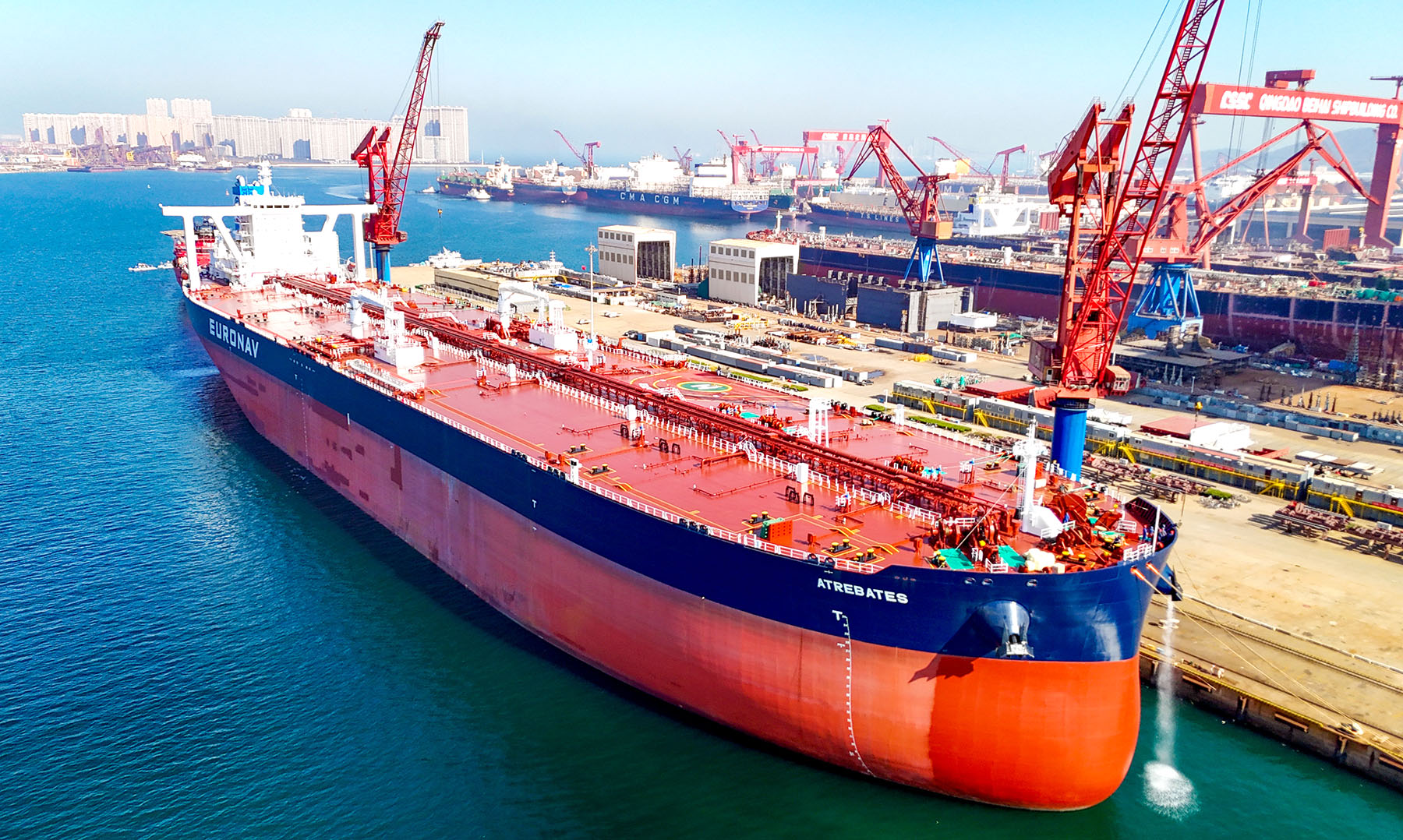
A 114,000-DWT oil tanker, built by Hengli Heavy Industries Group Co, a privately-owned shipbuilder with 35,000 employees in Dalian, Liaoning province, was delivered to its owner and set sail on March 31.
The vessel, ordered by Wah Kwong Maritime Transport Holdings Ltd, a Hong Kong Special Administrative Region-based shipping company, is equipped with advanced cargo tank coating technology, enabling it to carry a broader range of oil products and overcome traditional transport limitations.
Liu Minjing, president of Hengli Heavy Industries' Dalian shipyard, said the upgraded coating system enhances operational flexibility across major global ports, while offering improved environmental performance and efficiency.
Dominance deepens
China's dominance in global shipbuilding has deepened in recent years, underscoring a broader shift in industrial capacity and maritime demand toward Asia.
The country's shipbuilding output reached 53.69 million DWT in 2025, up 11.4 percent year-on-year and accounting for 56.1 percent of the global total, according to the Ministry of Industry and Information Technology.
New orders reached 107.82 million DWT, representing a 69 percent share of the global market.
Amid shifting geopolitical and regulatory dynamics, countries are increasingly building up their own oil tanker fleets to safeguard energy security.
Recent adjustments to the US Jones Act, also known as the US Merchant Marine Act of 1920, have drawn wide attention. The federal statute requires goods transported between US ports to be carried on vessels owned and operated by US citizens or permanent residents.
However, the measure was temporarily waived for 60 days in mid-March to help ease the cost of moving oil, gas and other commodities. The waiver allows foreign-flagged vessels to transport goods between US ports during this period to facilitate the flow of energy supplies across the country.
Tensions surrounding the Strait of Hormuz have underscored the importance of energy transport security and also driven demand for more diversified tanker fleets, greater operational flexibility and shorter delivery cycles.
This has created fresh opportunities for Chinese shipbuilders, given their strong production capacity, cost competitiveness and improving technological capabilities, particularly in segments such as oil tankers, LNG carriers and other energy transport vessels, experts said.
"The convergence of geopolitical tensions and regulatory adjustments is reinforcing structural demand for energy transport vessels in regions including the Middle East, Europe, North America and parts of Asia, and China is emerging as a primary beneficiary of that shift," said Liu Ying, a researcher at Renmin University of China's Chongyang Institute for Financial Studies in Beijing.
Liu noted that disruptions around key choke points such as the Strait of Hormuz, combined with policy moves like the waiver of the Jones Act, are accelerating changes in global shipping patterns.
Zhang Bo, a professor at the China Institute for Studies in Energy Policy of Xiamen University in Fujian province, said energy security concerns are prompting many countries and shipowners to prioritize flexibility, fleet diversification and faster delivery — areas where Chinese shipyards have developed a clear competitive edge.
Liu Guiyun, a professor at Ningbo University's faculty of maritime and transportation in Zhejiang province, said China's ability to deliver vessels at scale, with shorter lead times and increasingly advanced specifications, is helping it capture a larger share of high-value segments of the industry, from multipurpose chemical tankers to LNG carriers.
"This is no longer just about cost advantage," she said. "It reflects a broader upgrade in engineering capability and industrial coordination."
Looking ahead, these dynamics could reinforce China's lead in global shipbuilding, particularly in high-end oil tankers and LNG carriers, while forcing domestic shipyards to move up the value chain and compete more directly in technology-intensive segments, she said.
High-end tankers
Those capabilities are already being translated into high-end vessel deliveries.
In late March, a 307,000-DWT very large crude carrier (VLCC),Empire Hope, was delivered in Dalian to South Korean owner Cido Shipping Group, according to Dalian Customs.
Built by Dalian Shipbuilding Industry Co, another subsidiary of CSSC, the vessel represents the latest generation of China's VLCC designs.
Measuring 333 meters in length, 60 meters in beam and 30 meters in depth, the tanker features a deck area of over 18,000 square meters. From keel to bridge, it rises to the height of a 20-story building, with a coating area equivalent to around 76 soccer fields.
Designed for port and waterway flexibility, the vessel can carry more than 2 million barrels of crude oil at a design draft of 20.5 meters while transiting the Strait of Malacca, the narrow shipping lane that connects the Pacific and Indian Oceans, said Bi Hongkun, project manager at Dalian Shipbuilding.
The combined improvements, including a six-cylinder main engine and an exhaust gas desulfurization system, dramatically boost energy efficiency and environmental performance, with key indicators reaching world-class levels, said Bi.
China's VLCC technology is undergoing continuous improvements, he said. Future vessels will incorporate new green fuels and third-generation wind-assisted propulsion technology to meet the latest global environmental requirements.
With tightening environmental standards and evolving fuel technologies, shipbuilders are expected to further accelerate the adoption of digital control and greener propulsion systems, further reshaping competition in the global shipbuilding industry.
More evidence of China's push into high-end, green vessel segments can be seen in the delivery of advanced LNG carriers.
On April 8, under the supervision of Shanghai Customs, a large LNG carrier departed from Changxing Island with 29 crew members on board, marking its delivery to its overseas client three months ahead of schedule.
The vessel is part of Hudong-Zhonghua Shipbuilding (Group)Co's fifth-generation "Changheng" series of LNG carriers and is equipped with the latest intelligent exhaust gas re-circulation system, offering lower overall energy consumption and improved performance under low-temperature conditions.
Wang Jiaying, assistant general manager and head of marketing at Shanghai-based Hudong-Zhonghua Shipbuilding, a subsidiary of CSSC, said the early delivery reflects the company's continued focus on high-end shipbuilding and aligns with the global shift toward greener shipping.
As the global shipbuilding market enters a period of consolidation at elevated levels, high-value, environmentally friendly vessels are becoming a key area of competition, Wang added.
Push for cleaner waters
Tightening international regulations, rising fuel costs and growing pressure from cargo owners to decarbonize supply chains are also driving industry change.
Stricter emissions rules from the International Maritime Organization and regional authorities are accelerating demand for vessels powered by cleaner fuels such as LNG, methanol and ammonia, said Zeng Ji, a professor of shipbuilding at Shanghai Maritime University.
According to the IMO, 92.6 percent of the world's operating fleet still relies on traditional fuels such as marine diesel, gasoline and heavy fuel oil.
In 2023, the London-headquartered organization set a target of net-zero emissions by or around 2050. As its interim goals, 20 to 30 percent of emissions from international shipping are targeted for reduction by 2030, and up to 80 percent to be cut by 2040, compared with 2008 levels.
Qian Hanglu, an analyst at Ningbo Shipping Exchange in Zhejiang province, said at the same time, higher freight volatility is pushing shipowners to prioritize efficiency and life-cycle cost savings.
"As a result, shipbuilders with advanced engineering capabilities and integrated supply chains are better positioned to capture value in these higher-margin segments," she added.
This approach is also in line with broader national priorities under the 15th Five-Year Plan (2026-30), which emphasizes green and low-carbon growth, industrial upgrading and the development of stronger, more competitive high-end shipbuilding and marine engineering equipment clusters.
China will continue to advance the research, design and manufacturing of large cruise ships and LNG carriers this year, while consolidating the strengths of its marine equipment manufacturing industry, the Ministry of Industry and Information Technology said.
As efficiency and faster delivery increasingly determine order flows, Chinese shipyards have boosted margins by localizing material production, while reinforcing their industrial supply chains — a strategy that delivers benefits for both shipbuilders and their global clients, said Zhang Hongpeng, a professor at Dalian Maritime University in Liaoning.
The value of China's ship exports reached $55.08 billion in 2025, up 26.7 percent year-on-year, data from the China Association of the National Shipbuilding Industry showed.
ALSO READ: Country retains spot as largest shipbuilder
The shipbuilding industry is characterized by its complexity, extensive supply chain and strong industrial linkages, encompassing more than 50 industries, including steel, nonferrous metals, machinery, electronics and coatings, said the Beijing-based association.
Zhang said that artificial intelligence and digital systems are increasingly being integrated into ship design, manufacturing and operations, improving efficiency and supporting the shift toward greener, smarter production.
Beyond vessel deliveries, industry cooperation is also expanding across global markets.
Roger Holm, executive vice-president at Wartsila Corp, a Finnish ship engine manufacturer operating four plants in China, noted that both Finland and China possess strong capabilities in clean technologies, digitalization and smart manufacturing.
"We look forward to enhanced cooperation that will accelerate green transition, foster deeper innovation and strengthen local partnerships," he said.
Contact the writers at zhongnan@chinadaily.com.cn
