

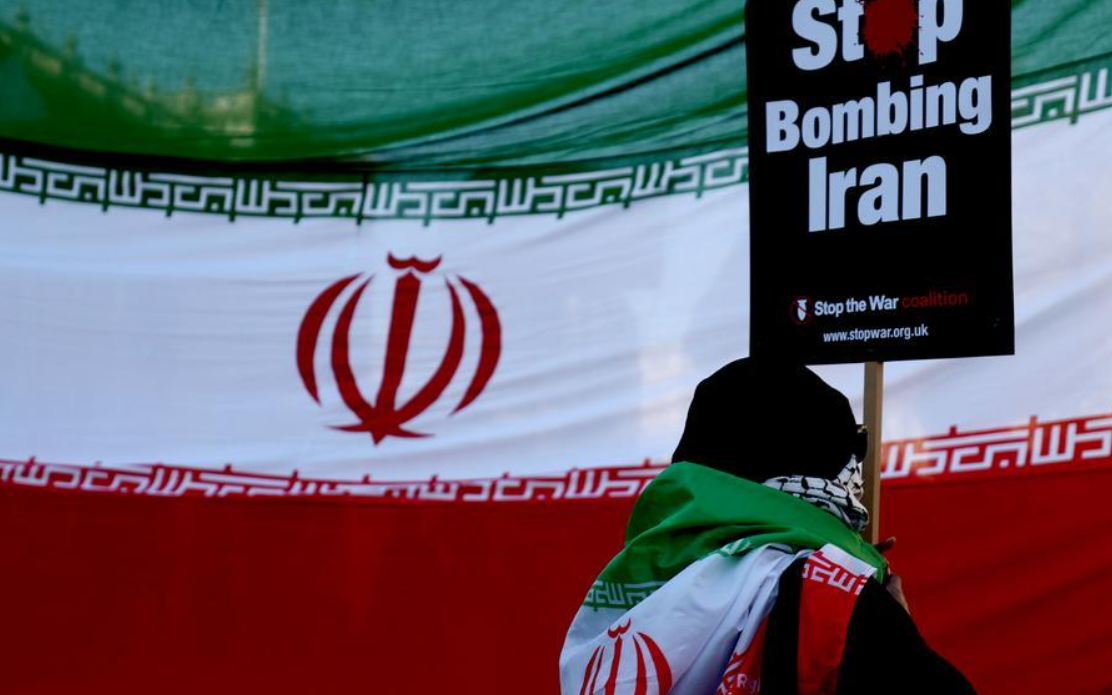
TEHRAN/WASHINGTON/JERUSALEM/CAIRO/LONDON/BAGHDAD - Iranian President Masoud Pezeshkian said on Monday that Iran reserves the "inalienable and natural" right to defend its territory.
Pezeshkian made the remarks when exchanging views with Pakistani Prime Minister Shehbaz Sharif on the consequences of the "illegal" US-Israeli war against Iran in a phone conversation, according to a statement published on the Iranian president's office website.
During the phone call, the two sides also discussed bilateral ties and the latest regional developments, said the statement.
Pezeshkian said Iran did not start the war, noting the United States and Israel launched military aggression against Iran in the middle of nuclear negotiations, killing the country's then Supreme Leader Ali Khamenei, high-ranking military commanders and civilians, and targeting Iranian public facilities.
He said that Iran consistently makes efforts to protect regional stability and security and stressed that the country still seeks to strengthen cooperation among states in the region.
"The insecurity imposed on the Strait of Hormuz is a direct result of the military aggression by the United States and Israel," he said, adding that Iran has taken necessary measures to ensure the security and safety of navigation and the safe passage of vessels through the waterway.
Sharif, for his part, expressed deep regret over the US-Israeli attacks against Iran as well as the deaths of Iranian civilians and senior officials, extending the Pakistani government's sympathy and condolences.
He praised Iran for allowing the safe passage of Pakistan's vessels through the Strait of Hormuz, calling for collective efforts by regional states to de-escalate tensions and restore sustainable peace and stability in the region.
"Pakistan has always been and will always be by the side of the Iranian government and nation," Sharif said.
On Monday, the Iranian Foreign Ministry denied having negotiations with the United States, the country's official IRNA news agency reported, reversing US President Donald Trump's earlier claim that Washington had reached "major points of agreement" with Iran and is in contact with "a top person".
Friendly countries recently sent messages to Iran indicating Washington's desire to begin talks on ending the war, but Iran has not responded, the IRNA reported, citing Iranian Foreign Ministry spokesperson Esmaeil Baghaei.
Baghaei said Tehran's stance on the Strait of Hormuz as well as its conditions to end the war have not changed, according to the report.
Iranian Parliament Speaker Mohammad Bagher Ghalibaf also denied the claim on social media platform X, saying "no negotiations have been held" with Washington.
Meanwhile, several media reports quoted Ebrahim Rezaei, spokesperson for the Iranian parliament's National Security and Foreign Policy Committee, as saying that talks with the US are meaningless in the current conditions.
Earlier in the day, Trump said he had ordered a five-day delay of planned strikes on Iranian power plants and energy facilities, citing what he described as "very good and productive conversations" over the past two days aimed at easing tensions in the Middle East.
Reuters, citing Israel officials, later reported that the US is holding negotiations with Ghalibaf, and that the two sides could hold talks in Pakistan's Islamabad as early as this week.
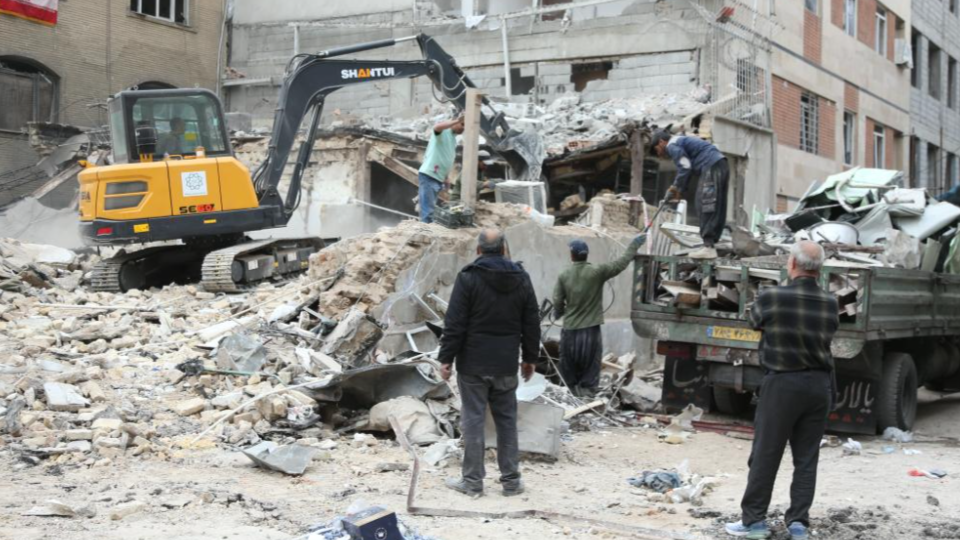
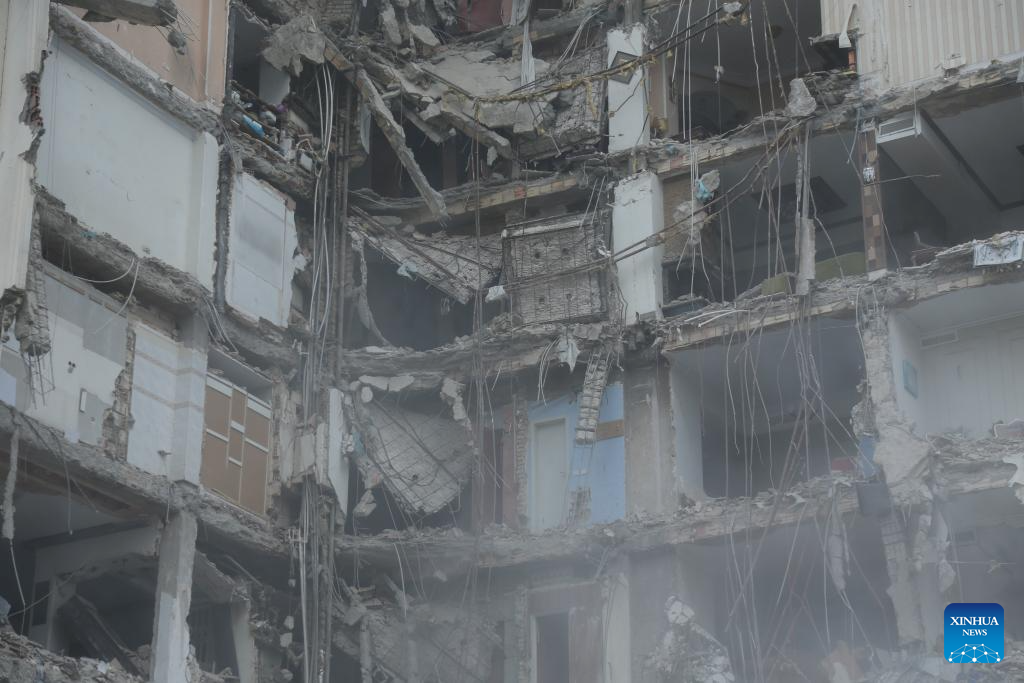
The developments came amid heightened regional tensions following joint US-Israeli strikes on Iran starting on Feb 28, to which Iran and its regional allies responded with attacks on Israeli and US interests across the Middle East.
ALSO READ: HKSAR govt raises travel alert for Israel, Iran amid Mideast crisis
Airborne troops
The Pentagon is weighing a possible deployment of airborne troops to support military operations in Iran, The New York Times reported on Monday, citing senior defense officials.
The combat forces would come from the US Army's 82nd Airborne Division's "Immediate Response Force," a brigade of about 3,000 soldiers capable of deploying anywhere in the world within 18 hours, said the report, noting that so far nothing had been ordered by the Pentagon or the US Central Command.
These forces could be used to seize Kharg Island, Iran's main oil export hub, according to the report.
'Vital interests'
Also on Monday, Israeli Prime Minister Benjamin Netanyahu said that Israel will leverage its attacks on Iran to ensure any potential diplomatic agreement protects its "vital interests."
ALSO READ: China urges immediate halt to military action as tensions over Iran escalate
Following a phone call with Trump, Netanyahu issued a video statement, saying Trump believes there is an opportunity to "leverage the tremendous achievements" of the joint US-Israeli attack on Iran in order to "realize the objectives of the war through an agreement".
"We will safeguard our vital interests in any situation," he said.
Naval mines
Iran's Defense Council has warned that the country will lay naval mines in the Gulf if the United States and Israel launch any attack on its coasts or islands, the semi-official Fars news agency reported on Monday.
"Any attempt by the enemies to attack Iranian coasts or islands will naturally and based on common military practices cause Iran to lay various types of naval mines, including the floating ones that can be laid from the coasts, in all access routes and communication lines in the Gulf and the coasts," the report said.
The council said that in that case, the entire Gulf would effectively mirror the Strait of Hormuz situation for a long time, and the waterway would be practically blocked, a responsibility to be borne by the threatening party.
The only way for the non-hostile states' vessels to pass through the Strait of Hormuz is through coordination with Iran, it added.
In response to the US threat of attacking Iran's power plants and energy infrastructure in case the Strait of Hormuz is not opened, the council reaffirmed its commitment to immediately give a "decisive and devastating" response to any such strikes.
'Not a war for Britain'
British Prime Minister Keir Starmer said on Monday that the war in Iran is not a war for Britain, and his country is not getting dragged into it.
Answering questions on a Liaison Committee session, Starmer said there must be "a lawful basis and a viable and thought-through plan" for any British action, adding: "This is not our war, and we are not getting dragged into this war."
He said he's told his team not to fall into the "false comfort" that there could be a "quick and early end."
"The immediate priority has to be a swift resolution of the conflict and delivering a negotiated agreement which puts tough conditions on Iran, particularly in relation to nuclear weapons," he added.
Iraqi paramilitary bases
Iraq's paramilitary Popular Mobilization Forces (PMF) said on Monday that US-Israeli airstrikes attacked two of its bases, without causing casualties.
Two PMF statements said that its units of the 15th Brigade and 27th Brigade suffered from US-Israeli airstrikes, resulting in no casualties but material losses.
Over the past few days, dozens of PMF members have been killed in what the group claimed were US-Israeli operations
