

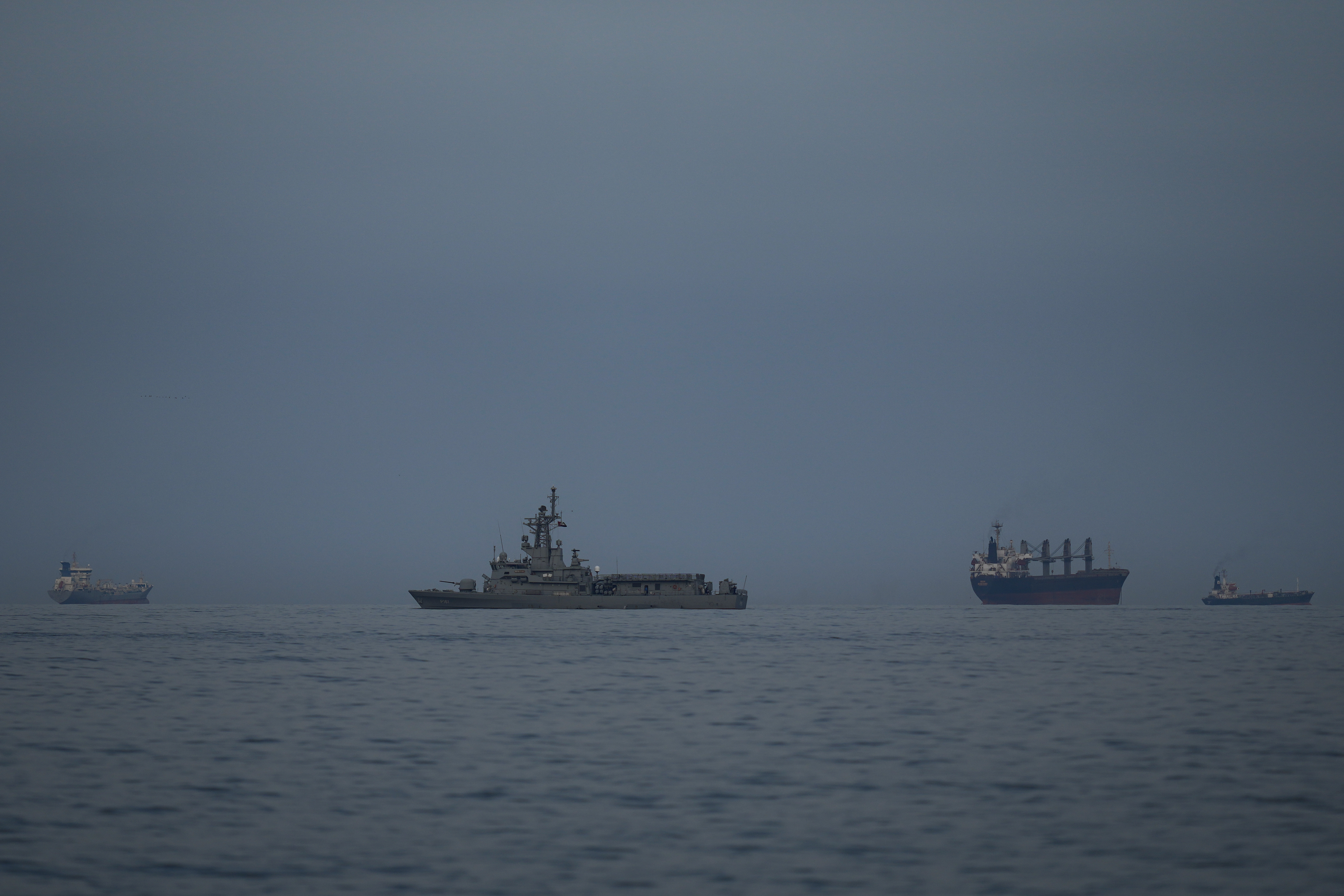
WASHINGTON/TEHRAN/ABU DHABI/PARIS/BANGKOK - US President Donald Trump said Sunday that he has "demanded" about seven countries heavily reliant on Middle East oil join a coalition to escort vessels through the Strait of Hormuz, a key waterway through which about 20 percent of the world's oil passes.
"I'm demanding that these countries come in and protect their own territory, because it is their own territory," Trump told reporters aboard Air Force One, referring to the strait.
Trump didn't name the countries the White House is negotiating with.
Also on Sunday, Trump threatened that NATO would face a "very bad" future if its allies fail to take action to help Washington keep the Strait of Hormuz open, Financial Times reported.
In a phone interview with the British daily, Trump again pressed European allies by urging them to join US operations concerning the strait, a key global oil shipping route.
ALSO READ: Trump says Iran's terms ‘not good enough’ for ceasefire deal
He said Europe was a major beneficiary of navigation through the waterway and should help to make sure that "nothing bad happens there." He also warned that NATO's future would be "very bad" if allies gave "no response" or a "negative response" to Washington's request.
Trump argued that the United States had previously helped Europe on the Ukraine issue and that now it was time to "see if they help us."
Trump noted he had long believed NATO was "a one-way street," meaning that the United States would stand by its allies, but they might not come to Washington's aid when needed.
Speaking of Britain, Trump said the country was often regarded as Washington's "number one ally" and its "longest serving" ally but that Britain "didn't want to come" when the United States asked for help.
He added that Britain only offered to send ships after the United States had "basically wiped out the danger capacity."
"We need these ships before we win, not after we win," Trump was quoted as saying.
Citing US officials, The Wall Street Journal reported Sunday that the White House is planning to announce a multinational coalition to escort ships through the Strait of Hormuz.
The plan, which remains under discussion, could be unveiled "as soon as this week," the report said.
Publicly, many governments have been noncommittal to such an escort mission until hostilities end, given the risks involved, according to the report.
Australia not sending naval ships
Australia will not send navy ships to protect oil tankers in the Strait of Hormuz, said Minister for Infrastructure, Transport, Regional Development and Local Government Catherine King.
Australia is well-prepared for the "economic crisis" caused by the ongoing conflict in the Middle East and would not be sending a warship to the region, said King, also a member of Prime Minister Anthony Albanese's Cabinet, according to the Australian Broadcasting Corporation (ABC) radio.
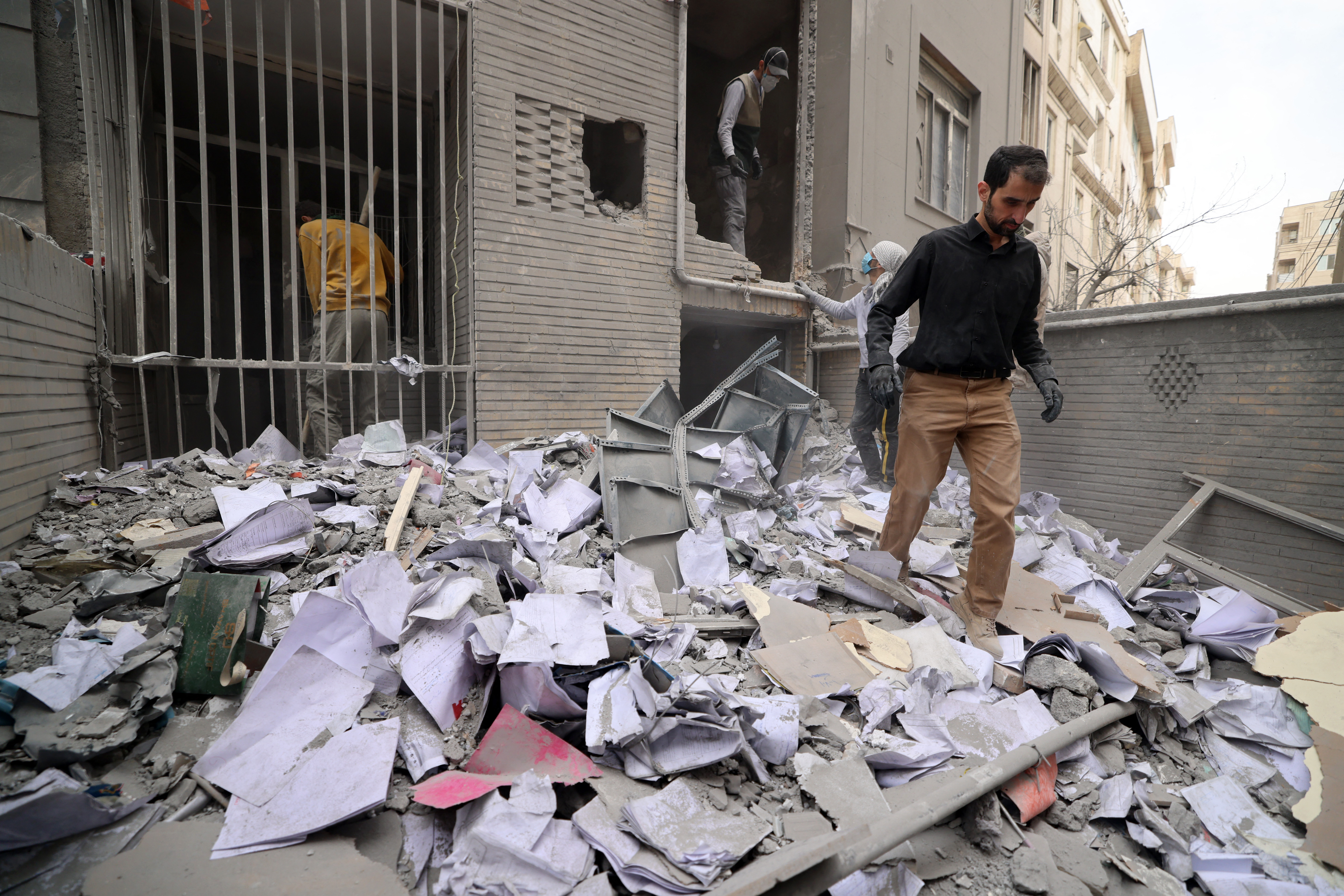
Iran's Supreme Leader Mojtaba Khamenei on Thursday called for the continued closure of the Strait of Hormuz and pledged to open new fronts in his country's conflict with the United States and Israel.
On Sunday night, Khamenei reiterated his country's demand for compensation from its "enemy."
"We will obtain compensation from the enemy, and if he refuses, we will take as much of his property as we determine, and if that is not possible, we will destroy the same amount of his property," read a post on the supreme leader's Telegram account.
On Feb 28, Israel and the United States launched joint attacks on Tehran and other Iranian cities, killing Iran's then Supreme Leader Ali Khamenei, senior military commanders, and civilians. Iran responded with waves of missile and drone strikes targeting Israel and US bases and assets across the Middle East.
Mojtaba Khamenei, son of Ali Khamenei, was selected as Iran's new supreme leader, the Assembly of Experts announced on March 8.
Araghchi: Iran prepared to defend itself 'as long as it takes'
Iranian Foreign Minister Seyed Abbas Araghchi has said that the country is not asking for a ceasefire or negotiations with the United States, stating that Tehran is prepared to defend itself "as long as it takes" against what he described as an "illegal war."
In an interview with CBS News aired Sunday, Araghchi rejected claims that Iran has sought an end to hostilities.
"We never asked for a ceasefire, and we have never asked even for negotiations. We are ready to defend ourselves as long as it takes," said the minister.
ALSO READ: Report: Trump rejects Putin's offer to move Iran's uranium to Russia
He noted that Iran will continue its operations until Trump "comes to the point that this is an illegal war with no victory."
"We don't see any reason why we should talk with Americans, because we were talking with them when they decided to attack us, and that was for the second time," Araghchi added.
As for the Strait of Hormuz, the minister stressed that Iran has not closed this waterway. "This is up to our military to decide, and they have already decided to let a group of vessels belongs to different countries to pass," he noted.
Dubai intl airport gradually resumes flights
Meanwhile, the Dubai Civil Aviation Authority said some flights to and from Dubai International Airport (DXB) have gradually resumed to selected destinations after a temporary suspension.
The suspension was implemented as a precaution to ensure the safety of passengers and staff after a drone crashed near the airport earlier in the morning, triggering a fire.
The fire has since been brought under control, with no injuries reported, according to the Dubai Media Office.
On Sunday, the United Arab Emirates' Defense Ministry said six nationals of the UAE, Pakistan, Nepal and Bangladesh have been killed and 142 residents of multiple nationalities have suffered minor to moderate injuries in the UAE amid the recent escalating regional tensions.
Since the start of what the ministry described as Iranian attacks, the UAE's air defense systems have intercepted 298 ballistic missiles, 1,606 drones, and 15 cruise missiles, the ministry said in a statement.
It said the air defense systems intercepted four ballistic missiles and six drones launched toward the country on Sunday alone.
Earlier in the day, authorities in Dubai confirmed that loud explosions heard in the Marina and Al Sufouh areas were the result of air defense interceptions.
In Abu Dhabi, emergency teams contained a fire caused by a drone strike at the Ruwais Industrial Complex, with no injuries reported, according to the Abu Dhabi Media Office.
In the eastern emirate of Fujairah, a fire broke out at the Fujairah Oil Industries Zone following another interception, resulting in minor injuries to a Jordanian national.
Lebanon deaths
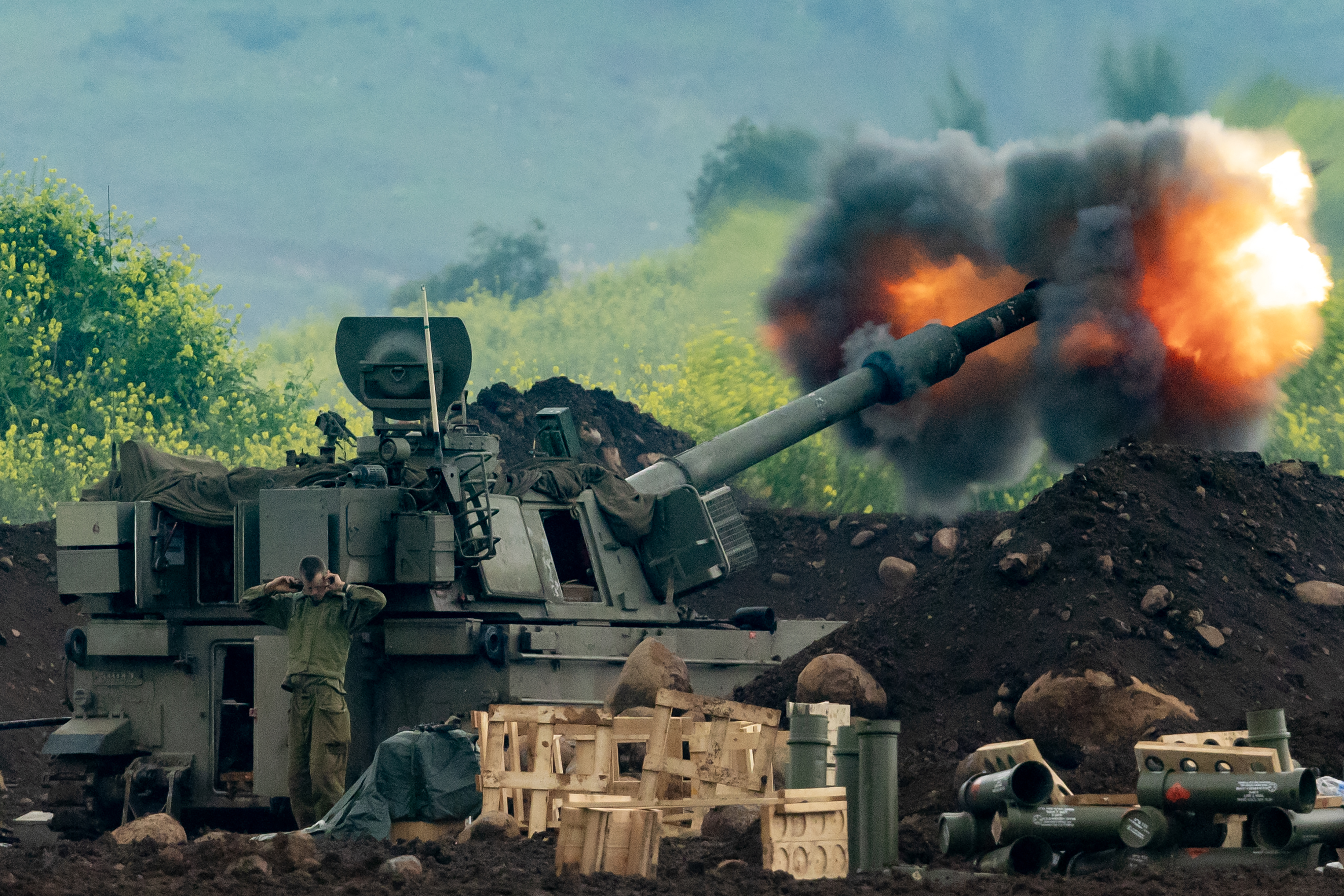
At least 10 people were killed and 13 others injured on Sunday as Israel continued its attacks on areas in southern Lebanon, according to statements issued by the Lebanese Health Ministry's Emergency Operations Center.
Two people were killed and four others wounded in an Israeli airstrike on the town of Majdal Selm in the Marjayoun district, the center said.
In another strike, three people were killed and three others injured in the town of Aaitit in the Tyre district.
Macron: Unacceptable that France should be targeted
French President Emmanuel Macron said on Sunday that it is "unacceptable" for France to be targeted amid the regional escalation following joint US-Israeli strikes on Iran.
Macron made the remarks in a post on X after speaking by phone with Iranian President Masoud Pezeshkian.
He said France acts strictly within a defensive framework aimed at protecting its interests, safeguarding its regional partners and supporting freedom of navigation, adding that he had called on Iran to immediately end the attacks it has carried out against countries in the region, whether directly or through proxies.
3 Thai crew members still missing
Twenty Thai crew members of the cargo ship attacked in the Strait of Hormuz arrived in Thailand on Monday, with their three colleagues still missing, according to the owner of the vessel.
Thai Foreign Minister Sihasak Phuangketkeow sought the Iranian side's assistance in the search and rescue operation for the three Thai crew members on board over a telephone conversation with his Iranian counterpart on Sunday.
They also discussed the authorization for the safe passage of Thai cargo vessels through the Strait of Hormuz.
