

AI in China moving beyond labs to become foundational architecture for industrial growth, systemic economic development
For years, artificial intelligence has largely been viewed through a lens of technological breakthroughs, algorithmic benchmarks and limited commercial applications.
However, for the first time, the 2026 Government Work Report has introduced the goal of creating new forms of smart economy.
To industry insiders and foreign investors, this significant linguistic shift signals a clear message — that AI in China is moving beyond the lab and simple "tool empowerment" to become the foundational architecture for industrial growth and systemic economic development.
READ MORE: China to create new forms of smart economy
This evolution represents a profound opportunity. As the world's second-largest economy pivots, the emergence of the smart economy — encompassing everything from AI-native software to embodied robotics — is poised to become a primary driver of new growth, offering a vast landscape of opportunities for both domestic and foreign corporations, company executives and experts said.
Chen Changsheng, a member of the drafting team for the Government Work Report and deputy director of the Research Office of the State Council, provided the official interpretation of this new terminology. "By proposing to create new forms of smart economy for the first time, we aim to seize the opportunities presented by AI development and expand the breadth and depth of AI empowerment across all industries," Chen said.
This shift is not merely semantic. It reflects a recognition that AI has the potential to deliver tangible economic output at scale.
Liu Qingfeng, a deputy to the National People's Congress and chairman of iFlytek — a pioneer in intelligent speech and AI technologies — resonated with this strategic direction.
"What impressed me the most is the introduction of new forms of smart economy," Liu said. "It provides very clear guidance and requirements on how to achieve in-depth, large-scale commercial application of the 'AI Plus' initiative, including areas like smart terminals, AI agents and AI-native applications. I believe this will serve as a significant and positive boost for the next phase of AI development."
Echoing the need for practicality, Liu emphasized that AI development must be rooted in real-world demands. "I believe we need to develop AI that is truly rooted in the needs of both production and daily life, namely AI that addresses real demands, brings tangible benefits to the people and provides concrete help to industrial development. AI should be inclusive, allowing everyone to stand on the shoulders of this technology," he added.
Among the most tangible manifestations of this smart economy push is the rapid advancement of humanoid robotics. Chinese companies have already unveiled over 300 types of humanoid robot products, accounting for more than half of the world's total, data from the Ministry of Industry and Information Technology show.
Lei Jun, an NPC deputy and founder of Xiaomi, framed the industry's potential in sweeping terms, describing humanoid robots as a potential "disruptive product" following computers, smartphones and new energy vehicles. He positioned them as a cornerstone of China's "new quality productive forces", highlighting their transformative potential for the economy.
According to a forecast by Morgan Stanley, China's annual shipments of humanoid robots could exceed 2.6 million units by 2035, with the market surpassing 140 billion yuan ($20.2 billion) and eventually reaching a trillion-yuan scale.
However, Lei was candid about the challenges that lie ahead on the path from laboratory wonder to factory floor workhorse. While acknowledging that China has built a first-mover advantage in humanoid robotics technology — particularly with advancements in general-purpose AI — he cautioned that the sector faces a critical bottleneck. The large-scale engineering application of these machines is hindered by challenges including high hardware costs, insufficient process stability, and a shortage of suitable operational positions on factory floors.
"More efforts are needed to expand application scenarios in smart manufacturing to significantly increase the utilization rate of humanoid robots, moving them from experimental phases to large deployment on production lines," Lei said. His remarks underscore a key policy imperative, namely bridging the gap between technological capability and industrial application.
Qi Xiangdong, a member of the 14th National Committee of the Chinese People's Political Consultative Conference and chairman of cybersecurity firm Qi-Anxin Technology Group, views the smart economy as a gateway to immense potential. He believes it will unleash enormous demand for application scenarios, fueling a new leap in economic and social development.
The policy rhetoric is firmly grounded in industrial reality. Data from the Ministry of Industry and Information Technology underscore the accelerating pace of AI integration. In the past year, downloads of Chinese open-source large language models topped global charts. More critically, by the end of 2025, the adoption rate of AI technology among manufacturing enterprises above a designated size had exceeded 30 percent.
Huang Qunhui, a CPPCC National Committee member and former head of the Institute of Economics at the Chinese Academy of Social Sciences, offers a dual-lens view of this new economic form. He said the smart economy manifests in two primary ways: first, as the "AI plus" or AI empowerment of traditional industries, and second, as the emergence of "AI-native" business formats — entirely new industries, consumer models, and economic activities that are born from and built upon AI.
Another key detail within the report that has captured the attention of the tech community is the inaugural mention of "AI agents", placed alongside "intelligent terminals". This distinction is crucial:"intelligent terminals" refer to the physical carriers of AI, such as embodied intelligent robots, AI-powered smartphones and intelligent connected vehicles. "AI agents", conversely, refer to the sophisticated software programs capable of understanding complex tasks and executing them autonomously.
The Government Work Report called for faster application of new-generation intelligent terminals and AI agents, and encouraged large-scale commercial application of AI in key sectors and fields, so as to foster new forms and models of AI-native business. This is widely seen by the industry as the next major frontier for AI application.
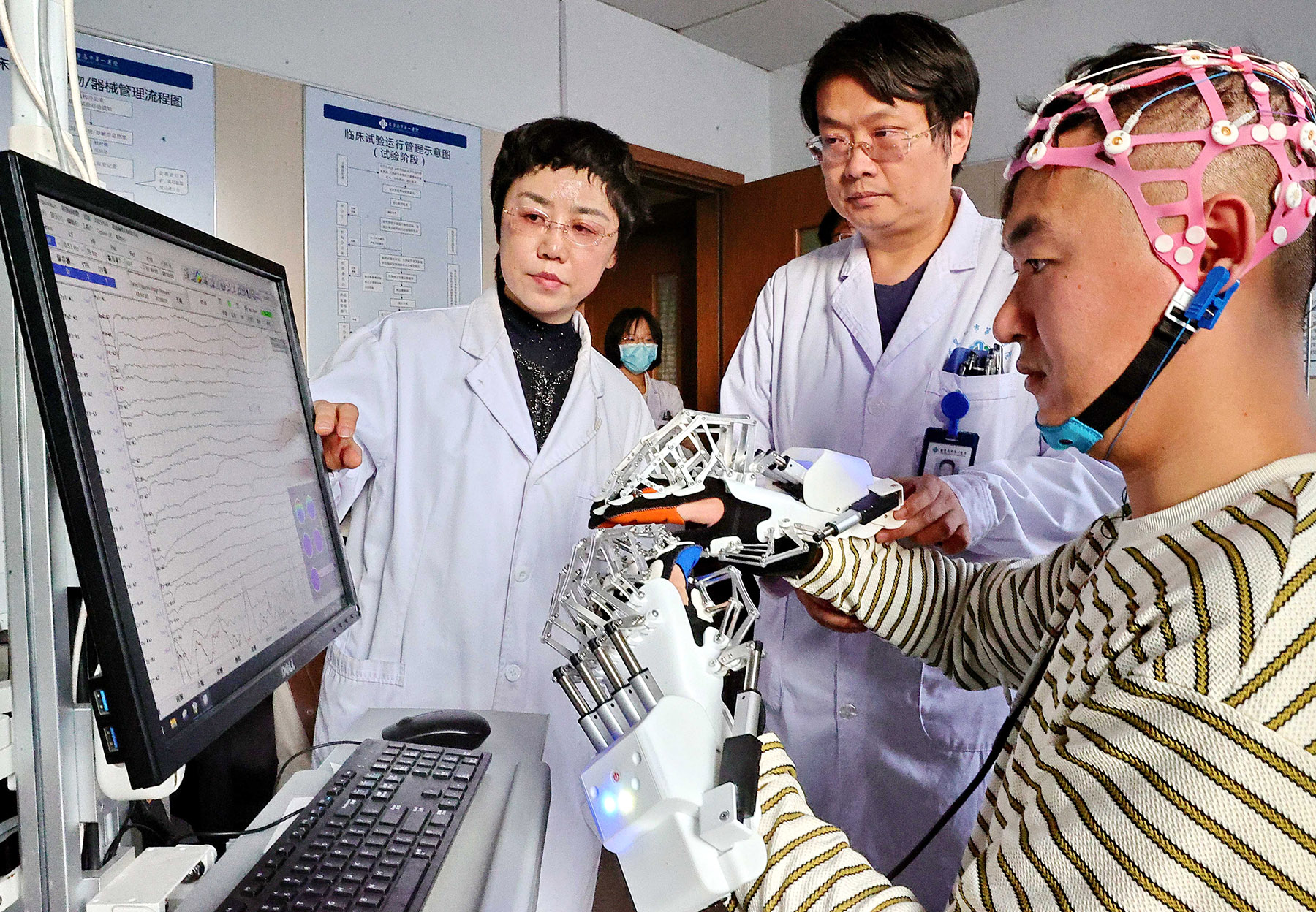
Li Lecheng, Minister of Industry and Information Technology, said during the two sessions that the nation will spare no effort in promoting the research, development and iterative upgrading of next-generation AI products this year, including brain-computer interface, autonomous vehicles and robots, as part of a broader strategy to integrate AI with the manufacturing sector.
China's development path for AI is clearly mapped. A pivotal document, the State Council's "Opinions on deeply implementing the 'AI Plus' action", issued last year, explicitly ties national progress to the smart economy. It sets three phased goals. By 2027, the smart economy's core industries will see rapid growth. By 2030, the smart economy will become a significant growth pole for China's economy. By 2035, the country will fully enter a new stage of development characterized by the smart economy and a smart society.
To achieve this, the government will not only push for large-scale application, but also deepen the openness of AI technologies and advance the construction of new types of infrastructure specifically designed to support AI development, experts said.
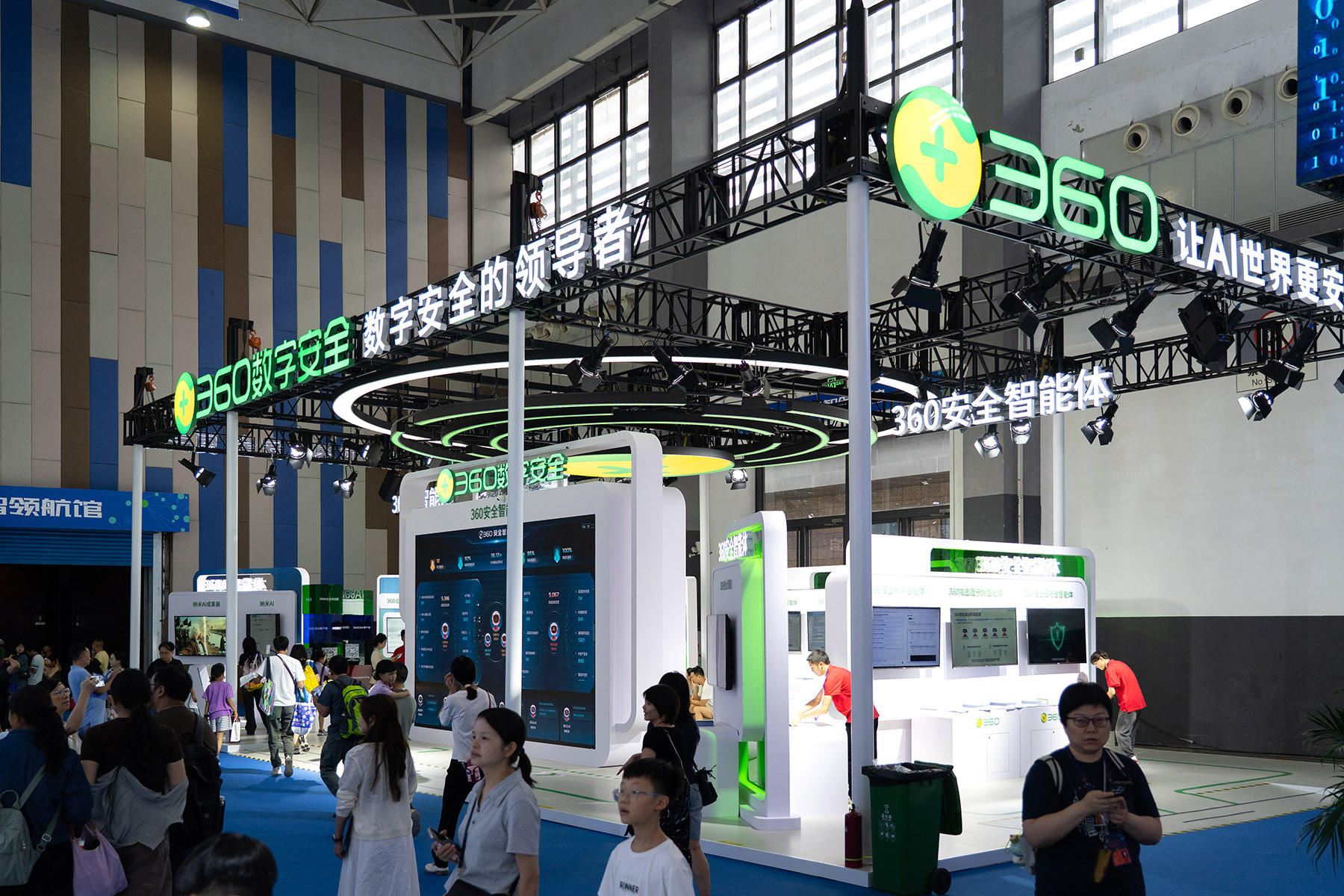
Zhou Hongyi, a CPPCC National Committee member and founder of 360 Security Group, said the implications are vast. "While the nation supports AI technology in empowering all walks of life, it is also improving the planning of the industrial and ecological chains,"Zhou said. He argued that this comprehensive approach presents an opportunity even greater than the internet economy boom.
The smart economy is not an isolated concept. It is intrinsically linked to the broader national strategy of fostering new growth drivers. The 2026 Government Work Report outlines that China will intensify efforts to cultivate emerging and future industries.
The report said that China has continued to pursue innovation-driven development, with its research and development spending reaching 2.8 percent of GDP in 2025. The output of core industries in the digital economy has risen to account for more than 10.5 percent of GDP.
"We should stay focused on the real economy, develop new quality productive forces in light of local conditions and modernize the industrial system," the report added.
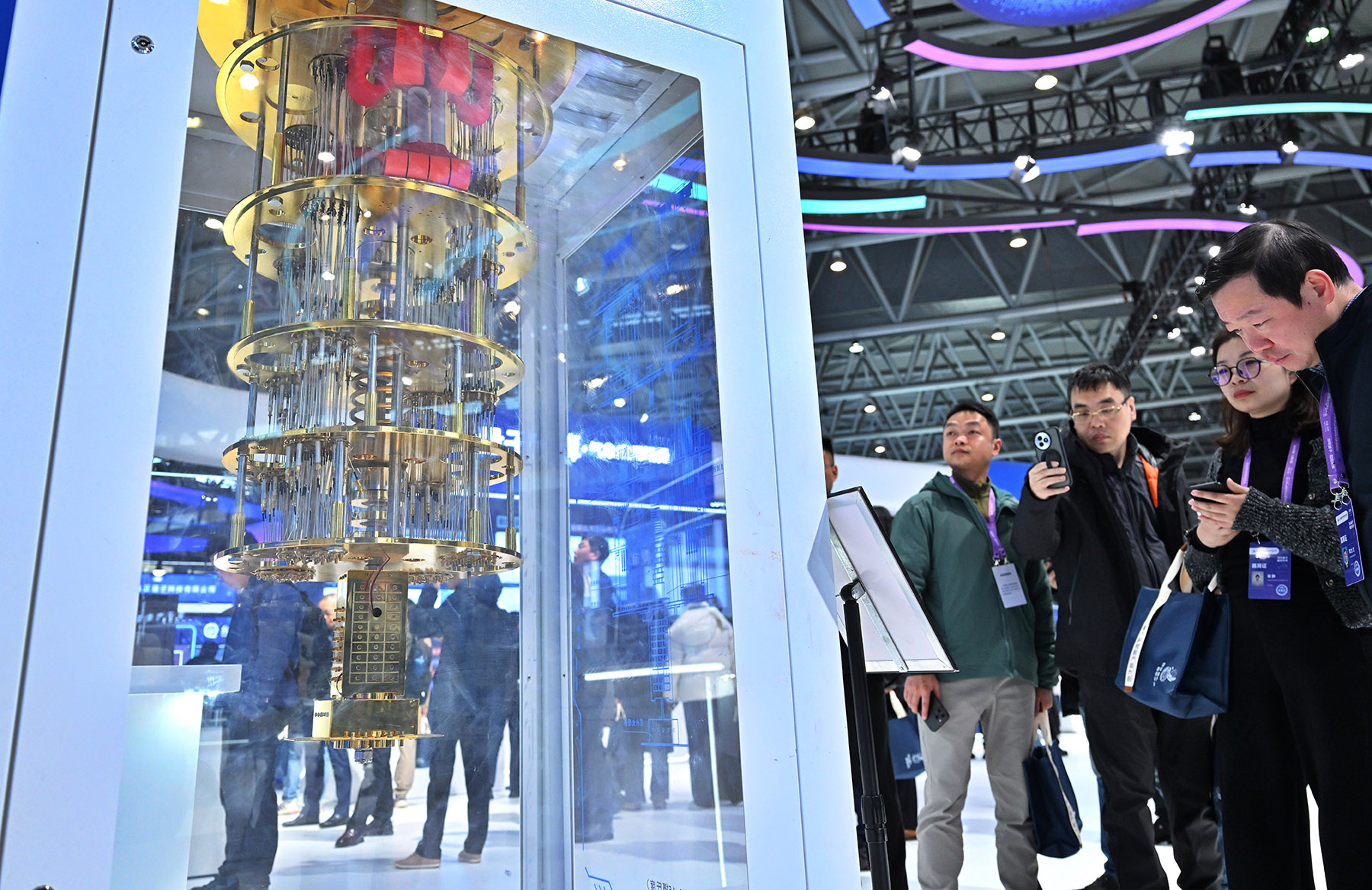
To this end, China will continue to develop strategic emerging industries such as integrated circuits, aerospace, biomedicine and the low-altitude economy. Simultaneously, it will advance future industries including green energy, quantum technology, embodied intelligence, brain-computer interfaces and 6G.
Zhu Keli, founding director of the China Institute of New Economy, said that this year's report explicitly listed five key directions for future industries. "This not only provides market players with a clear roadmap for investment, but also helps avoid fragmented resource allocation and redundant construction, ensuring that innovation resources are concentrated in areas of genuine strategic value," Zhu said.
To support these high-risk, high-reward sectors, the government will implement industrial innovation initiatives, encourage central State-owned enterprises to open up application scenarios, and, crucially, establish mechanisms to increase funding and share risks. "By creating mechanisms for risk-sharing and benefit-sharing, it can effectively guide social capital to invest with greater confidence, willingness and long-term commitment," Zhu said, highlighting how this can ease funding bottlenecks for cutting-edge technology development.
ALSO READ: China's quantum computing rising
Nancy Wang, country manager at LinkedIn China, said: "China's role in LinkedIn's global strategy has never been more strategically significant. The 19.1 percent increase in newly established foreign-invested enterprises in 2025 reflects a business environment that continues to attract global confidence.
"For LinkedIn, China functions simultaneously as a critical market, an innovation reference point, and increasingly, a launchpad. We observe that Chinese enterprises' outbound recruitment demand on our platform has grown over 30 percent year-on-year, spanning high-value sectors including smart hardware, industrial robotics, healthcare and new energy."
She said that as global supply chains reconfigure, companies that maintain deep roots in China not only gain market access, but also the insight needed to navigate an increasingly complex world.
With policy tailwinds, technological breakthroughs and expanding application scenarios, the smart economy is rapidly positioning itself as a cornerstone of China's future growth — a dynamic and opportunity-rich landscape for innovators and enterprises ready to engage with the world's most expansive AI market, experts added.
Contact the writers at masi@chinadaily.com.cn
