

For centuries, Bailizhou residents used boats to connect them with the outside world, but that might soon finish, Bai Shuhao reports in Zhijiang, Hubei.
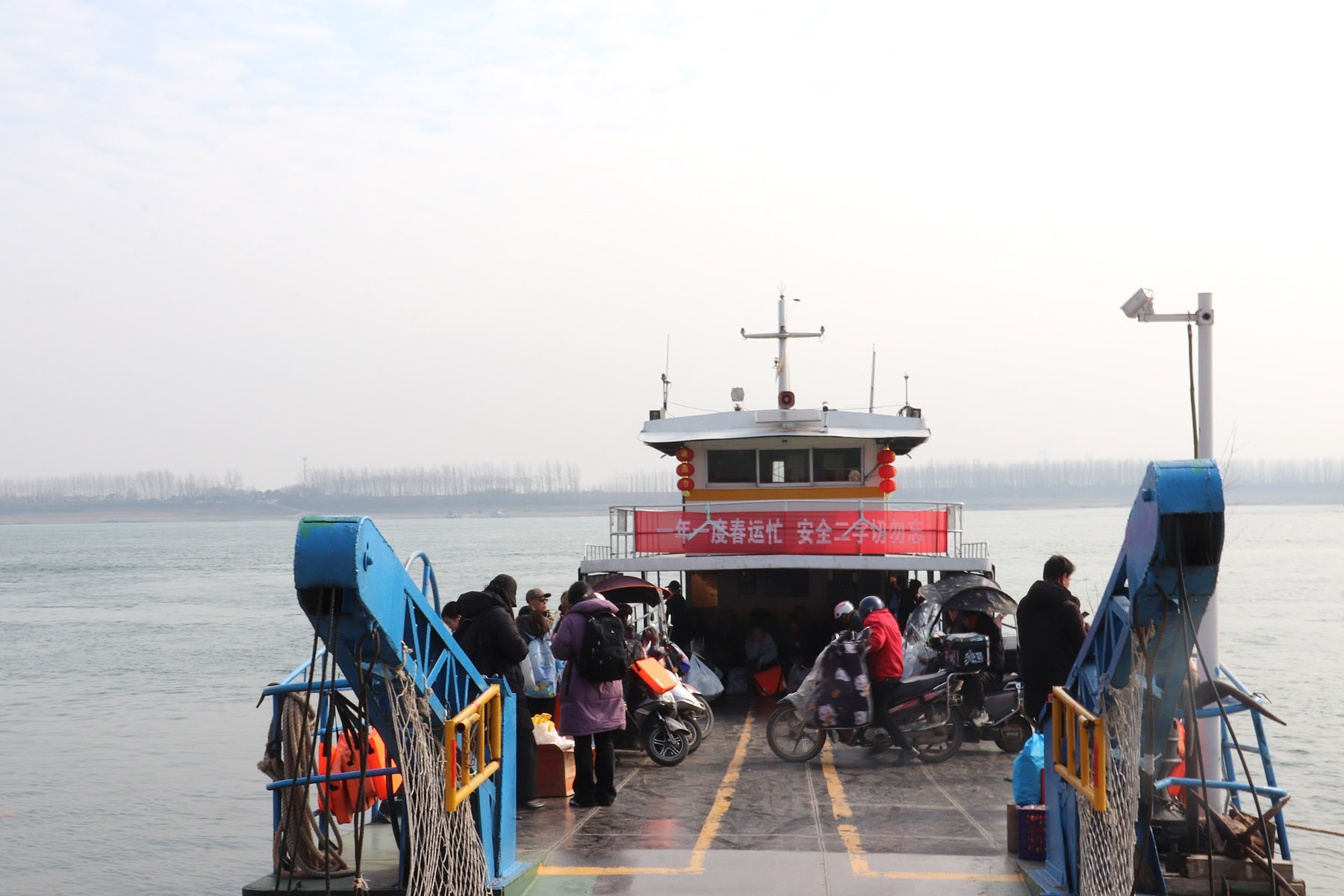
In winter, a dense fog often settles over a stretch of the Yangtze River near Bailizhou, an island town administered by Zhijiang in Hubei province. For travelers returning home for the Chinese New Year, the journey does not truly begin until the sun burns through the mist, a ferry emerges from the gray expanse, and the far bank and home come into view.
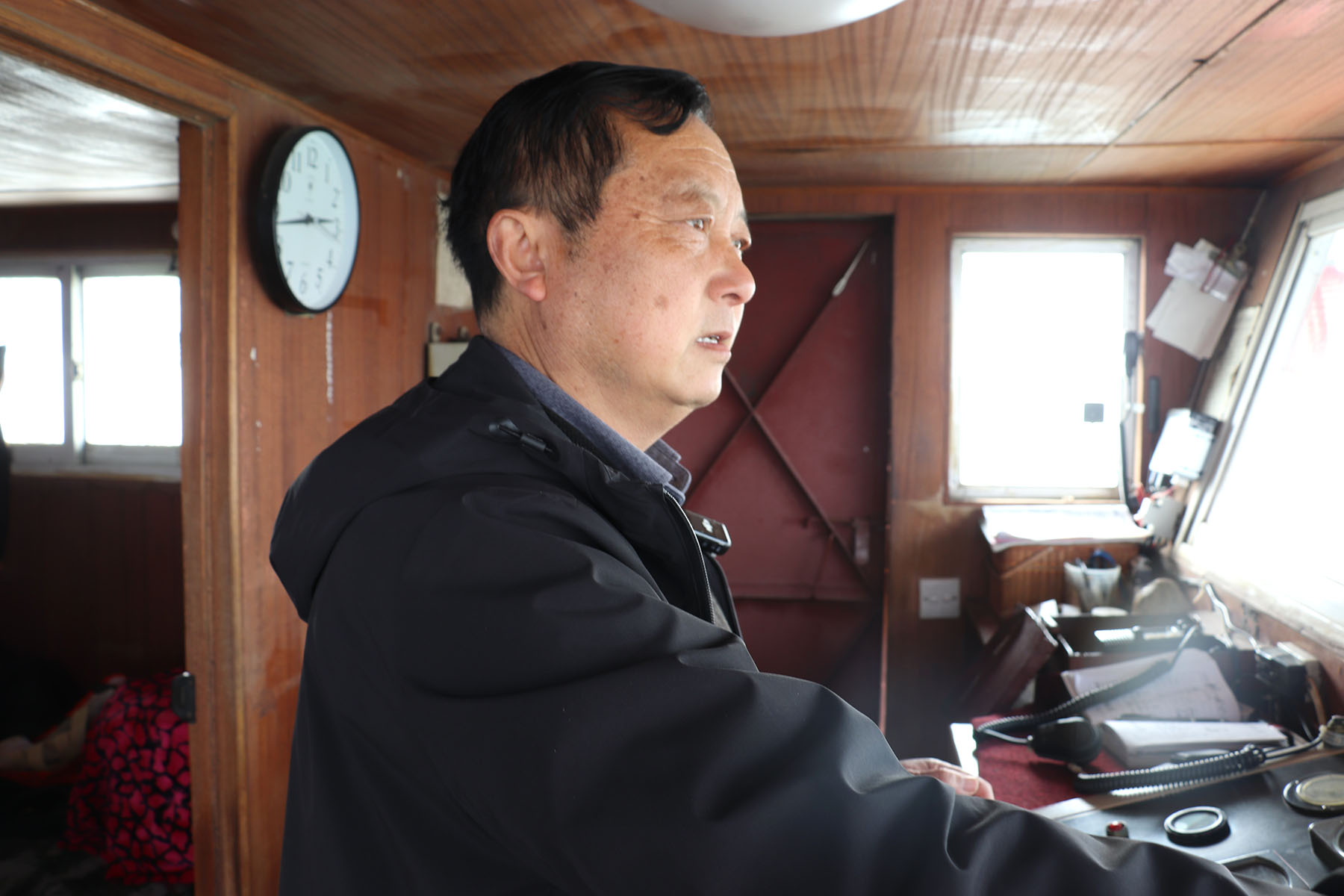
Captain Yan Zhirong stands in the wheelhouse of the E Zhijiang Ferry 0055, watching villagers hurry aboard with rolling suitcases and bundles of New Year goods.
"There are more people coming back this year," he says.
A native of the island, Yan, 55, has spent more than three decades piloting ferries between downtown Zhijiang and Bailizhou. His work starts at 7 am and finishes around 6 pm, with a crossing every half hour — as many as 17 or 18 round trips a day.
Surrounded on all sides by water, Bailizhou is the largest river island in the middle reaches of the Yangtze and the only town in Hubei province without a road to the outside world.
Often described as a "lonely island", it relies on six ferry routes and 17 vessels to move people and goods. Some ferries carry vehicles; others, like Yan's, transport mostly passengers, motorcycles and electric scooters.
For centuries, boats have been an inseparable part of residents' lives, but that history is now nearing an end.
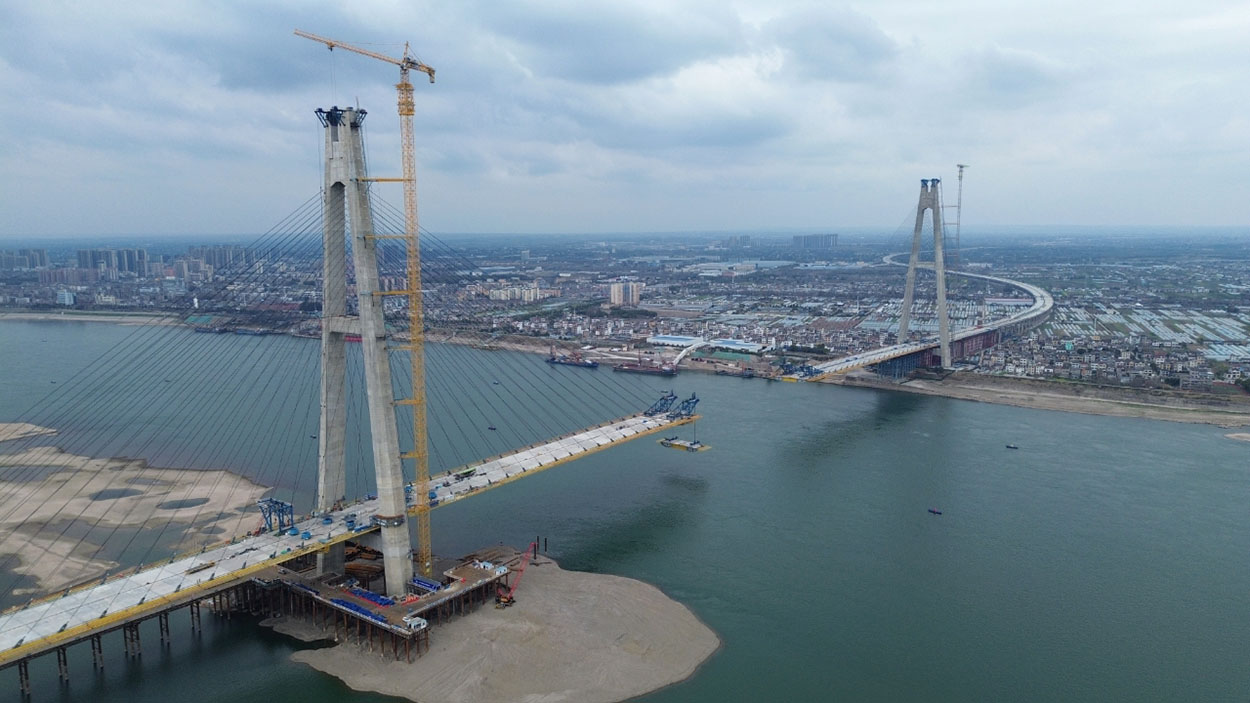
In 2020, the Zhijiang Bailizhou Yangtze River Bridge was included in the national development plan. Construction officially began in 2022, and tower construction started in 2024. According to the schedule, the two sections of the bridge will be joined in April and open to traffic at the end of the year.
This Chinese New Year, which fell on Feb 17, many migrant workers returning from far-flung cities may have boarded the ferry home for the last time.
From the deck of Yan's boat, passengers can already see the bridge's northern and southern spans inching toward each other.
Li Ming, who works in Dongguan, Guangdong province, holds up her phone to record the progress.
"Watching this bridge being built makes me very emotional," she says.
Even from hundreds of miles away, she constantly asks her family for updates on the construction. Next year, she plans to drive home across the bridge.
The ferry is more than transportation for Li, it is a vessel of memories. During her student years in Zhijiang, she rode it home once a month.
"This boat was the only way back," she says. "It carries all my memories of growing up."
Across the river, Zhijiang's urban core offers stronger economic prospects and more concentrated educational and medical resources. Many Bailizhou residents commute there for work, school or hospital visits.
Waiting at the dock — sometimes in fog, driving rain, high winds, or floodwaters — is a shared ritual for nearly every islander.
The ferry service ends at 6 pm, but emergencies do not keep a schedule. Before a dedicated medical crossing was established, residents had to hire private boats at their own expense for urgent trips.
Yan recalls being awakened at 1 am by a knock on his cabin door; a pregnant woman was about to give birth and needed transport. He dressed quickly to depart, only to learn that the baby had arrived before the mother could board.
"The advantage of a bridge is that it won't be limited by time, wind or rain," he says. "Besides that, it will also make it easier for our agricultural products to reach larger markets."
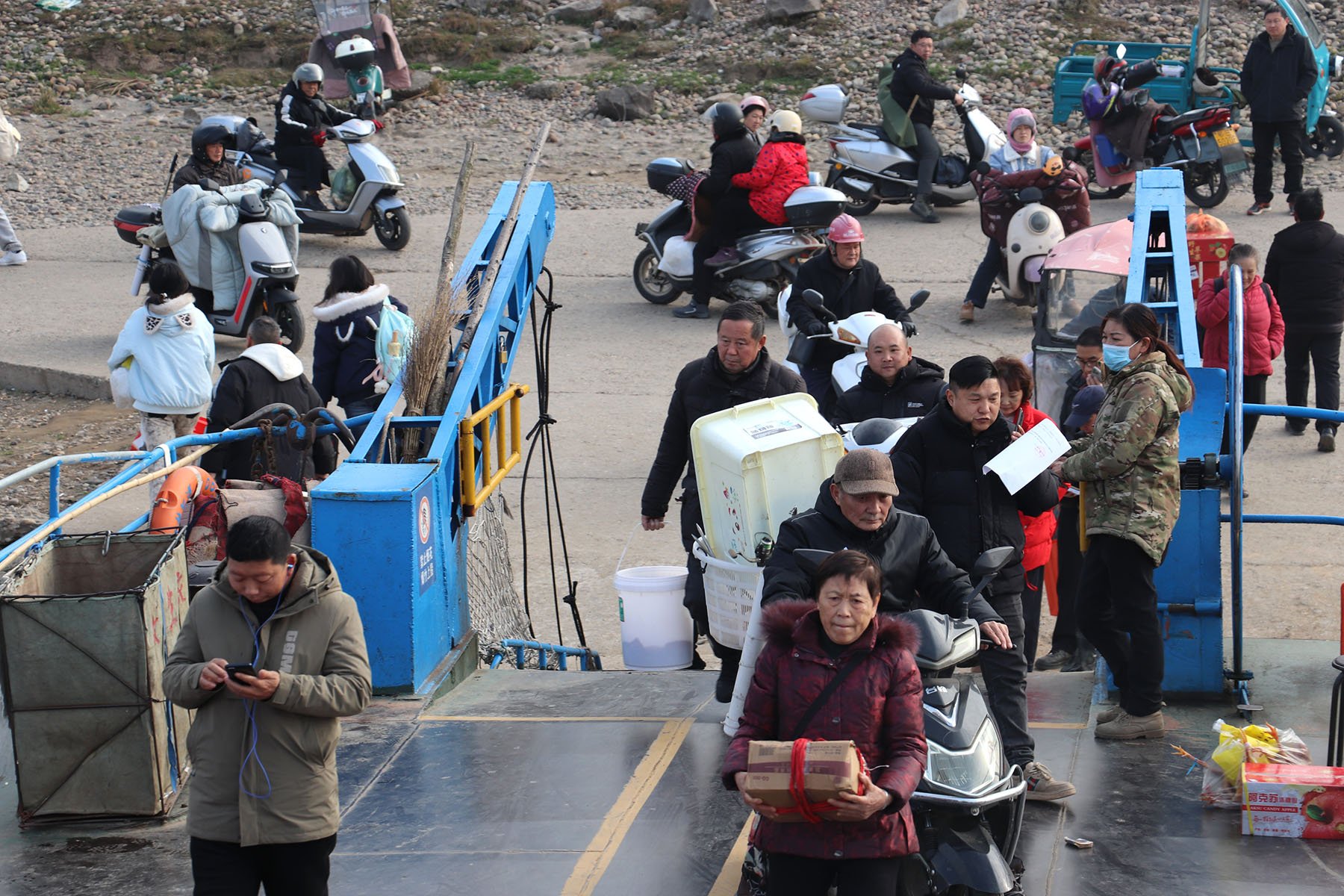
Among those products is Bailizhou's famed sand pear. Yan has watched the fruit's journey off the island evolve, from farmers lining up at 3 am with bicycles piled high with crates to motorcycles, and now to three-wheeled vehicles and trucks carrying pears to markets much farther away.
The bridge's first foundation pile was driven in Baimasi village, where about one-third of residents grow pears, according to village Party secretary Yang Chengjin.
The project, Yang reveals, fulfills the wishes of generations.
"Many elderly people in our village say their biggest hope is to walk on the bridge and see it with their own eyes."
She envisions the development of pear-picking orchards once the bridge opens. A ramp for nonmotorized vehicles will descend near the village's entrance. "In summer, people from Zhijiang can come here to pick pears," she says, hoping it will boost the entire village's economy.
Zeng Xiang, a native of Bailizhou who participated in the bridge's construction, notes that planners took into account the heavy use of electric bikes and three-wheeled vehicles. Lanes for nonmotorized traffic are being built on both sides of the highway bridge to accommodate cyclists and pedestrians.
"When I first heard the bridge would be built, I was thrilled," Zeng says. "I've devoted myself fully to it — not just for me, but for our hometown."
During the holiday rush, the dock at Bailizhou teems with travelers, and Yan's schedule tightens. Boats that once departed every 30 minutes leave roughly every 10.
As in years past, he and his wife are spending the Chinese New Year aboard the ferry. According to his observation, few passengers travel from Zhijiang to the island from the first to the fourth day of Spring Festival; after that, islanders begin departing again for jobs elsewhere.
Safety remains his chief concern. Before departure, he sweeps dust from the dock and reminds each traveler to wear a life jacket.
ALSO READ: Ferries flowing into history in remote China
"This boat is surrounded by water on all sides, and danger is always present. We must stay vigilant."
He has four years until retirement. Whether he will continue operating the ferry after the bridge opens will depend on public demand.
After 34 years on the river, Yan has seen his vessel upgraded three times, each one better than the last.
"Society is developing; life doesn't stay the same," he says. "This bridge will certainly be good for Bailizhou."
Contact the writer at baishuhao@chinadaily.com.cn
