

Young Chinese travelers embrace cultural immersion, seeking authentic experiences over traditional sightseeing in diverse destinations.
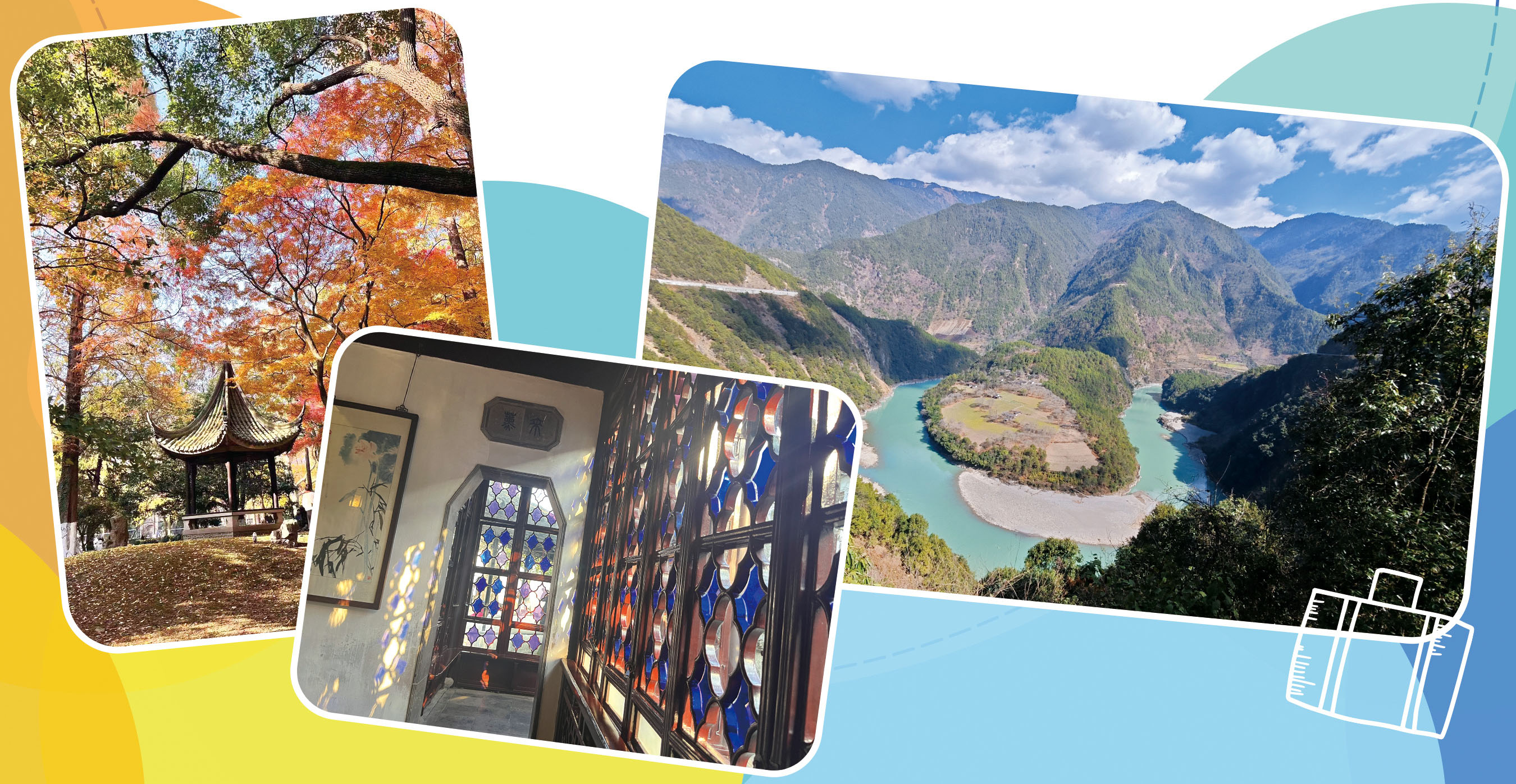
This Chinese New Year, Zhu Jiongyi, a sociology undergraduate from Beijing studying at Wuhan University, chose Kunming in Yunnan province as his holiday destination — a city that stands out as his favorite among all the places he visited over the past year.
His travels have taken him to some of China's most remote regions, including Xinjiang, Xizang, Inner Mongolia, and Gansu. He has also followed the Silk Road to Central Asia, Egypt, the United Arab Emirates, and Oman.
Yet despite the diversity of these destinations, it was Kunming's multicultural charm that captured his heart and drew him back for the holiday.
"Yunnan is home to 25 ethnic groups," Zhu explained. During his stay at a youth hostel, he shared meals with other guests, which gave him the opportunity to sample a wide variety of cuisines. "For example, Wa cuisine, influenced by Myanmar, has a distinct Burmese flavor. Dai food is sour and refreshing. There are also Bai and Shui cuisines, each with its own unique characteristics."
It is this blend of ethnic cultures that attracts young travelers like Zhu, who seek authentic and diverse experiences rather than superficial sightseeing.
READ MORE: Huitong Bridge spirit still inspires
Boliyuhai (pseudonym), another young traveler, shares a similar preference for in-depth exploration. Her focus, however, is on the multifaceted appeal of Hong Kong.
"Last year, I visited Hong Kong five times, but I still feel there is so much more to discover in the city," she said. "Even though I speak Cantonese and have a good understanding of the local culture, Hong Kong still gives me a strong sense of 'boundary'. It's a complex and multi-dimensional city."
Yet it is precisely this complexity that inspires her. "Whenever I feel confused, I visit Hong Kong alone. I wander through random streets, soaking in the city's vibe — dignified yet grounded, calm yet urgent," she wrote on her Xiaohongshu (RedNote) account.
"By stepping outside my familiar environment and immersing myself in the local culture, I've started noticing things I would normally overlook — how buildings are arranged and how urban spaces tell their own stories," she added.
Zhu and Boliyuhai's travel styles reflect an emerging trend among young Chinese travelers: turning away from popular tourist hot spots and instead choosing destinations based on personal passions and interests.
Pages to places
Coco (pseudonym), a graduate student studying literature at Soochow University in Jiangsu province, has a unique way of selecting her travel destinations: she chooses places based on the writers she admires.
For example, during her junior year, Coco was deeply drawn to the works of Xiao Hong (1911-1942), a renowned modern Chinese writer. She visited Harbin and made a special trip to the Hulan district, Xiao Hong's hometown and the setting of her novel Tales of Hulan River (1940). Centered on the writer's childhood, the novel portrays the social landscape and everyday lives of people in the small town.
"I noticed that many locals had weathered skin, slender faces, and high nose bridges. The sun set at around 4 pm there," she recalled. "I felt as if the city I was visiting was still the one described in Xiao's books. Sitting on the bus back to downtown Harbin, watching the sky slowly darken, I suddenly felt that I understood her."
Travel has also shaped Coco's academic journey, offering new perspectives on her literary studies and even influencing her educational choices.
It was during her sophomore year that she visited Suzhou for the first time and immediately fell in love with it.
"The city felt so vibrant and alive that I decided to apply for graduate school there," she said.
Looking back, she believes it was the right decision. As a literature student, Suzhou felt less like a tourist destination and more like a living text she had long studied. Standing at Changmen Gate, she couldn't help but think of the opening scene of Dream of the Red Chamber, the classic Chinese novel by Cao Xueqin (1715-1763), which begins there. The classical gardens, especially the smaller ones like Master of the Nets Garden, also remind her of quatrains — subtle, restrained, and meant for quiet contemplation.
While Coco and Boliyuhai explore cities from a literary perspective, Zhu, with his sociology background, takes a more social approach to travel.
"My travels often start with a question in my mind," he said.
Last summer, for example, he went to Indonesia with a specific query: How do overseas Chinese communities live, and what challenges do they face? He spent more than two weeks visiting nearly every Chinese temple on Java, interacting with locals — restaurant owners, tea vendors, residents of religious sites, and even passersby he met while hiking.
"I want to immerse myself in local life and experience it firsthand," he explained.
This approach to travel requires an open and equal attitude toward social interactions. "In today's consumer-driven society, it's easy to overlook the most authentic aspects of a culture, even when you are right there in the middle of it," he said.
"I often see travelers who, because they're spending money, become arrogant and miss out on many valuable experiences — the unique and distinctive parts of local life that they deem beneath their standards," he added.
ALSO READ: Hiking across winter's seaside solitude
However, Zhu acknowledged that this kind of immersive travel has its limitations. "Without understanding the social background, it's hard to truly integrate into the local way of life," he said. "When you chat with someone, for example, their words are influenced by their past experiences, especially their religious beliefs, which are deeply rooted in long-standing social contexts. As an outsider, it's impossible to bridge this gap in just a few days."
This is why Zhu plans to stay in one place for at least two years to conduct fieldwork.
"I hope to see more diverse lifestyles," he said. "I want to understand how local culture forms and observe how people are shaped by their geography and social environment."
"They say when you've traveled all around a mountain, the mountain stays in your heart. It's the same with fieldwork — only after interacting with many people can you begin to form a complete picture of a place," he added.
Contact the writers at guojiatong@i21st.cn
