

The country’s top political advisory body has hailed the Guangdong-Hong Kong-Macao Greater Bay Area’s integrated development over the past year as “remarkable and worthy of praise”, citing fruitful results across transportation, sports, livelihood and innovation, and pledging continued support for Hong Kong and Macao to better align with and serve national development.
Liu Jieyi, spokesperson for the fourth session of the 14th National Committee of the Chinese People’s Political Consultative Conference (CPPCC), made the remarks at a news conference on Tuesday, a day before the opening of the political advisory body’s annual session.
Liu said that in 2025, cities across the Greater Bay Area worked in unison and achieved remarkable progress in integrated development across multiple sectors.
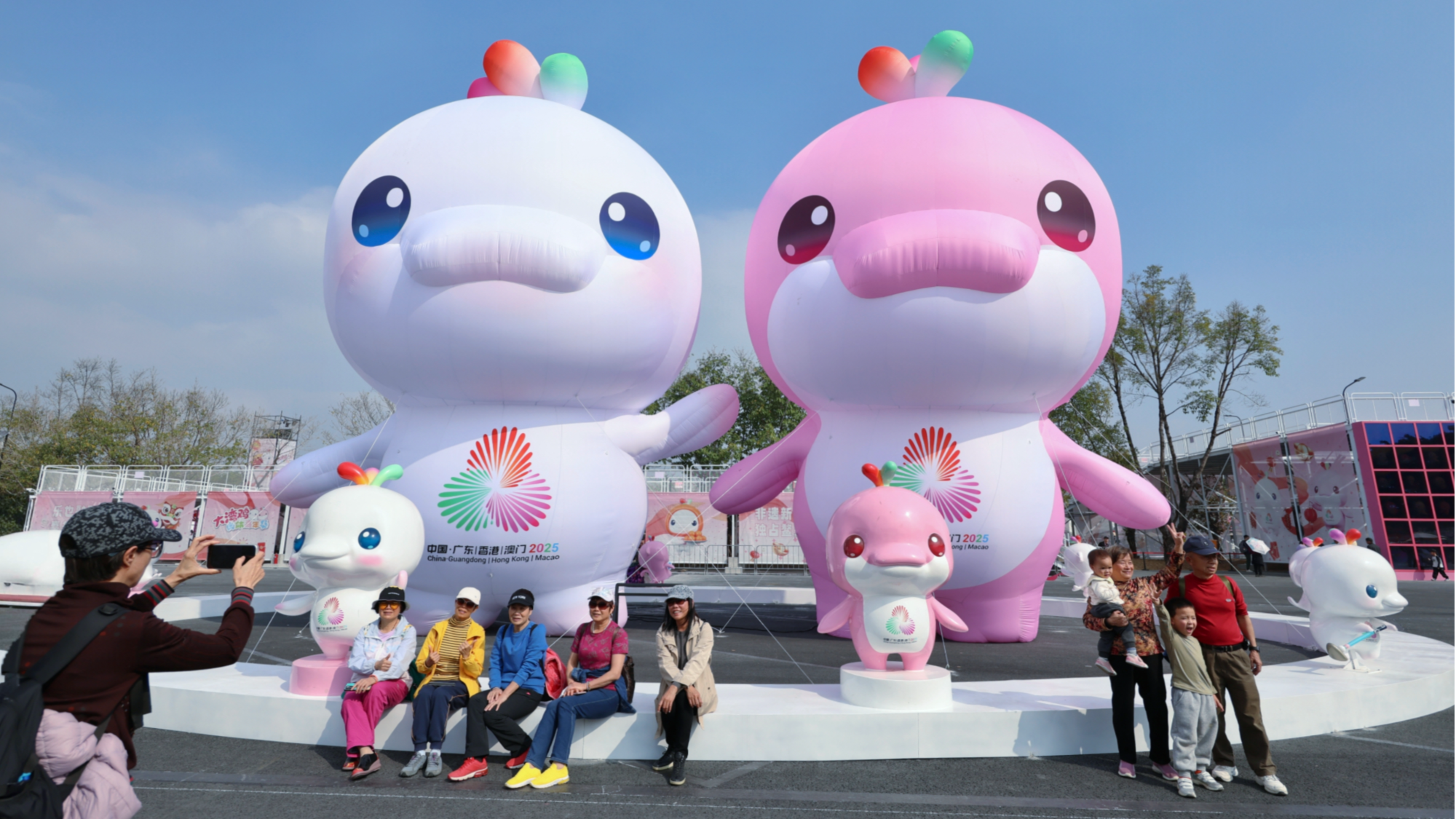
He began by highlighting the successful joint hosting of the 15th National Games by Guangdong province and the Hong Kong and Macao special administrative regions, describing it as a sports pageant showcasing “institutional strengths, regional unity and local characteristics”.
He added that the cross-border transportation in the 11-city cluster entered a new era following implementation of the Southbound Travel for Guangdong Vehicles initiative, which allows Guangdong-registered vehicles to drive into Hong Kong via the Hong Kong-Zhuhai-Macao Bridge for short-term stays.
ALSO READ: HK’s new transportation blueprint targets green, smart, connectivity
The Greater Bay Area also saw major breakthroughs in innovation cooperation, Liu said, citing the fact that the World Intellectual Property Organization had ranked the Shenzhen-Hong Kong-Guangzhou innovation cluster tops in its Global Innovation Index last year.
On the livelihood front, Liu said Hong Kong and Macao residents now enjoy greater convenience when living, retiring and seeking medical care on the Chinese mainland, supported by various facilitating policies.
Last year, the CPPCC National Committee deliberated and advised on efforts to promote Hong Kong and Macao’s long-term prosperity and stability, as well as the two SARs’ better integration into national development, Liu added.
National political advisers, particularly those from Hong Kong and Macao who played what Liu described as “dual active roles”, have participated in Greater Bay Area development and strengthened economic, trade, technological and cultural cooperation between Hong Kong, Macao and the Chinese mainland through advice based on in-depth research and special consultations.
READ MORE: Hetao zone eyed as sandbox for institutional innovation in GBA
Their focuses covered multiple topics, including the alignment of rules and mechanisms within the Greater Bay Area, the region’s efforts in developing an international sci-tech innovation center, and the construction of the Hetao Shenzhen-Hong Kong Science and Technology Innovation Cooperation Zone, Liu said.
This year, Liu pledged that the CPPCC National Committee will continue engaging in political consultation on topics such as strengthening cooperation between Hong Kong, Macao and the mainland, as well as supporting the two regions in becoming international hubs for high-caliber talent, with the goal of better integrating the two SARs into the country’s overall development.
Michael Woo Kim-kong, a Hong Kong member of the CPPCC National Committee, said the news conference charted a course to enable him to fulfill his duties. He pledged to uphold his "dual role" by conducting more research and offering more suggestions on Greater Bay Area integration.
Woo also vowed to promote exchanges between Hong Kong and mainland youths, helping them seize national development opportunities and pursue careers in the Greater Bay Area.
Henry Tan, another national political adviser from Hong Kong, said he hopes Hong Kong will continue contributing on the path to Chinese modernization. At this year's session, he plans to propose using fresh cold-chain logistics as a pilot to develop a “Greater Bay Area model and standards” for the low-altitude economy.
He also said he hopes to promote the model globally, leveraging the region's economic density, cross-border logistics demand, tech innovation, and alignment with international rules to serve national development.
Grace Wong Kit-cheng, a Macao member of the CPPCC National Committee, said she will continue to fulfill her duties by advising on topics like Macao's appropriate economic diversification, youth development, and institutional innovation under the integrated development of Macao and the Guangdong-Macao In-Depth Cooperation Zone in Hengqin.
Contact the writer at amberwu@chinadailyhk.com
