

Colorful Chinese festival tradition finds its feet at contemporary US celebrations
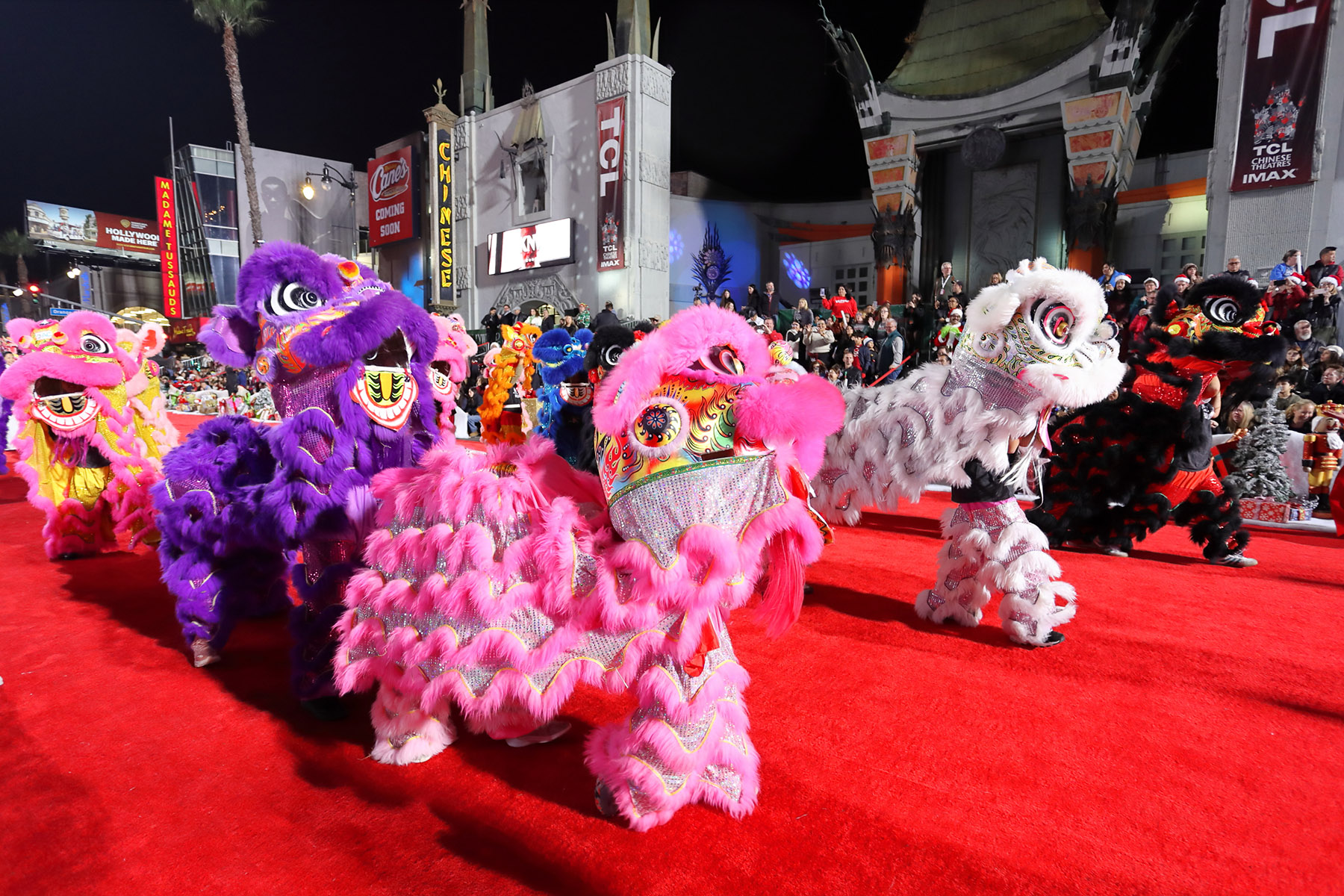
Sam Lara, a fashion coach at a Walmart store in Houston, Texas, first experienced lion dancing a few years ago at a fundraising event.
It was at the MD Anderson Boot Walk to End Cancer, an annual event that often attracts thousands of participants from numerous countries.
"When I went to that walk, I saw the performers' T-shirts had their phone number, so I took a picture," said Lara.
That's how Lara ended up contacting and meeting Shi Xinghao, master of the Houston Shaolin Kung Fu Academy.
Then, in 2024, the Walmart where she worked underwent a full remodeling, and a grand opening ceremony was scheduled for October of that year. Thinking it would bring good energy and be nice for the community, Lara arranged a lion dance to mark the occasion.
"The community received it very well. For people not familiar with the culture, it was something new, something they hadn't seen," said Lara. "The lion dance was loud and exciting. The energy felt so good; it's just something very different."
READ MORE: Dragons and lions provide link to the past
Since then, Lara has invited Shi's lion dance team to perform as part of the store's Spring Festival celebrations, a practice observed by many institutions across the United States.
In the mid-1800s, Southern Chinese migrants brought the lion dance with them to the US. San Francisco, the first major settlement for Chinese migrants, became the activity's epicenter in the US.
Elyne Cheng, a Houston Shaolin Kung Fu Academy student, has performed lion dances for years.
Cheng, who is primarily a wushu competitor, said that martial arts tap her skills and lion dances draw on her strength.
"Sometimes the lion dances will go on for more than two hours. (As well as physical strength), you really need mental strength to carry on."
Spring Festival is a fun time for many students, Cheng said.
"Every single time we hit January, everyone gets pumped up because, for some, it's the biggest event of the year."
Taking care of the lion heads, especially after all the firecrackers, is no easy task, Cheng said."We pick out the tiny bits of paper by hand with a fork."
In China, lion dances are primarily performed during the Chinese New Year and other traditional festivals.
However, in the US, the performance has grown beyond its Chinese roots, and lion dances have become a cultural calling card for Chinese communities.
According to Shi, over the past two decades, businesses such as the grocery chains H-E-B and Kroger, as well as local oil companies and public institutions such as the MD Anderson Cancer Center and the city of Houston itself, have invited his team to perform lion dances for various occasions.
In 2023, the lion dance made its debut at 1600 Pennsylvania Avenue in Washington, DC, when former US president Joe Biden and first lady Jill Biden hosted the first-ever White House reception for Spring Festival.
In recent years, more people have been booking lion dances for their birthday parties and weddings, Shi said, adding: "It started when some family members of our students were getting married. We didn't give it much thought at first. We went with the usual dance routine to express our best wishes and create a celebratory atmosphere."
ALSO READ: Spring blooms across globe
As requests for wedding performances started to roll in, Shi began to adapt the choreography to fit the occasion.
"First, a pair of male and female lions escort the couple as they make their grand entrance. Then, our lions begin to dance and flirt with each other. After a while, the female lion gets tired and sits down. The male lion encourages her to get up, and they begin to chase after each other. Then, they invite the groom and the bride to stand before them, and both pairs kiss at the same time," Shi said.
After the kisses, a baby lion appears, symbolizing the traditional wedding wish "may you have a baby soon", Shi explained. "Our lion dances tell a story of love, and people are usually very moved."
Shi said the requests keep coming: "We have about eight to 10 wedding bookings a year, and our customers are diverse, including Asians and non-Asians."
Contact the writers at mayzhou@chinadailyusa.com
