

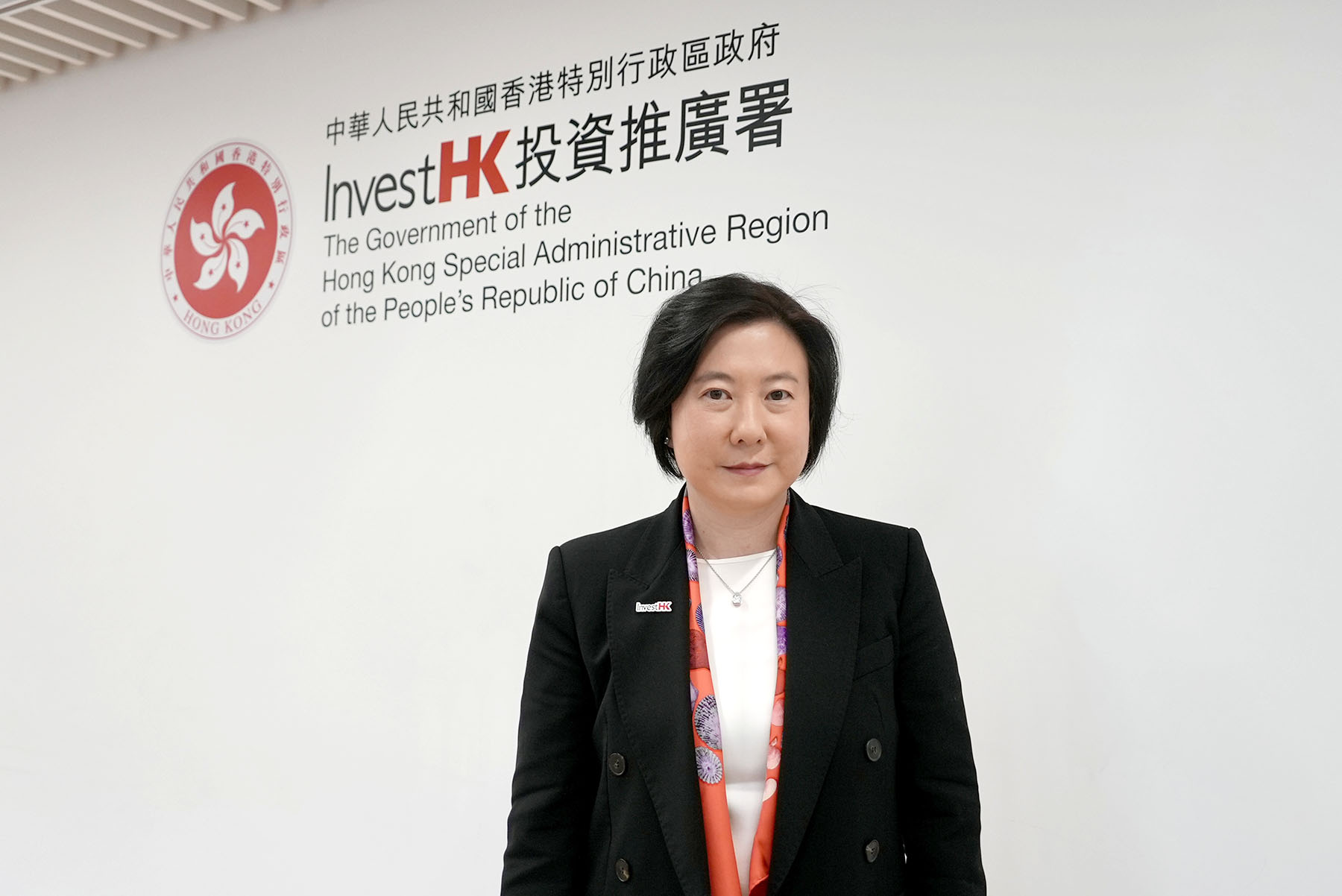
The Northern Metropolis is fast emerging as a key instrument for Hong Kong to attract investment, as it deploys a tilt toward technology-driven industries and a flexible development model that lowers the threshold for private-sector participation.
Invest Hong Kong Director-General Alpha Lau Hai-suen made the remarks during an exclusive interview with China Daily this week.
 Covering about 30,000 hectares, or one-third of the Hong Kong Special Administrative Region’s land area, the Northern Metropolis is reshaping the perception that the city lacks development land, and is expected to meet the needs of companies looking to set up research-and-development centers and production facilities locally, Lau said.
READ MORE: Officials, LegCo vow more policy support for Northern Metropolis
“Companies are showing interest,” Lau said, adding that InvestHK is in talks with many potential investors.
Acting as a “matchmaker”, InvestHK connects companies with the Development Bureau, rather than leaving firms to hunt for private sites and negotiate on their own, she said.
This approach enables companies to participate more directly in areas that align with their business needs. “They don’t have to run around to different bureaus to look at the possibilities.” The Hung Shui Kiu/Ha Tsuen New Development Area (HSK), for instance, is earmarked for professional services and cross-border logistics, while the San Tin Technopole focuses on technology-intensive industries.
In the first batch of sites launched in the HSK area late last year, the government introduced a “two-envelope approach”, emphasizing a bidder’s potential contribution to Hong Kong. Under this method, bidders submit two envelopes: one with a financial bid, and the other with technical proposals.
These factors account for 70 percent of the assessment, instead of relying primarily on land premium, Lau said.
“It’s like a preferential policy for those who could bring in jobs or investment,” she said.
Network expansion
Her remarks came after data released by InvestHK in late January showed that the agency helped 560 overseas and Chinese mainland companies set up or expand operations in Hong Kong in 2025, up more than 4 percent from 2024 and a record high. Mainland firms accounted for 298 of the total, followed by those from the United States, Singapore and the United Kingdom.
These businesses invested nearly HK$69.4 billion ($8.9 billion) and are expected to create 10,748 jobs, a year-on-year increase of more than 57 percent.
Many overseas companies entering Hong Kong are using the city not only as an end market but also as a regional management base to support expansion into the mainland and the wider Asia-Pacific, Lau said.
While access to the mainland market remains a major consideration for most investors, some firms are leveraging Hong Kong as a springboard into the rest of Asia, particularly Southeast Asia, she added.
“Hong Kong is gradually replacing Singapore as the regional headquarters for some of these companies because we have the best of both worlds,” Lau said. Hong Kong has a free-trade agreement with the Association of Southeast Asian Nations, its second-largest trading partner, she added.
Positioning Hong Kong as a two-way platform, the SAR government in October launched the Task Force on Supporting Mainland Enterprises in Going Global. Its goal is to help Chinese companies navigate challenges that include capital management, regulatory compliance and cultural barriers while expanding overseas. In the meantime, the process generates new business for the city’s financial, legal and other professional-services sectors.
With InvestHK serving as coordinator, the task force has focused its outreach on the Pearl River Delta, the Yangtze River Delta and the Beijing-Tianjin-Hebei region, areas with large pools of companies ready to expand overseas. It has also stepped up engagement in Wuhan, capital of Central China’s Hubei province, known for its strength in advanced manufacturing and relatively easy overland access to Europe, Lau said.
She cited Chinese retail brand Pop Mart, known for its popular Labubu dolls, as an example. In the early stages of its expansion into Thailand several years ago, InvestHK and the Hong Kong Trade Development Council connected the company with local events and potential joint-venture partners, helping it gain an early foothold. Its sales in Thailand have now exceeded those in Hong Kong.
For technology firms going global, many establish R&D centers in Hong Kong first, Lau said. The city supports free flows of data, enabling research outputs from universities, joint projects or corporate R&D hubs to be registered locally. Commercial returns of these findings can enjoy tax treatment even more favorable than Hong Kong’s already low rates.
Referring to last year’s Policy Address, which set a target of attracting at least 1,200 mainland and overseas companies in 2026-27, Lau said she is confident that Hong Kong can achieve that goal.
Looking ahead, besides its continued ties with the Global South and economies involved in the Belt and Road Initiative, Lau said InvestHK will place greater emphasis on Central Asia, where demand is growing for infrastructure, logistics hubs and modern manufacturing. Traditional markets in Europe and North America will also remain a focus, given their strengths in life sciences, biotechnology and sustainability, she said.
Contact the writers at irisli@chinadailyhk.com
