

Blending innovation with compassion, young entrepreneurs rethink how artificial intelligence can truly serve seniors in an aging society.
An elderly person presses a button on an AI-powered voice reminder app and begins describing their plans for the afternoon. When the button is released, the screen instantly displays a detailed schedule for each task. At the appointed times, an AI voice emerges from the phone, delivering clear, well-organized reminders of what needs to be done.
This app was created by Dong Wei, 27, from Lanzhou, Gansu province. He posted a video of the scene on the Chinese video-sharing platform Bilibili, where the clip — highlighting the intersection of technology and aging — quickly drew widespread interest.
"AI has advanced by leaps and bounds, but it seems that only young people are benefiting from it," Dong said in the video. "Very few of us are paying attention to how older adults can use technology to make their lives easier."
According to the latest data from the National Bureau of Statistics of China (NBS), by the end of 2024, China's population aged 60 and above had exceeded 310 million. That number is expected to surpass 400 million by around 2035, accounting for over 30 percent of the country's total population.
READ MORE: Robotics, AI innovations put elderly care on fast track
Dong's decision to develop the app came from his grandmother's struggles with smartphones: she had trouble adjusting the volume or connecting to Wi-Fi. After speaking with many seniors in nursing homes, Dong realized that such difficulties were common among the elderly.
"While digitalization has brought convenience to many people, it has left my grandmother's generation feeling confused and frustrated," he said.
Determined to address this gap, Dong and his team set out to create a voice-activated memo app that requires no typing. This is an area where AI proved especially useful, as voice recognition can be challenged by dialects and unclear speech. Dong relied on AI to generate and refine these features rather than writing every line of code himself, and his role became one of fine-tuning and improving the AI-generated results.
The outcome exceeded his expectations: the app can accurately transcribe seniors' speech into coherent text and deliver timely voice reminders based on their schedules.
This experience also reshaped Dong's understanding of technology. "Programming with AI significantly lowers the barrier to software development," he said. "When young people use these tools to create products for seniors, it drives innovation and helps technology better serve them over time."

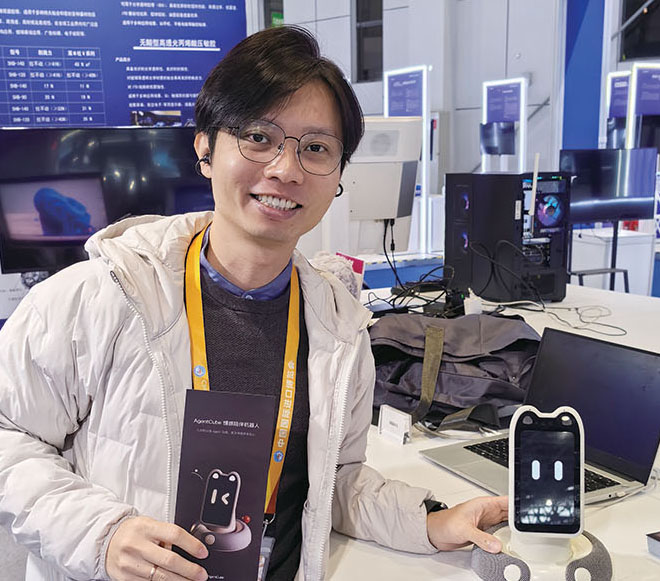
Xie Dong'an shares a similar perspective. Born in Taiwan and now based in Changsha, Hunan province, he is the co-founder of the tech company UniEpoch and a co-developer of Moi X2, which he describes as an "AI offspring companion avatar robot" for seniors.
Designed as a desktop companion, Moi X2 monitors seniors' health when their children are not present. It can permanently store users' basic information and other data they consider important.
To address seniors' concerns about privacy, Xie and his team built in features that allow users to independently manage privacy settings, giving them full control over what information is shared and with whom.
Xie is the second of five siblings. In such a large family, even if some members cannot return home to care for elderly relatives, others can step in to help. As a result, he is able to stay well-informed about his aging family members through this support network.
After moving to the Chinese mainland, Xie noticed a stark contrast: many young people there come from one-child families, and they don't communicate with their parents as frequently as he does. Over time, this lack of contact can weaken emotional bonds between generations. This observation inspired him to develop Moi X2.
"My product is not intended to replace children in seniors' hearts," Xie said. "Instead, it aims to enhance communication and keep parents and their children connected through shared information."
As a young entrepreneur, Xie also emphasizes the importance of drawing on complementary strengths on both sides of the Taiwan Strait.
Taiwan, he noted, recognized the challenges of an aging population relatively early and has accumulated considerable experience in this field."Taiwan has abundant resources, while the Chinese mainland offers a vast market and a large talent pool," he said."Our team comprises members from diverse backgrounds, and the exchange of ideas often sparks new innovations."
Xie encourages more young people to enter the eldercare technology sector, believing that the work they do today will benefit both current and future generations — including themselves.
"Don't be a bystander," he advised. "Truly put yourself in the shoes of seniors."
Storing memories
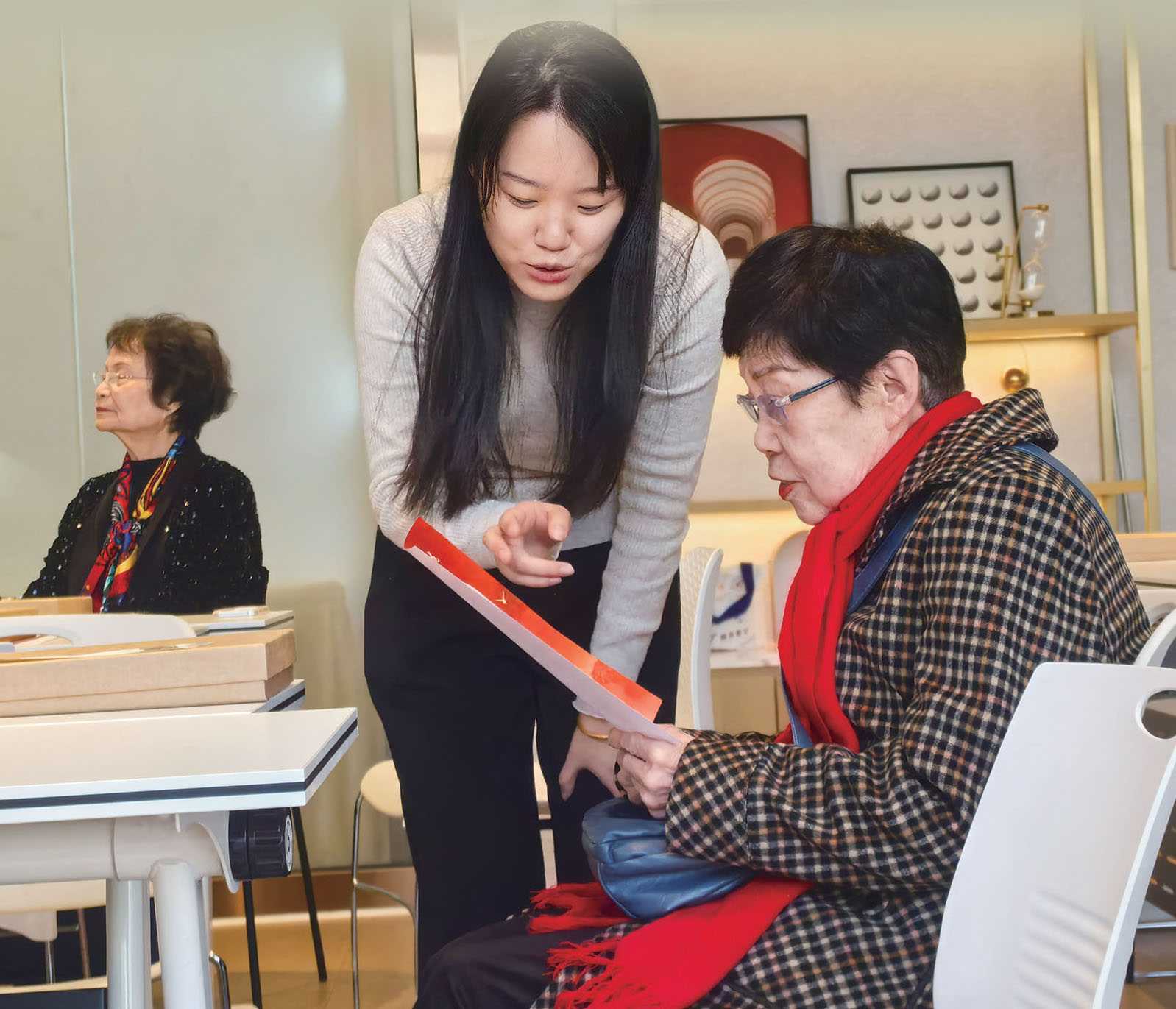
Zhu Yancheng, a 29-year-old from Anqing, Anhui province, has come to realize that integrating AI into eldercare is about more than applying new technologies — it is also about meeting seniors' emotional needs. With this understanding, she founded Lanvita, an AI-driven memoir platform for the elderly.
Zhu's entrepreneurial journey began with a deep personal motivation: fulfilling her father's wish. "He wanted to preserve his memories, but he wasn't familiar with computers, and organizing everything became exhausting for him," she recalled.
As Zhu conducted further research, she discovered that 27.8 percent of surveyed seniors are willing to purchase memoir products for themselves, while 30.7 percent of adult children intend to buy such products for their parents.
"This isn't just my father's personal wish," she said. "It reflects a broader, shared need."
With a background in AI, Zhu designed Lanvita and launched it as a WeChat mini-program. She then collaborated with local communities, nursing homes, and other institutions to host offline trial sessions, allowing seniors to experience the memoir-creation process firsthand and receive completed versions of their stories shortly afterward.
One participant who left a strong impression on Zhu was 89-year-old Gong Guoping. According to her, Gong has lived through a life full of upheavals, including war and major family changes, while also witnessing the development and transformation of Hefei, the Anhui provincial capital, where he has spent his whole life.
ALSO READ: Youth seek sports rehab services
"Mr Gong's memoir isn't just a record of his personal experiences," Zhu said. "It's a microcosm of an entire era."
Zhu believes that meaningful products can only be created by engaging directly with elderly users and truly listening to their stories.
"Face-to-face, offline services are far more effective than overwhelming people with online advertisements," Zhu noted.
After the trial sessions, many seniors voluntarily recommended Lanvita to relatives and friends, helping the platform build a growing user base.
Through her interactions with seniors, Zhu has also found that although older adults may adopt AI more slowly than young people, they are still curious and willing to try new technologies.
"In the field of AI-driven eldercare, what we truly need is not necessarily smarter AI, but more empathetic AI," she said.
Contact the writers at heweijia@i21st.cn
