

Chinese mainland exercises around Taiwan reaffirm combat readiness
Editor's note: The Taiwan question is a key focus for China and the international community. China Daily is publishing a series of reports to track hot Taiwan-related topics and address disinformation from the Democratic Progressive Party administration.
Since then-United States House speaker Nancy Pelosi's provocative visit to Taiwan in August 2022, the People's Liberation Army has conducted seven large-scale military actions around the island, with the most recent held in late 2025 after what is believed to be the largest-ever US arms sales package to the Taiwan region.
Experts have said the drills have featured training areas drawn closer to the island and with a higher level of combat realism, while the PLA's resolve and capability to safeguard national sovereignty and territorial integrity have remained unchanged.
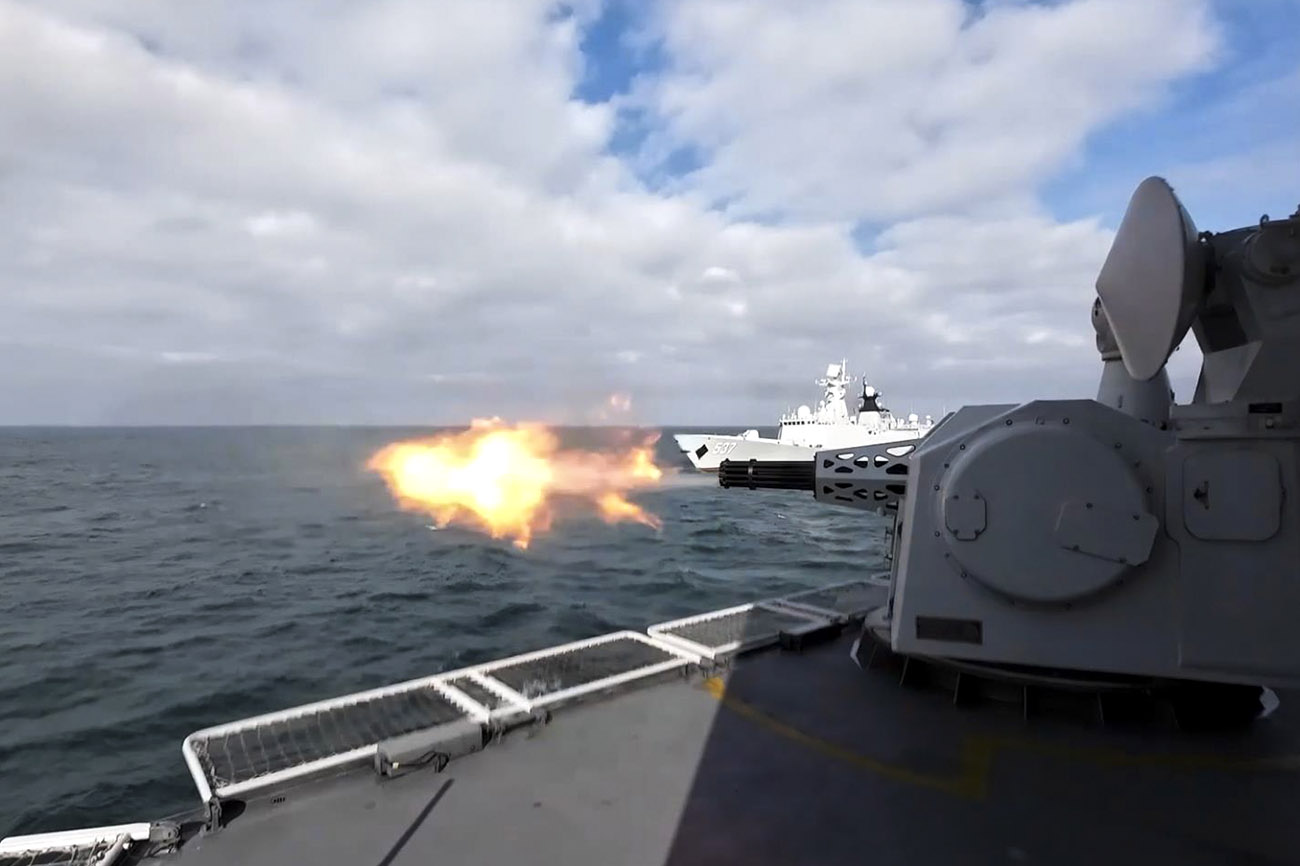
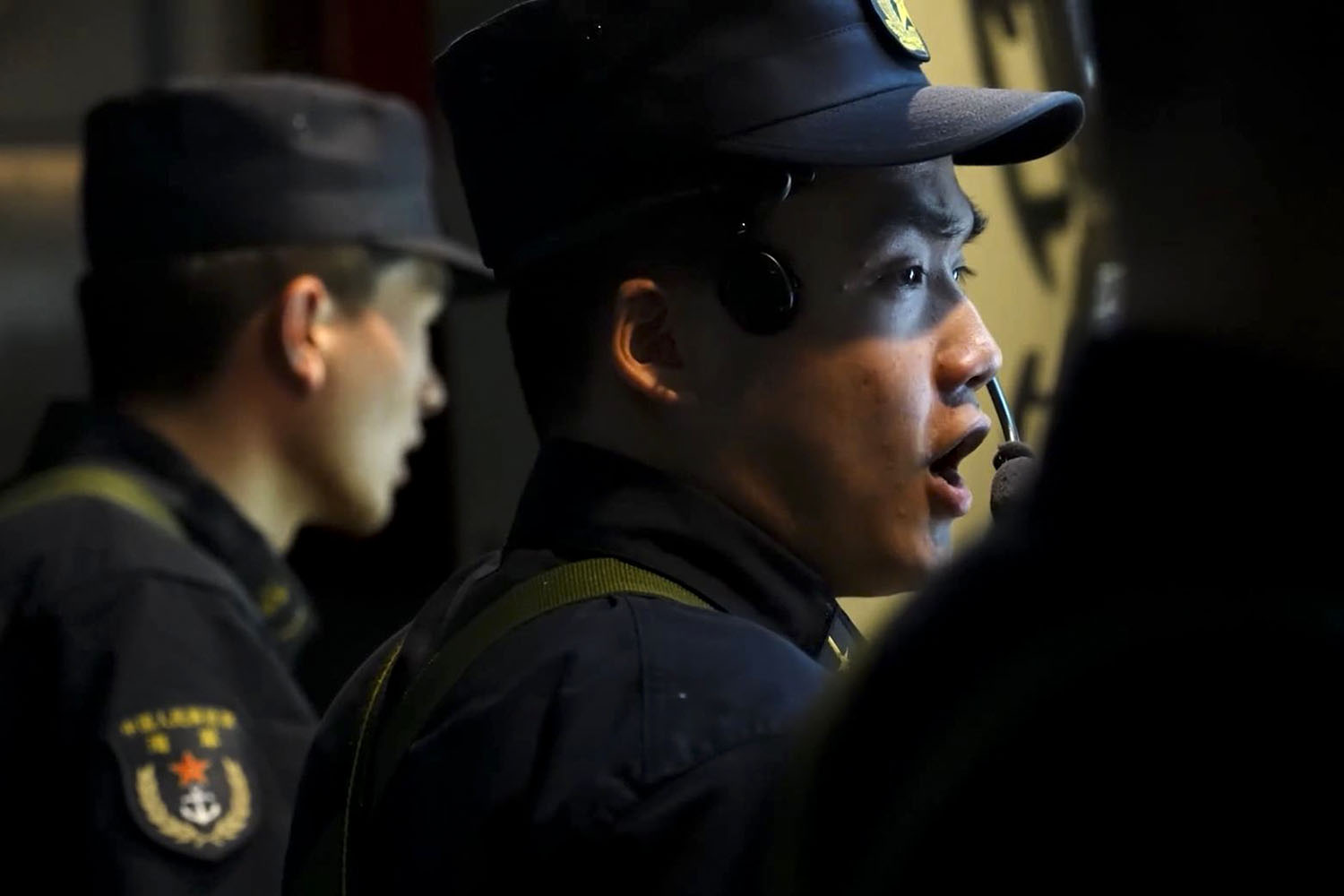
On Dec 29, Shi Yi, spokesman for the PLA Eastern Theater Command, announced that the command had started a two-day exercise codenamed Justice Mission-2025 around Taiwan Island, mobilizing units from the ground force, navy, air force and rocket force. The drills focused on combat readiness at sea and in the air, seizing comprehensive control, blockading key ports and areas, and multidimensional deterrence on outer lines.
READ MORE: PLA conducts major drill near Taiwan
On Dec 30, the PLA carried out long-range joint firepower strikes in waters south of Taiwan Island and organized live-fire drills. It also deployed forces, including an amphibious assault ship formation, destroyer and frigate formations, and unmanned aerial vehicles in waters east of the island, conducting exercises such as multilayered delivery, precision raids, and seizing and controlling key ports.
Shi said the exercises served as a stern warning to "Taiwan independence" separatist forces and external interference, calling them a "legitimate and necessary action" to safeguard sovereignty and national unity.
Fu Zhengnan, a researcher at the PLA's Academy of Military Science, said the drills are a necessary response to what he described as "serious and provocative collusion" between the US and the island, particularly the latest US approval of more than $11.1 billion in arms sales to the region.
He said the arms package marked a significant escalation in scale, nature and the weapons involved.
The nature of the weapons has shifted, "from so-called defensive systems in previous US arms sales to clearly offensive capabilities in this round", Fu said. He stressed that this constituted a serious violation of the fundamental principles enshrined in the three China-US joint communiques, especially the August 17 Communique.
Targeted moves
The drills have been aimed at deterring separatist forces and external interference in the Taiwan question.
In the latest actions, the PLA dispatched an amphibious assault ship formation for the first time. Such a move was highly targeted, according to Zhang Junshe, a former researcher at the Naval Research Academy.
He said that an amphibious landing is widely viewed as one of the main operational approaches in any potential cross-Strait conflict scenario.
The drills included joint sea-air strikes and live-fire launches of long-range box-type multiple rocket launchers, which Zhang described as a warning to separatists that "there are many ways" to impose punishment.
In a Dec 30 New York Times report, Joshua Arostegui, research director of the China Landpower Studies Center at the US Army War College, was quoted as saying the rocket launchers mobilized in the exercises "can fire basically anywhere along the coast to range most, if not all, of Taiwan".
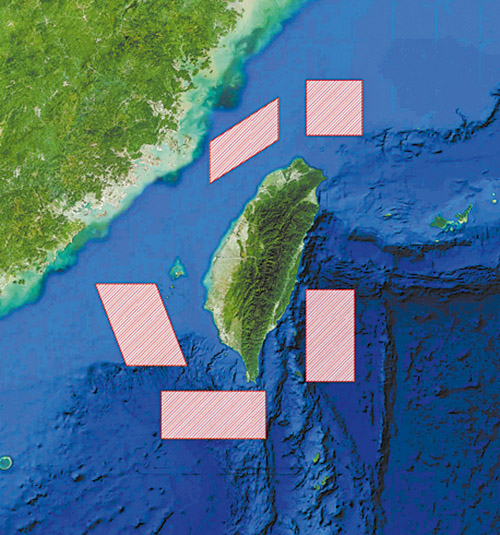
Some foreign media outlets and Taiwan media reports claimed the five exercise zones designated this latest time were the closest yet to Taiwan Island compared with the previous six major exercises.
Zhang said the placement of the zones reflected that "the rope" around separatist forces' neck was being tightened. He added that Taiwan is part of China, and therefore, "wherever the PLA sets the exercise areas, it is natural, normal and reasonable".
Repeated action
Before the drills in December, there had been six rounds of major military actions encircling the island by the PLA, with the first taking place in August 2022, shortly after Pelosi's visit to Taiwan. Two rounds of large-scale exercises were conducted in each of 2023, 2024 and 2025.
The first exercise in 2022 did not have a specific code name. The drills in April 2023 and both exercises in 2024 were labeled under the Joint Sword series.
In April last year, the exercise was code-named Strait Thunder-2025A, while the December 2025 drills were named Justice Mission-2025, a title widely seen as intended to underscore the legitimacy of China's actions against separatism and external interference.
According to the PLA Eastern Theater Command, the longest of the seven actions was the first in 2022, which lasted more than a week, while the other six lasted between one and three days.
Three trends
Zhang Chi, a professor at the PLA National Defense University, said the PLA's exercises have shown three major trends.
"The first is that the range of our deterrence against 'Taiwan independence' separatist forces is getting larger, the tools are becoming more diverse, and the distance is getting closer," he said, adding that the pressure on the island's Democratic Progressive Party authorities' "defensive space" has also intensified.
The second trend, Zhang said, is the flexible and dynamic adjustment of timing and operational space, allowing drills to "be launched suddenly to achieve a surprise effect".
He cited the Joint Sword-2024B drill in October 2024, saying it began abruptly at 5 am without prior notice and ended suddenly at 6 pm the same day. "It can be described as a quick strike and quick withdrawal, and our exercises can shift from training to combat at any time," he said.
The third trend, Zhang said, is that military operations have become richer in form, including combat readiness patrols at sea and in the air, blockading key areas and routes, seizing comprehensive control, joint firepower strikes and simulated precision attacks on key targets.
He said the PLA has developed an active posture of "countering salami-slicing tactics" in response to separatists and external interference that challenge China in incremental ways.
"The DPP authorities can only respond in panic, with no real ability to parry," Zhang said.
Unchanged approach
Despite evolving trends across the seven major actions, some core training elements have remained consistent, especially the joint sea-air blockade, the former researcher said.
He said this involves blockading major ports on the island, such as Keelung and Kaohsiung, in order to cut off external channels for supplies and energy.
ALSO READ: Three key takeaways from PLA's 'Justice Mission 2025' drills around Taiwan
Such operations, Zhang stressed, are also aimed at preventing separatist forces from fleeing and blocking routes that could be used by external forces to provide support.
He said that every large-scale action has also underscored the mainland's determination to safeguard sovereignty and territorial integrity, as well as its resolve to counter separatism and external interference, while demonstrating strong capability.
Contact the writers at jiangchenglong@chinadaily.com.cn
