

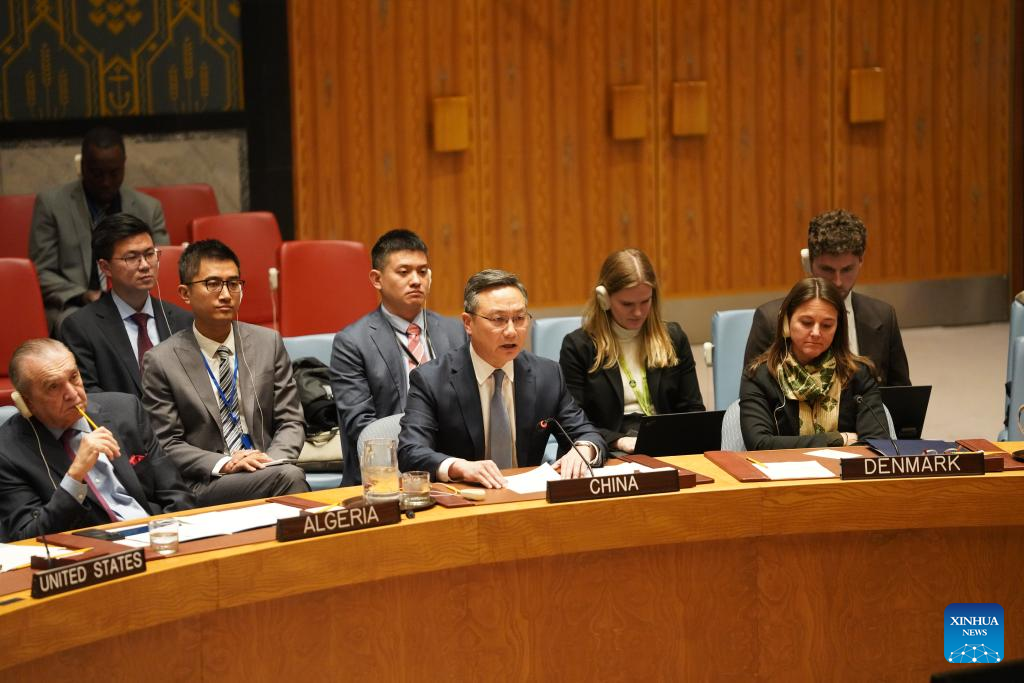
UNITED NATIONS - Japan has become a disruptor of international order, said a Chinese envoy on Monday in response to the Japanese representative's statement to an open debate of the Security Council on the international rule of law.
Sun Lei, China's deputy permanent representative to the United Nations, said the Japanese representative was distorting facts and misleading, which China firmly opposes and categorically rejects.
Taiwan's return to China was a major outcome of the victory in World War II and constitutes an integral part of the post-war international order. The erroneous remarks by Japanese Prime Minister Sanae Takaichi, he said, seriously violate the obligations of a defeated nation as stipulated in the Cairo Declaration, the Potsdam Proclamation and the Japanese Instrument of Surrender.
He added that the remarks also represent a grave breach of the fundamental principles of international relations enshrined in the United Nations Charter, including respect for state sovereignty and territorial integrity, as well as non-interference in internal affairs. In essence, such statements seek to deny the outcomes of World War II and undermine the post-war international order.
"Such behavior shows that Japan has become a disruptor of the international order," he said.
During World War II, Japan waged wars of aggression and inflicted untold atrocities on Asian peoples. The International Military Tribunal of the Far East systematically exposed the crimes of Japanese militarism. However, some Japanese politicians and forces have never truly repented or confessed guilt. Instead, they have attempted to deny those crimes and falsify history, he said.
Their so-called reflection on the war focuses ironically on why Japan was defeated rather than on its war crimes. Such a Japan is a perpetrator of wars of aggression, he stressed.
ALSO READ: China urges Japan to reflect on historical wrongdoings, correct mistakes
From the Japanese leader threatening the use of force against China, to a senior official in the prime minister's office publicly advocating Japan's nuclear armament and attempting changes to the three national security documents and signaling revisions to the three non-nuclear principles, all of this exposes the attempts of Japan's right-wing forces to promote re-militarization and return to the old path of military expansion. These actions pose new threats to regional and global peace. Such a Japan has become a resurrector of militarism, he said.
The international community must prevent Japan from embarking on the old and evil path of militarism again, he warned.
The Takaichi administration has grossly interfered in China's internal affairs, hinted at military intervention in the Taiwan question, and deployed offensive weapons in areas adjacent to Taiwan of China, deliberately creating regional tensions and provoking military confrontation, said Sun, stressing that Japan is a true instigator of regional tensions.
China strongly urges Japan to do serious self-reflection, genuinely acknowledge and repent for its wrongdoings, stop making provocations and crossing lines, and earn the trust of China and the international community through concrete actions, he said.
A Japanese representative made an additional statement. Sun asked for the floor again to reject his remarks.
Sun said the Japanese representative not only refused to acknowledge wrongdoing but continued groundless justifications, leaving the Chinese side no choice but to respond again.
If Japan truly abides by the UN Charter and is committed to upholding the international order, Sun asked, why do its leaders, from a country defeated in World War II, interfere in the internal affairs of a victorious nation and even threaten the use of force.
If Japan genuinely seeks to build a nuclear-weapon-free world as a so-called peace-loving country, why has its government floated revising the three non-nuclear principles and even talked of introducing nuclear weapons.
If Japan truly upholds the international rule of law, why has it failed to fulfill its obligations under international legal documents such as the Cairo Declaration, the Potsdam Proclamation and the Japanese Instrument of Surrender, which require complete disarmament and prohibit the maintenance of industries capable of rearmament.
And if Japan's position on the Taiwan question has indeed remained unchanged, he asked, why can it not fully and accurately reaffirm the stance set out in the 1972 Sino-Japanese Joint Statement.
ALSO READ: China calls for upholding UN Charter, international rule of law
Sun said China's demand has always been categorically clear. China urges Japan to face history squarely, reflect on its wrongdoings, retract erroneous remarks and stop shaping a new type of militarism. China hopes Japan can take concrete actions to come clean with the people of China and the world at large.
