

As Chinese companies accelerate their overseas expansion to unlock new growth and skirt rising trade barriers, Hong Kong’s financial sector is being urged to turn the wave of globalization into a new engine of development by providing more diversified cross-border financial services.
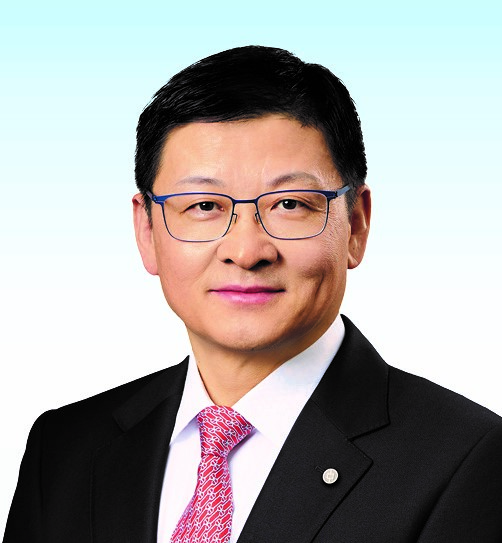
 More Chinese mainland enterprises are setting up regional headquarters in the Hong Kong Special Administrative Region and using it as a springboard for global expansion, said Sun Yu, vice-chairman and chief executive of Bank of China (Hong Kong) (BOCHK), in an exclusive interview with China Daily.
They are calling for stronger and more efficient international financial support, an area where Hong Kong’s financial institutions have “ample room to act”, Sun said.
He said the financial sector should develop itself into a cross-border investment hub by building a more comprehensive one-stop service system that covers equity investment, debt financing, and mergers and acquisitions advisory.
Investment banks and commercial lenders in Hong Kong, he added, are well placed to tap international capital through the city’s vibrant monetary system and mature capital market, providing funding for overseas investment, large-scale projects, and business restructuring.
Sun also highlighted the HKSAR’s advantages in treasury management, saying that “its financial institutions have the capacity to help companies move funds across borders and regions in a secure and efficient manner”, boosting operational efficiency while effectively managing exchange-rate and interest-rate risks.
ALSO READ: HK urged to explore professional services beyond finance, auditing
Sun’s call comes as Chinese firms’ overseas expansion gathers pace amid profound shifts in global industrial chains. Emerging destinations such as Southeast Asia and the Middle East are gaining traction, while high-tech goods, advanced equipment and green products are driving the next phase of manufacturing exports.
By the end of 2025, Chinese investors had established over 50,000 overseas enterprises across 190 countries and regions, according to the Ministry of Commerce. Outward direct investment reached $174.4 billion in 2025, up 7.1 percent year-on-year, ranking the country’s cumulative outbound investment among the world’s top three for nine consecutive years.
The momentum has been particularly strong for countries and regions involved in the Belt and Road Initiative. A report by consultancy Ernst & Young in November showed that China’s direct non-financial investment into BRI economies reached $30 billion in the first three quarters of 2025, jumping 23.7 percent from the previous year.
CATL, one of the world’s biggest electric vehicle battery makers, earmarked about 90 percent, or HK$27.6 billion ($3.5 billion), of its net proceeds from Hong Kong’s largest initial public offering of 2025 for the first two phases of its plant in Hungary, to build localized production capacity in Europe amid rising demand for power and energy storage batteries.
READ MORE: HK seen to cement global HQ status over economic, institutional strengths
Against the backdrop, the HKSAR government launched the Task Force on Supporting Mainland Enterprises in Going Global last October, aimed at encouraging mainland firms with overseas ambitions to use Hong Kong as their platform by offering cross-sector, one-stop support. BOCHK is one of the member institutions from the financial industry.
Sun said that as regional economic integration deepens under a shifting global landscape, there are multiple opportunities for the mainland, Hong Kong and Southeast Asia to strengthen their capital market connectivity.
“Hong Kong should strengthen its role as the bridge between the mainland and the Association of Southeast Asian Nations (ASEAN) in investment and trade, to inject fresh momentum into the city’s financial sector.”
The cooperation between Southeast Asia and the mainland in fields such as digital infrastructure, green development and the blue economy has accelerated in recent years, Sun noted. Moreover, the China-ASEAN Free Trade Area 3.0 Upgrade Protocol signed in October has laid “a solid institutional foundation” for bilateral cooperation, which will further deepen and broaden economic ties between the two sides.
As the Bank of China’s regional headquarters for Southeast Asia, BOCHK will lead its nine institutions in the region to deepen group-wide coordination and enhance its cross-border financial services, Sun said.
Contact the writer at irisli@chinadailyhk.com
