

Key industry leaders say focus has shifted toward mass production, specialized application ecosystems and urgent development of heavy-lift launch capabilities
A record-breaking filing for orbital resources has signaled a pivotal shift in China's space ambitions, moving the industry from a phase of technical verification to aggressive commercial scaling.
In late December, China submitted applications to the International Telecommunication Union for frequency and orbital resources for an additional 203,000 satellites. The move would drastically expand the global population of spacecraft and reshape the competitive landscape of low-Earth orbit.
While the sheer magnitude of the applications garnered international headlines, the practical execution of this strategy relies heavily on a rapidly maturing domestic supply chain that is fundamentally different from its Western counterparts.
Key industry leaders say the focus has shifted toward mass production, specialized application ecosystems and the urgent development of heavy-lift launch capabilities to meet international deployment deadlines.
READ MORE: China's commercial satellites accelerate global connectivity
The acceleration comes as Chinese enterprises seek to secure finite resources in space, a domain that experts warn is becoming increasingly crowded with commercial hardware.
Lin Guangrong, a constellation communication system architect at GalaxySpace, said the company has successfully transitioned from a "custom workshop" model to a "digital factory" approach to meet this demand.
GalaxySpace, recognized as China's first unicorn company in the commercial aerospace and satellite internet sector, has spent seven years building a full-chain capability for satellite development.
Lin noted that unlike the standardized production of automobiles or computers, satellite mass production faces unique hurdles regarding reliability in the vacuum of space. It requires a delicate balance between speed and rigorous quality control.
Through a process of agile development and rapid iteration, Galaxy-Space has established a manufacturing chain for satellites ranging from 100 to 2,000 kilograms in weight. The company's annual production capacity for medium-sized satellites has stabilized between 100 and 150 units.
Lin explained that the manufacturing cycle has been shortened by 80 percent compared to traditional models. This efficiency is driven by a "smart brain" within the factory, where algorithms continuously optimize industrial processes based on data from frontline engineers.
This shift allows the company to move away from "hand-crafted" prototypes to a streamlined industrial output capable of supporting large-scale constellations.
Technological innovation remains the primary driver for this efficiency, particularly in the development of payloads using the Q/V band.
To understand the significance of this technology, Lin compared satellite communication frequencies to highways in the sky. Traditional frequency bands are like congested city streets, limited in how much traffic they can handle.
The Q/V band represents a new, wider superhighway that allows for significantly more data traffic and higher bandwidth, which is essential for a high-speed satellite internet experience.
However, utilizing this "superhighway" requires overcoming substantial technical difficulties, as higher frequencies are more sensitive to atmospheric interference and require precise hardware.
Lin said GalaxySpace has successfully developed its fourth-generation Q/V antenna, reducing the weight from over 7 kg to just 3.2 kg while lowering the profile to 0.265 meters.
This size reduction is critical. It allows engineers to stack more satellites inside a single rocket fairing, thereby reducing the cost per unit launched. The company is now producing 300 of these advanced antennas annually.
These technical breakthroughs are being tested in the "Little Spider Web", China's first low-Earth orbit broadband trial constellation.
Comprising eight independently developed satellites, this network has verified the ability to provide continuous broadband communications for 30 minutes at a time, a key metric for proving the viability of the system.
The system has successfully conducted tests in diverse environments, from verifying power grid connectivity in Yunnan province to enabling maritime emergency communications.
Lin highlighted the company's ambitious timeline, noting that in September, it launched the world's first satellite equipped with large-scale flexible solar wings, further pushing the boundaries of power generation in orbit.
While GalaxySpace focuses on the infrastructure of satellite internet, other industry giants are concentrating on the downstream ecosystem and how these signals reach the average consumer.
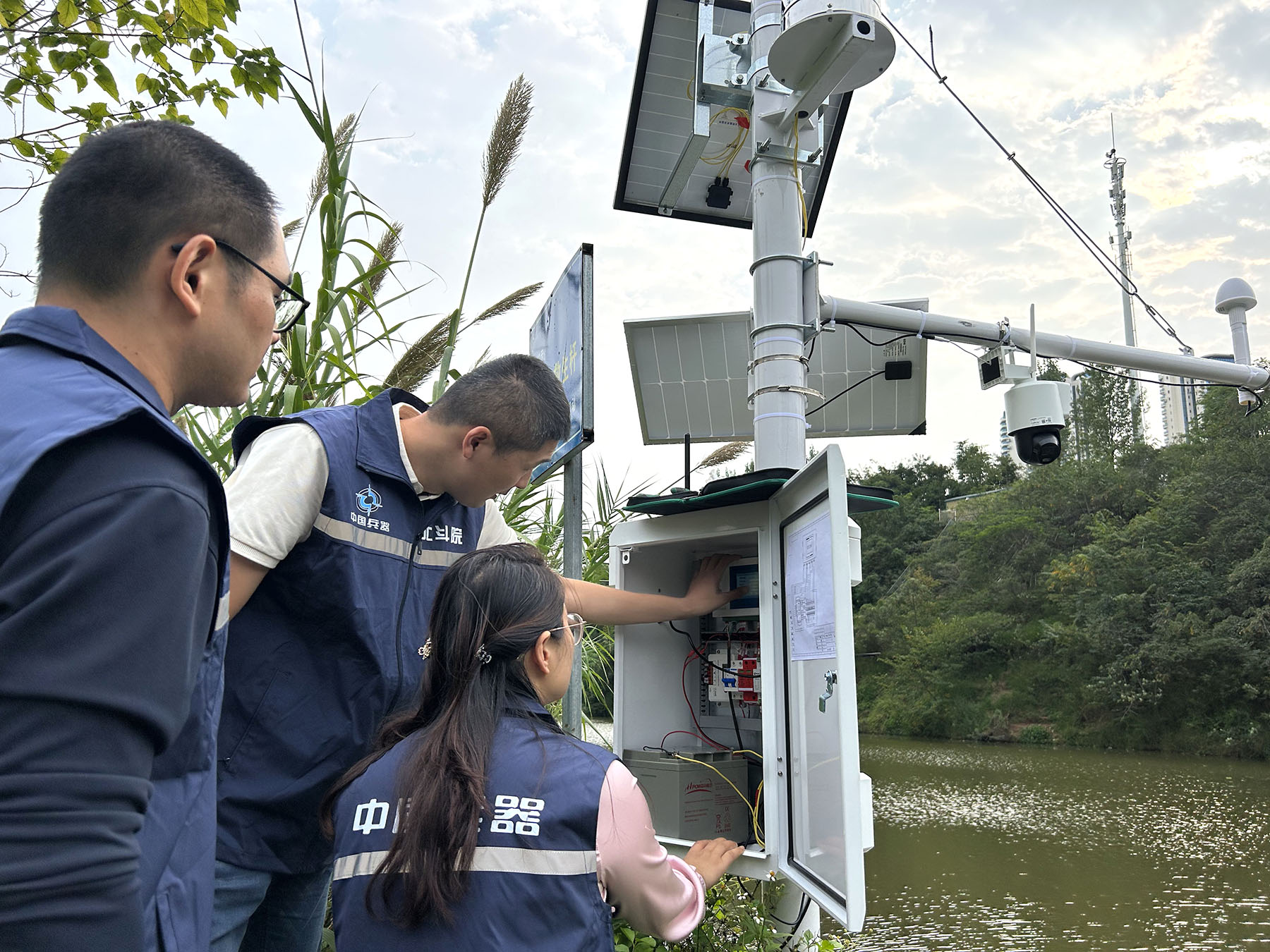
Wang Hui, general manager of BeiDou Satellite Communication Co Ltd, a subsidiary of China North Industries Group (Norinco Group), highlighted this rapid evolution in the application sector.
"The application potential of China's commercial satellites is accelerating from technical verification to large-scale implementation, demonstrating broad market prospects and innovative vitality across multiple fields," Wang said.
He emphasized that these applications "are no longer confined to professional sectors, but are deeply integrating into consumer life and every link of the national economy, showing immense potential and rapid growth."
Pan Ying, deputy chief engineer at the same company, offered a distinct perspective on how Chinese companies are carving out a unique market position compared to Western competitors like SpaceX.
Pan argued that the two markets operate on fundamentally different structural logics.
SpaceX employs a "vertical integration" model, controlling the entire chain from chip manufacturing to rocket launches and terminal sales. In contrast, the Chinese ecosystem is defined by specialization, which Pan described as a "letting a hundred flowers bloom" approach.
In China, rocket manufacturers focus on launch vehicles, satellite makers focus on spacecraft, and chipmakers focus on semiconductors. Each entity dedicates its resources to its core competency.
While acknowledging that the fully integrated model allows for tighter feedback loops, Pan argued that the Chinese model excels in concentrating resources during the system construction phase.
He cited the development of the BeiDou navigation system as proof that concentrating superior resources — often under the "national team" framework — can lead to high-quality system completion in a short timeframe.
Still, he admitted that this segmentation can sometimes slow the transmission of market demands from downstream users back to upstream designers, as there is no single entity overseeing the entire loop.
To bridge this gap, Pan's company is focusing heavily on integrating satellite services into mass-market consumer devices to create a sustainable business loop.
The company is leveraging the BeiDou short message service, a unique feature of the Chinese navigation system that allows satellites to send text messages. Unlike standard GPS, which only tells users where they are, BeiDou allows users to tell others their location and status, even without ground-based mobile signals.
Pan said this feature is rarely used in daily life, but will play a crucial role in emergency scenarios.
By forming joint ventures to develop new chips, the company has successfully integrated this capability into standard smartphones without requiring bulky external antennas.
Since 2022, hundreds of millions of mobile phones equipped with BeiDou short message capabilities have been shipped, significantly driving down the cost of core components.
Pan noted that numerous news reports have already confirmed cases where users in areas without cellular coverage used the feature to send distress signals and receive rescue, validating the social and commercial value of the technology.
Beyond phones, BeiDou Satellite Communication Co Ltd is innovating through cross-industry partnerships. Pan revealed collaborations with outdoor apparel brands like Bosideng and Phoenix to embed satellite communication modules directly into outdoor gear. This strategy aims to empower traditional products with satellite capabilities, expanding the market beyond dedicated tech enthusiasts to the general public.
Looking forward, Pan predicted that over the next three to five years, the market will feature multiple coexisting systems, including BeiDou, the Tiantong satellite system, and emerging low-Earth orbit internet constellations.
He emphasized that future terminals will likely be compatible with multiple systems, allowing seamless switching based on user needs.
However, the realization of these commercial ambitions depends heavily on the availability of orbital slots and the physical capacity to launch hardware into space.

The recent applications for 203,000 satellites by China highlight the intensifying competition for near-Earth orbit resources.
Zhang Zhilong, an associate professor at Beijing University of Posts and Telecommunications, compared the current constellation boom to a game of musical chairs.
Low-Earth orbit is a limited resource, constrained by the physical need for safe spacing between objects to prevent collisions.
According to a white paper by CCID Consulting and other industry analyses cited by Science and Technology Daily, the estimated safe capacity of low-Earth orbit satellites ranges from 60,000 to 175,000 — a threshold global filings have already exceeded.
Under International Telecommunication Union rules, the "first come, first served" principle applies to these resources, but it comes with strict "use it or lose it" deadlines.
Once a frequency and orbit are filed, the applicant must launch the first satellite within seven years and deploy 10 percent of the total constellation within nine years.
Failure to meet these milestones results in the loss of priority rights. This regulatory clock is placing immense pressure on China to increase its launch capacity and reduce costs immediately.
China's current launch capabilities are racing to catch up with the manufacturing output of satellite factories like GalaxySpace.
In 2025, China conducted 92 launches, deploying just over 300 commercial satellites. This figure must grow exponentially to meet the targets implied by the new filings. The industry is looking toward a new generation of liquid-fueled, reusable rockets to bridge this gap and lower the price of access to space.
Several commercial rocket companies are preparing for orbital launches in 2026, including the highly anticipated Tianlong-3 developed by Space Pioneer.
Designed specifically to address the need for large-scale constellation deployment, the Tianlong-3 features a diameter of 3.8 meters and a total thrust of 840 metric tons, benchmarking it against the performance of the Falcon 9. Its first stage is powered by nine "Tianhuo-12" engines, providing the thrust-to-weight ratio necessary for heavy payloads.
Crucially, its large composite fairing is capable of carrying dozens of satellites in a single mission. Ground tests in late 2025 verified a "one rocket, 36 satellites" configuration, a capability essential for the economic viability of mega-constellations.
Lin from GalaxySpace emphasized that the global market is large enough to accommodate alternative solutions to Starlink. He noted that more than 2.5 billion people worldwide still lack internet access, representing a massive untapped economy.
GalaxySpace is actively expanding its international footprint, particularly in Southeast Asia and countries involved in the Belt and Road Initiative.
In Thailand, the company has partnered with local operators and universities to build ground stations and test satellite internet applications. These trials include remote medical consultations and connecting vehicles to the satellite network.
These trials marked the first time low-Earth orbit broadband has been utilized in Thailand. Similar agreements have been signed in Hong Kong to explore applications in the Middle East and Africa.
Lin argued that China's strong industrial base and the integration of internet technology with aerospace give it a distinct advantage in manufacturing. He expressed confidence that the global market needs diverse options that are inclusive, flexible and widely applicable.
ALSO READ: China boosts commercial space sector
Pan from Norinco also stressed the importance of international compliance and clear guidelines for overseas operations.
He noted that while Chinese satellite systems have high potential abroad, the lack of clear regulatory frameworks has hindered the establishment of robust business models.
Pan called for government departments to provide clearer guidance to help companies navigate the complex legal landscapes of international operations. He suggested that with proper support, services like the BeiDou short message could find widespread use in global search and rescue.
The convergence of policy support, technological maturation and capital investment suggests 2026 could be a watershed year for the sector.
The establishment of the Radio Innovation Institute in Xiong'an New Area, which spearheaded the massive satellite filings, indicates a coordinated national strategy bringing together regulators and enterprises.
As the seven-year countdown for the new satellite filings begins, the industry faces a clear mandate: build fast, launch faster and prove commercial viability.
For engineers like Lin and Pan, the era of theoretical planning has ended, replaced by the relentless pace of industrial execution.
Contact the writers at renqi@chinadaily.com.cn
