

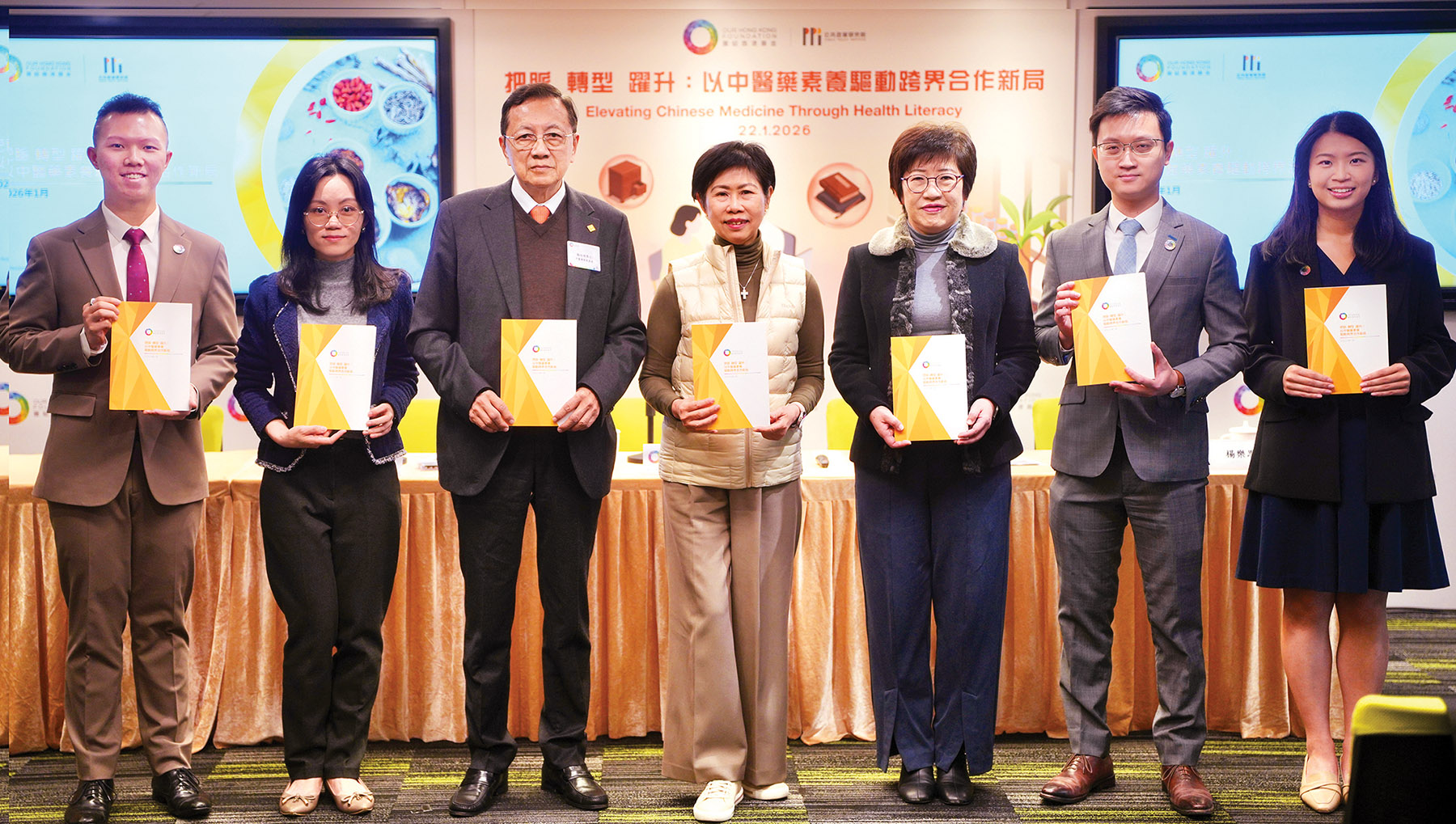
Hong Kong residents’ knowledge of traditional Chinese medicine is only “moderate”, with many struggling to differentiate between proprietary TCM products and over-the-counter health supplements, the city’s first study on Chinese medicine literacy revealed on Thursday.
Following the study’s release on Thursday, experts called for a united effort by the authorities, healthcare practitioners, community groups, and residents to refine local policies, improve interdisciplinary talent training and medical services, and boost public awareness about TCM.
The report, titled Taking the Pulse of Transformation: Elevating Chinese Medicine Through Health Literacy, gives Hong Kong a “moderate” score of 69.8 out of 100 for overall TCM literacy.
Over 85 percent of the public can apply TCM health advice to enhance their physical well-being, the report stated, adding that this level of knowledge serves as “a solid foundation”.
ALSO READ: Hong Kong's role in promoting TCM highlighted at forum
But key findings also indicate that 40 percent of the 800 respondents cannot reliably differentiate between TCM and health supplements, and one-third of them are unclear about how to obtain a legally valid sick leave certificate from a TCM practitioner.
A quarter of those surveyed were also unaware that they can provide feedback and lodge formal complaints about TCM services with statutory authorities such as the Chinese Medicine Council of Hong Kong.
The study utilized Hong Kong’s first-ever localized TCM health literacy tool, developed by a team from Hong Kong Polytechnic University’s School of Nursing, covering areas including “fundamental concepts”, “regulations and service delivery”, “CM-incorporated lifestyle”, and “Treatment”.
Survey results reveal that the public scored highest in their understanding of the TCM-empowered healthy lifestyle, at 73 points, followed by their knowledge of related regulations, at 70.7 points; their knowledge of TCM treatments and fundamental concepts scored 69.2 and 67.5 respectively.
READ MORE: HK bets on integrated hub to enhance TCM profile
Jane Lee, president of the study’s commissioner, the Our Hong Kong Foundation, said that despite the wider availability of TCM services following the December launch of the Chinese Medicine Hospital of Hong Kong, “critical gaps” remain among both the public and general healthcare practitioners in their understanding of TCM’s principles and practical applications.
A boost in public TCM literacy would empower individuals to manage their own health while enabling healthcare professionals to confidently integrate TCM into practice, paving the way for more comprehensive public healthcare, Lee said.
She said she believes Hong Kong is well positioned to become “a bridgehead” for preserving TCM’s legacy and driving its innovation forward.
The government in December unveiled the city’s first Chinese Medicine Development Blueprint, and set out phased objectives and 20 actionable measures aimed at elevating local TCM services, professional rigour, product quality, cultural inheritance, and the discipline’s global influence.
Dicky Chow, OHKF’s head of healthcare and social innovation and a member of the research team, said that future efforts must go beyond publicity, and called for aligned actions by the authorities, community groups and residents across policy design, service delivery, and age-specific public engagement initiatives.
READ MORE: Hong Kong set to be launchpad for TCM’s global push
He suggested creating additional localized TCM literacy assessment tools, which can better quantify policy impact and help stakeholders accurately identify gaps in the public’s knowledge and tailor interventions accordingly.
He also recommended that the rollout and renewal of TCM-related policies and some proactive programs in the field should be explicitly linked to their performance results, as measured by the assessment tools.
Contact the writer at wanqing@chinadailyhk.com
