

Beijing, Chongqing first urban areas to pilot cutting-edge technology
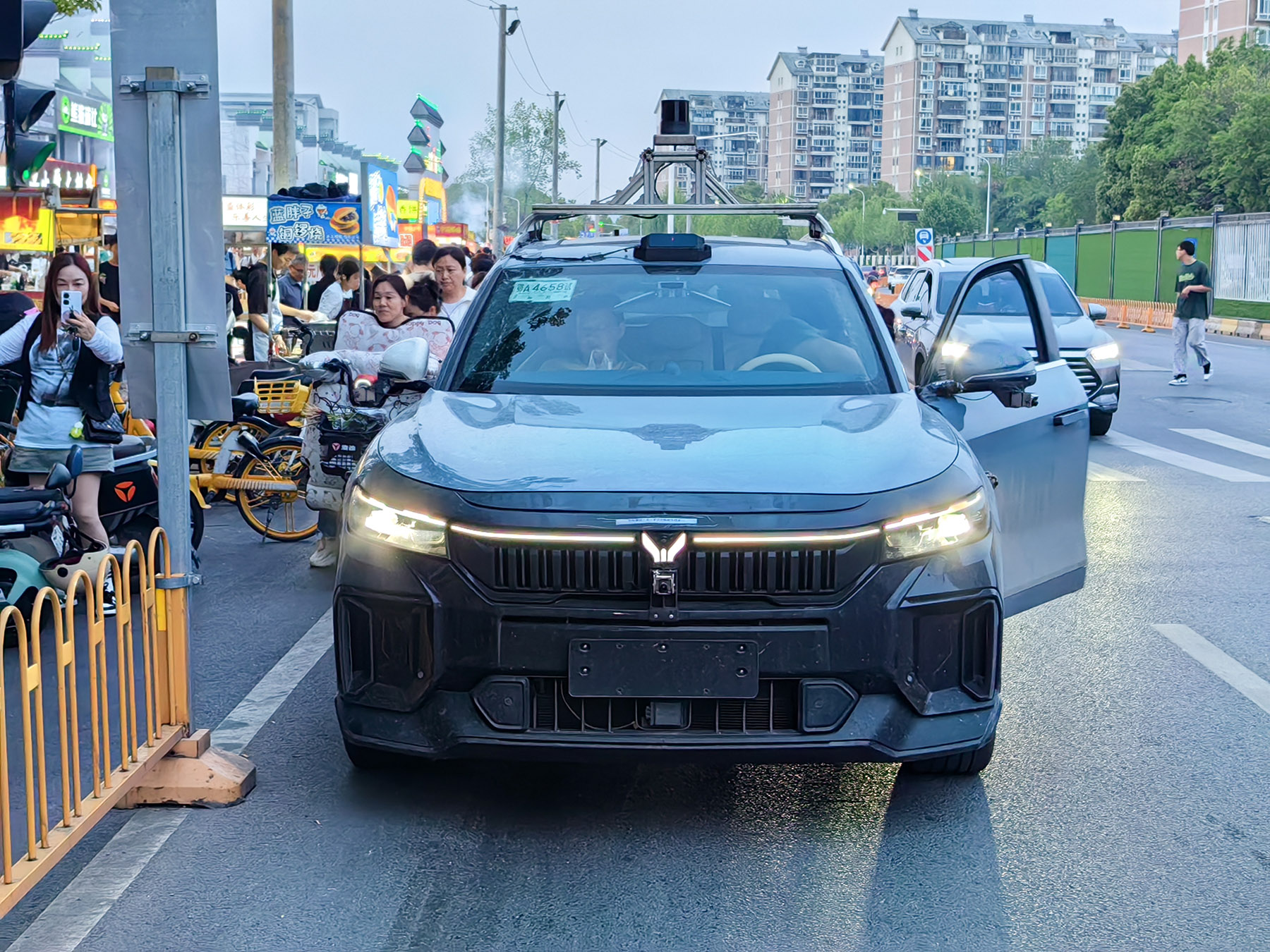
On the bustling roads of Beijing, a subtle revolution is taking shape, marked by a series of distinctive license plates. To the untrained eye, they are just alphanumeric codes. To China's intelligent vehicle industry, they are emblems of a historic leap. These are not ordinary plates but the nation's first official license plates issued specifically for level 3 conditional autonomous driving vehicles, symbolizing a formal transition from prolonged testing to regulated, on-road commercial piloting.
This tangible milestone follows the recent announcement from China's Ministry of Industry and Information Technology, granting the first-ever batch of market-access permits for L3 conditional self-driving vehicle models. Two models — one optimized for stop-and-go urban congestion, the other for structured highway driving — are now authorized for limited public use in designated areas of Beijing and Chongqing. This move decisively shifts L3 technology from closed proving grounds into the complex, unpredictable realm of real-world traffic interaction.
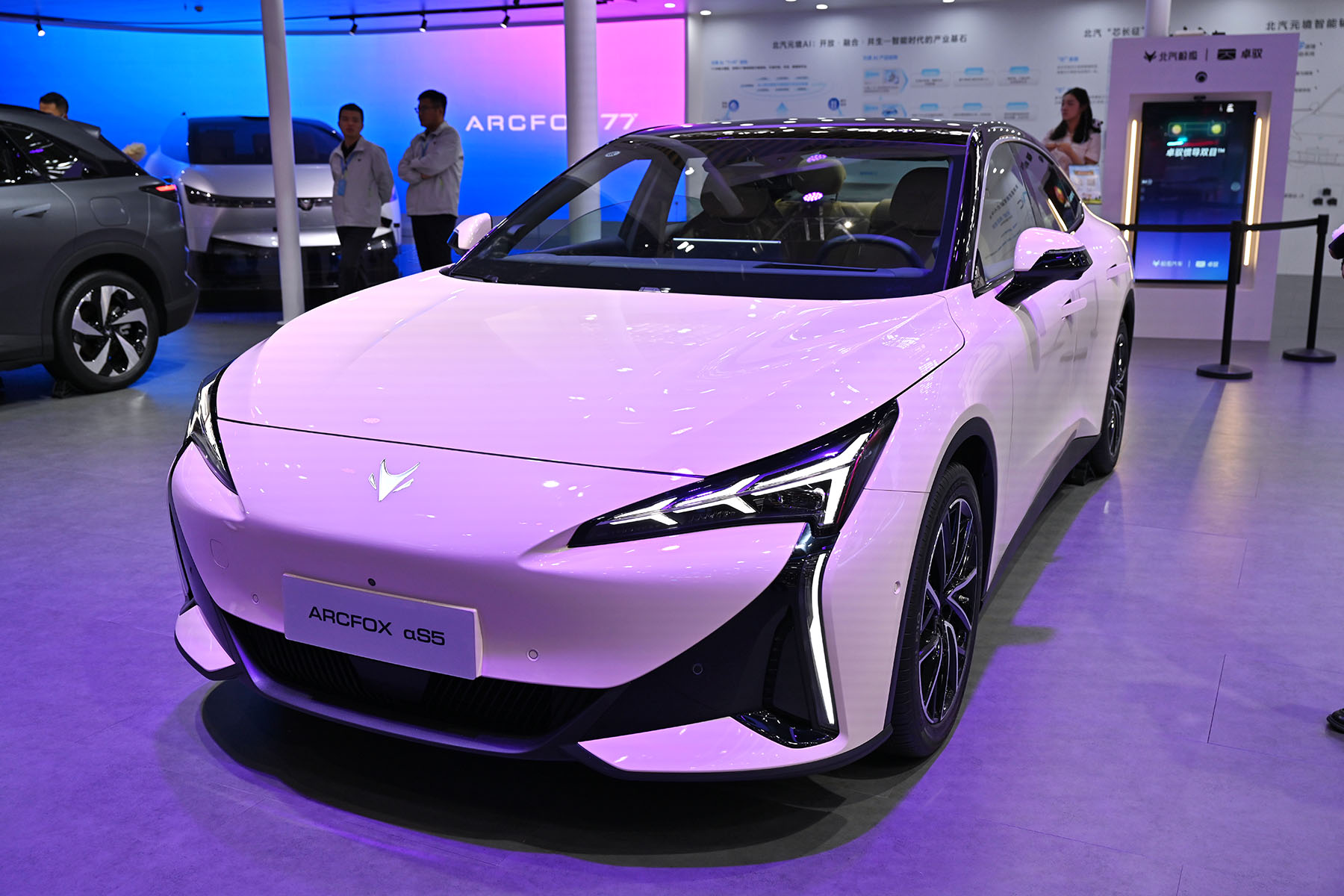
The approved models were developed by Changan Automobile and BAIC Motor's Arcfox brand.
READ MORE: China pilots L3 vehicles on roads
Changan and BAIC are among a batch of joint groups in a pilot program for access approval and road testing of intelligent connected vehicles in China.
The pilot program was initiated as early as 2023 by several ministries, including MIIT and the Ministry of Transport, to accelerate the development of intelligent connected vehicles and boost local innovation.
Other participants in the pilot program include BYD, Nio, FAW Group and SAIC, according to sources.
The program is not limited to passenger vehicles. It also covers trucks and buses. Participating manufacturers include heavy-duty truckmaker SAIC Hongyan and Yutong Bus.
The core of L3, or "eyes-off, mind-on", automation lies in its conditional nature. Under specific operational design domains, such as certain highways or slow urban traffic, the system can take full control of dynamic driving tasks, legally allowing the driver to disengage. However, the human must remain ready to intervene when prompted. This phase fundamentally changes the relationship between human and machine, moving the industry's focus from perfecting "hands-off" technology to defining clear lines of "liability-on".
Sun Hang, chief engineer of the China Automotive Standardization Research Institute, said: "The approval of the first L3 models means that for the first time, China has allowed autonomous vehicles to enter the market as formal products at the policy level. We are exploring commercial application through pilots, which is a landmark in itself,"Sun said.
In China, driving automation is defined by six levels, from 0 to 5, with L0 meaning that such vehicles are entirely operated by humans. Levels 1 and 2 are considered driver-assistance systems, in which the human driver remains perpetually responsible for monitoring the environment and must be ready to intervene instantly, according to the MIIT.
Liu Fawang, deputy head of the ministry's Equipment Industry Development Center, said that L3, or "conditional automation", is the pivotal threshold. The vehicle itself can perform dynamic driving tasks such as steering, acceleration and braking under specific conditions, and the driver is not required to monitor the road continuously, but only to respond when the system requests intervention.
"The shift to L3 formally enters the realm of automated driving where the responsibility for the driving task can be allocated among the driver, the car manufacturer and the system supplier. This represents a monumental shift from the unequivocal driver liability associated with L1 and L2 cars," Liu added.
Fu Bingfeng, secretary-general of the China Association of Automobile Manufacturers, said: "The move means that China's autonomous vehicle sector is accelerating from the 'technical validation' phase into a new stage of 'mass production and application'. This progression is not merely a reflection of technological maturation, but also a vivid example of the nation's coordinated strategy to balance high-quality development with high-level safety."
Sun said: "The pilot is designed to better ensure the safety of drivers and passengers. It reflects an overarching philosophy of prioritizing safety and advancing step-by-step, starting with low-risk, limited-scenario trials before considering broader applications. While the full integration of autonomous driving into daily life still requires time, this step clearly indicates that autonomous driving technology is one step closer to us."
The move came after China established a comprehensive industrial system for intelligent connected vehicles, with more than 60 percent of new passenger cars now equipped with combined driver-assist functions, or L2 systems, according to the ministry.
But Liu from the Equipment Industry Development Center cautioned that the approval is explicitly not a broad liberalization.
"This conditional access follows a principle of 'starting with small, specific applications and implementing with attached conditions', with safety as the paramount priority for coordinated advancement. The subsequent pace of L3 license issuances will primarily depend on the safety, reliability and technological maturity of the products declared for the pilot, as well as the systematic and scientific nature of the applying enterprises' safety management capabilities."
China's move places it among the first group of major nations to formally regulate L3 vehicles, alongside Germany and Japan, which approved models from Mercedes-Benz and Honda, respectively, with conditions, in recent years, Liu added.
Automobile manufacturers possessing a Chinese production license, including foreign firms, can apply for Level 3 autonomous driving approval if they meet all stipulated requirements for both enterprises and products related to intelligent connected vehicles, said sources familiar with the approval process.
In Japan, Honda obtained type designation for an L3 automated driving system in 2020, with the technology entering limited real-world use one year later on the Honda Legend Hybrid EX. Equipped with an L3 system branded Honda SENSING Elite, the model is primarily intended for motorway congestion scenarios.
Germany approved the L3 automated driving system DRIVE PILOT developed by Mercedes-Benz in 2021, initially permitting operating speeds of up to 60 kilometers per hour. Building on this approval, an upgraded version was cleared in late 2024, raising the maximum operating speed to 95 km/h and enabling more frequent and longer use of the automated driving mode, while allowing drivers to make better use of their free time.
Sun said the deployment of L3 models in Germany and Japan was limited in scale, sometimes involving internal sales, with models like Honda's later being discontinued. This international experience among peers reinforces China's chosen path of prudence.
Liu said such international experience "reminds us once again of the arduousness and complexity of autonomous driving application and management exploration", necessitating a focus on balancing development with safety.
When assessing China's relative advantages in L3 development, experts point to its unique ecosystem. Sun said key strengths — including the vast complexity and diversity of Chinese urban driving scenarios — serve as an unrivaled testing ground, implying that systems validated in the country possess strong global adaptability and acceptability.
"Furthermore, China benefits from the 'blooming of a hundred flowers' in technological pathways, encompassing everything from pure vision-based systems to lidar-integrated solutions, and a strong push for vehicle-road-cloud integration," Sun said, adding: "The regulatory environment has also shown notable continuity, with a series of national standards and road testing regulations guiding the sector since 2018, providing stable long-term guidance for industry development."
ALSO READ: China accelerates push for autonomous driving sector
The safety validation processes for the models from Arcfox and Changan were equally rigorous.
Liu detailed the procedure, explaining that both underwent a stringent, multistep safety evaluation — including program assessment, product testing, implementation evaluation and final review. Based on their respective hardware and software configurations, specific design operational domains covering speed, road types and weather conditions were defined.
From a safety certification perspective, Sun said the vehicles with embedded artificial intelligence tech are treated as "black boxes", and are assessed against fundamental safety requirements.
China's inaugural step into conditional automated driving is a characteristically strategic and guarded one. It is a controlled experiment designed to accumulate real-world data, refine technologies and standards within a safety-centric framework, and steadily build the foundation for the responsible integration of autonomous driving, experts added.
Contact the writers at masi@chinadaily.com.cn
